
What Size Rug Do You Need Under a 6-Person Dining Room Table?
Determining the right rug size for a dining area is essential for both functionality and aesthetic balance. When you are trying to figure out what size rug do you need under a 6-person dining room table, the primary goal is ensuring that your chairs remain on the rug even when someone is seated and pushed back from the table.
A rug that is too small creates a tripping hazard and makes a room feel disjointed, while one that is too large can overwhelm the space. By measuring your furniture and floor area correctly, you will create a cohesive look that anchors your dining room and protects your flooring from daily wear.
Measure Your Dining Table First

Before you even look at patterns or materials, you must start with the specific dimensions of your furniture. A 6-person dining table typically comes in two main shapes: rectangular or oval, and round. For a standard rectangular table that seats six, the most common dimensions are 60 to 72 inches in length and 36 to 42 inches in width.
To determine the ideal coverage, you need to add at least 24 to 30 inches to every side of the table. This extra space allows for chairs to be pulled out without the back legs catching on the edge of the rug.
If your table is 60 inches long, you are looking for a rug that is at least 108 to 120 inches long. Always measure the table itself, not just the room, to ensure you are accounting for the footprint of the furniture in the dining room.
Accounting for Chair Clearance
The most common mistake homeowners make is buying a rug that is just slightly larger than the table. When guests sit down, they naturally pull their chairs back to get comfortable. If the rug is too small, the back legs of the chair will rest on the bare floor while the front legs stay on the rug, causing the chair to wobble.
A good rule of thumb is to calculate the space required for someone to sit and stand up safely. You need roughly 30 inches of clearance from the edge of the table to the edge of the rug on all sides.
This ensures that even when the chair is fully pulled back, the feet of the chair remain firmly on the carpet. If you have a tight space, you might be tempted to go smaller, but it is better to have a slightly larger rug that extends toward the wall than one that cuts off mid-chair.
Rectangular Tables and Standard Rug Dimensions
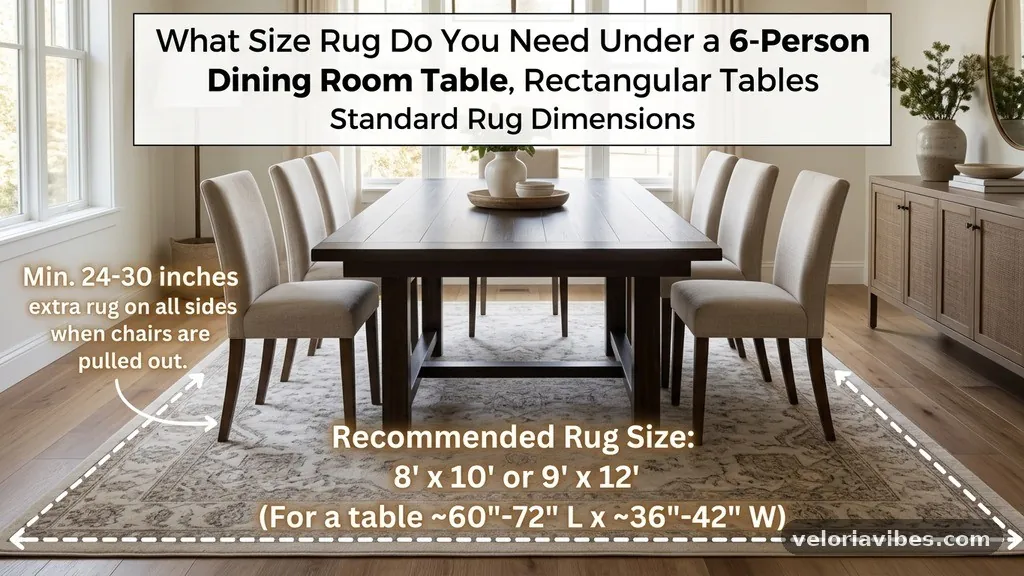
For a rectangular 6-person table, an 8×10 foot rug is the industry standard. This size provides enough surface area to accommodate the table and the six chairs comfortably. In a dining room, an 8×10 rug allows for about 24 to 30 inches of rug extension on the long sides and roughly 24 inches on the short ends.
If you have a particularly long or wide table, you might need to step up to a 9×12 foot rug. This is especially true if you are hosting in a larger room where a smaller rug would look like a floating island in a sea of floorboards.
Check your room’s dimensions before purchasing; you want to ensure the rug doesn’t hit the baseboards or furniture against the walls. A little bit of exposed hardwood or tile between the rug and the wall is perfectly fine and often looks more professional than a wall-to-wall carpet effect.
Selecting Rugs for Round Dining Tables
Round tables require a different approach to geometry. For a round 6-person table, which typically measures 48 to 60 inches in diameter, you should look for a round or square rug. A round rug creates a soft, circular focal point, but it must be large enough to handle the chairs.
If you choose a round rug, aim for a diameter of at least 8 feet. This provides enough room for the chairs to stay on the rug when pushed out. Some people prefer using a large square rug under a round table to create a more modern, structured look.
A square rug, such as an 8×8 or 9×9, can define the dining zone more clearly than a round one, especially in a square-shaped room. Always prioritize the clearance of the chair legs over the shape of the rug itself.
The Importance of Low-Pile Textures
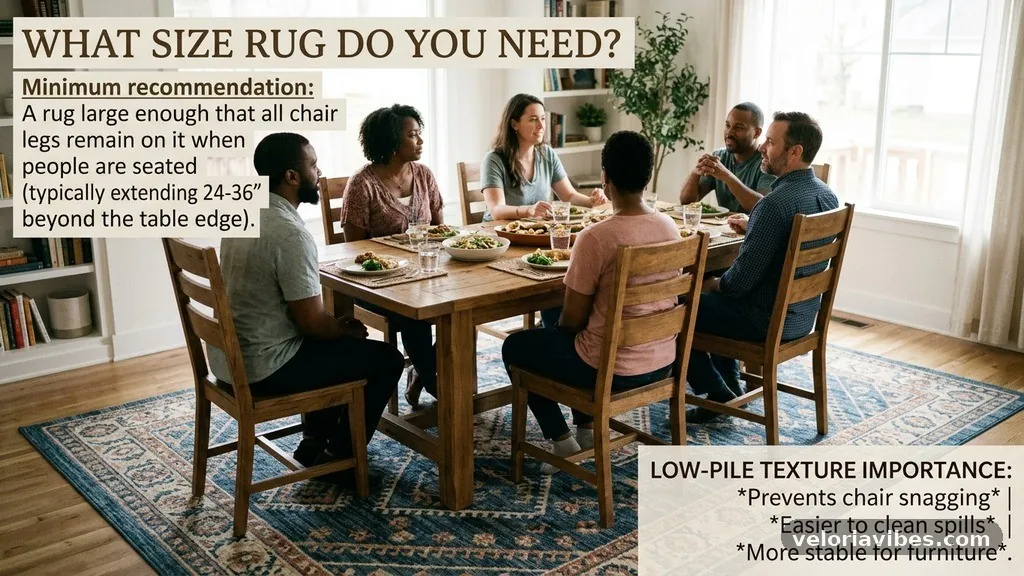
Dining rooms are high-traffic areas where spills are inevitable. When selecting the material for your dining room rug, opt for a low-pile or flat-weave construction. High-pile rugs or shaggy textures make it difficult to slide chairs in and out, and they are notoriously hard to clean when food crumbs or liquids fall onto them.
A flat-weave or a tight-loop pile is the best choice for a dining room. These materials provide a stable, flat surface for chairs to glide across.
If you love the look of a traditional Persian rug, search for a durable, low-pile wool version that can handle the weight of heavy furniture. Avoid silk or delicate fibers that may fray under the constant friction of chair legs moving back and forth during dinner service.
Considering Room Dimensions and Traffic Flow
Your rug shouldn’t just fit the table; it needs to respect the flow of the room. If your dining area is part of an open-concept floor plan, the rug acts as a visual divider, separating the dining space from the living room or kitchen. A rug that is too small can make the dining set look like an afterthought, while a properly sized rug anchors the furniture and makes the area feel intentional.
Observe where the walkways are in your room. If a major traffic path crosses through your dining area, ensure the rug is large enough that people aren’t constantly stepping on the edge.
A rug that is properly sized will feel like a cohesive part of the room’s architecture. Use painter’s tape on the floor to outline the potential size of the rug before you buy; this helps you visualize if the rug will impede doors or overlap with other furniture.
Maintenance and Rug Pads

Once you have identified the right size, don’t overlook the importance of a rug pad. A high-quality, non-slip pad is a necessity for dining room rugs. It prevents the rug from bunching up as chairs move, which is both a safety issue and a cause of uneven wear.
A rug pad also adds a layer of cushioning that protects the rug backing from the pressure of table and chair legs. Over time, the constant weight of furniture can cause impressions in the rug, and a pad helps distribute that weight more evenly.
Choose a thin, dense felt or rubberized pad specifically designed for hard floors. This will keep your rug flat, secure, and looking fresh for years to come.
Handling Asymmetrical or Unique Spaces
Not every room is a perfect rectangle or square. If you have an awkward alcove or a dining area that is positioned off-center, you may need to get creative with your rug placement. In these cases, you might not be able to follow the “30-inch clearance” rule on every single side.
If you are limited by a wall on one side of the table, prioritize the clearance on the sides where people will actually be pulling out their chairs. It is better to have the rug go right up to the baseboard on one side if it means you have enough room for chairs on the other sides.
Sometimes, a custom-sized rug is the best solution for a unique space. While this is a larger investment, it ensures that your rug fits the specific dimensions of your room perfectly without looking cramped or misaligned.
Common Mistakes to Avoid
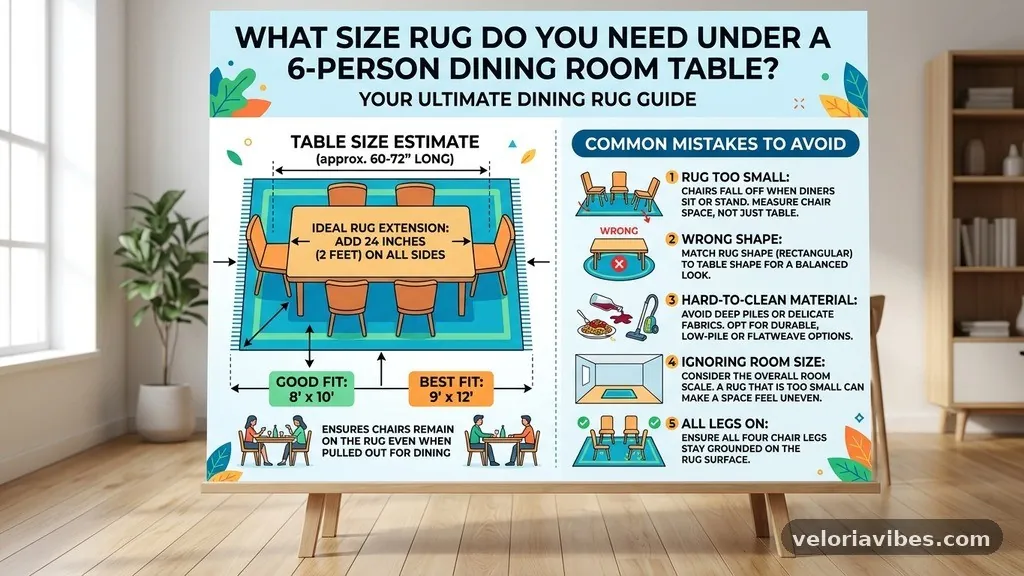
The most frequent error is sacrificing functionality for the sake of the rug’s design. Never buy a rug just because you love the pattern if it is too small for the table. A beautiful, expensive rug that is constantly causing chairs to trip or wobble is a source of frustration, not joy.
Another mistake is choosing a material that is too light in color or too delicate for a dining space. While white or cream rugs look stunning in photos, they are impractical for a home with children or frequent dinner parties. Look for rugs with busy patterns or darker, heathered tones that can hide minor stains.
Finally, don’t forget to rotate your rug every few months. This ensures even wear and prevents the areas under the chair legs from becoming permanently indented or worn down faster than the rest of the rug.
Setting the Tone with Style and Color
Your rug is a major design element in the room, so it should complement the style of your dining table and chairs. If you have a modern, minimalist glass table, a bold geometric rug can add visual interest and warmth. For a traditional wooden farmhouse table, a neutral, textured jute or sisal rug can provide a grounded, organic feel.
Consider the color palette of the chairs as well. If your chairs are upholstered in a bold fabric, a more subtle rug will balance the look. If your dining set is neutral, the rug is the perfect place to inject color and personality.
Remember that the rug will be the foundation of the room, so choose something you won’t get tired of quickly. While trends change, a well-chosen, high-quality rug can last for decades if cared for properly.
Frequently Asked Questions
Should I use a rug if I have hardwood floors?
Yes, using a rug on hardwood floors is highly recommended in a dining room. It protects the wood from scratches caused by chair legs and prevents the floor from becoming slippery. Plus, it adds acoustic insulation, which helps dampen the noise of chairs sliding on the floor and makes the room feel warmer and more inviting.
Can I put a rug over existing wall-to-wall carpeting?
While it is possible to layer a rug over carpeting, it can be tricky. It often leads to bunching and creates a trip hazard. If you must do it, choose a very thin, flat-weave rug and ensure you use a carpet-to-carpet rug pad to keep it from sliding. Generally, it is better to skip the rug if the room is already fully carpeted.
How do I clean a dining room rug effectively?
Vacuuming regularly is the most important step for maintenance. For spot cleaning, address spills immediately by blotting—never rubbing—with a clean cloth. Depending on the material, you may need a mild detergent or a specialized rug cleaner. If the rug is wool or a delicate blend, consider professional cleaning every year or two to keep it in top condition.
What if my table has leaves?
If you frequently use leaves to expand your table for guests, size your rug based on the extended table length. It is better to have a rug that looks a bit large when the table is small than to have one that is too small when the table is fully extended. If you only add leaves once a year for holidays, you might prioritize the standard size and accept that the rug will look slightly undersized during those rare occasions.
Do I need a rug pad if the rug has a non-slip backing?
Most rugs with a built-in non-slip backing are not sufficient for the heavy, shifting weight of dining chairs. A separate, high-quality rug pad provides a much better grip and, more importantly, adds the necessary cushioning to protect your floor and the rug fibers. It is a small investment that significantly extends the lifespan of your dining room rug.
Conclusion
Selecting the right rug for your home is about finding the balance between style and utility. When you consider what size rug do you need under a 6-person dining room table, remember that your priority should always be chair clearance. By ensuring that your seating remains firmly on the rug, you create a comfortable and stable environment for all your meals.
Measure your space, account for the dimensions of your table, and choose a low-pile material that can withstand daily use. With these steps, you will anchor your dining area beautifully and protect your floors for years to come.
Take a moment to measure your furniture today so you can start searching for the perfect piece that fits your life and your style. We hope this helps you create a space you love.