
How to Decorate a Living Room with Cozy Furniture
A living room can look beautiful and still not feel comfortable. You can have the right paint color, attractive artwork, and carefully chosen accessories, yet something may still feel missing. In many homes, that missing element is furniture that actually invites you to sit down, relax, and stay awhile.
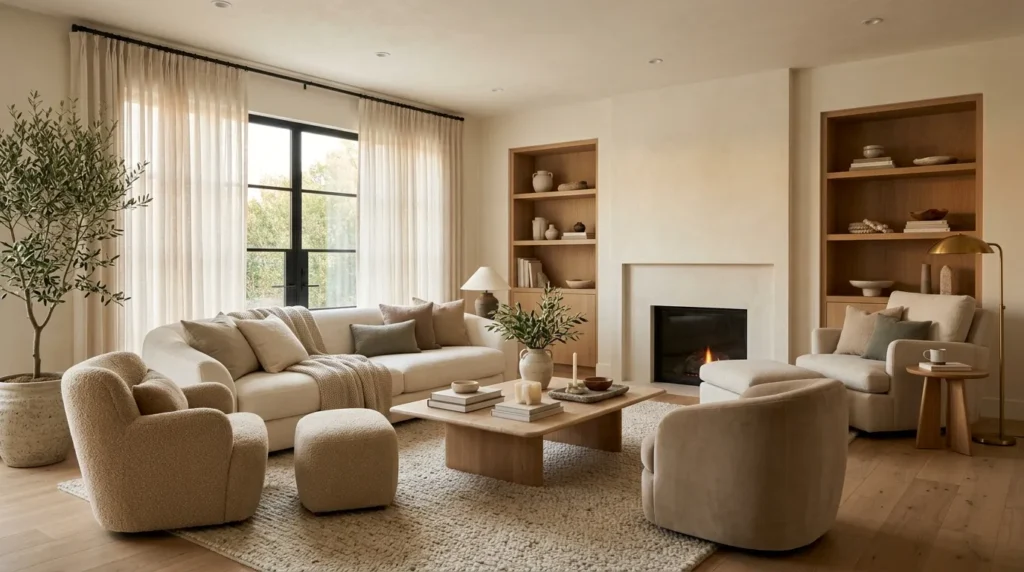
Cozy furniture changes the feeling of a room because it combines comfort with visual warmth. A deep sofa, soft accent chair, oversized ottoman, textured cushions, and a well-positioned coffee table can make an ordinary living room feel much more welcoming.
The good news is that you do not need to replace every piece of furniture to create a cozier space. Often, a few strategic changes can make a noticeable difference. Rearranging the seating, adding a softer chair, introducing an ottoman, or choosing warmer materials can completely change how the room functions.
If you’re anything like me, you probably want a living room that looks polished enough for guests but comfortable enough for everyday life. That balance is what makes cozy decorating so appealing.
The goal is not to fill the room with furniture. Too many large pieces can make a space feel crowded rather than comfortable. Instead, choose furniture based on how people actually use the room.
Think about where you naturally sit, where you place your coffee, whether you like stretching out while watching television, and whether you need flexible seating when guests arrive.
Then layer in the visual details—soft upholstery, warm wood, woven textures, neutral colors, rounded shapes, and comfortable textiles.
These ideas can help you create a living room that feels relaxed, inviting, and practical while still looking thoughtfully designed.
Table of Contents
1. Deep Comfortable Sofa
Choose a generous sofa that becomes the comfortable foundation of the room.
2. Oversized Accent Chair
Add a roomy chair that creates a dedicated spot for reading and relaxing.
3. Soft Upholstered Ottoman
Use an ottoman as flexible seating, a footrest, and a casual coffee-table alternative.
4. Layered Sectional Seating
Create a welcoming arrangement that encourages conversation and lounging.
5. Rounded Furniture Shapes
Soften the room with curved furniture that feels relaxed and approachable.
6. Warm Wood Accents
Balance upholstered furniture with natural wood for warmth and texture.
7. Cozy Window Seat
Turn an underused window area into a comfortable reading or lounging zone.
8. Flexible Pouf Seating
Add lightweight seating that can move around the room when needed.
9. Textured Lounge Chair
Introduce tactile upholstery that makes a quiet corner feel inviting.
10. Balanced Furniture Layout
Arrange every piece to support comfort, conversation, and easy movement.
1. Deep Comfortable Sofa
Quick Benefits
- Creates an inviting focal point
- Provides generous seating
- Works for lounging
- Makes the room feel relaxed
- Supports everyday family use
Why It Works
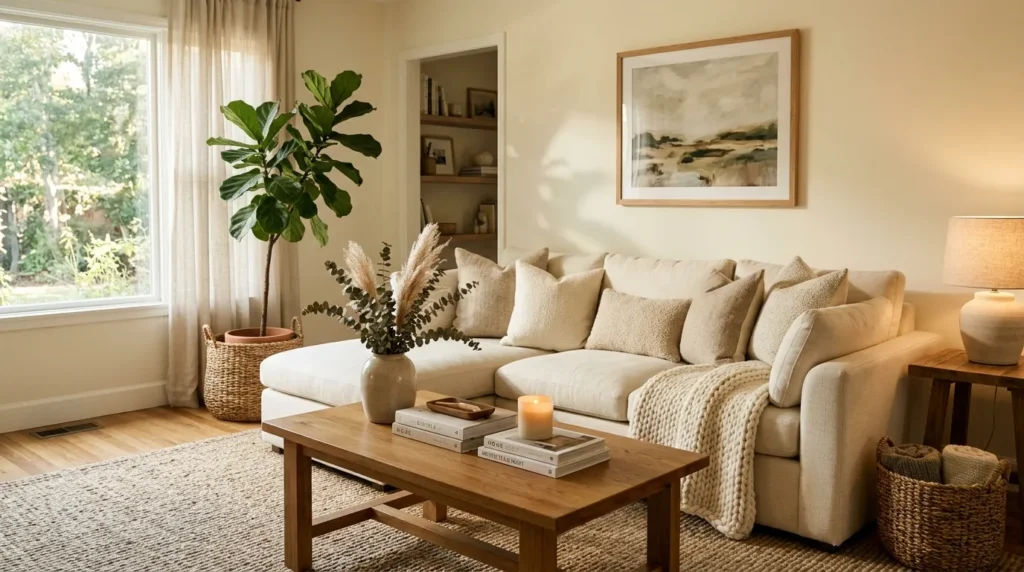
The sofa usually determines the emotional tone of the living room.
A deep, comfortable sofa immediately communicates that the space is meant to be used rather than simply admired.
However, depth should be chosen according to the people using the room.
A very deep sofa may feel luxurious to someone who likes to curl up but uncomfortable for shorter household members who prefer more upright support.
Look for upholstery that feels soft without being impractical for your lifestyle.
Performance fabrics can be especially useful for busy households when the manufacturer’s care instructions and fabric specifications suit your needs.
The goal is to combine physical comfort with a silhouette that fits your room.
How To Style It
Choose a sofa that leaves enough space for movement around it.
Warm beige, cream, taupe, soft gray, and muted brown are versatile choices.
Add cushions in different sizes and textures.
Layer linen, cotton, boucle, or other suitable upholstery textiles for visual softness.
A large throw can be draped casually over one arm.
Position the sofa toward the room’s main focal point, such as a fireplace, television, window, or conversation area.
Avoid pushing every piece of furniture directly against the walls unless the room genuinely requires it.
Even a small amount of breathing space can make the arrangement feel more intentional.
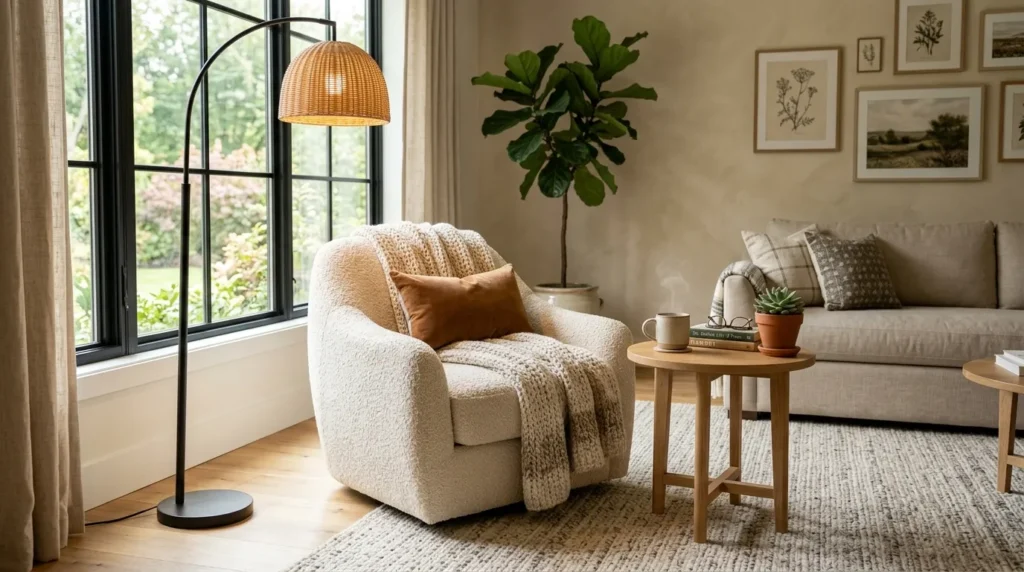
2. Oversized Accent Chair
Quick Benefits
- Adds comfortable individual seating
- Creates a reading spot
- Breaks up a sofa-heavy layout
- Introduces texture
- Makes empty corners useful
Why It Works
A comfortable accent chair can make a living room feel more layered.
Instead of relying entirely on a sofa, a substantial chair gives someone a separate place to sit.
This is especially useful when the chair faces the sofa rather than being placed randomly in a corner.
The arrangement encourages conversation while also giving the room another visual anchor.
An oversized chair can also introduce a different texture or color.
A boucle chair, linen chair, leather chair, or soft upholstered armchair can add character while maintaining the overall palette.
How To Style It
Place the chair at an angle toward the sofa when space allows.
Add one lumbar pillow or soft throw rather than covering the chair completely.
Position a small side table nearby.
A table lamp can create a dedicated reading area.
For a warm modern room, combine a cream upholstered chair with natural wood.
For more contrast, choose a muted olive, caramel, or charcoal upholstery.
Make sure the chair’s scale matches the sofa.
A tiny chair next to a massive sectional can feel visually insignificant, while an enormous lounge chair can overwhelm a compact room.
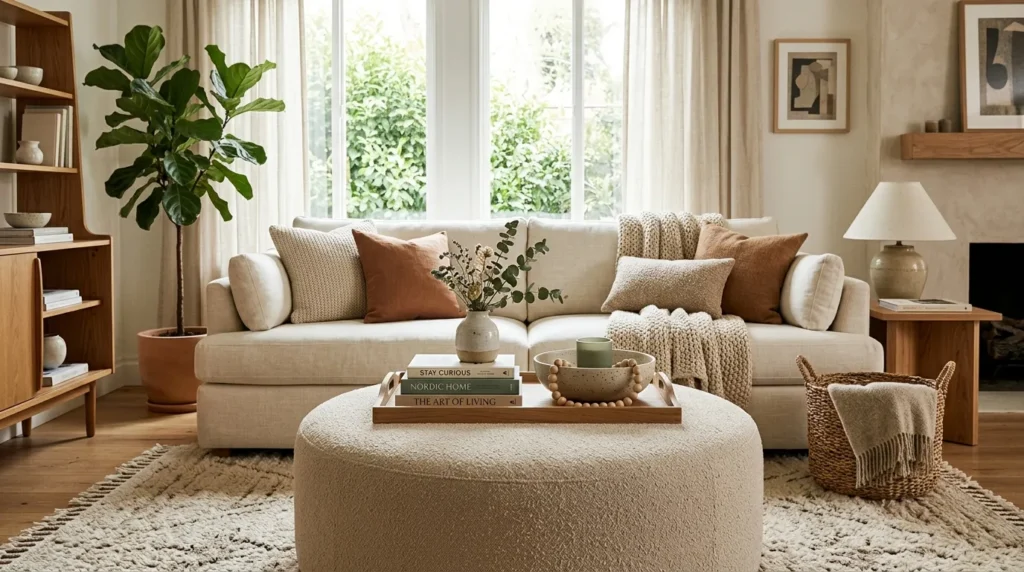
3. Soft Upholstered Ottoman
Quick Benefits
- Provides a footrest
- Adds flexible seating
- Can replace a traditional coffee table
- Introduces soft texture
- Works well in family rooms
Why It Works
Ottomans are among the most useful pieces of cozy living-room furniture because they serve multiple purposes.
An upholstered ottoman can function as a footrest during movie night, casual seating when guests arrive, or a soft surface for a tray.
It also removes some of the visual hardness that comes with a room filled with tables and wooden furniture.
A large rectangular ottoman can visually anchor a sectional, while a smaller round ottoman can soften a compact seating arrangement.
How To Style It
Choose upholstery that complements your sofa rather than necessarily matching it exactly.
Boucle, linen, velvet, leather, and performance fabrics can create different effects.
For everyday use, place a large tray on top when you need a stable surface for drinks or books.
Remove the tray when you want the ottoman to function as a footrest.
Keep the edges soft and rounded if the rest of your furniture is angular.
For a family room, choose a durable upholstery suitable for the expected use.
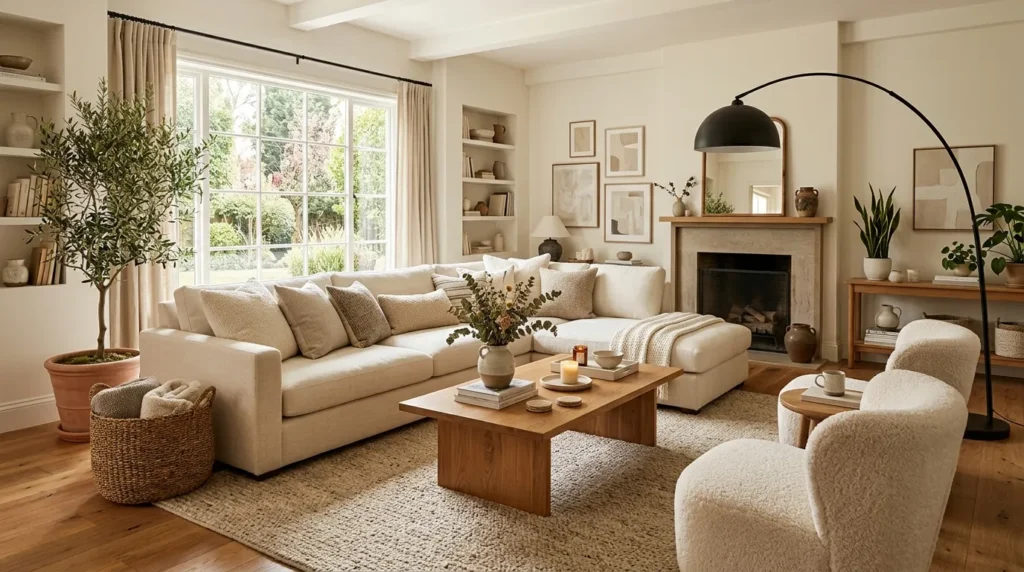
4. Layered Sectional Seating
Quick Benefits
- Maximizes seating
- Encourages lounging
- Works well for families
- Creates a strong focal point
- Makes large rooms feel more intimate
Why It Works
Sectionals are naturally associated with relaxation because they allow people to sit in different positions while remaining part of the same seating group.
They are especially effective in larger living rooms where a standard sofa can look undersized.
The challenge is avoiding an arrangement that makes the room feel like one giant piece of furniture.
Balance the sectional with lighter accent pieces.
A side chair, small table, floor lamp, or open shelving can keep the room visually varied.
How To Style It
Position the sectional around the room’s main activity.
For a television room, orient the longest side toward the screen while preserving a comfortable viewing arrangement.
For a conversation-focused room, position the sectional to face additional seating.
Add several cushions in coordinated textures.
Use a large area rug to connect the sectional with the rest of the furniture.
A substantial coffee table or upholstered ottoman can complete the center.
Keep walking paths open around the seating arrangement.
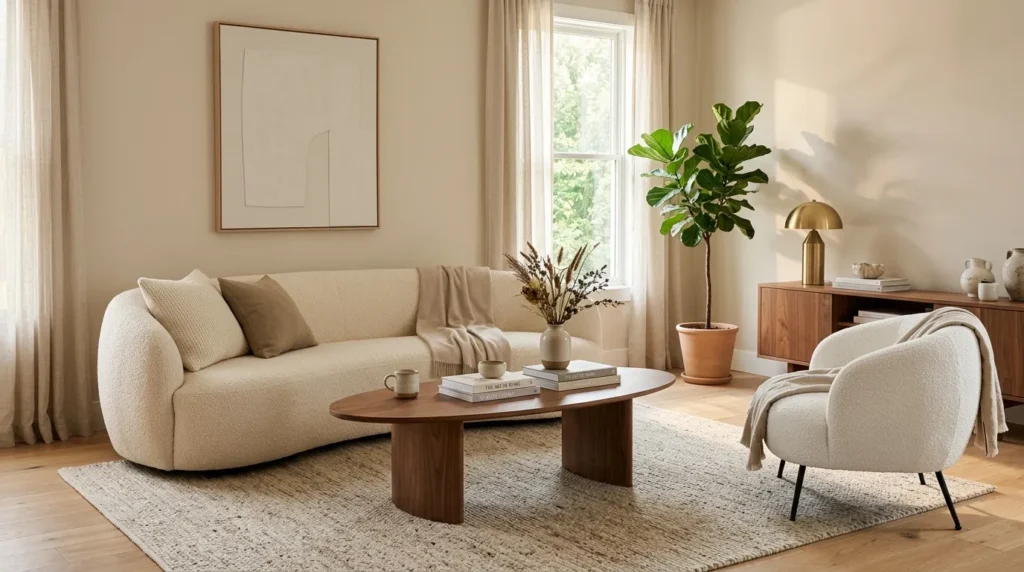
5. Rounded Furniture Shapes
Quick Benefits
- Softens hard lines
- Creates visual flow
- Makes furniture feel approachable
- Works in modern rooms
- Adds sculptural interest
Why It Works
Curved furniture can make a living room feel softer almost immediately.
A rounded sofa, curved accent chair, oval coffee table, or circular ottoman breaks up the repeated rectangles found in many living rooms.
This is especially helpful when the room already contains strong architectural lines.
Rounded furniture also tends to create a more relaxed visual rhythm.
It can feel less formal than furniture dominated by sharp corners and straight edges.
How To Style It
You do not need every piece to be curved.
Choose one or two rounded elements.
For example, pair a rectangular sofa with a curved accent chair and round coffee table.
Or place an oval ottoman in front of a straight sectional.
Repeat the curved shape subtly through accessories.
A round mirror, circular lamp, or rounded ceramic vase can reinforce the design.
Keep the colors simple so the furniture silhouette remains noticeable.
6. Warm Wood Accents
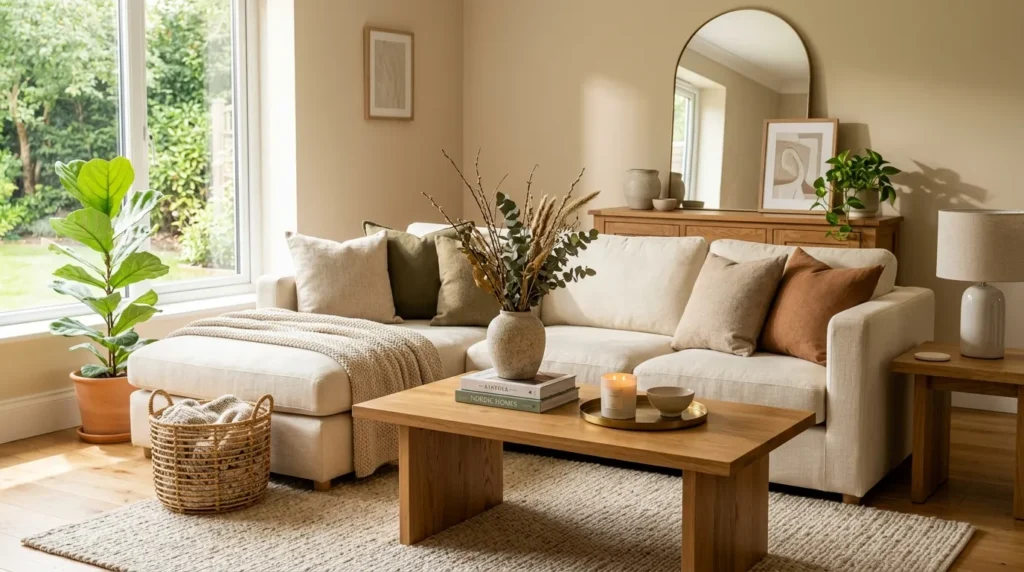
Quick Benefits
- Adds natural warmth
- Balances soft upholstery
- Works with modern styles
- Creates visual texture
- Connects furniture pieces
Why It Works
A living room filled entirely with upholstered furniture can sometimes feel flat.
Natural wood introduces warmth and variation.
A wooden coffee table, side table, console, exposed chair frame, or shelving unit can balance plush furniture and create a more layered appearance.
Wood also works across many design styles.
Light oak can create a Scandinavian or organic modern feeling.
Walnut adds depth.
Medium-toned woods can create a more traditional warmth.
The key is repetition.
When the same or related wood tone appears in several places, the room feels more cohesive.
How To Style It
Choose one dominant wood tone.
Use it on a coffee table, side table, or console.
Then repeat smaller touches through trays, frames, bowls, or shelving.
Pair warm wood with cream upholstery and woven textures for a cozy modern look.
Avoid using too many unrelated wood finishes unless you intentionally want an eclectic appearance.
Balance larger wood pieces with soft textiles.
The contrast between hard wood and plush upholstery is what makes the room feel layered.
7. Cozy Window Seat
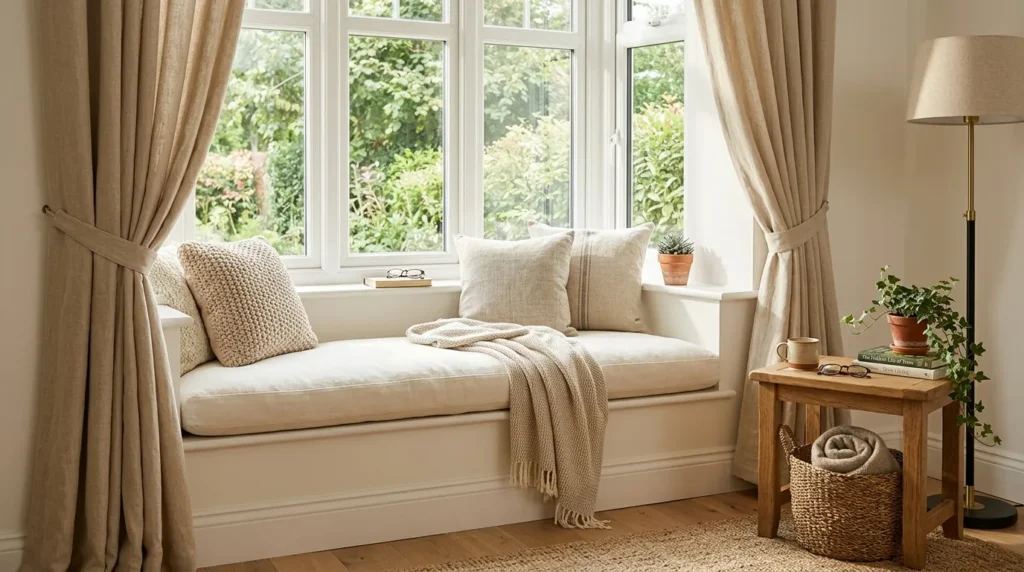
Quick Benefits
- Uses overlooked space
- Creates a reading area
- Adds extra seating
- Makes windows more inviting
- Works well in bedrooms and living rooms
Why It Works
A window area can become a natural cozy zone.
If your living room has a wide, deep window ledge or a suitable built-in area, adding cushions and textiles can turn it into a relaxing perch.
If there is no built-in seat, you can create a similar effect with a narrow upholstered bench positioned near the window.
The natural light makes the area particularly appealing during the daytime.
How To Style It
Choose a bench that fits comfortably without blocking windows, heating elements, doors, or required access.
Add a supportive cushion designed for the furniture.
Layer one or two pillows.
A small side table can hold a book or drink.
Use washable or appropriately durable fabrics if the area receives strong sunlight.
Keep the palette connected to the main living room.
A cream cushion with beige and muted green pillows can create a relaxed organic look.
8. Flexible Pouf Seating
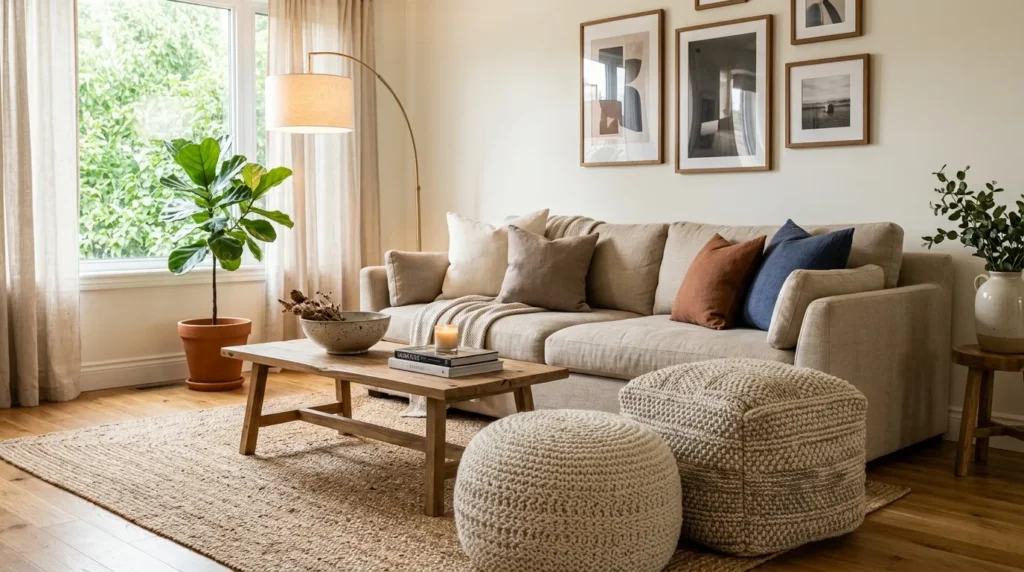
Quick Benefits
- Easy to move
- Adds casual seating
- Fits small rooms
- Provides extra texture
- Useful for entertaining
Why It Works
Poufs are useful when you want flexible furniture without committing to another large chair.
They can be moved closer to the sofa during gatherings and tucked beneath a console or table when they are not needed.
Because they are usually smaller than traditional seating, they can also fit into corners that would otherwise remain unused.
Their softness adds another tactile element to the room.
How To Style It
Choose one or two poufs in complementary colors.
Woven, boucle, leather, cotton, and textured fabric options can work with different styles.
Use a round pouf beside a curved chair or a square pouf with a more structured sofa.
Avoid placing too many small pieces around the room.
One or two flexible seats are usually enough.
When guests arrive, move them into the main seating group.
When the room is quiet, position them beside a chair as casual footrests.
9. Textured Lounge Chair
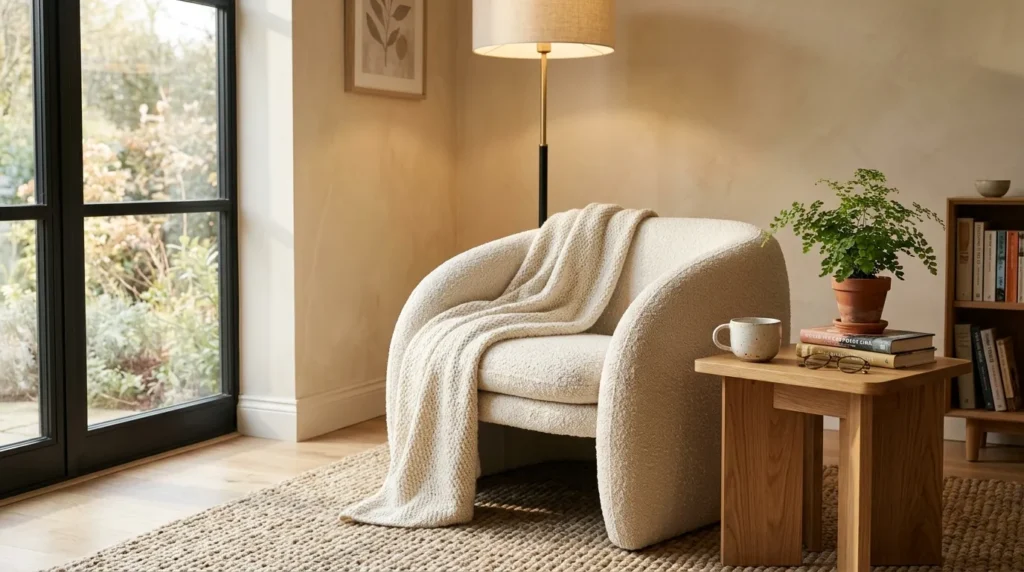
Quick Benefits
- Creates a cozy corner
- Adds tactile interest
- Provides comfortable seating
- Can introduce contrast
- Works in unused spaces
Why It Works
Texture is an important part of visual comfort.
A chair with noticeable upholstery—such as boucle, brushed fabric, linen, or another suitable tactile material—can make an otherwise simple room feel much warmer.
A lounge chair also creates a personal destination.
Instead of every seat facing the television, one chair can be positioned near a window or lamp for reading.
This gives the room multiple purposes.
How To Style It
Choose a chair with enough cushioning and support for how you intend to use it.
Position it near a floor lamp or side table.
Add a soft throw for visual warmth.
A small round table can keep the arrangement light.
For a neutral living room, use texture rather than bright color to create interest.
A cream boucle chair against a warm beige wall can feel sophisticated.
For contrast, try caramel leather or muted olive upholstery.
10. Balanced Furniture Layout
Quick Benefits
- Improves everyday comfort
- Creates better conversation flow
- Makes furniture feel intentional
- Prevents overcrowding
- Helps define functional zones
Why It Works
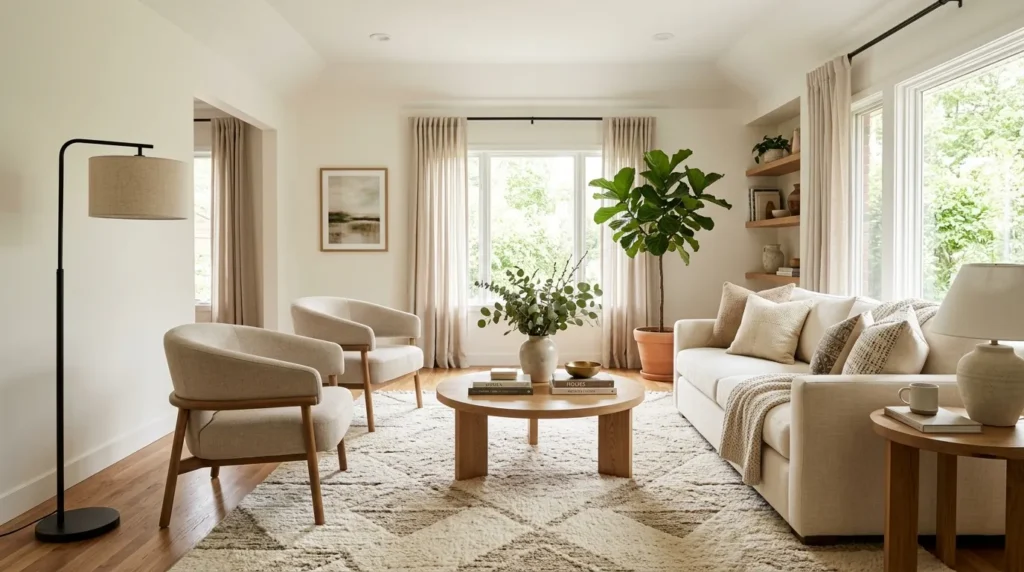
Even the most comfortable furniture can feel awkward when it is poorly arranged.
A cozy living room needs enough space for people to move between seating, tables, doors, and other parts of the home.
Furniture placement also influences how people interact.
When chairs and sofas face one another, conversation becomes easier.
When everything points toward one television, the room can feel more like a viewing area.
The best arrangement depends on your lifestyle.
How To Style It
Start with the largest piece, usually the sofa or sectional.
Then add chairs.
Place the coffee table or ottoman centrally.
Add side tables where people naturally need surfaces.
Use an area rug to visually connect the seating.
Maintain comfortable walking paths.
Before moving heavy furniture repeatedly, use painter’s tape to mark the approximate footprint on the floor.
Try different arrangements until the room feels natural.
Remember that a cozy room should not require people to squeeze between furniture.
Comfort includes movement.
How To Choose Cozy Living Room Furniture
Start with comfort, then consider appearance.
A sofa should support the way your household actually sits.
If you like stretching out, a deeper sofa may be useful.
If you prefer upright seating, look for a more supportive seat depth.
For households with children or pets, consider upholstery that fits your cleaning and maintenance needs.
Then consider scale.
A large sectional can be wonderful in a spacious family room but overwhelming in a small apartment.
Likewise, several tiny chairs can make a large room feel unfinished.
Think about the room as a collection of zones.
You might have:
- A main conversation area
- A television zone
- A reading corner
- A window seat
- A small work area
Not every living room needs all of these.
Choose the functions that matter most to your household.
Best Colors For A Cozy Living Room
Color has a major influence on how comfortable a room feels.
Warm White
Creates a clean foundation while avoiding a cold appearance.
Cream
Adds softness and works beautifully with natural wood.
Beige
Creates a relaxed, timeless backdrop.
Taupe
Adds subtle depth without becoming overwhelming.
Warm Gray
Works well when balanced with wood and warm textiles.
Muted Green
Introduces a natural feeling.
Caramel
Adds warmth through upholstery or leather accents.
Terracotta
Creates an earthy accent without requiring a dramatic color change.
You do not need a completely neutral room.
A few carefully chosen colors can make the space feel much more personal.
How To Make Existing Furniture Feel Cozier
You may not need to buy anything.
Start by changing the arrangement.
Move chairs closer to the sofa so the room feels more conversational.
Replace overly formal cushions with softer textures.
Add a large throw.
Introduce a floor lamp near a reading chair.
Use a large area rug to visually anchor the seating.
Place a tray on the coffee table to organize everyday items.
Add a soft ottoman if you have enough space.
Even changing the position of a side table can make the room more functional.
One simple trick I always suggest is to sit in every seat after rearranging the room.
Can you comfortably reach a table?
Can you see the room’s main focal point?
Can people walk behind the seating?
Can you place a drink down without leaning forward?
Those small practical questions often reveal more than simply looking at the room.
FAQ
What furniture makes a living room feel cozy?
Deep sofas, upholstered accent chairs, ottomans, soft poufs, rounded furniture, and textured lounge chairs can all contribute to a cozy feeling. The most important factor is choosing furniture that supports how you actually use the room. Warm materials, comfortable upholstery, and thoughtful placement can make a bigger difference than simply adding more pieces.
How do I make my living room cozy without buying new furniture?
Start with the layout. Move seating closer together, create a stronger conversation area, add soft throws and cushions, introduce a rug, and improve lighting. Rearranging furniture can sometimes make a room feel substantially more comfortable without spending anything. Remove pieces that interfere with movement or make the room feel crowded.
Should a cozy living room have a sectional?
A sectional can be an excellent choice if your room and lifestyle support it. It provides generous seating and naturally encourages lounging. However, a sectional should be sized carefully. Leave enough room for walking paths and other furniture, and consider whether its shape works with doors, windows, and the room’s main focal point.
What colors make a living room feel warmer?
Cream, warm white, beige, taupe, warm gray, caramel, muted green, and earthy terracotta can all create a warmer atmosphere. Natural wood is another effective way to add warmth. You can use neutral walls and furniture while introducing warmer tones through cushions, rugs, curtains, artwork, and accessories.
How many pieces of furniture should a living room have?
There is no universal number. The right amount depends on room size, household needs, and layout. Start with the essential seating, then add tables and accent pieces only where they serve a purpose. A room with fewer appropriately sized pieces can feel much more comfortable than one filled with furniture.
How do I arrange furniture for conversation?
Place the main seating pieces so people can comfortably see one another. A sofa facing one or two chairs is a classic arrangement. Keep the distance comfortable enough for conversation without forcing people to lean forward. A central coffee table or ottoman can visually connect the seating group while providing a useful surface.
What is the coziest living room furniture material?
Soft, tactile materials such as linen, boucle, cotton, brushed fabrics, and suitable performance upholstery can contribute to a cozy appearance. Leather can also feel warm and inviting, particularly when paired with softer textiles. Choose materials based on both comfort and maintenance requirements rather than appearance alone.
Conclusion
A cozy living room is not created by simply filling the space with soft furniture.
The real difference comes from choosing pieces that support the way you live.
A comfortable sofa gives the room a foundation. An oversized accent chair can create a personal reading spot. An upholstered ottoman provides a place to put your feet while also offering flexible seating. Poufs can move around when guests arrive, while rounded furniture can soften the overall appearance.
Then there are the quieter details.
Warm wood adds natural texture. Soft upholstery creates visual comfort. A carefully positioned floor lamp can make a chair feel like an inviting destination. A large rug can connect the furniture and help define the seating area.
The layout matters just as much.
Give people enough space to walk comfortably. Position seating so conversation feels natural. Keep frequently used surfaces within reach. Avoid filling every corner simply because you have the space.
If your current furniture is already comfortable, start there.
Try rearranging the seating, adding softer textiles, introducing warmer lighting, and removing pieces that interfere with movement.
If you are shopping for new furniture, think about your actual habits before choosing a style. The best living room is not the one that looks perfect in a photograph but the one that makes you want to sit down at the end of a long day.
Start with one change—a better seating arrangement, a comfortable chair, a soft ottoman, or warmer materials—and build from there.
Over time, those thoughtful choices can turn your living room into a space that feels welcoming, functional, and genuinely yours.
Related Articles
- 10 Cozy Living Room Ideas for a Warm Home
- 11 Modern Living Room Ideas for Comfortable Style
- 10 Small Living Room Furniture Arrangement Ideas
- 10 Neutral Living Room Ideas with Warm Decor
- 11 Cozy Home Decor Ideas for Every Room