Pedestal Base vs 4-Corner Legs: Which Base Type Allows More Chairs to Squeeze In?
Introduction
Choosing a pedestal base vs 4-corner legs dining table depends on whether you prioritize seating flexibility or traditional stability. Pedestal bases generally offer more seating flexibility and legroom because they reduce the corner obstructions that can limit chair placement.
Legroom and seating capacity matter when furnishing compact dining spaces or accommodating larger gatherings. This guide explains the differences between pedestal, double-pedestal, trestle, and four-leg designs, helping you compare their seating arrangements, support styles, and practical benefits before choosing a dining table.
Pedestal vs 4‑corner seat count
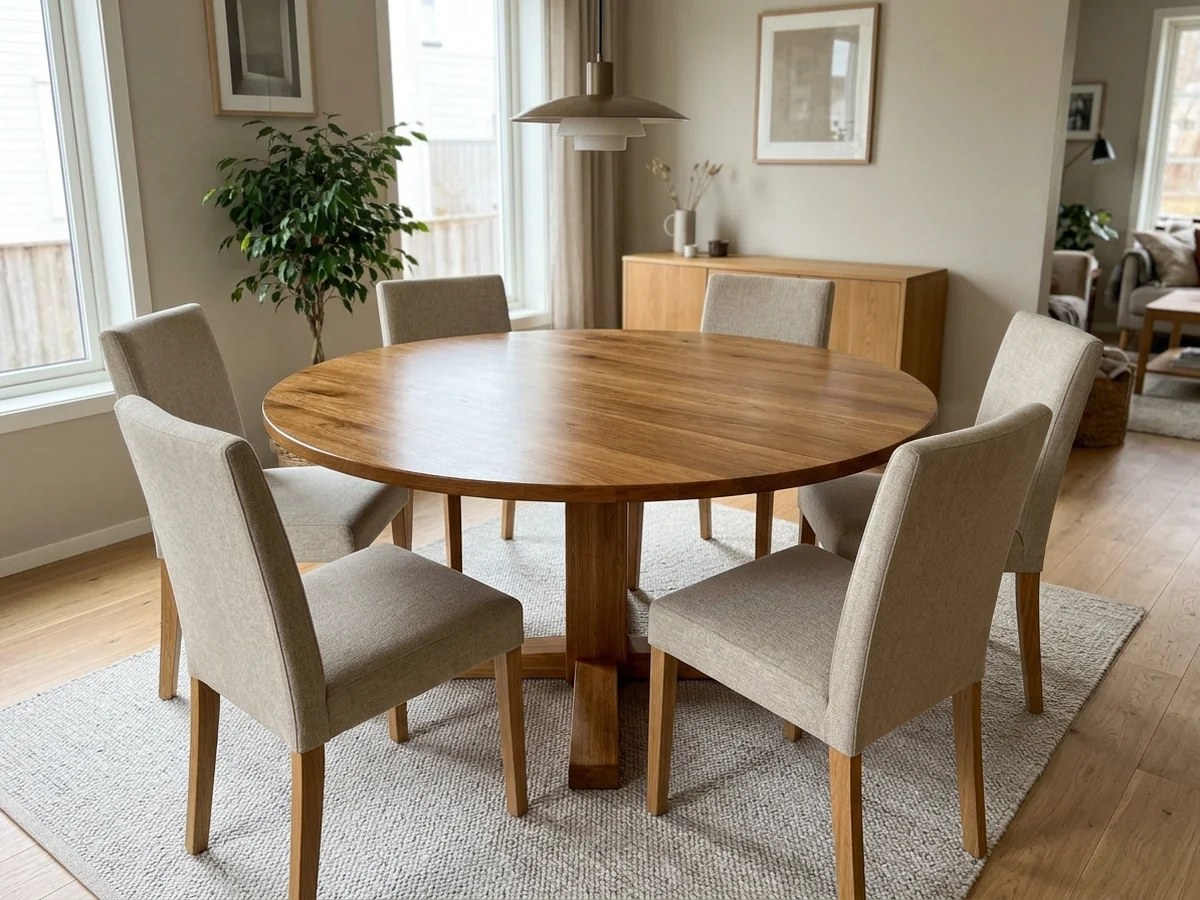
Pedestal tables generally allow more chairs along the sides because the central column occupies less of the tabletop edge than four corner legs. Each chair needs roughly 24, 30 inches of clear space, so a base that leaves a longer uninterrupted edge creates a higher seating capacity.
- A single pedestal leaves only the diameter of the column to subtract from the usable side length, often freeing an extra 6, 12 inches per side compared with a corner‑leg design.
- Four corner legs each require about 4, 6 inches of width at the table edge, which can reduce the total side clearance enough to lose one chair on a standard 72‑inch table.
- When the table is narrow, the space taken by corner legs at the ends may block chairs entirely, while a pedestal’s central position rarely interferes with end seating.
- Double‑pedestal tables add a second column but still keep the middle of each side clear, allowing the same side‑by‑side capacity as a single pedestal while supporting larger surfaces.
- Because the leg‑to‑leg spacing on a four‑corner table is fixed, any adjustment to seat more people usually requires a wider tabletop, whereas a pedestal can accommodate extra chairs simply by arranging them closer to the edge.
Legroom Comparison: Pedestal vs 4‑Corner Legs
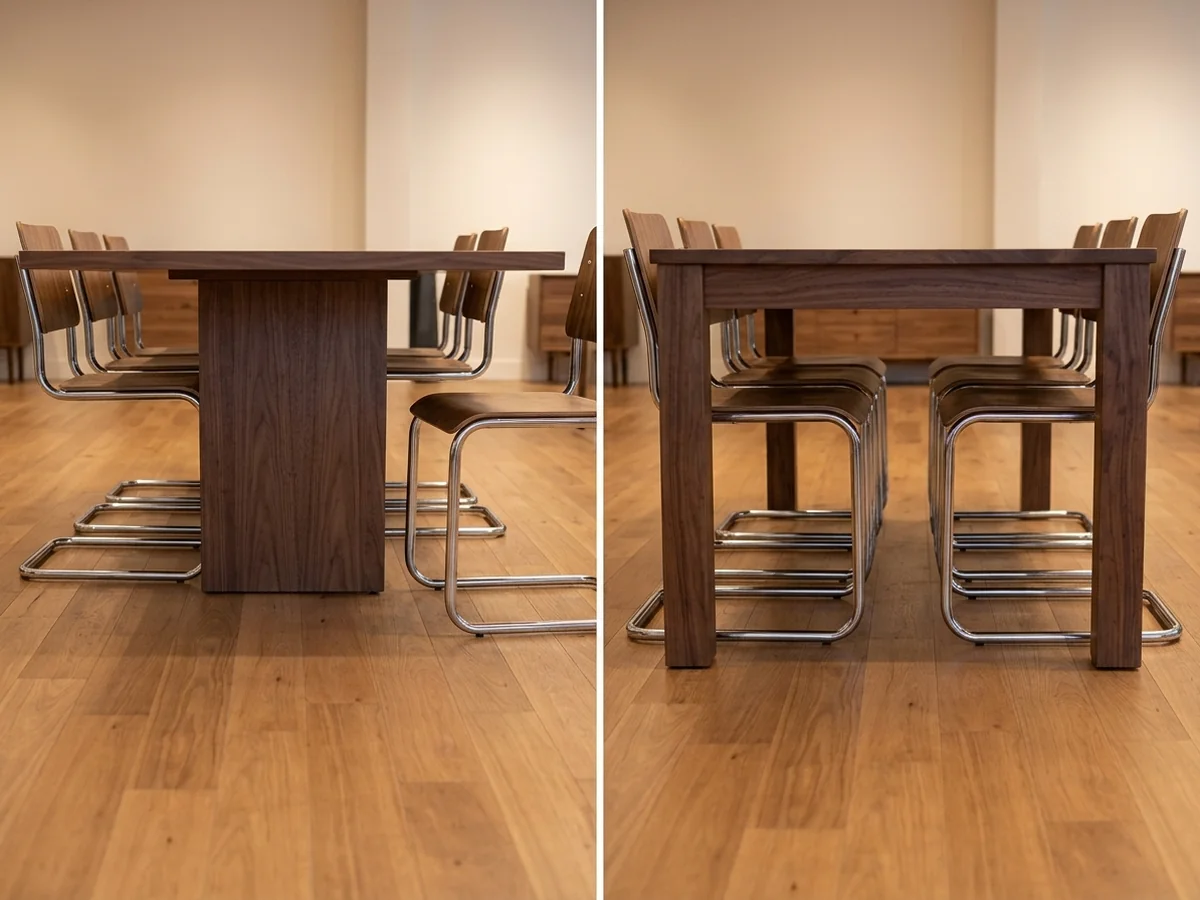
A pedestal base generally allows more chairs to fit around a table because it eliminates the physical obstruction of legs at the corners. While corner legs can limit where chairs are placed, a central pedestal provides an unobstructed perimeter, making it a frequent choice for those prioritizing seating capacity in dining room ergonomics.
| Feature | Pedestal Base (10-14 inch diameter) | 4-Corner Legs (4-6 inch footprint per leg) |
|---|---|---|
| Leg Intrusion | Centralized under the tabletop | Located at each corner |
| Usable Width (72-inch table) | Approx. 72 inches of clear space | Approx. 60-64 inches of clear space |
| Seating Flexibility | High, 360-degree access | Restricted by corner placement |
When planning your dining table legroom comparison, consider that corner legs reduce the total usable width by taking up space at each end of the table. A 72-inch table with 4-inch legs effectively shrinks your seating area as chairs may collide with the supports. In contrast, the pedestal design keeps the base footprint contained, allowing you to maximize the full length of the table for guests. Double-pedestal tables use two separate support bases to accommodate larger rectangular or oval tabletops, maintaining the open perimeter advantage for longer surfaces.
Pedestal vs 4‑corner small space
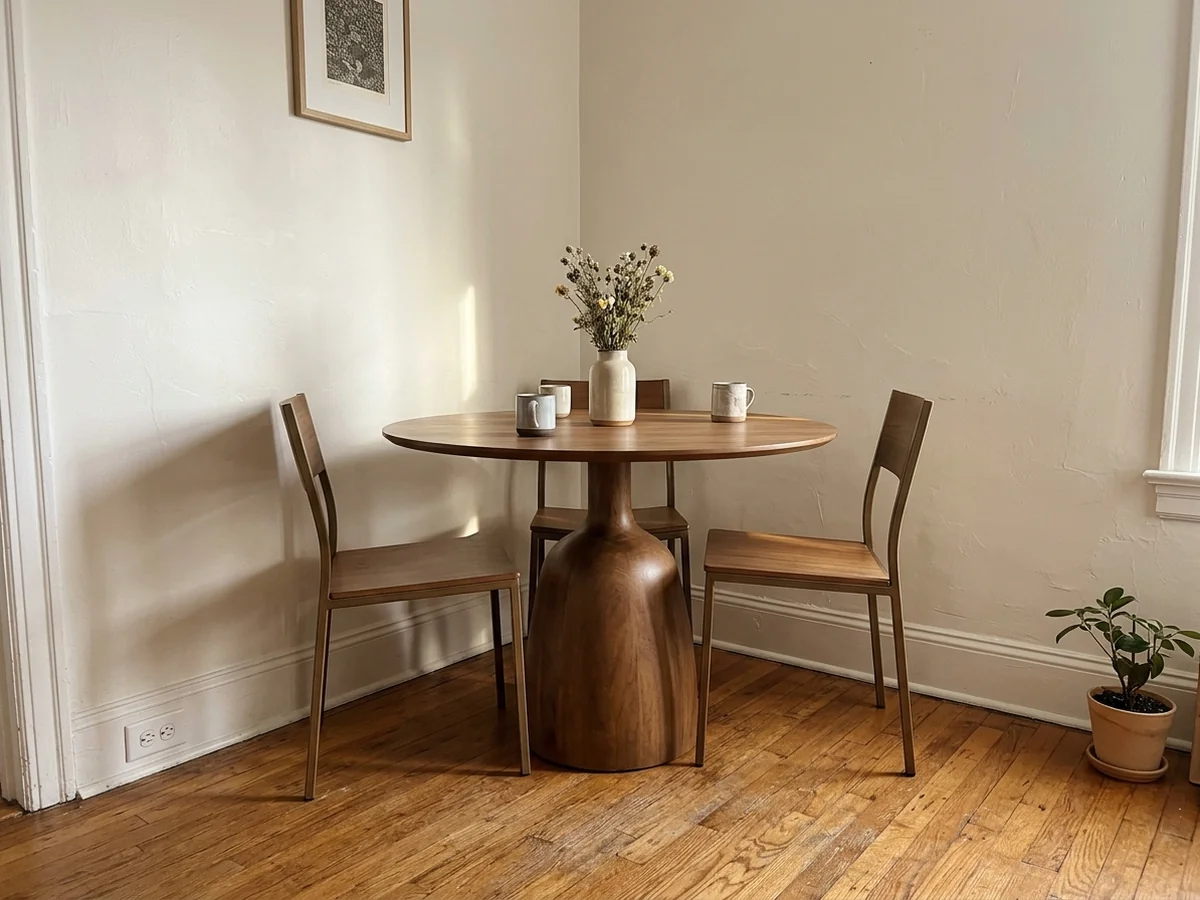
A pedestal base typically allows for more flexible seating because it removes the physical obstruction of legs at the corners of the table. By concentrating support toward the center, these tables often provide better clearance, making them a popular choice when you need to squeeze in extra chairs for guests.
When you are working with limited square footage, the best dining table base for small spaces is often one that maximizes floor area. Without corner posts, diners can shift their chairs more freely without bumping into table supports. This design improves dining room ergonomics, especially in tight rooms where every inch of movement counts toward a smoother flow.
However, 4‑corner tables offer distinct advantages in specific layouts. In narrow, rectangular rooms, a central pedestal might actually interfere with legroom or create an awkward seating arrangement if the base is wide. For these elongated spaces, corner legs are often more practical, as they keep the area under the table completely open for knees and feet.
Consider the following factors when choosing between these styles for your floor plan:
- Corner legs define the seating perimeter clearly, which helps prevent overcrowding in rooms with strict traffic lanes.
- Pedestal tables provide superior flexibility for adding extra chairs, as there are no corner posts to box in a guest.
- Double-pedestal tables use two separate support bases to accommodate larger rectangular or oval tabletops, which can be a functional compromise for long tables in narrow rooms.
- Four-leg tables allow for a more traditional look and are commonly found in a wide variety of styles, including tapered or turned designs, making them highly adaptable to different aesthetics.
Choosing the right base depends on whether your priority is maximizing guest capacity or maintaining clear traffic paths through the room. If your space is long and skinny, corner legs often provide a more comfortable, predictable seating experience.
Pedestal vs 4‑corner stability
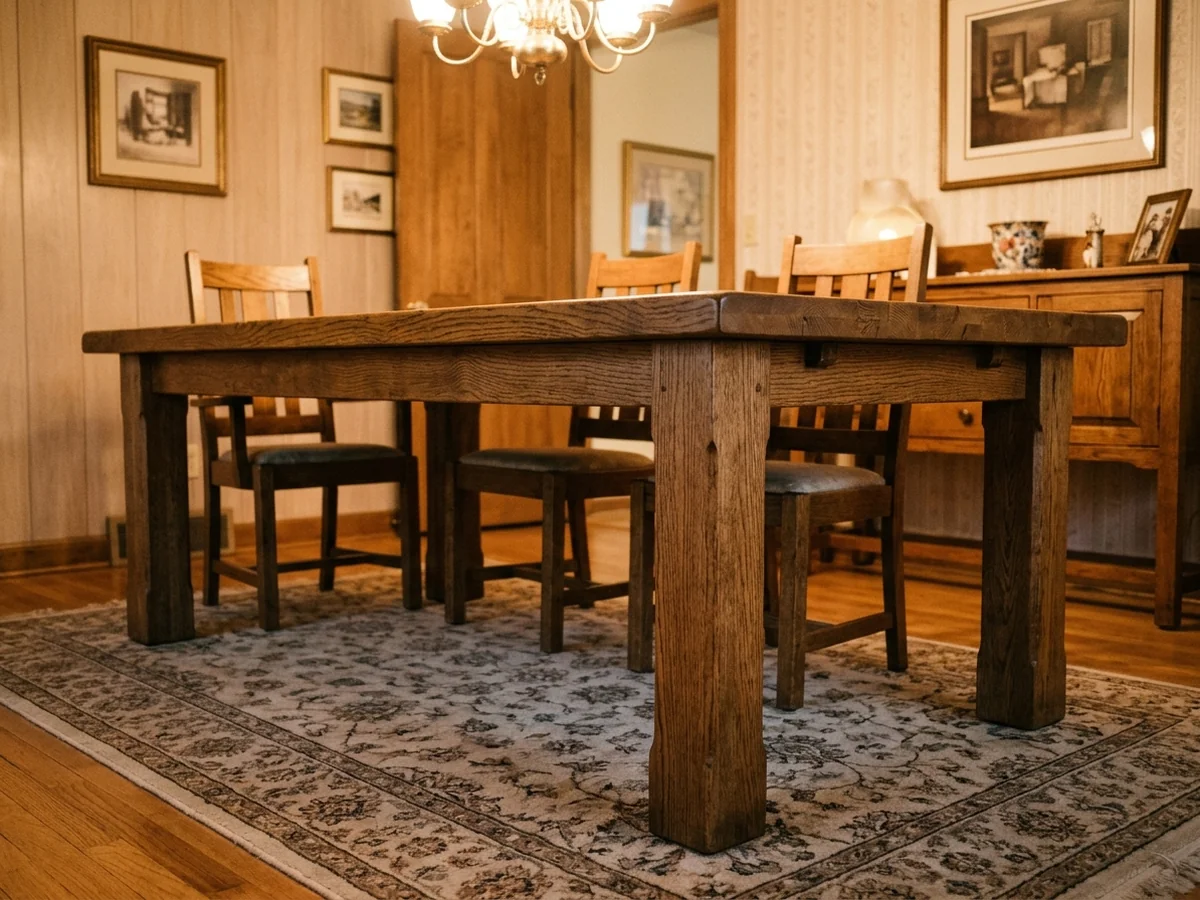
Four-corner leg tables generally offer higher static load capacities and superior resistance to tipping compared to pedestal designs. While both styles must meet general safety expectations for residential use, the structural mechanics differ significantly. Industry guidance from organizations like the American National Standards Institute (ANSI) emphasizes that furniture stability is determined by the balance between the center of gravity and the footprint of the base.
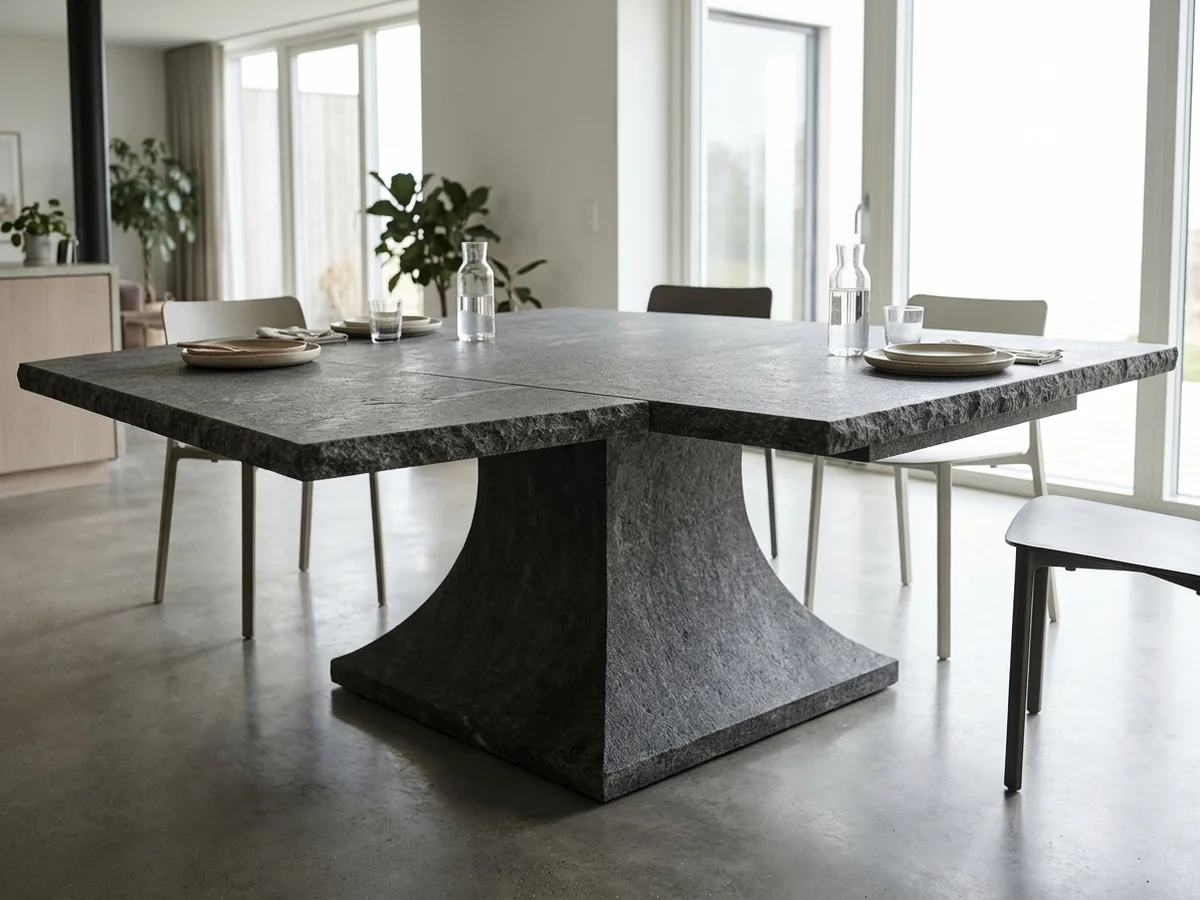
Four-corner tables distribute weight across a wider perimeter, which inherently improves lateral stability. This setup is particularly effective for heavy tabletops or high-traffic households where accidental leaning is common. In contrast, a pedestal design relies on a singular or dual vertical support point. While double-pedestal tables use two separate support bases to accommodate larger rectangular or oval tabletops, they can still be more sensitive to off-center weight loads than a traditional leg configuration.
The material of the tabletop plays a critical role in how these bases perform. A heavy slab of solid wood or stone exerts more downward pressure on the connection point of a pedestal base, which can lead to structural fatigue over time if the mounting hardware is not sufficiently robust. Conversely, corner legs typically integrate directly into the frame or apron of the table, creating a more cohesive load-bearing structure. When evaluating dining table stability pedestal vs 4-corner, consider these factors:
- The footprint size of the base relative to the total tabletop surface area.
- The quality and attachment method of the hardware connecting the top to the base.
- The rigidity of the material, as softer woods may require more frequent tightening of joints on pedestal models.
- The intended use, such as whether the table will support heavy appliances or significant downward force during daily activities.
Understanding these dynamics helps when reviewing modern pedestal dining table pros and cons, as a well-engineered pedestal can be perfectly stable for standard dining. However, for maximum structural confidence, the traditional four-corner approach remains the standard for heavy-duty applications.
Pedestal vs 4-corner tipping risk
When evaluating dining table stability pedestal vs 4-corner designs behave very differently under heavy loads and everyday use. Understanding how furniture weight distribution works helps homeowners select pieces that remain secure during family meals, homework sessions, and gatherings.
Four-corner leg layouts generally offer high resistance to tipping because supports sit near the perimeter of the furniture. In contrast, taller single-support models concentrate weight toward the middle. When evaluating single-support versus traditional corner supports for everyday furniture, interior design space planning must account for how downward pressure affects balance. If someone leans heavily on the outer edge of a single-support model, the physics of the design create a potential pivot point.
Manufacturers and testing laboratories rely on American National Standards Institute protocols to evaluate structural stability, applying specific force measurements to ensure furniture withstands everyday leaning without tipping over. Double-pedestal tables use two separate support bases to accommodate larger rectangular or oval tabletops, which significantly improves weight distribution compared to a single central column.
Common mistakes homeowners make when assessing tipping risks include ignoring the total weight of solid wood furniture construction and placing heavy serving dishes exclusively on one side of a single-support surface. To maintain safety and prevent accidents, follow these practical steps:
- Distribute heavy serving platters and cookware evenly across the center of the surface rather than crowding the outer edges.
- Verify that floor surfaces are level, as an uneven rug or hardwood floor can exacerbate the slight sway of a central support.
- Choose double-support systems when outfitting large dining rooms that experience heavy daily use.
Pedestal vs 4-corner looks
When planning interior design space planning, the silhouette of your dining furniture sets the visual tone for the entire room. Comparing central columns with four-post frameworks reveals distinct aesthetic choices. Central support designs create a streamlined, open aesthetic in modern interiors, whereas corner post frameworks offer a structured, architectural silhouette. Choosing between these profiles shapes the entire visual weight of a dining space, balancing artistic flair with everyday practicality.
Single-column or sculptural supports draw the eye inward, creating a sense of openness around the perimeter of the room. This minimalist footprint pairs beautifully with contemporary decor schemes, allowing surrounding chairs and flooring to take center stage without visual clutter. For larger tabletops, Harvard University research notes that double-pedestal tables use two separate support bases to accommodate larger rectangular or oval tabletops, providing balanced visual weight while keeping the ends of the table visually light.
Corner posts establish a grounded, classic look that anchors the dining area with defined boundaries. Leg tables commonly feature various design details, including turned, tapered, spindle, splayed, and square designs. These traditional frames make corner post layouts a versatile choice for homeowners aiming for a tailored, balanced layout that emphasizes solid wood furniture construction and traditional craftsmanship.
Visual impact directly influences how functional trade-offs play out in daily life. A pedestal base often delivers superior dining table legroom comparison advantages because diners never bump into outer posts. Meanwhile, a four-corner framework provides a predictable boundary that helps define distinct seating zones in open-concept floor plans. To make the best choice, homeowners must balance how table seating layout planning interacts with daily traffic flow, chair storage, and personal interior design preferences.
Pedestal vs 4-corner wood
When planning interior design space planning for a dining area, understanding solid wood furniture construction helps homeowners choose between a pedestal base and a four-corner design. Different support formats distribute weight and handle daily wear differently based on their material strength. For instance, double-pedestal tables use two separate support bases to accommodate larger rectangular or oval tabletops effectively, balancing furniture weight distribution across the floor.
Solid wood options like pine or oak require specific care routines to maintain their structural integrity and appearance over time. When evaluating your dining table stability pedestal vs 4-corner, keeping the timber in prime condition prevents long-term sagging or joint failure. Here are the key maintenance practices needed for solid wood furniture construction:
- Apply periodic wood polishing to nourish the grain and prevent the surface from drying out.
- Maintain stable indoor humidity levels to stop the solid timber from warping, cracking, or splitting.
- Wipe up spills immediately with a soft, damp cloth to protect vulnerable joints and finishes.
- Inspect underlying structural connections regularly to ensure screws and bolts remain tight under heavy loads.
- Use protective coasters and felt pads to prevent scratches that weaken the protective outer seal.
- Keep wooden tables away from direct heat sources and harsh sunlight to preserve natural color tones.
A common mistake when maintaining wooden table bases is ignoring the hidden joints where the support meets the tabletop. Regular inspections ensure that seasonal humidity shifts do not loosen the underlying hardware, which preserves structural soundness regardless of the specific layout you choose for your home.
Pedestal vs 4‑corner modifications
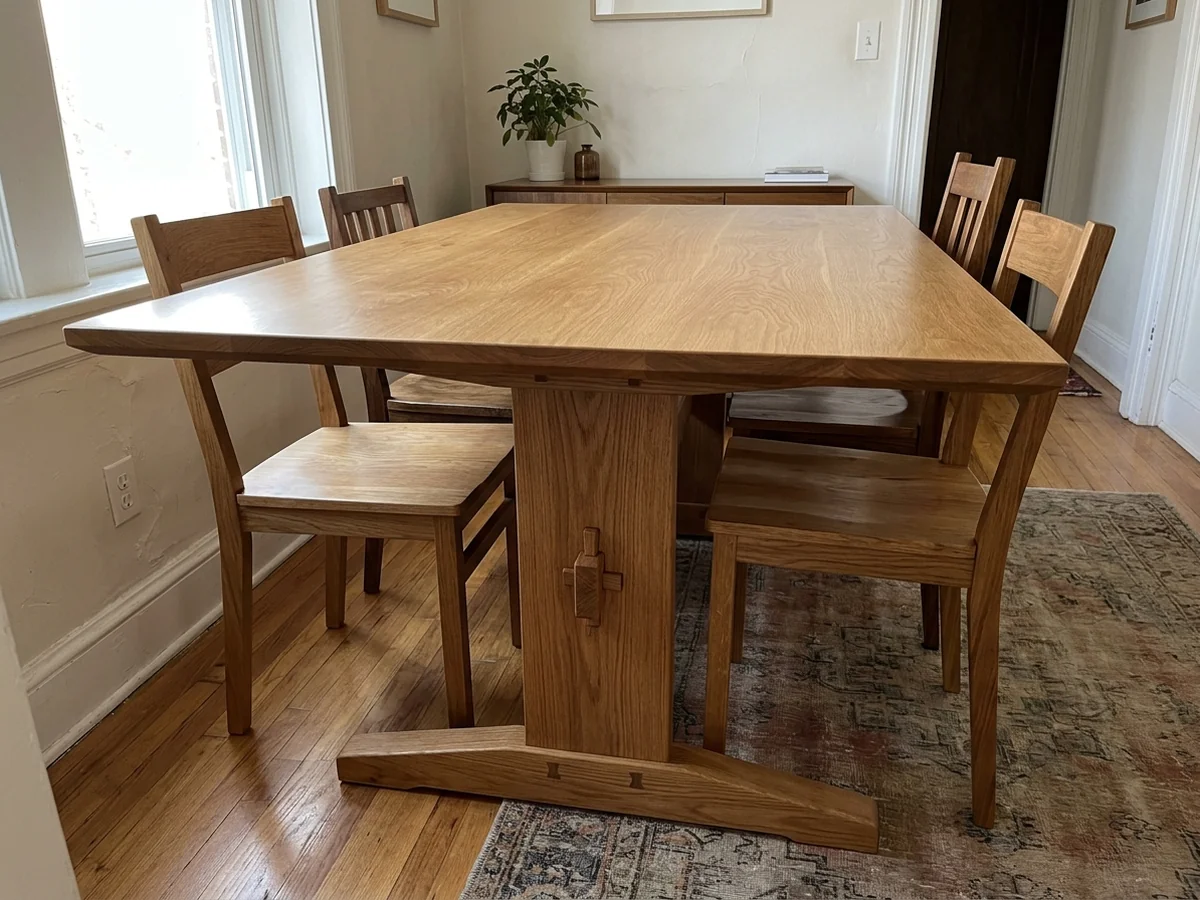
When planning interior design space planning, the physical structure of a dining table often dictates how well it fits into a specific room. Homeowners frequently evaluate whether they can adapt a piece to tighter layouts or unique architectural constraints. While choosing between a central column or traditional corner supports usually starts as an aesthetic decision, the ability to modify these supports over time plays a major role in long-term furniture flexibility.
Common guidance indicates that leg tables are compatible with various leg styles including turned, tapered, spindle, splayed, and square designs. This structural variety gives homeowners plenty of options when tweaking furniture dimensions for unique room layouts. Swapping standard components for alternative configurations allows for minor adjustments in clearance and stance without requiring a complete furniture replacement.
Understanding the practical steps and common pitfalls of base adjustments helps prevent structural instability. Here is what to keep in mind when modifying table supports:
- Component swapping: Changing individual leg supports typically requires basic hardware adjustments and careful measurement of table apron clearance to ensure the frame remains square.
- Weight distribution: Altering the angle or thickness of supports affects furniture weight distribution, which can compromise the balance of solid wood furniture construction if not done evenly.
- Pedestal limitations: Redesigning a central pillar or modifying double-pedestal tables (which use two separate support bases to accommodate larger rectangular or oval tabletops) involves complex woodworking or total replacement rather than simple hardware swaps.
A common mistake during modifications is failing to account for how new leg angles impact seating capacity. While splayed or tapered legs can visually open up a room and improve floor clearance, shifting the supports too far inward can create unexpected crowding for diners. Balancing visual lightness with structural integrity ensures the table remains functional for daily family use.
Pedestal vs 4‑corner double
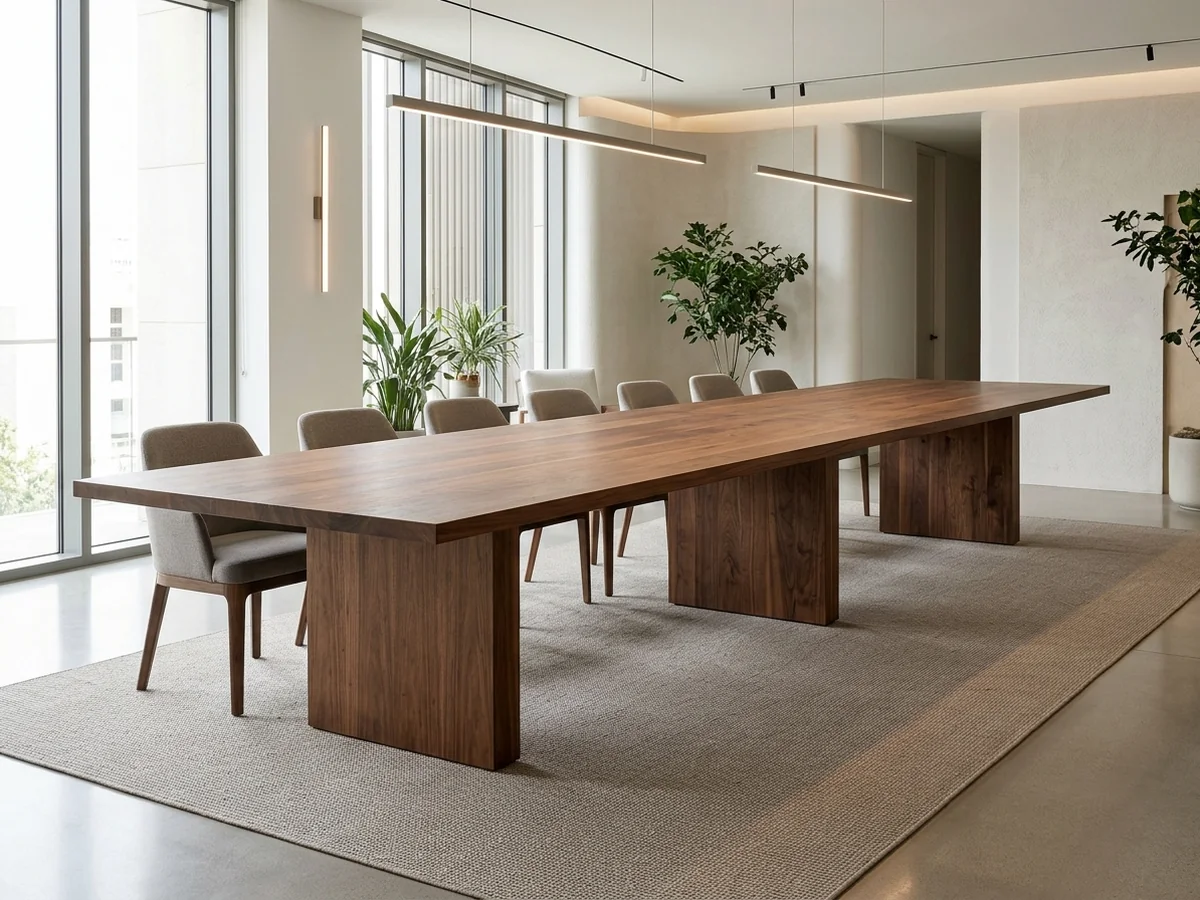
Choosing the right support structure for a dining room centerpiece involves balancing visual weight, daily functionality, and spatial efficiency. When evaluating a central column layout against a traditional four-legged surface, homeowners must consider how each design interacts with table seating layout planning and overall interior design space planning. Understanding these differences helps ensure the finished dining space supports both casual family meals and formal gatherings without awkward compromises.
Double-pedestal tables use two separate support bases to accommodate larger rectangular or oval tabletops. This configuration provides a reliable foundation while changing how people interact with the furniture. Because the vertical supports sit inward from the outer perimeter, diners experience distinct advantages regarding dining room ergonomics and chair movement. Rather than navigating around vertical posts positioned at every corner, individuals enjoy an unobstructed path for their feet and seating adjustments.
To make the best decision for your home, consider the following practical steps and operational factors:
- Measure your available floor space carefully, accounting for the pull-out distance of chairs on all sides of the room.
- Evaluate the shape of your tabletop, keeping in mind that rectangular and oval tops pair naturally with dual-support columns.
- Assess your typical seating capacity needs, remembering that inward-positioned supports eliminate corner leg interference.
- Consider furniture weight distribution, ensuring the chosen base properly balances the mass of solid wood furniture construction.
Despite the functional benefits of dual-support designs, homeowners often encounter a few common mistakes during the selection process. One frequent error is failing to check table apron clearance, which can restrict legroom even if the floor supports are positioned ideally. Another mistake is ignoring how room traffic flows around the furniture, leading to cramped pathways in compact dining areas. Finally, selecting a base style strictly for visual appeal without testing chair placement can result in daily frustration during meals.
FAQ
Which table base offers the most legroom?
Pedestal bases generally offer the most unrestricted legroom because they eliminate corner obstructions that typically limit seating layouts. Diners can slide chairs closer together without hitting vertical supports, which makes comparing central supports to traditional corner posts very favorable for tight spaces.
Which base is best for small or awkward dining spaces?
Pedestal designs work best in compact rooms because they allow chairs to tuck neatly underneath the tabletop when not in use. This layout maximizes floor area and improves overall traffic flow around the dining room.
Are trestle tables stable enough for daily use?
Trestle tables typically use two supports positioned beneath the tabletop and connected by a horizontal beam, which creates a very stable foundation for everyday meals. Common guidance suggests this design handles daily wear well while still leaving plenty of knee clearance along the sides.
Do corner legs interfere with seating at the ends of the table?
Corner posts can restrict leg movement and make it difficult to tuck chairs completely in at the head of the table. You will want to measure the distance between the inside of the legs to ensure your dining chairs fit comfortably.
Which base type is best for large families?
Double-pedestal tables use two separate support bases to accommodate larger rectangular or oval tabletops, making them ideal for seating big groups comfortably. This configuration prevents legs from getting in the way when you need to squeeze extra guests around the table during holidays.
Conclusion: Choosing the Right Base for Your Home
Deciding on a central support layout or a traditional four-leg table depends entirely on your daily routine and household size. Measure your dining room and count your household members carefully before making a purchase. You want to ensure you have enough clearance for comfortable seating and smooth traffic flow. Take time to evaluate how you use the space so you can pick the setup that fits your lifestyle.
Sources: shrine-qa-node01.catalyst.harvard.edu
You might also like: Can You Fit an 8-Person Rectangular Table in a 12×14 Dining Room?