Armchairs vs Armless Side Chairs: How Much Extra Width Do Armrests Consume?
Introduction to Chair Widths and Seating Layouts
Understanding armchairs vs armless side chairs width helps homeowners plan furniture layouts, room spacing, and table clearances effectively. Chairs with built-in armrests naturally require a larger spatial footprint than armless alternatives, changing how many seats fit around a dining table or living area.
This guide breaks down exact dimensional differences, spatial planning constraints, and layout calculations. You will learn how to measure side clearances properly, evaluate table apron heights, and arrange multiple seats comfortably without overcrowding your room.
Width Comparison Overview
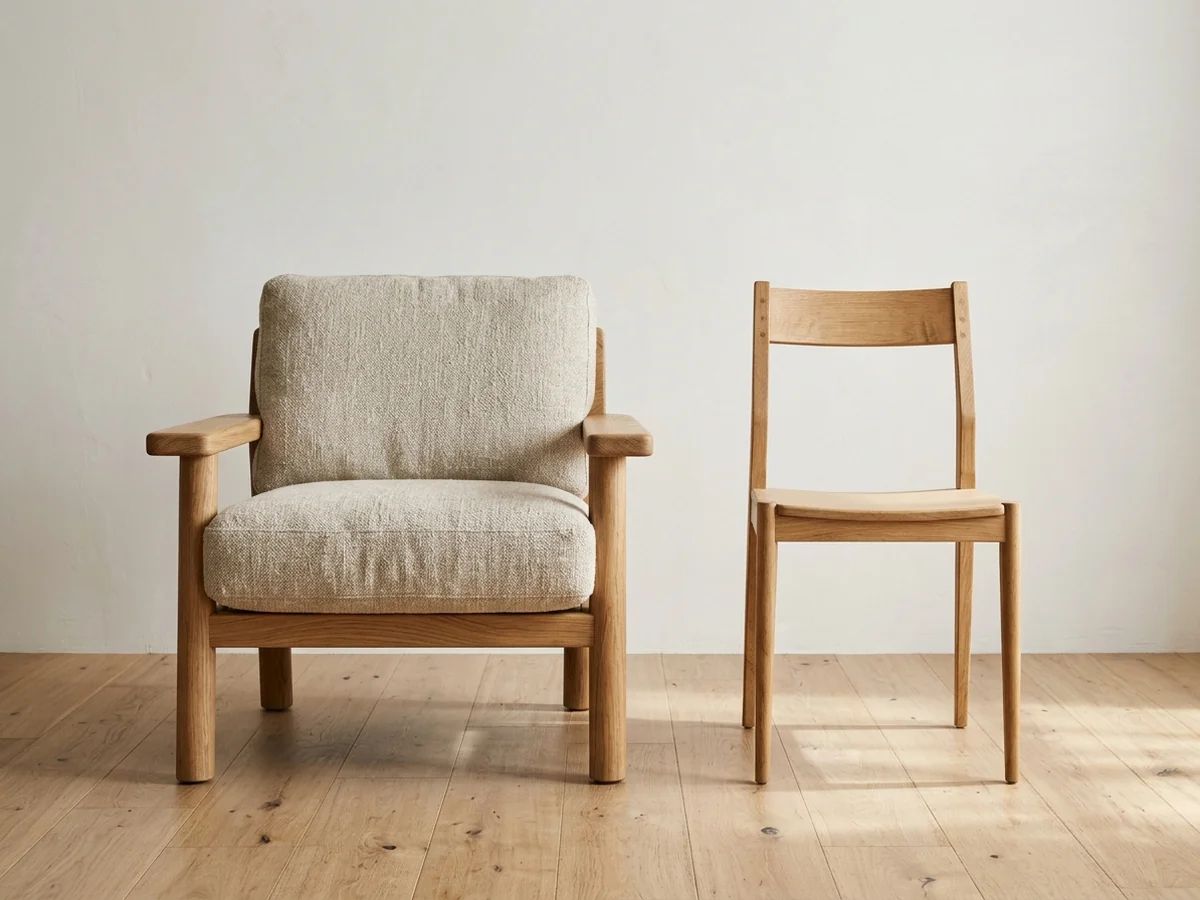
Understanding the dimensional differences between seating styles is essential for effective space planning and ensuring comfortable furniture placement. Armrests typically add several inches of horizontal space to a seat, making models featuring structured arm support significantly wider overall than standard dining or accent seating without side attachments. Comparing these two layouts reveals how physical framing dictates room planning and furniture placement.
The main difference between an armchair and a side chair lies in how their structural framing handles lateral boundaries. Side chairs lack side restrictions entirely, which reduces their physical profile and visual weight in a room. This open design allows multiple units to sit closely together without crowding the floor plan. Armrests create fixed outer edges that demand extra horizontal clearance during space planning, requiring careful measurements with a tape measure before arranging seating around a dining table apron or tight corner.
| Seating Attribute | Armchair | Armless Side Chair |
|---|---|---|
| Horizontal Boundary | Defined by outer armrest edges | Defined primarily by the seat pan |
| Visual Weight | Substantial and prominent profile | Streamlined and open profile |
| Table Clearance | Requires arm height check against aprons | slides fully underneath most tables |
When evaluating the typical width of an armchair, homeowners must account for the solid wood or upholstered framing that extends past the seat cushion. While an armless side chair generally preserves a streamlined furniture footprint, models with arms require additional side clearance to prevent rubbing against adjacent seats. Interior designers often apply the four inch rule for furniture spacing, ensuring adequate breathing room between seated guests. Calculating how wide an armchair should be involves measuring the total span from outer arm to outer arm, then verifying that the arm height clears the dining table apron so the piece can slide inward when not in use.
Analyzing Standard Dimensions: Typical Width of an Armchair
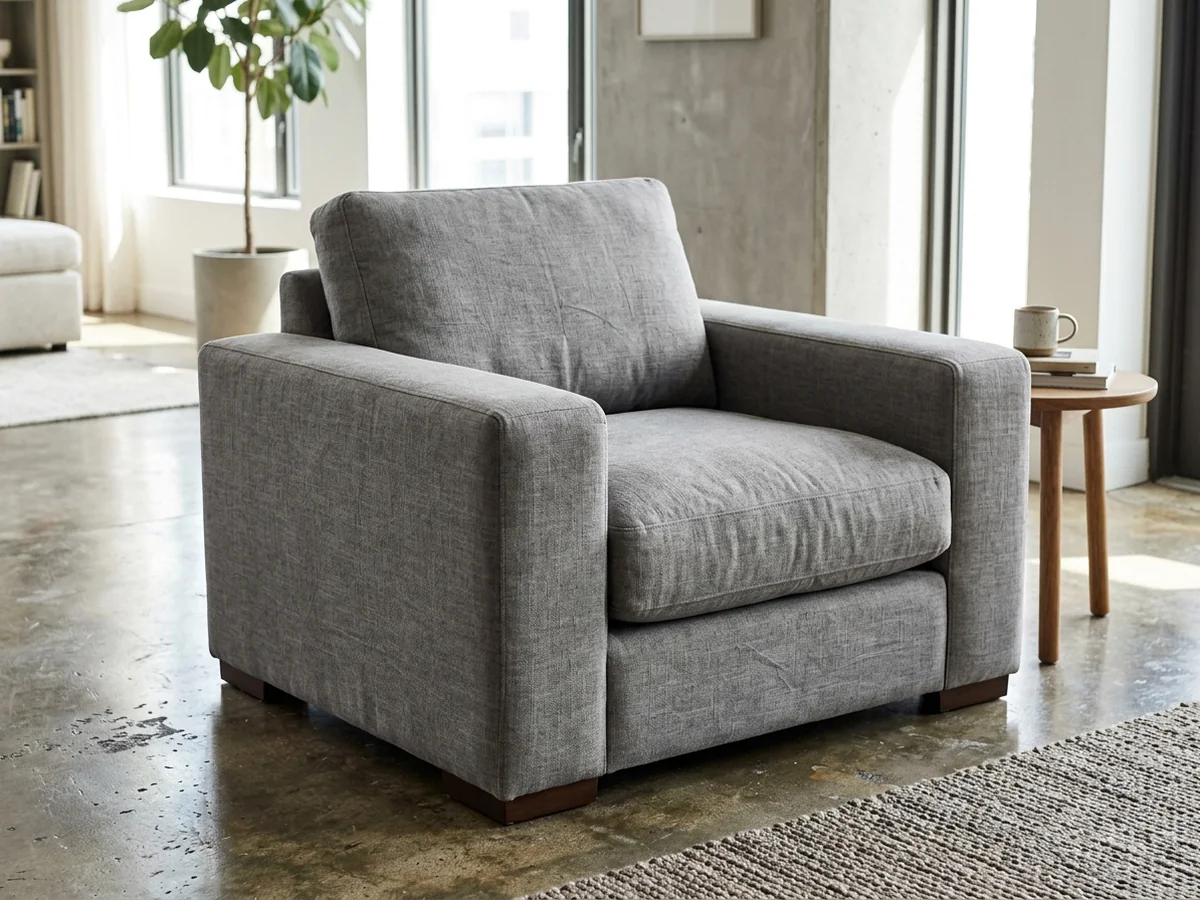
An armchair typically features a wider structural footprint than an armless side chair because its built-in supports extend past the main seating cushion. When evaluating the typical width of an armchair for space planning, you must look beyond the seat itself to account for these outer edges and the specific footprint they create on your floor.
Side chairs designed without armrests usually keep a slim profile that matches the exact width of the cushion. Upholstered accent designs, solid wood seats, and dining chairs that include armrests add lateral bulk on both sides, which changes how much floor space the furniture actually occupies. Understanding the main difference between an armchair and a side chair helps prevent tight layouts in living rooms and dining spaces.
Manufacturers build these armrests to provide extra comfort and support, but that added structure increases the overall dimensions significantly. Accent chairs and dining seats with arms take up more horizontal space than their armless counterparts, making precise measurements essential for proper room layout. You should always use a tape measure to verify the total width at the widest point of the arms rather than relying solely on cushion dimensions.
Why Armrests Expand the Furniture Footprint
While an armless side chair might measure between 18 and 22 inches across, an armchair often spans anywhere from 24 to over 36 inches depending on the padding and style. That extra lateral span requires careful attention during space planning to ensure smooth traffic flow.
- Armless designs allow people to sit closer together because their frames do not collide.
- Armchairs demand extra lateral clearance so the structural supports do not bump into adjacent seating.
- Mixing armchairs and armless options around a table requires calculating the total linear perimeter to prevent overcrowding.
Practical Steps for Accurate Space Planning
Checking the exact specifications helps prevent crowding around tables or living room arrangements. Knowing how wide an armchair should be ensures you leave enough clearance between adjacent seats and nearby walls for comfortable movement.
When planning a dining table arrangement, check the table apron and leg positions in relation to arm height. If the armrests sit higher than the dining table apron, you will not be able to push the chair fully underneath the table surface. This pushes the furniture footprint further out into the room when not in use, reducing available walk space behind seated guests.
Common Mistakes to Avoid
A frequent error in room layout is measuring only the empty floor space without accounting for pull out clearance. People often forget that chairs with arms need extra room to pull away from a table or wall. Ignoring the 4 inch rule for furniture spacing around dining perimeters frequently leads to cramped arrangements where guests cannot comfortably exit their seats.
Another mistake is assuming that all armless side chairs and armchairs share uniform scaling. Always cross reference manufacturer specifications with your room dimensions to maintain comfortable distances for everyday use.
Exact Extra Width Consumed by Armrests
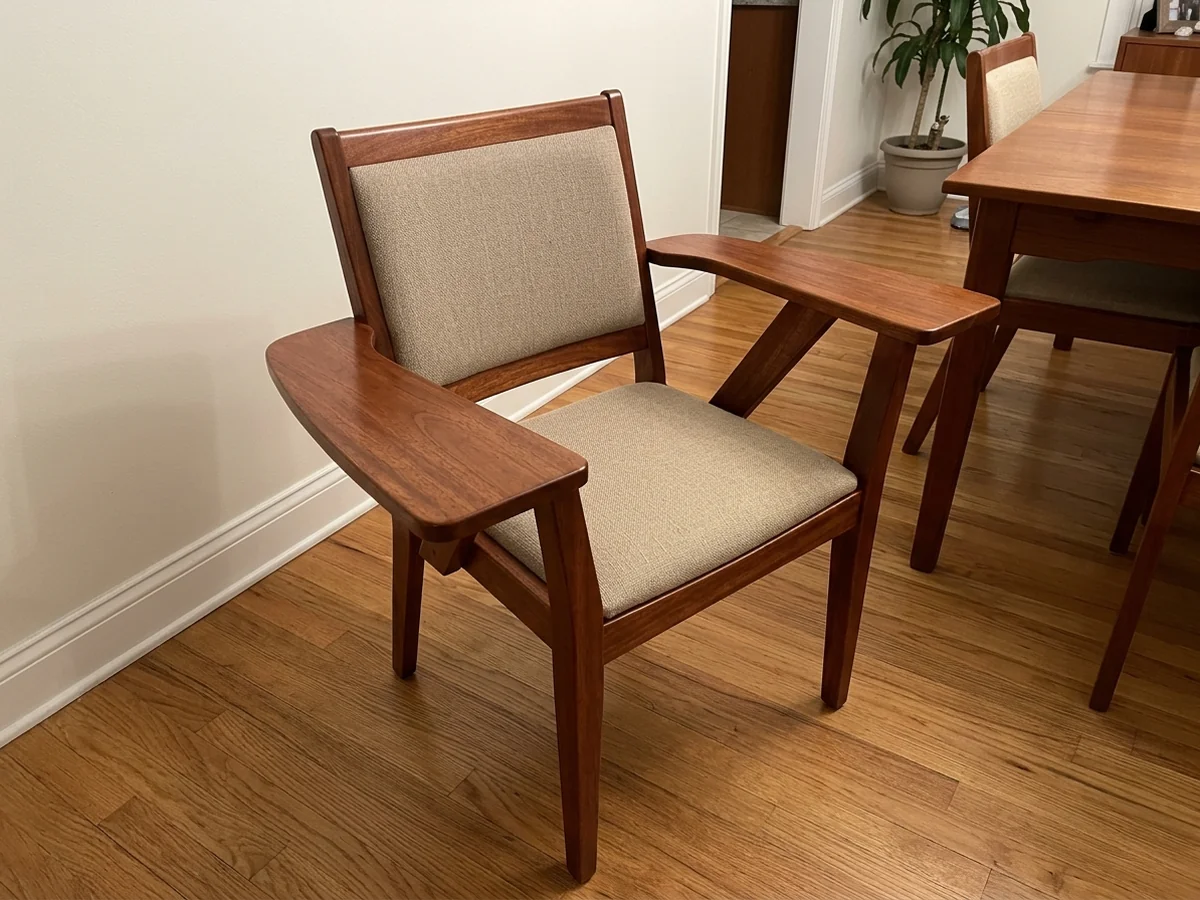
When comparing seating options for a dining room or living space, understanding the armchairs vs armless side chairs width difference is essential for accurate space planning. Armrests generally add several inches of lateral span to a seat, making models with arms noticeably broader than armless side chairs overall. While a standard armless side chair typically measures between 18 and 22 inches in width, an armchair often extends from 24 to 30 inches or more depending on whether the frame is crafted from solid wood or features heavy padding as an upholstered dining chair. This additional bulk directly influences side-by-side placement, often requiring more linear wall space or a larger dining table to fit the same number of guests.
| Chair Type | Lateral Design Feature | Overall Footprint Impact |
|---|---|---|
| Armless side chair | Straight edges or tapering legs | Compact lateral span for tight spaces |
| Armed model | Extended side supports | Broader overall width requiring extra clearance |
Planning for this difference means evaluating your furniture footprint carefully before buying. When placing multiple seats next to each other, those extra inches per armrest accumulate quickly, which can cause overcrowding if you do not account for the total lateral span during room layout planning. If you are mixing both styles around a dining table, the main difference between an armchair and a side chair goes beyond aesthetics. It dictates how many guests can comfortably sit along one side of the table without elbow bumping.
To calculate the exact clearance needed, use a reliable tape measure to check both your available floor area and your table apron. A common guideline is the four inch rule for furniture, which suggests maintaining adequate gaps between adjacent items to ensure smooth movement. Common mistakes during layout planning include measuring only the seat pan while ignoring the widest point of the armrests, or forgetting to check if the arms slide completely beneath the dining table apron when pushed in. Neglecting these measurements often leads to chairs sticking out awkwardly into walkways, disrupting the flow of the room.
Applying the Four Inch Rule for Furniture and Clearance
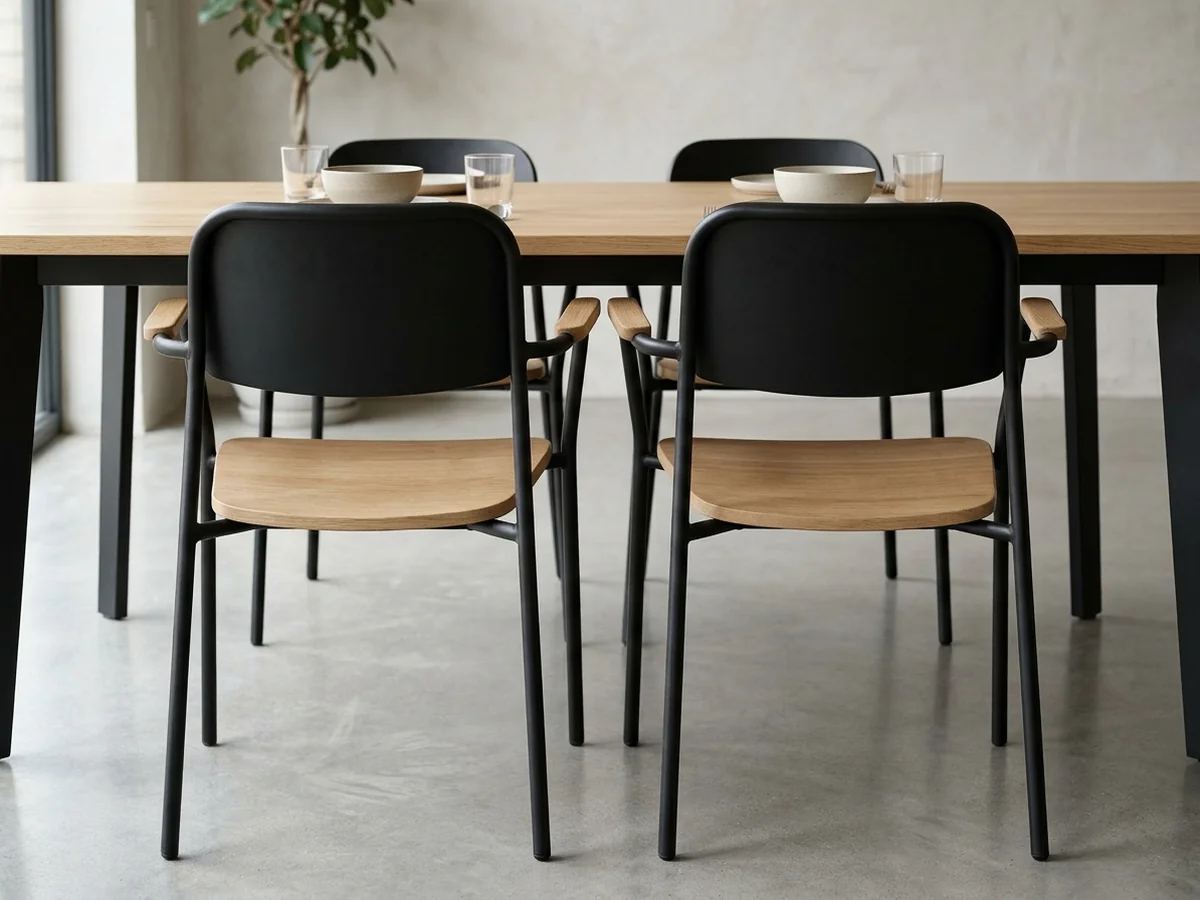
When planning a dining room layout or selecting seating, understanding the 4 inch rule for furniture helps determine the side clearance per person required when armrests are added to a seating arrangement. This specific guideline ensures guests have enough elbow room without feeling cramped during meals or gatherings, creating a comfortable balance between capacity and personal space.
Spacing principles required between seated individuals demand careful attention to the furniture footprint. When evaluating armchairs vs armless side chairs width, homeowners must account for the horizontal space each design occupies at the edge of a dining table. Side chairs typically allow for tighter groupings because they lack projecting supports, whereas introducing armrests increases the overall width requirement for each seat, meaning fewer total chairs fit along the same table length.
To apply these concepts practically during space planning, follow a straightforward measurement process using a tape measure:
- Measure the widest point of the seating frame, including the outer edges of the arms, to determine the exact furniture footprint.
- Assess the general scale and breadth of an armchair, noting how side chair widths generally range narrower, allowing for more flexible placement.
- Calculate the side clearance per person by subtracting the broader armchair footprint from the available table perimeter to verify how many seats will fit comfortably.
- Check the dining table apron height against the armchair arm height to ensure the seats can slide inward when not in use.
A frequent mistake in dining room design is ignoring the spatial impact of arms when mixing chairs. Homeowners often measure only the table length without accounting for the extra bulk of upholstered dining chair frames, leading to overcrowded seating where guests bump elbows. Another common error is failing to check whether armchair arms clear the underneath of the table apron, which prevents chairs from being pushed in fully and disrupts traffic flow in smaller rooms.
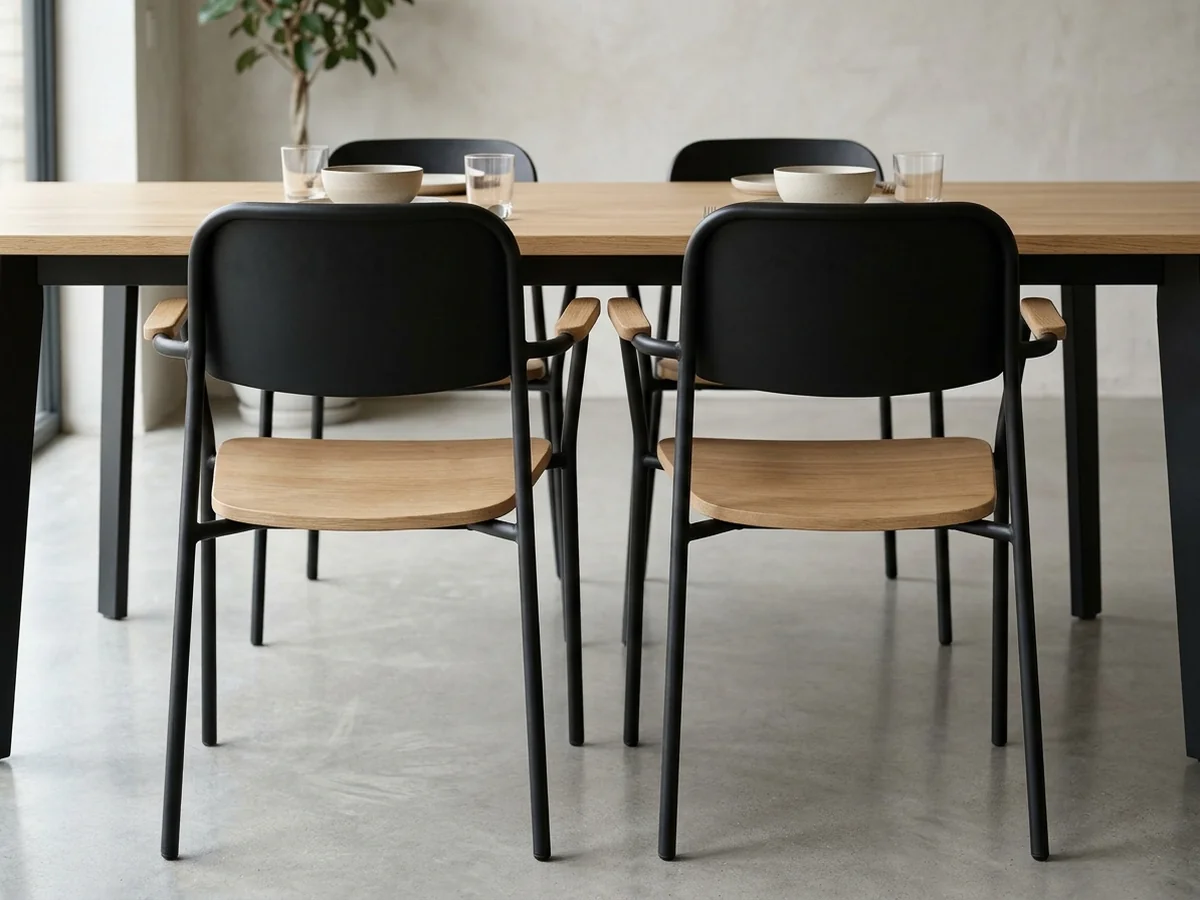
Proper space planning prevents these layout issues and makes it easier for people to slide in and out of their seats without disturbing neighbors. By accounting for solid wood frames, upholstery thickness, and pull-out clearances, you can combine armchairs at the heads of the table with slim side chairs along the sides for a balanced, functional room layout.
Table Apron Clearance and Arm Height Considerations
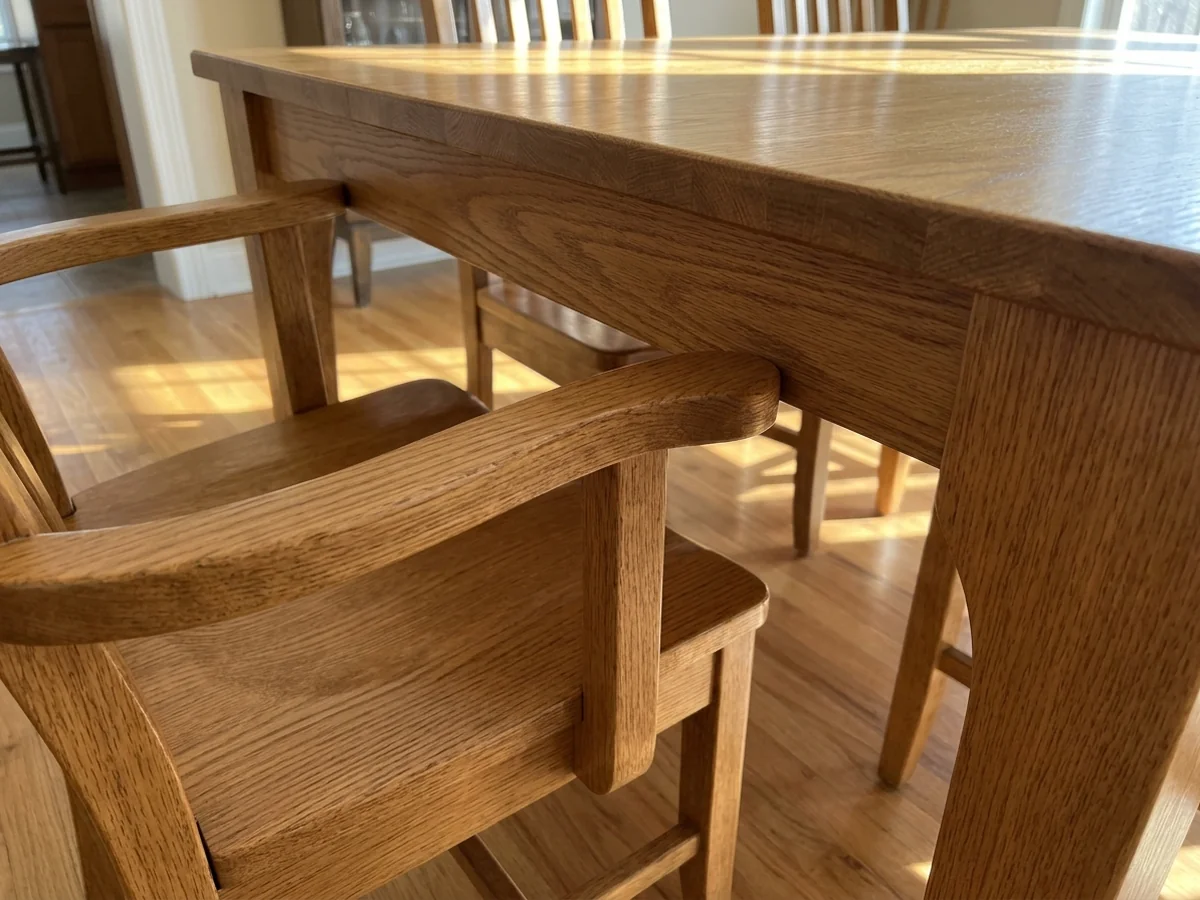
Armrests frequently prevent seats from sliding fully beneath a dining table because horizontal frames and vertical arm heights collide with the underside of the surface. Checking vertical and horizontal constraints prevents costly layout mistakes when matching seating to a dining table apron.
The dining table apron acts as a primary physical barrier that stops chairs from sliding in all the way. While an armless side chair slides straight under the edge without obstruction, a chair equipped with armrests often hits the lower wooden rim much sooner. This physical clash alters the final furniture footprint, leaving chairs protruding further into the room than intended.
Measuring the vertical distance from the floor to the underside of the table rim is essential before buying new furniture. If the top of the armrest sits higher than that lower rim, the chair cannot be pushed flush against the table. To avoid this layout issue, use a reliable tape measure to check both the floor to table clearance and the chair arm height from the floor up. Solid wood construction and upholstered dining chair designs can add unexpected bulk, making these vertical checks vital for maintaining a clean room profile.
Horizontal clearance matters just as much as vertical height during spatial planning. Even when a seat slides in partially, the extra width of the armrests dictates how many total seats can fit along one side of the table without crowding. When evaluating the armchairs vs armless side chairs width differences, remember that arm styles demand more lateral room. If you are comparing how wide an armchair is against standard side chairs, factor in the structural contrast where side pieces extend the overall spatial requirement.
Common mistakes in space planning include ignoring the dining table apron height and failing to account for push-in clearance. When planning your layout, avoid these errors by following practical steps:
- Measure the exact height from the floor to the bottom edge of the table apron using a tape measure.
- Check the floor-to-armrest height of any seating candidate to ensure it clears the table rim.
- Calculate the horizontal span required for each chair to prevent elbow bumping and tight squeezes.
- Allow adequate pull-out space behind each chair so users can sit down comfortably without hitting walls or other furniture.
Checking these structural limits ensures that the furniture fits the physical architecture of the room. Taking precise measurements of both the table and the seating keeps walkways clear, supports proper space planning, and maintains a clean profile when the dining set is not in use.
Pull-Out Space and Pushed-In Positioning Details
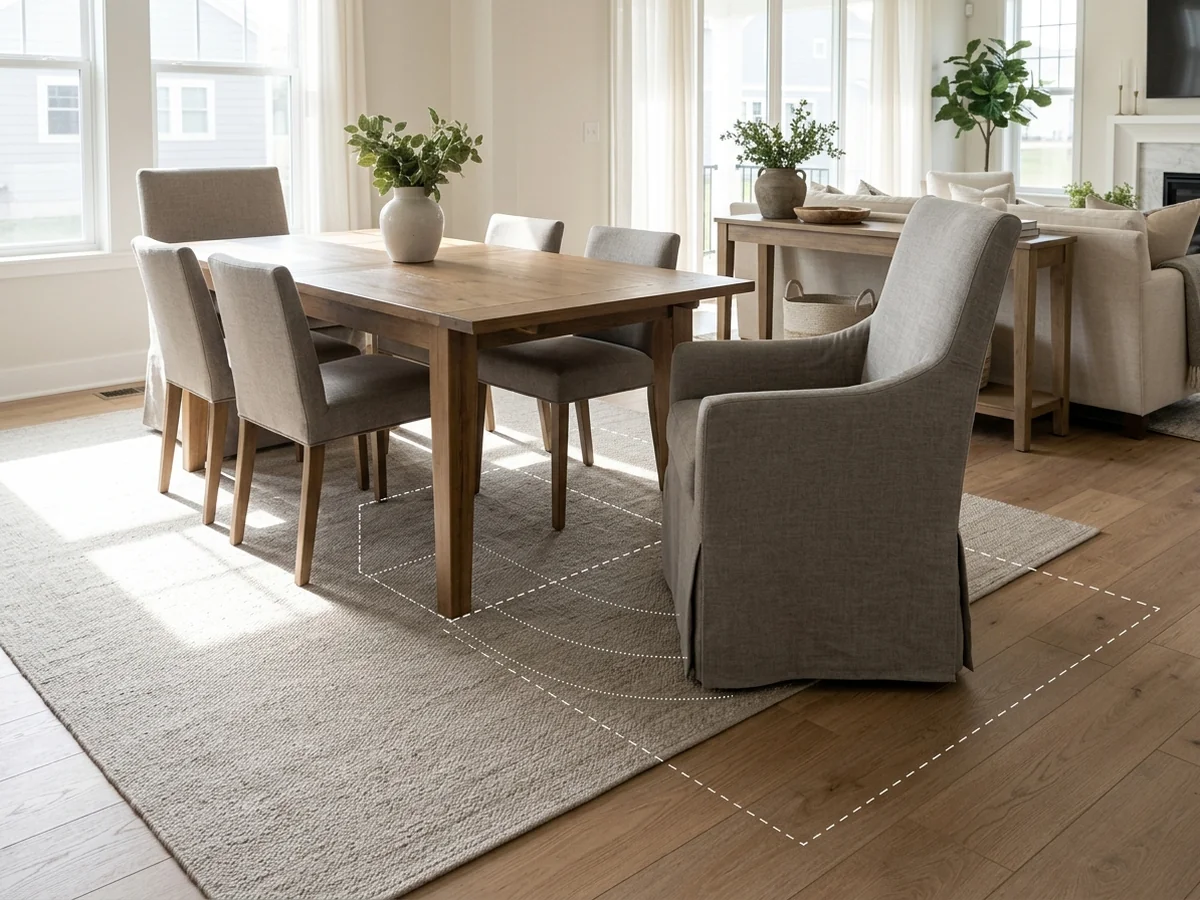
When planning your dining room layout, understanding the armchairs vs armless side chairs width difference is essential for smooth daily use. Armchairs require significantly more room perimeter footprint clearance for safe pull-out access than armless side chairs because of the lateral extension of their armrests. Proper space planning prevents seat frames from colliding with neighboring seats or table legs when guests pull them away from the table.
Solid wood construction and heavy padding on an upholstered dining chair frame add bulk that alters clearance requirements far beyond basic frame dimensions. Solid wood framing relies on thick joinery and substantial structural members, while thick foam and fabric layers on upholstered designs extend the outward profile by several inches. If you are wondering how wide should an armchair be, keep in mind that overall seat measurements often exceed a standard side chair by several inches, directly impacting your furniture footprint.
When mapping out your exact furniture layout, you must account for several critical clearance factors and potential mistakes:
- Failing to check the dining table apron height before purchasing is a common error. Pushed-in positioning for seating with arms is restricted by the dining table apron height, meaning armrests often prevent the seat from sliding fully underneath the table edge.
- Ignoring side clearance leads to cramped seating. Pulling out a seat with arms safely requires extra side clearance so the armrests clear adjacent table supports and neighboring guests without scraping.
- Skipping physical measurements causes layout failures. Using a reliable tape measure helps you map the exact room perimeter footprint before arranging your seating layout, ensuring compliance with general guidelines like the 4 inch rule for furniture spacing.
- Overlooking material thickness creates tight squeezes. Solid wood frames demand wider spacing margins because their rigid structural parts do not compress if bumped against a wall or cabinet.
- Assuming all padded seats behave the same way is risky. Upholstered dining chair options feature soft protruding edges that might compress slightly, but their overall bulk still demands generous clearance buffers in compact areas.
To achieve a balanced space, evaluate your room dimensions carefully. While structural arm support and profile width separate seats with arms from armless designs, proper placement ensures your dining space remains comfortable and functional for every guest.
Mixing Chair Widths
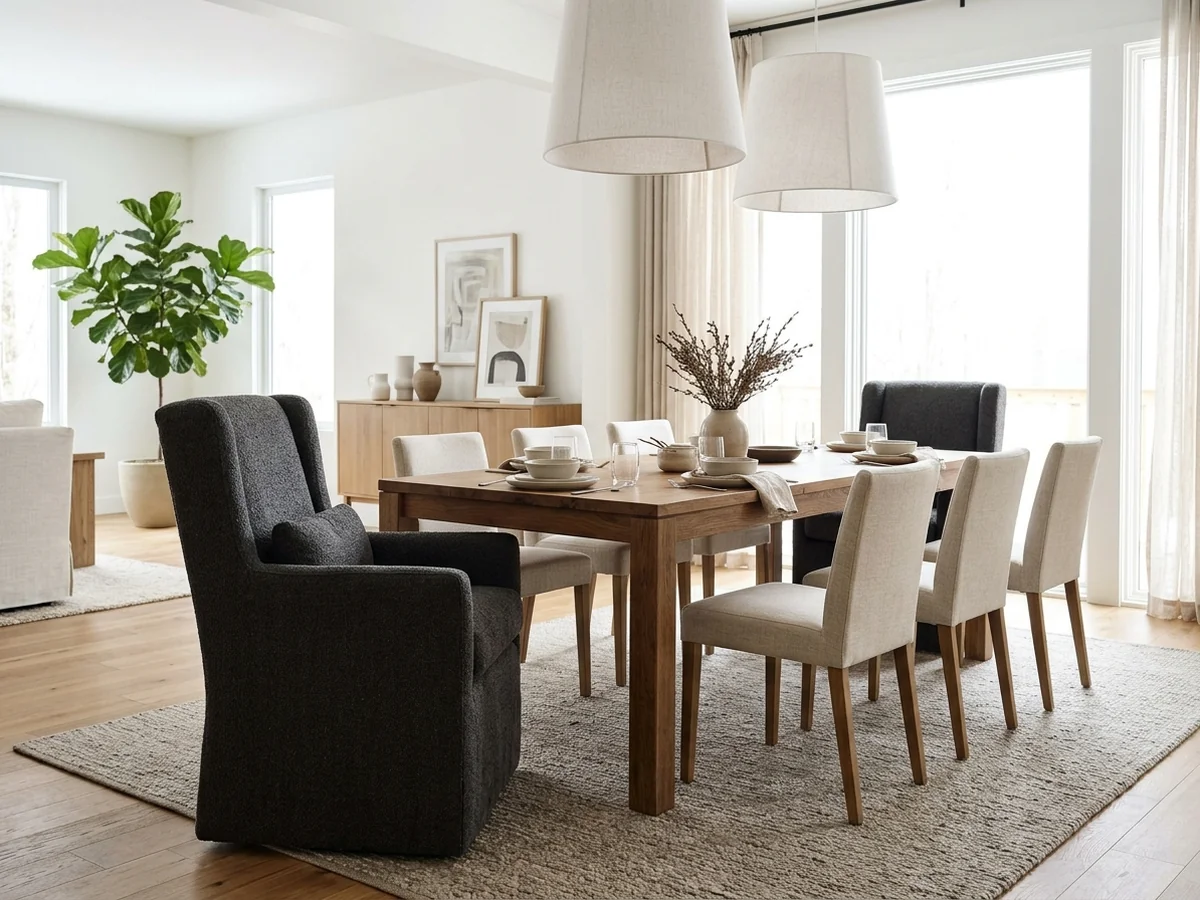
Combining armchairs vs armless side chairs width arrangements at a dining table creates a balanced room layout by pairing structured focal points with streamlined side seating. This design strategy maximizes seating capacity along the table edges while preserving a formal look at each end. When evaluating how wide should an armchair be for your specific setup, consider that adding armrests typically increases the furniture footprint by several inches compared to an armless design. Space planning becomes critical to ensure the wider end seats do not disrupt the flow of the room.
Balancing visual weight requires careful attention to room layout constraints and scale. Placing bulkier seats at the table heads anchors the space, whereas keeping the sides open prevents the room from feeling crowded. Matching the overall seat height and wood finish helps tie different seating styles together harmoniously, creating a cohesive look even when the silhouettes differ. Designers often use an upholstered dining chair at the table head to introduce texture and softness against simpler wooden side seating, which breaks up monotony while maintaining functional dining ergonomics.
Human comfort remains a key priority when blending these styles. Diners seated at the ends enjoy extra elbow room from the built-in supports, and guests along the sides get adequate personal space if the overall layout avoids overcrowding. Careful space planning using a tape measure ensures everyone can pull their seat out smoothly without bumping into neighboring guests or the dining table apron.
Mastering this layout involves several practical steps to avoid common mistakes:
- Measure your table length carefully before purchasing head chairs to ensure the combined width fits between the table legs.
- Check the arm height against the underside of the table apron so that the armchairs can push in fully when not in use.
- Leave adequate clearance around the entire perimeter of the group for comfortable movement.
A frequent mistake in space planning is ignoring the general spacing guideline that suggests maintaining proper breathing room of at least a few inches between adjacent pieces. Overcrowding chairs with arms around a table restricts movement and makes the dining area feel cramped. By verifying dimensions against ANSI/BIFMA standards for stability and scaling your furniture footprint properly, you can successfully mix seating styles for both aesthetic appeal and everyday comfort.
Frequently Asked Questions
How wide are these seats on average?
An armchair usually measures between 24 and 30 inches across, depending on the thickness of the upholstery and the flare of the arms. Side chairs without arms generally span about 18 to 22 inches, which means armrests add several inches of extra footprint per seat.
Can you mix arm and armless dining chairs?
You can mix armchairs and armless side chairs at the same table as long as you verify that the arm height clears the underside of the table apron. Placing armchairs at the heads of the table while using armless versions along the sides creates a balanced look and saves space.
How much space do I need for chairs with arms?
You need to allow at least 24 inches of linear table space per person when using armchairs to prevent guests from bumping elbows. Armless side chairs require less side clearance, often fitting comfortably within a 20 to 22 inch allocated width per seat.
Which is better for small spaces?
Armless side chairs are much better for small spaces because their compact footprint allows you to tuck multiple seats completely under the table when not in use. Armchairs require extra clearance room around the entire furniture layout to pull out and sit down comfortably.
What separates these two seating styles?
The primary distinction lies in the inclusion of built-in armrests, which provide extra upper body support at the cost of a wider overall footprint. Side chairs omit these structures to maintain a slim profile that fits easily into tight dining areas.
Conclusion and Final Space Planning Takeaways
Armchairs typically demand several more inches of lateral room than armless models, meaning thoughtful layout planning directly prevents cramped dining spaces. Evaluating the exact dimensional contrasts between these two seating styles helps homeowners optimize tight apartments and spacious dining rooms alike. Grab a tape measure to check room perimeters and table clearances before making any final seating purchases.
You might also like: How Many Chairs Can Comfortably Fit Around a 60-Inch Round Dining Tabl