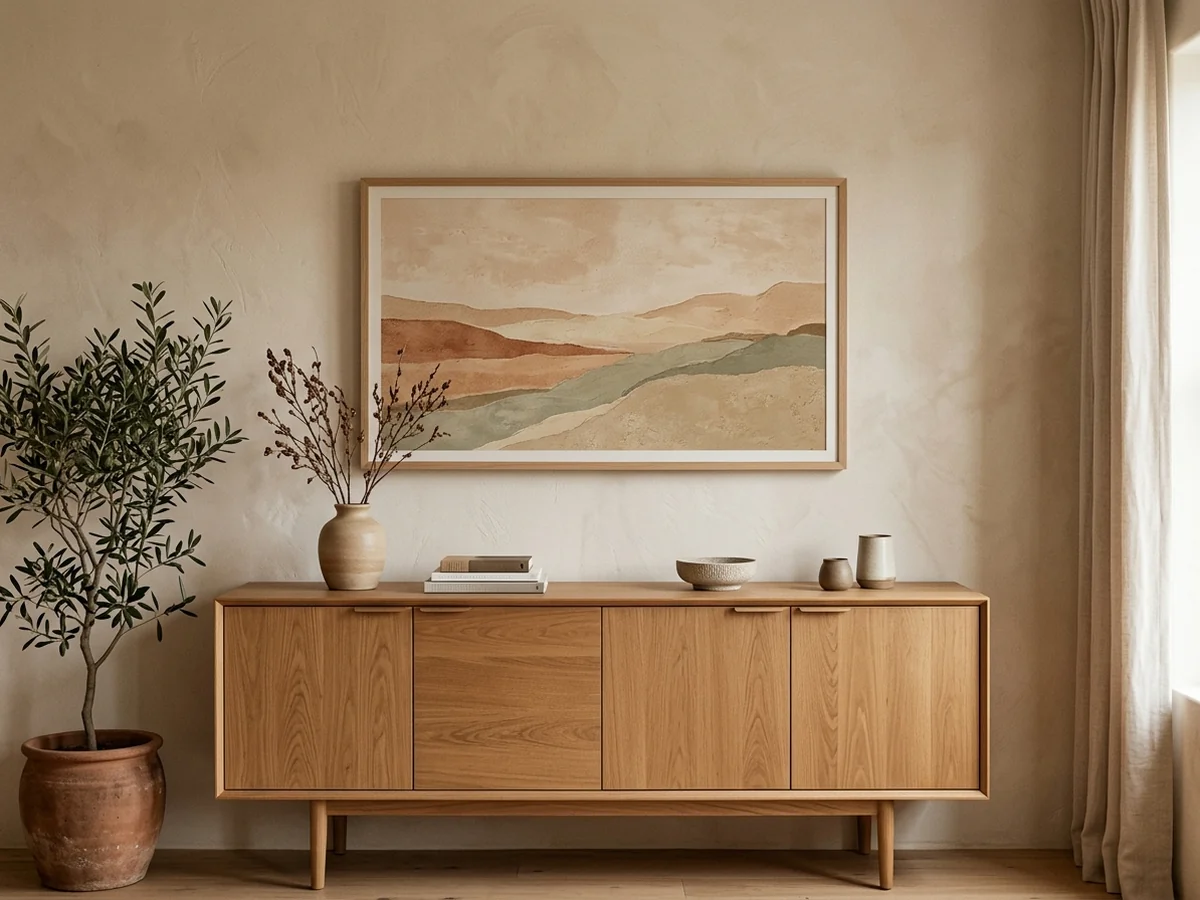
How High to Hang Art or a Mirror Above a Dining Room Sideboard Credenza
Introduction to Dining Room Wall Decor Placement
Determining the correct height to hang art above sideboard surfaces involves balancing your furniture dimensions with the vertical wall space. US homeowners and DIY decorators often struggle with styling that empty area above a dining room buffet or cabinet, especially when trying to create a cohesive look.
This guide walks you through the exact measurements and design proportions needed for your dining room. You will learn how to avoid common spacing mistakes and achieve a polished, magazine-worthy aesthetic.
Understanding Standard Sideboard and Credenza Dimensions
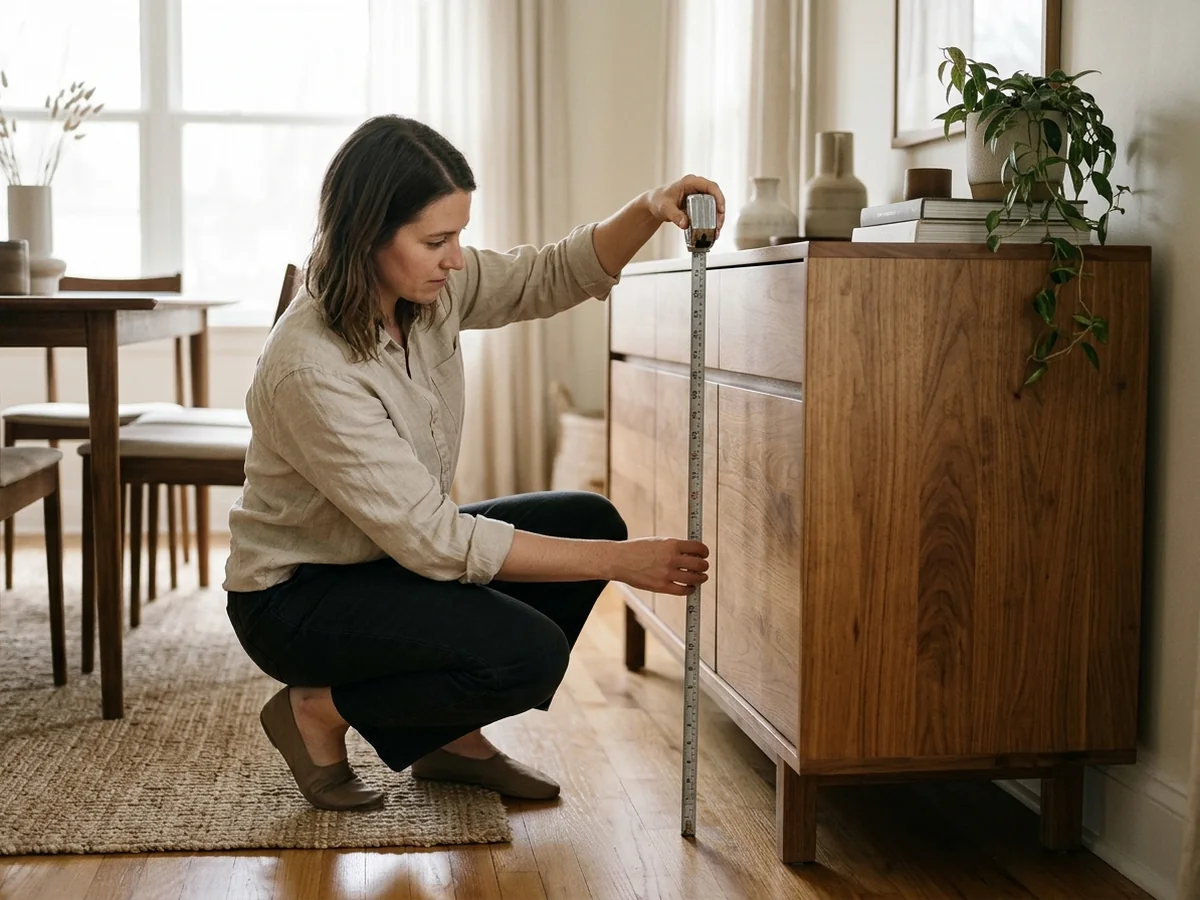
When planning your dining room wall decor, understanding your furniture measurements is the most important first step. Typical guidance notes that the average console or buffet table sits just shy of thirty inches tall. This baseline height directly dictates how much blank wall space you have to work with before reaching eye level or interacting with nearby ceiling lines. Knowing this dimension helps you figure out the exact height to hang art above a sideboard without guessing or ending up with awkward gaps.
Furniture height heavily influences overall visual weight in a dining room. A low profile buffet creates more open wall space above it, while a taller credenza compresses the vertical distance between the surface and your ceiling. Understanding these proportions keeps your decor from floating too high or looking cramped against the furniture below. When your sideboard matches the visual mass of surrounding elements, your wall art anchors the entire room cohesively.
Measuring Your Specific Furniture
A common mistake during this process is measuring only from the floor while ignoring the furniture surface. Always measure the exact height of your specific credenza before marking any walls. Standard pieces often hover around thirty inches, but vintage finds or custom cabinets can vary widely. Knowing your exact surface height ensures that any clearance gap you leave between the furniture and the bottom of your picture frame remains consistent and intentional.
Applying Common Design Rules
Another pitfall is treating all art pieces the same way regardless of frame size or weight. Keeping the height to hang art above a sideboard tied to both your furniture and common design practices ensures a balanced, intentional look. Common guidance often references the eye level rule, which suggests that the center of your art should sit approximately fifty-eight to sixty-two inches from the floor. When working above a buffet, you also need to factor in how high should artwork be above a sideboard so that the frame interacts harmoniously with the surface below rather than floating in isolation.
Balancing Width and Proportion
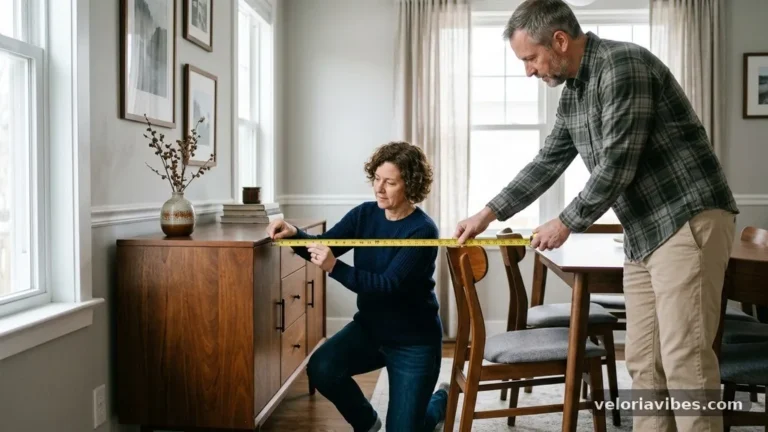
Beyond vertical measurements, horizontal spacing plays a major role in room styling. Homeowners often wonder about proportions when creating a gallery wall or hanging a single large canvas. Utilizing tools like a tape measure and painter is essential for mapping out the visual field before putting any nails in the wall. Ensuring your art spans roughly two-thirds the width of your sideboard creates a balanced visual anchor for your dining space.
The Core Eye Level Rule for Wall Art and Mirrors

When arranging decor in a room, you often hear about common design guidelines like the eye level rule, which typically suggests that the center of your art should hang approximately 58 to 62 inches from the floor. This measurement provides a comfortable viewing height for most standing adults, creating a balanced display similar to a professional gallery or museum. Applying this baseline ensures your space feels intentional and well curated.
Balancing Art Above a Sideboard
However, hanging wall art above a sideboard or credenza requires a bit of extra thought. Because the average console or buffet table is just shy of 30 inches tall, sticking strictly to the standard eye level rule can create a frustrating gap. If you hang the center of the frame too high above a low piece of furniture, the picture often ends up floating awkwardly, leaving a disconnected void between the top of the credenza and the bottom of the frame.
To determine how high to hang art above a sideboard, treat your furniture as part of the overall composition rather than a separate element. Instead of measuring solely from the floor, focus on the relationship between the furniture surface and the bottom of your picture frame. You want to bridge the visual gap so the decor and the furniture anchor each other.
Tools and Practical Steps for Hanging
Getting the placement right takes a little preparation before you start driving nails into drywall. Grabbing a tape measure, a stud finder, and some painter’s tape helps you test different heights and find the sweet spot where your wall art and sideboard feel connected. Using painter’s tape to outline the dimensions of your picture frame directly on the wall lets you step back and evaluate the spacing before you commit to hanging anything permanently.
If you are working with picture wire, remember that the hanging wire shifts the frame down once it is placed on the hook, so measure the distance from the taut wire to the top of the frame before marking your wall. Taking these small precautions ensures your display stays balanced and secure.
Exact Clearance Spacing Between Furniture Surface and Frame
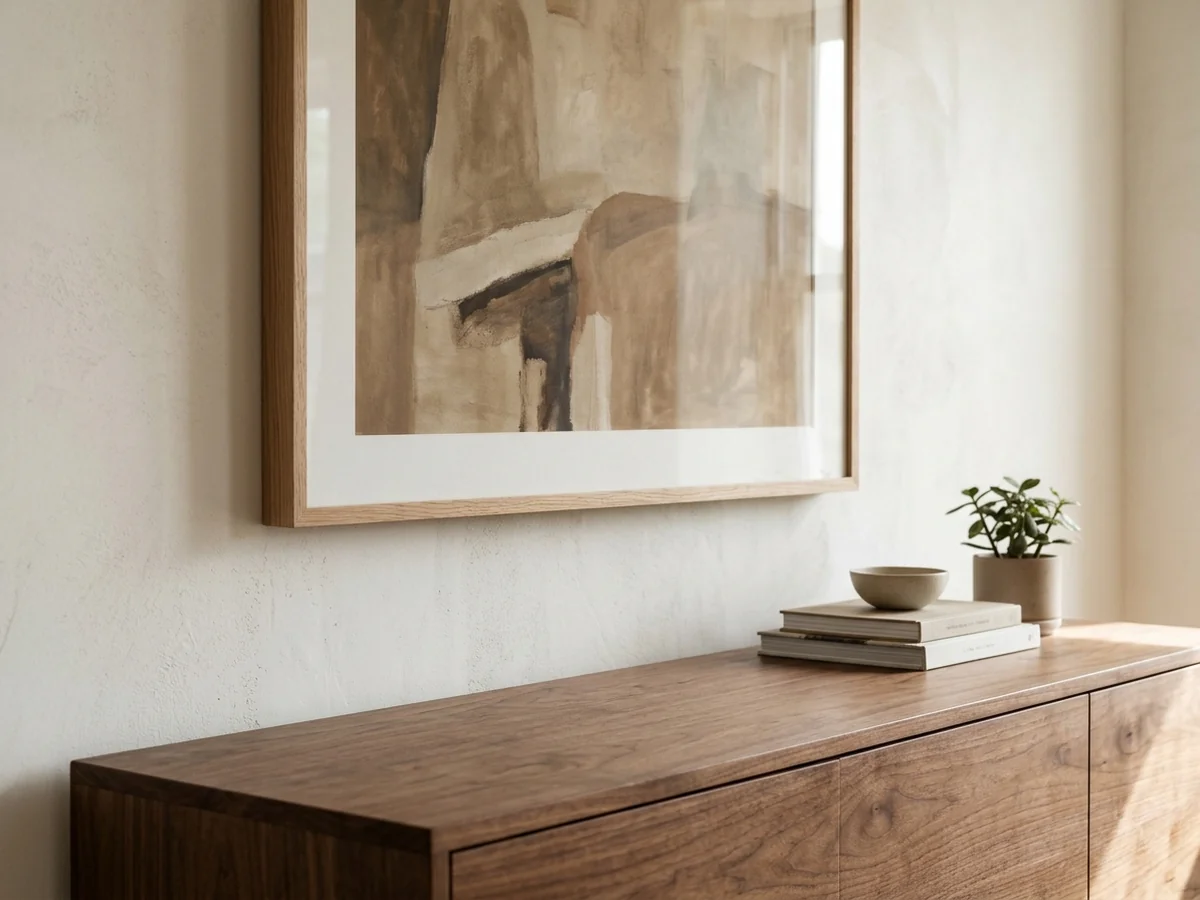
Leaving a gap of six to ten inches between the credenza top and the bottom of your picture frame creates a balanced visual connection without crowding your belongings. This specific clearance spacing ensures the art feels anchored to the furniture rather than floating aimlessly up the wall or crashing into surface decor. Figuring out the right height to hang art above sideboard surfaces requires balancing the physical dimensions of your room with everyday functionality.
The main reason for maintaining this specific gap is proportion and utility. Since typical guidance notes that the average console or buffet table is just shy of thirty inches tall, adding a six to ten inch buffer bridges the gap between horizontal furniture and vertical wall space. It prevents the frame from looking disconnected while leaving plenty of breathing room for taller table lamps, ceramic vases, and decorative objects so they never obscure the lower edge of the artwork.
To get this measurement right in your dining room or living space, follow a few practical steps before driving any nails into the drywall. Measure six to ten inches upward from the top surface of your sideboard before marking the spot for your picture frame bottom. Account for everyday items like candlesticks or seasonal bowls by testing your lamp placement first. Many decorators also like to use painter’s tape on the wall to outline the frame boundaries and check the visual weight before committing.
Watch out for common mistakes that throw off the entire arrangement. Avoid the frequent pitfall of hanging your picture too high, which creates an awkward visual disconnect between the furniture and the wall display. Another error is resting heavy frames directly on surface clutter. This hides lovely frames and makes the dining room styling look messy rather than intentional.
- Measure six to ten inches upward from the top surface of your sideboard before marking the spot for your picture frame bottom.
- Leave enough breathing room so that taller table lamps, ceramic vases, and decorative objects never obscure the lower edge of the artwork.
- Avoid the common pitfall of hanging your picture too high, which creates an awkward visual disconnect between the furniture and the wall display.
- Skip resting heavy frames directly on surface clutter because this hides lovely frames and makes the dining room styling look messy rather than intentional.
- Account for everyday items like candlesticks or seasonal bowls by testing your lamp placement before driving any nails into neighbourhood drywall.
- Use typical guidance where the average buffet table sits just shy of thirty inches tall when calculating your final wall measurements.
Proportion Rules: Width Ratios and the Two Thirds Guideline
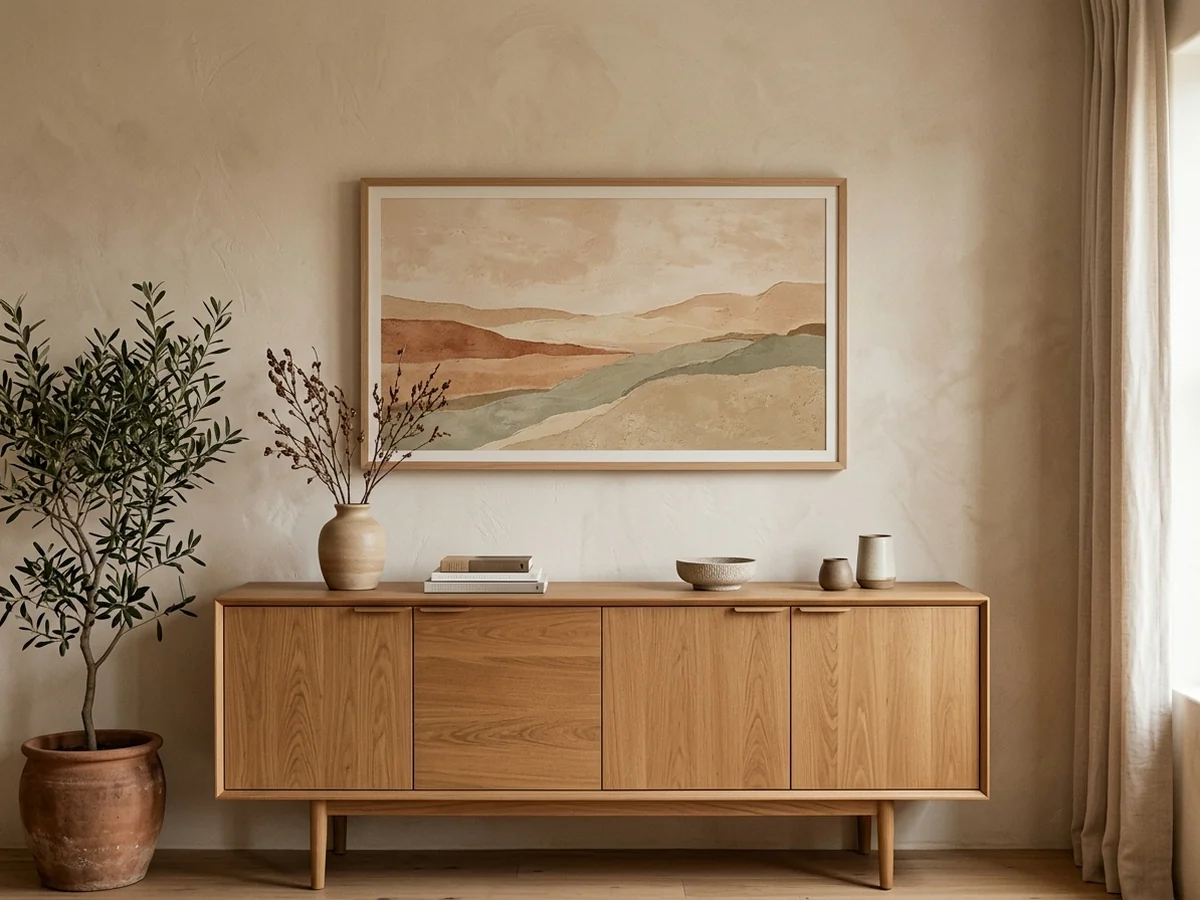
Achieving visual balance above a dining room buffet starts with matching the width of your display to the furniture piece below it. Common design guidance relies on what is the 2/3 rule for wall art. This standard suggests that a single picture or a curated collection of frames should span roughly two thirds of the total width of the sideboard or credenza it sits above. For example, a sixty inch credenza pairs best with a primary display measuring about forty inches across.
Understanding the why behind this proportion prevents heavy furniture from looking anchorless or tiny decor pieces from getting lost on a wide wall. When your wall art is too small, the furniture underneath visually overpowers the room. When the art is too wide, it cramps the visual space and extends past the edges of the buffet.
Applying the Width Math
To apply this practically, use a simple mathematical calculation. Multiply your sideboard length in inches by zero point six six to find the ideal combined width for your artwork. Choosing between a single large canvas and a multi piece gallery wall changes how you approach this math. A single canvas simply needs to hit that target proportion on its own. Gallery arrangements require you to treat the entire grouped collection as one single shape, measuring the collective width from the outer edge of the leftmost frame to the outer edge of the rightmost frame.
Accounting for Furniture Dimensions
Common mistakes in this process often involve ignoring the negative space between frames in a gallery display or failing to measure the buffet base instead of just the top overhang. Keeping your arrangement properly proportioned ensures your dining area looks intentional and curated. This attention to detail matters especially when you factor in standard furniture dimensions, given that typical practice indicates the average console or buffet table is just shy of 30 inches tall.
Balancing Height and Vertical Placement
Getting the width right is only part of the equation when determining the right height to hang art above a sideboard. When you coordinate your display, keep in mind how vertical spacing interacts with your horizontal measurements. Typical practice points toward positioning your wall decor so the middle point sits roughly 58 to 62 inches above the ground, maintaining a comfortable viewing level whether guests are seated at the dining table or standing in the room.
Specific Height Breakdowns for Different Artwork Sizes
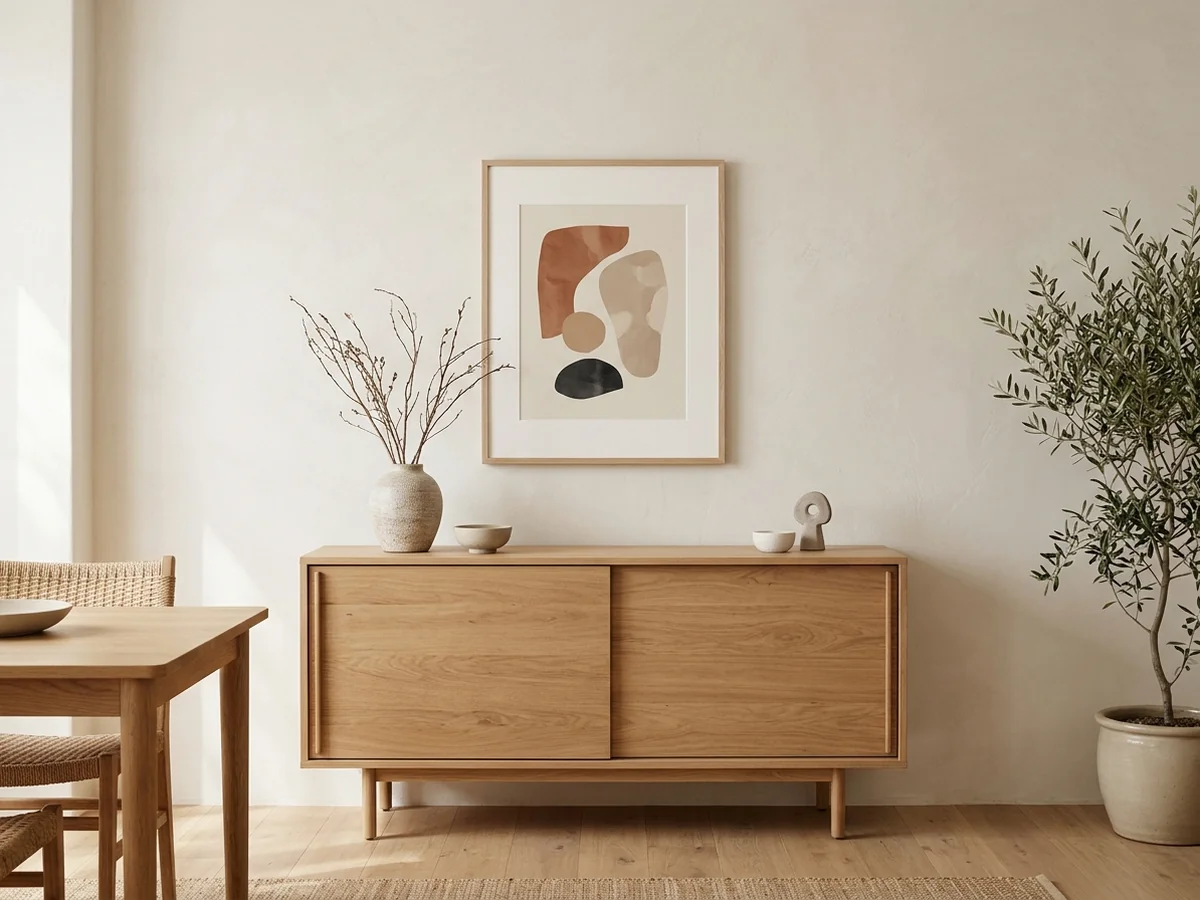
Hanging smaller pieces requires a much tighter gap above your buffet, while large statements need careful centering to avoid looking crowded. Standard furniture sits at a typical height of about 30 inches, meaning you must calculate your vertical placement based entirely on the physical dimensions of your frame.
| Artwork Size | Placement Strategy | Visual Weight Factor |
|---|---|---|
| Small (6 to 12 inches) | Group tightly or rest closer to the surface | Light frames need tighter spacing |
| Medium (13 to 24 inches) | Float centrally above the credenza | Standard borders need balanced breathing room |
| Large (25 to 36 inches) | Anchor higher up to maintain clearance | Heavy frames demand sturdier wall anchors |
Small art measuring 6 inches high needs to sit just a few inches above your credenza to prevent it from getting lost against a large wall. Medium formats spanning up to 24 inches generally look best when following common guidance that places the center point around 58 to 62 inches from the floor. Massive 36 inch statements act as focal points, so their bottom edge usually floats just high enough to clear lamps or decorative objects sitting on the buffet.
Frame thickness and visual weight alter how your vertical placement feels in the room. Heavy wooden frames or deep shadowboxes demand slightly more breathing room so they do not overpower the furniture below. Thin metal borders or unframed canvases can sit marginally lower because they carry less visual mass.
Vertical stack arrangements demand tighter vertical gaps than sprawling horizontal groupings. Stacking two smaller frames utilizes vertical wall space effectively without overwhelming the room. Horizontal groupings require consistent spacing between each frame to keep the display looking cohesive across the length of your credenza.
Leaning Pictures or Mirrors on a Buffet Top

Leaning framed prints and heavy mirrors directly on a cabinet top offers a casual interior styling approach that avoids wall damage entirely. This laid-back method creates a relaxed aesthetic compared to traditional wall mounted setups, which feel more formal and permanent. Leaning decor also makes it simple to swap pieces whenever you want to update your dining room styling. However, wall mounted arrangements generally provide superior safety, especially in homes with active pets or small children.
Securing your display properly prevents accidents regardless of whether you choose a wall installation or a surface placement method. When dealing with the height to hang art above sideboard surfaces, leaning provides a natural alternative that bypasses strict vertical measurements. Since the average console or buffet table is just shy of 30 inches tall, resting a frame directly on the wood elevates the bottom edge instantly. This eliminates guesswork while maintaining a cozy, layered look.
Safety Steps for Surface Placement
Placing heavy items on a credenza without fastening them creates a sliding hazard. Follow these essential steps for anchoring either a heavy mirror or a framed piece securely:
- Measure the exact dimensions of your credenza surface to find the visual center before placing any heavy items.
- Attach heavy-duty furniture straps or anti-tip brackets to the back of the mirror frame and anchor them securely into wall studs behind the buffet.
- Apply clear museum putty or rubber grip pads underneath the bottom corners of the frame to prevent the glass from sliding forward on the wood surface.
- Use a reliable stud finder to locate wall supports if you decide to mount the heavy mirror just a few inches above the cabinet instead of resting it directly on top.
- Drive heavy-duty wall anchors and picture hanging hardware rated for the specific weight of your frame if wall mounting is preferred over surface leaning.
- Double-check that the bottom of the frame sits flush against the cabinet surface or maintains a uniform clearance gap if mounted slightly higher.
Balancing Proportion and Scale
When you style a sideboard, the visual weight of your leaning art matters just as much as its vertical placement. Large mirrors bounce light around the room, which brightens dark dining areas. Pair a tall leaning frame with smaller decorative objects like ceramic vases or candleholders on the buffet top to create depth. Keeping the objects varied in height prevents the display from looking flat, ensuring a balanced composition that complements your everyday aesthetic.
Tools and Techniques for Flawless Installation
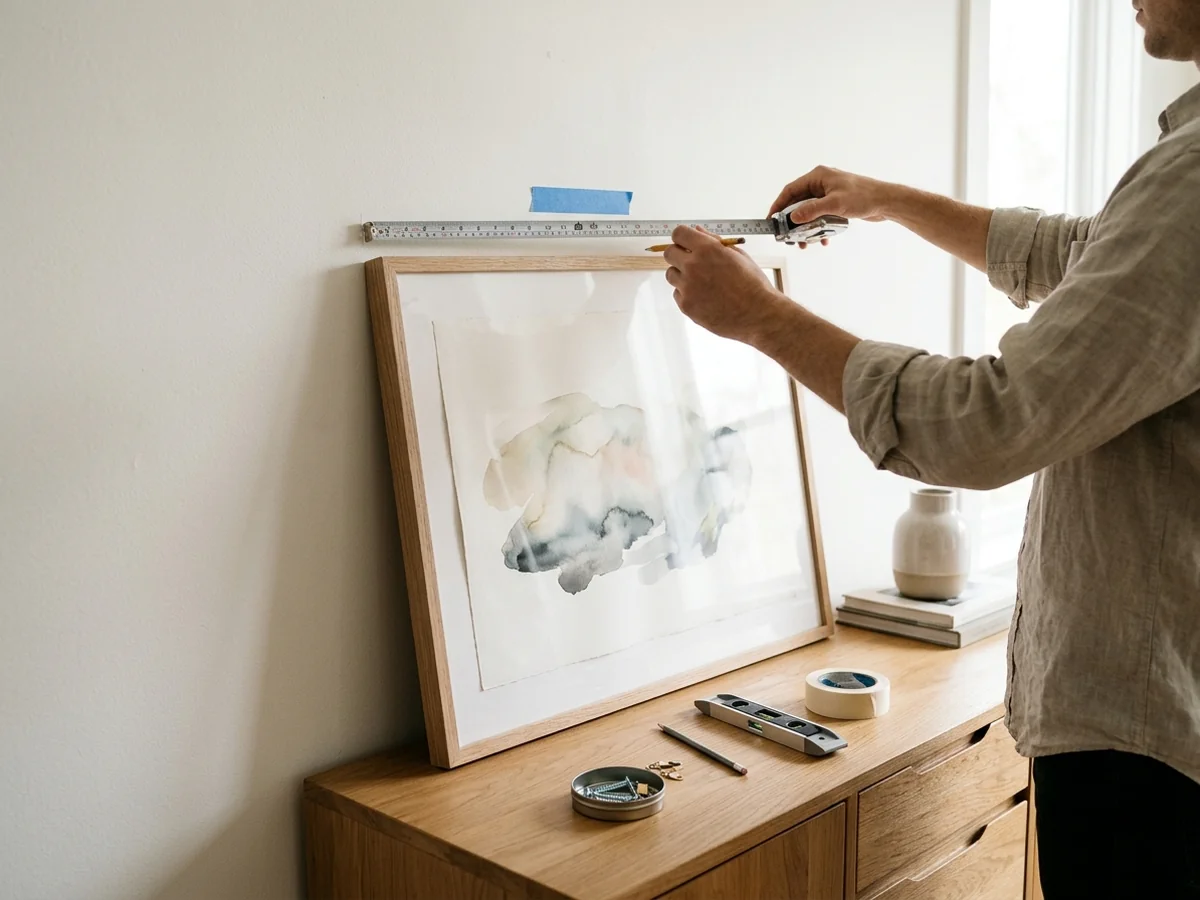
Achieving a balanced display above your sideboard requires more than just a good eye. Proper planning tools and reliable hardware prevent accidents and crooked frames. You can secure the correct height to hang art above sideboard arrangements without guessing by preparing your workspace ahead of time and avoiding common mistakes.
One of the most frequent errors is holding a heavy frame in place by hand while guessing where the nail should go. Instead, utilize painter’s tape to mock up frame layouts on the wall before driving any fasteners. This quick step lets you visualize different arrangements and spacing options without leaving permanent holes in your drywall.
Next, locate wall supports safely using a stud finder and a tape measure. Since the average console or buffet table is just shy of 30 inches tall, you will often work between standard furniture surfaces and upper wall zones. Securing your pieces directly into wood framing prevents heavy frames or glass mirrors from pulling away from the drywall over time. If a stud does not align with your layout, use rated drywall anchors that match the weight of your canvas.
Secure picture wire and heavy duty hanging hardware for secure placement, especially when mounting large items. Heavy mirrors or oversized canvases demand robust anchors that match the weight capacity of your chosen mounting points. Taking time to measure clearances twice ensures your decor stays level and secure.
Mastering Spacing and Vertical Clearances
Artwork should hang between six to ten inches above the top of your sideboard. That small gap gives the furniture and the frame some breathing room without making them look disconnected. Common design guidance places the center of wall art around fifty-eight to sixty-two inches from the floor, but your dining room furniture changes the math. Because the average buffet table sits just shy of thirty inches tall, you will measure upward from that surface rather than the floor. Using a tape measure and painter’s tape saves you from guessing where the bottom of the picture frame should rest.
When you want to know how high should artwork be above a sideboard, remember that anchoring the piece close to the furniture surface stops the frame from floating awkwardly in the middle of an empty wall. Homeowners and DIY interior decorators often struggle with this gap, but keeping within that six to ten inch window creates an intentional connection between your credenza and your wall decor.
Applying Proportional Design Rules
The 2/3 rule for wall art states that your chosen picture or arrangement should take up roughly two-thirds of the total width of the furniture below it. If your credenza measures sixty inches wide, you want your artwork or gallery wall group to measure about forty inches across. This proportion keeps the display from looking too small or completely overwhelming the sideboard. You can achieve this width using one large canvas or a neat pair of smaller frames hung closely together.
Understanding what is the 2/3 rule for wall art helps you scale your collection properly.
At the same time, knowing what is the 57 rule for hanging art gives you a solid baseline for vertical alignment. The 57 rule places the center of a picture frame at human eye level, typically fifty-seven inches off the floor. Interior designers rely on this trick because it creates a comfortable viewing height for most adults in a room. When you place a credenza underneath, you might have to adjust this rule slightly so your frame stays anchored to the furniture instead of floating too high on the wall. Always check how the top of your credenza interacts with the frame before hammering any nails.
Balancing Visual Weight and Negative Space
The 70/30 rule in art helps you balance the visual weight of your decor by ensuring your accent piece fills about seventy percent of the available blank wall space above the furniture. This leaves a clean thirty percent of surrounding negative space, which prevents the dining area from feeling cluttered or heavy. Applying this guideline keeps the focus squarely on your credenza and the statement piece resting above it.
For those arranging dining spaces or planning how high to hang art above dining table setups, maintaining these proportions ensures the entire room feels cohesive. Whether you are working with a single heavy mirror or a curated gallery wall, combining proper stud anchoring with strict measurement rules guarantees a polished result.
Frequently Asked Questions
How high should artwork be above a sideboard?
Artwork should hang six to ten inches above the top surface of your sideboard. This exact spacing ensures the frame sits close enough to the furniture to feel connected while leaving enough clearance so objects on the buffet do not block the view.
What is the 2/3 rule for wall art?
The 2/3 rule dictates that your wall art should occupy about two-thirds of the total width of the sideboard or credenza underneath it. This proportion establishes visual balance so the furniture does not dwarf the decor.
What is the 57 rule for hanging art?
The 57 rule means positioning the center of your picture frame fifty-seven inches from the floor to match average human eye level. While this is standard for open walls, you may need to cheat the height slightly upward when pairing art with a dining room buffet.
What is the 70/30 rule in art?
The 70/30 rule suggests that your wall decor should fill roughly seventy percent of the empty wall space above your furniture, leaving thirty percent as negative space. This balance frames your credenza nicely without crowding the room.
Conclusion
Achieving a balanced dining room starts with knowing the right height to hang art above sideboard surfaces while keeping your room’s unique proportions in mind. Standard design guidelines give you a reliable starting point, but your eye and personal space should guide your final choice. Feel free to adjust measurements up or down by a few inches to suit your ceiling height and furniture style. Trust your instincts and enjoy creating a dining space that feels just right for your home.
You might also like: Round vs Rectangular Dining Tables: Which Fits Better in a Square Room