Round vs Rectangular Dining Tables: Which Fits Better in a Square Room?
Choosing between round vs rectangular dining tables for a square room often feels like a puzzle where every piece has to fit just right. While the geometry of the room might suggest a square table, the flow of traffic and the number of guests you host regularly play a much larger role in your final decision. You want a piece that balances aesthetic appeal with genuine functionality.
This assessment will help you weigh the pros and cons of each shape, ensuring your selection enhances your home’s utility rather than hindering it. Understanding how these shapes interact with your floor plan is the secret to creating a comfortable, inviting dining environment.
Assessing Your Square Room Dimensions
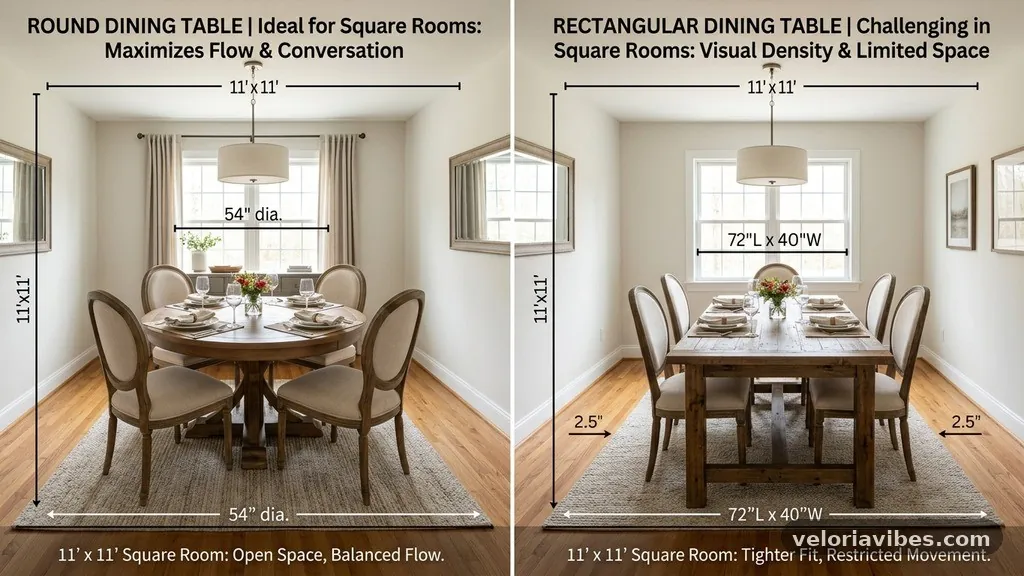
Before you commit to a specific table shape, you must measure your square dining room with precision. A square room offers a unique set of constraints, as the walls are equidistant from the center. If you have a room that measures 12 by 12 feet, you have a solid foundation for most standard setups.
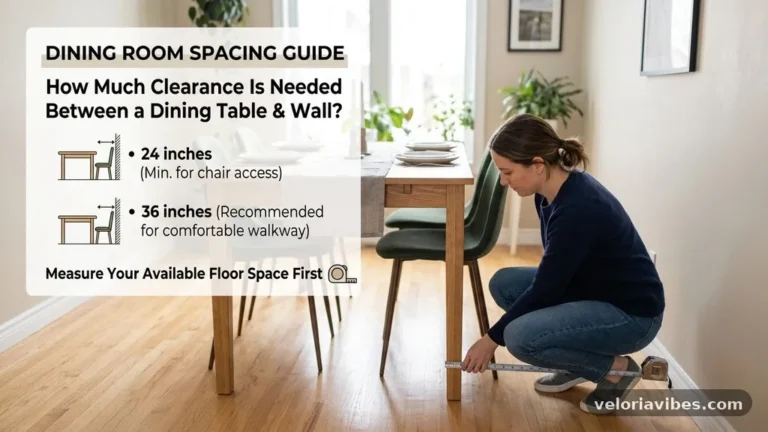
However, you must account for the clearance required for chairs to be pulled out. A good rule of thumb is to allow at least 36 to 42 inches of space between the edge of the table and the nearest wall or piece of furniture.
Many homeowners make the mistake of buying a table based on the number of people they host on holidays rather than their everyday needs. If you only host large groups twice a year, don’t buy a massive table that makes your daily life feel cramped. Instead, look for a table that fits the room comfortably for your primary household size.
For a square room, the goal is to maintain a sense of balance. If your room is on the smaller side, a massive rectangular table will dominate the space, making the area feel cluttered and difficult to navigate.
Consider the placement of doors and walkways as well. If you have a high-traffic path cutting through your dining area, a rectangular table might block that flow more aggressively than a round one. Square rooms are inherently symmetrical, and you can lean into that with a square or round table, or break it up with a long, narrow piece.
Always sketch your room on graph paper before heading to the store. This visual aid will prevent you from purchasing a piece that looks perfect in a showroom but fails to breathe in your actual living space.
The Case for Round Tables in Square Spaces
Round tables are often the most harmonious choice for a square room because they soften the harsh, straight lines of the walls. When you place a circular piece in a square environment, you create a natural focal point that draws the eye inward.
Because there are no sharp edges, moving around the table becomes much easier, which is particularly beneficial in smaller rooms. You don’t have to worry about bumping your hips or thighs against a corner while walking past.
Socially, round tables facilitate better conversation. Everyone at the table can see everyone else without having to lean forward or crane their neck. This setup is ideal for families who enjoy long, lingering dinners or for those who host frequent game nights.
There is no “head of the table,” which can change the entire dynamic of a meal. It feels more inclusive and democratic, making it a favorite for those who want their dining experience to feel intimate and relaxed.
However, round tables do have their limitations. They are generally less efficient when it comes to maximizing seating capacity in a tight footprint. If you have a very small square room, a round table might feel like it takes up more space than it actually provides in usable surface area.
Additionally, if you need to push a table against a wall to save space, a round piece will look awkward and leave dead space behind it. You should only choose a round table if you have enough clearance to keep it centered in the room.
Maximizing Utility with Rectangular Tables
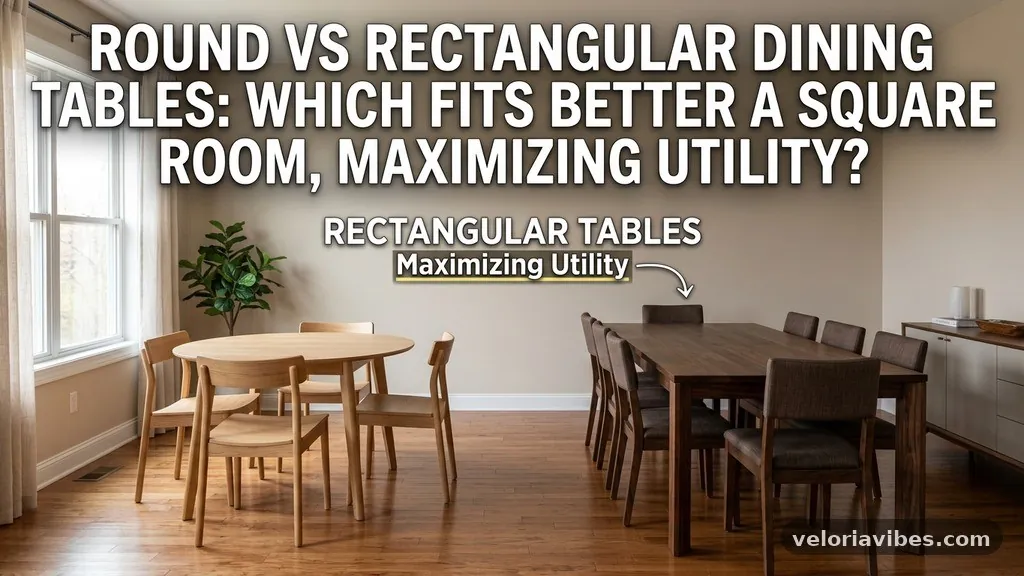
Rectangular tables are the workhorses of the dining world. If your primary goal is to seat as many people as possible, this shape is nearly impossible to beat. In a square room, a rectangular table creates a strong, architectural statement.
It can help elongate the room visually if you align it with the longer axis of your space, though in a perfectly square room, you have more flexibility regarding orientation. This shape is inherently more formal, which works well if your dining area is intended for hosting dinner parties or hosting formal holiday meals.
One of the greatest advantages of a rectangular table is its modular nature. You can easily push one end against a wall if you need to reclaim floor space for other activities, like a play area or an exercise zone. While this isn’t the most elegant arrangement for a dinner party, it is a practical necessity for many families.
Furthermore, rectangular tables often come with extension leaves. This feature allows you to shrink the table for daily use and expand it when guests arrive, providing a level of versatility that most round tables simply cannot match.
Be mindful of the “corners” problem, though. In a tight square room, the sharp corners of a rectangular table can become a liability. They can make the room feel more aggressive and potentially hazardous if you have young children or pets running around.
If you decide on a rectangular piece, look for one with rounded edges or a pedestal base. A pedestal base is significantly better than four corner legs because it removes the obstruction from under the table, giving your guests more legroom and making the room feel less crowded.
Evaluating the Traffic Flow and Walkways
Your floor plan is more than just the dimensions of the room; it is about how you move through it. When comparing round vs rectangular dining tables, you must map out the “dead zones” and “active zones.”
If your square dining room is also a thoroughfare—perhaps connecting the kitchen to the living room—the shape of your table will directly impact your daily comfort. A rectangular table creates a more defined “lane” for walking, which can be helpful if you want to guide traffic around the dining area.
Conversely, a round table encourages a more fluid, circular movement pattern. It doesn’t force you to walk in straight lines, which can feel more natural in an open-concept home. To test this, place painter’s tape on your floor to outline the footprint of the table you are considering.
Walk around that tape multiple times. Do you find yourself constantly navigating around a sharp corner?
Does the table feel like it’s squeezing you into the wall? If you feel restricted, you probably need a smaller table or a different shape.
Common mistakes often involve ignoring the chairs. A table might fit, but can you actually pull the chairs out far enough to sit down comfortably? You need at least 24 inches of space behind each chair to allow for a person to sit and stand without feeling trapped.
If your room is small, consider armless chairs or a bench on one side. Benches are excellent for tight square rooms because they can be tucked completely under the table when not in use, effectively disappearing and opening up the floor space.
The Role of Table Bases and Visual Weight
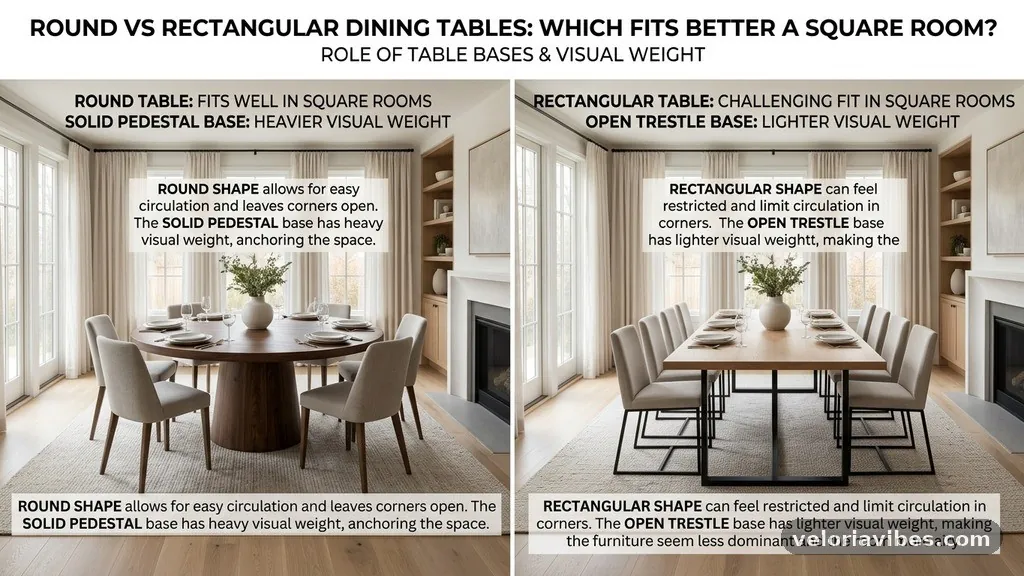
The base of your table is just as important as the top. A bulky, solid pedestal base on a round table can make the entire room feel heavy and grounded, while a thin, metal-legged rectangular table can make the space feel light and airy.
In a square room, you want to avoid “visual clutter.” If you have a lot of other furniture, such as a sideboard, a display cabinet, or a bookshelf, a table with a minimalist base is usually the better choice.
Think about how the table base interacts with your flooring. If you have a patterned rug, a table with four legs might obscure the design or make the area feel busy. A central pedestal base keeps the floor clear, allowing the rug to serve as a cohesive element that anchors the room.
This is a subtle detail, but it makes a massive difference in how large or small the room feels. For more guidance on choosing furniture that fits your specific space, you can refer to the Architectural Digest guide to selecting dining furniture, which covers the nuances of scale and proportion.
Don’t ignore the material of the base either. Wood adds warmth but can feel heavy. Metal or glass can provide a modern, sleek aesthetic that reflects light and makes a small room feel larger.
If you are struggling to decide, look at the other materials in your room. If you have a lot of wood furniture, a table with a metal base can introduce a welcome contrast, preventing the room from looking like a showroom set.
Considering Your Hosting Habits
How you use your dining room dictates your requirements. If you are a casual host who prefers buffet-style dinners or quick family meals, the social dynamics of a round table are likely superior. It creates a relaxed atmosphere where the focus is on interaction.
However, if you are the type of person who hosts formal three-course dinners with place settings for eight, a rectangular table is almost certainly your best bet. It provides the structure needed for formal service and ensures everyone has enough elbow room for their plate, glass, and silverware.
Think about your lifestyle. Do you use your dining table for more than just eating? Many people use their dining space as a secondary office or a craft area.
A rectangular table provides a flat, stable surface that is much better for spreading out documents, laptops, or sewing projects. If your dining room doubles as a workspace, you might find that the corners and straight edges of a rectangular piece are more practical for your daily productivity.
Another factor is the “kid-friendly” aspect. If you have small children, a round table is often safer because there are no sharp corners to bump into. It also tends to be easier to clean, as there are no hard-to-reach crevices in the corners.
However, a rectangular table with a durable, wipeable surface can be just as practical. The decision often comes down to the trade-off between the formal look of a rectangle and the cozy, safe, and social nature of a circle.
Lighting and Its Impact on Table Choice

Lighting is a critical, often overlooked factor when choosing a table shape. Your chandelier or pendant light should ideally be centered over the table. If you have a round table, a round or drum-shaped pendant light works perfectly, creating a unified visual column.
If you choose a rectangular table, you might need a linear fixture or even two smaller pendants to ensure the entire table is evenly lit. If your light fixture is fixed and cannot be moved, you must choose a table shape that aligns with it, or be prepared to hire an electrician to adjust the placement.
The height of your light fixture also matters. A lower-hanging light creates a more intimate, cozy feeling, which works well with round tables. A higher fixture can make the room feel more expansive and open.
When you are looking at round vs rectangular dining tables, imagine the light fixture hanging above them. Does it look balanced? Does the light cast shadows that make the room feel smaller?
If your room has a ceiling fan, be very careful. A rectangular table can sometimes interfere with the airflow or create a strobing effect if the blades pass directly under the light. In such cases, a round table is often more forgiving.
Always ensure that your lighting choice complements the shape of your table rather than fighting against it. Symmetry is your best friend in a square room, and your lighting is the primary tool for achieving that symmetry.
The Feng Shui Perspective
Some homeowners prioritize the energy flow, or Feng Shui, when designing their space. In this tradition, the shape of your dining table is thought to influence the harmony of your home. Round tables are often favored because they represent unity and equality.
They allow energy to circulate freely around the room without being blocked by sharp angles. This is believed to foster better communication and a more peaceful environment.
Rectangular tables, while still perfectly acceptable, are sometimes seen as having more “cutting” energy due to their sharp corners. To mitigate this in a Feng Shui-inspired space, you can soften the edges with a tablecloth, a table runner, or by choosing a design with rounded corners.
The goal is to avoid stagnation. If you feel that your dining room is a place of stress or conflict, changing your table shape—or simply softening the existing one—might make a surprising difference in how the room feels on a daily basis.
Ultimately, whether you subscribe to these principles or not, the underlying concept of “flow” is universal. A room that feels easy to move through and pleasant to inhabit is a well-designed room.
If you feel cramped or uncomfortable in your dining area, it is rarely just about the size of the room. It is almost always about the relationship between the furniture and the space it occupies.
Budgeting and Long-Term Investment
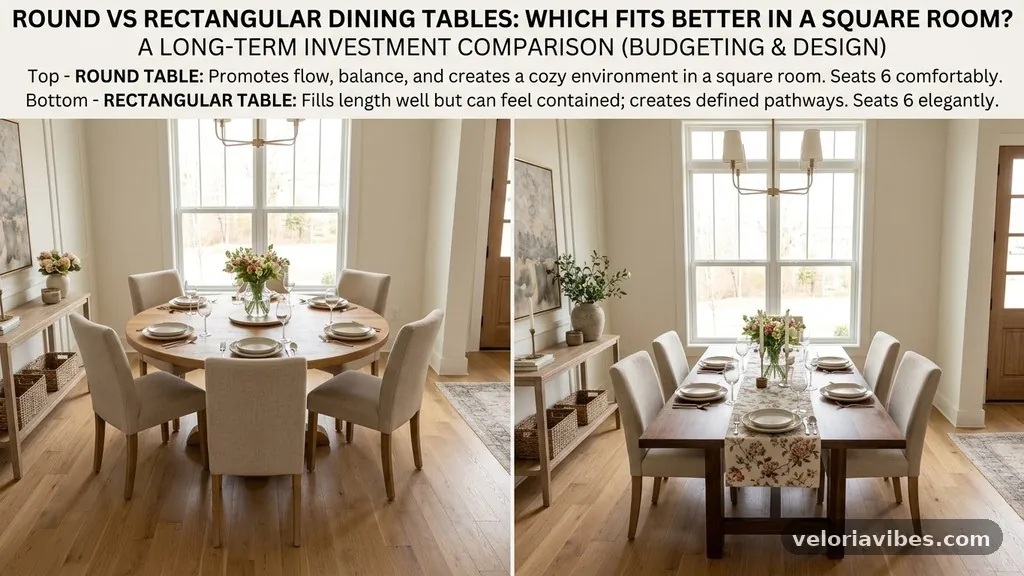
A dining table is a significant investment, so you want to choose one that will serve you for years to come. When you are comparing options, look at the quality of the construction.
Is the table made of solid wood, or is it a veneer over particle board? In a square room, where the table is likely to be a central feature, you want something that can withstand daily use and still look good.
Rectangular tables are generally easier to find in a wider variety of price points because they are a standard shape. You can find everything from flat-pack furniture to high-end artisan pieces.
Round tables, especially larger ones, can sometimes be more expensive because they require more complex engineering to ensure stability. A large round table needs a very sturdy base to prevent tipping, which can drive up the cost.
Think about your future needs. Are you likely to move? If you move into a house with a much larger or differently shaped dining room, will your table still work?
A rectangular table is often more versatile in different room shapes than a round one. However, if you love the look of a round table and it fits your current square room perfectly, don’t let the fear of a future move stop you. A dining table should serve your life today, not a hypothetical life in a different house.
Addressing Common Mistakes
The most common mistake is buying a table that is simply too large for the room. People often overestimate how much space they have. They forget that the chairs need to be pulled out, that there needs to be room for a server or a sideboard, and that the room needs “breathing room.”
If you are unsure, err on the side of a slightly smaller table. A small table that is well-proportioned to the room will always look better than a large table that makes the room feel like a storage closet.
Another mistake is ignoring the style of your chairs. If you already own chairs, make sure they fit comfortably under the table. Some tables have aprons (the wood frame under the top) that can prevent chairs from sliding in all the way.
This is a huge annoyance that can make your dining area feel messy even when it’s clean. Always check the clearance from the floor to the bottom of the apron.
Finally, don’t forget the importance of a rug. A rug can define the dining zone, especially in an open-plan home. However, it needs to be large enough.
A common error is buying a rug that is too small, so the back legs of the chairs catch on the edge of the rug when someone tries to scoot out. A good rule is to have the rug extend at least 24 inches beyond the edge of the table on all sides.
Frequently Asked Questions
What is the best table shape for a square dining room?
There is no single “best” shape, but a round table is often preferred for smaller square rooms because it softens the lines and improves traffic flow. A square or rectangular table can also work beautifully, provided you have enough clearance for chairs and prioritize a pedestal base to keep the floor looking open.
Is the round dining table outdated?
Not at all. While rectangular tables are more common in mass-market furniture stores, round tables remain a timeless choice for their social benefits and ability to create an intimate atmosphere. They are a classic selection for homeowners who prioritize conversation and a balanced room layout.
What size dining table should I get for a 10×11 room?
In a 10×11 space, you should aim for a table that leaves at least 36 inches of clearance on all sides for chair movement. A round table with a diameter of 42 to 48 inches is usually the maximum size that will allow for comfortable movement without making the room feel cramped.
Is it better to have a round or rectangular dining table for small spaces?
In very small spaces, a round table is usually the winner because it lacks sharp corners that can obstruct movement. However, if you need a table that can be pushed against a wall to save space, a rectangular table is significantly more practical, as it can be tucked away when not in use.
Can I mix a rectangular table with a square rug?
Yes, you can, but it requires careful attention to scale. A square rug under a rectangular table can look disjointed unless the rug is large enough to encompass the entire dining area, including the space needed for chairs to be pulled out. It is often easier to match the shape of the rug to the shape of the table.
Final Thoughts
Choosing between round vs rectangular dining tables for your square room comes down to how you live, how you host, and how you want your home to feel. There is no right or wrong answer, only the solution that best supports your daily rituals. If you crave intimacy and fluid movement, a round table is a fantastic choice that honors the geometry of your space.
If you require maximum seating and a formal, structured look, a rectangular table will provide the utility you need. Take your measurements, consider your traffic patterns, and trust your intuition.
Your dining room should be a place where you enjoy spending time, so choose the piece that makes you feel most at home. We hope this exploration helps you make a confident decision that brings comfort to your table for years to come.