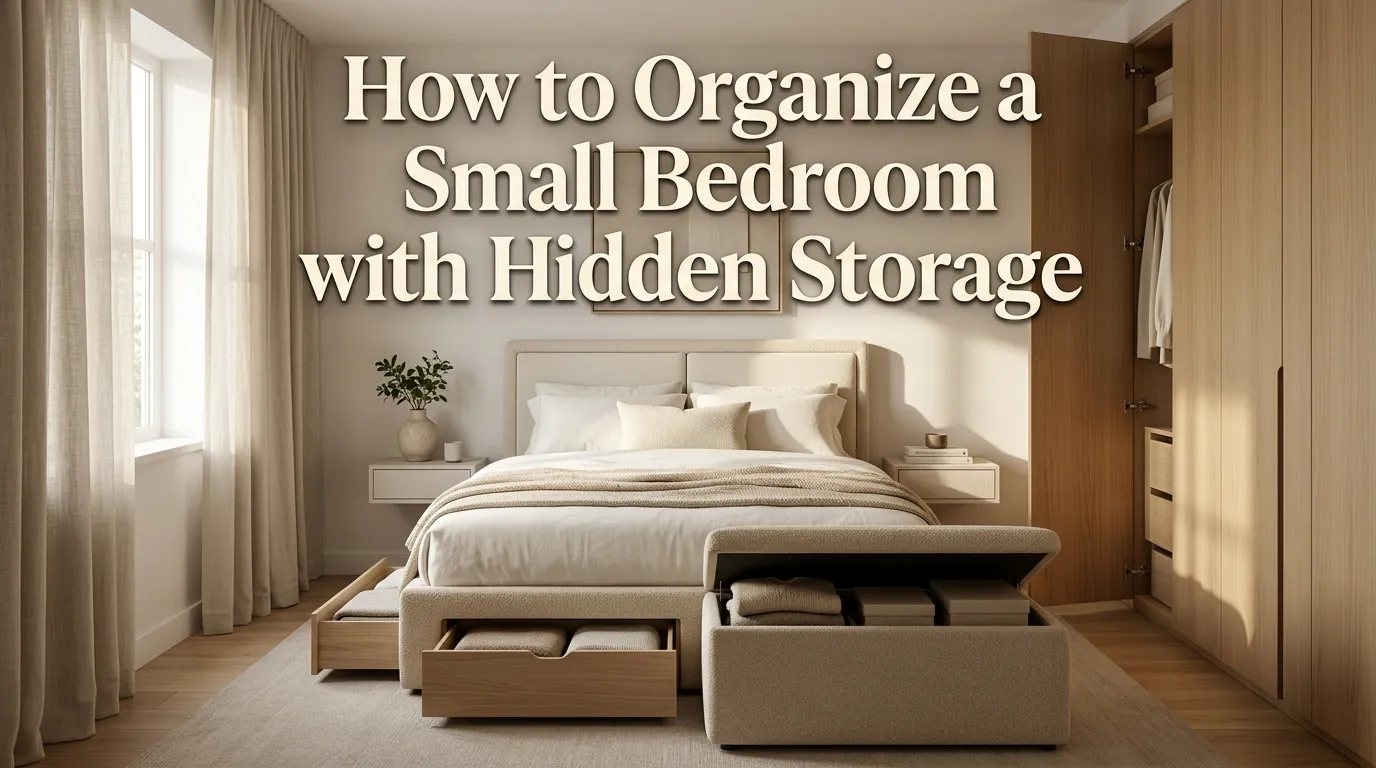
How to Organize a Small Bedroom with Hidden Storage
A small bedroom can become difficult to organize surprisingly quickly. Clothes, bedding, books, shoes, accessories, chargers, and everyday essentials all need somewhere to go, but floor space and closet space are often limited.
The solution is not always to buy a bigger dresser or add another shelving unit. In a compact bedroom, adding more visible storage can actually make the room feel smaller. A better approach is to use the space you already have more strategically, especially the areas that are easy to overlook.
Hidden storage can make a remarkable difference because it allows everyday belongings to stay accessible without keeping everything on display. Think of the space underneath the bed, storage inside an ottoman, baskets tucked into a bench, drawers built into a nightstand, or slim organizers placed behind doors.
The key is choosing storage based on what you actually need to keep.
In my experience, small bedrooms work best when every storage solution has a specific purpose. If a container does not make something easier to find, use, or put away, it may simply become another place for clutter to accumulate.
It also helps to think vertically and visually. When the floor is limited, walls, doors, furniture interiors, and unused gaps can become valuable storage opportunities.
You do not need to renovate the room to make this happen.
A few smart furniture choices and simple organizational changes can create additional capacity while keeping the bedroom calm and comfortable.
The ideas below are designed for bedrooms in apartments, townhomes, guest rooms, older homes, and other compact spaces where every square foot matters.
Whether you are trying to organize a tiny primary bedroom or simply want your current bedroom to feel less crowded, these hidden storage solutions can help you create a space that looks tidy without sacrificing the things you actually use.
Table of Contents
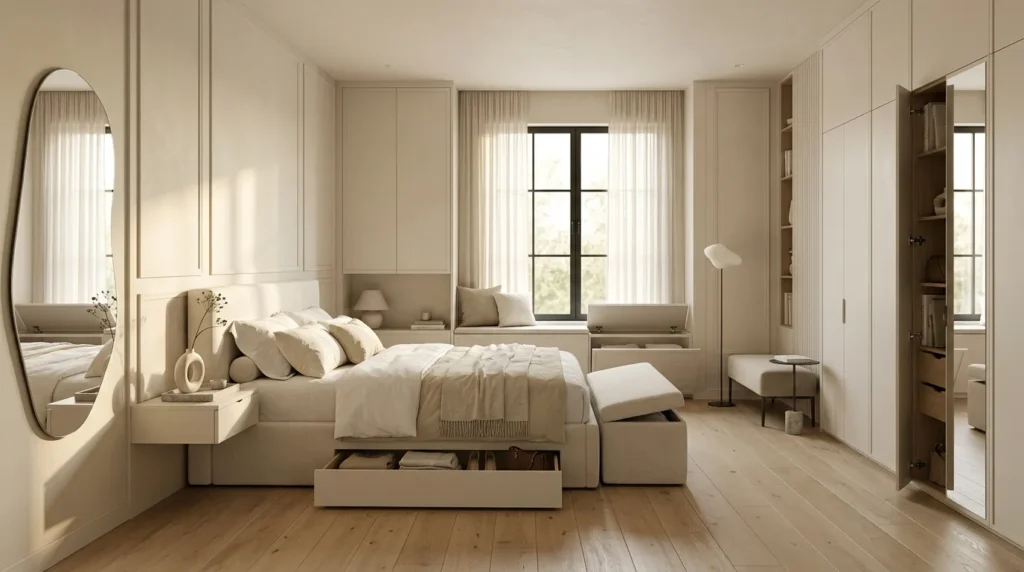
1. Under-Bed Drawers
Use the unused space beneath the bed for practical hidden storage.
2. Storage Headboard
Turn the headboard area into discreet storage for everyday essentials.
3. Ottoman Bench
Add seating that secretly stores blankets, clothing, or accessories.
4. Bedside Drawers
Choose nightstands that keep small essentials organized and out of sight.
5. Closet Door Storage
Use the back of the closet door for overlooked vertical storage.
6. Window Bench Storage
Combine a comfortable window seat with concealed compartments underneath.
7. Hidden Dresser Space
Choose furniture designs that maximize storage without overwhelming the room.
8. Floating Storage
Use wall-mounted furniture to free valuable floor space.
9. Basket Storage
Tuck attractive baskets into overlooked corners for flexible organization.
10. Multiuse Furniture
Choose pieces that solve more than one storage problem at once.
1. Under-Bed Drawers
Quick Benefits
- Uses otherwise wasted space
- Keeps seasonal items hidden
- Frees closet shelves
- Works without renovation
- Keeps belongings dust-protected
Why It Works
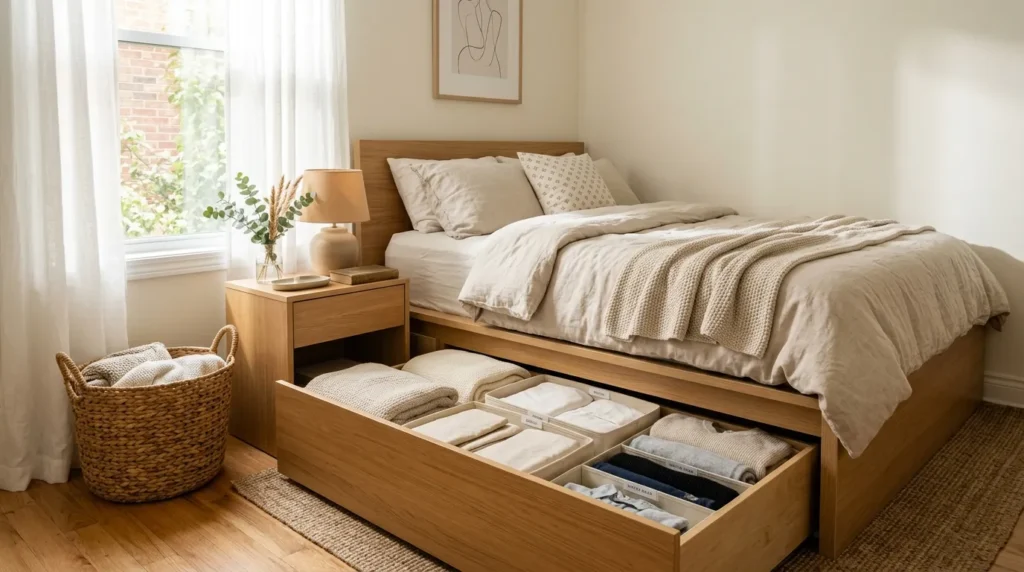
The area underneath the bed is one of the most valuable hidden storage zones in a small bedroom.
Because the space is already occupied by furniture, using it for storage does not require giving up additional floor area. That makes it particularly useful when closets and dressers are already full.
Under-bed storage works best for items that are not needed every day. Seasonal clothing, spare bedding, luggage, shoes, and occasionally used accessories can all be good candidates, depending on the storage conditions.
The important thing is to avoid treating the area as a place to hide random clutter.
When everything underneath the bed becomes an unorganized pile, finding something later becomes frustrating.
How To Style It
If your bed already has built-in drawers, assign each compartment a category.
One drawer could hold spare sheets, another seasonal clothing, and another shoes or accessories.
For a standard bed frame, use low-profile containers designed to fit underneath.
Choose containers with lids if dust protection is important.
Fabric storage bags can work well for soft items, while rigid containers may be useful for belongings that need more structure.
Label the front of each container.
Avoid stuffing every inch of available space.
Leaving enough room to pull containers out easily makes the system much more practical.
If the bed is low to the ground, measure the clearance before purchasing anything.
2. Storage Headboard
Quick Benefits
- Uses vertical space
- Replaces bulky bedside storage
- Keeps books and accessories nearby
- Creates a built-in appearance
- Works well in narrow bedrooms
Why It Works
A headboard is usually thought of as a decorative feature, but some designs can also provide valuable storage.
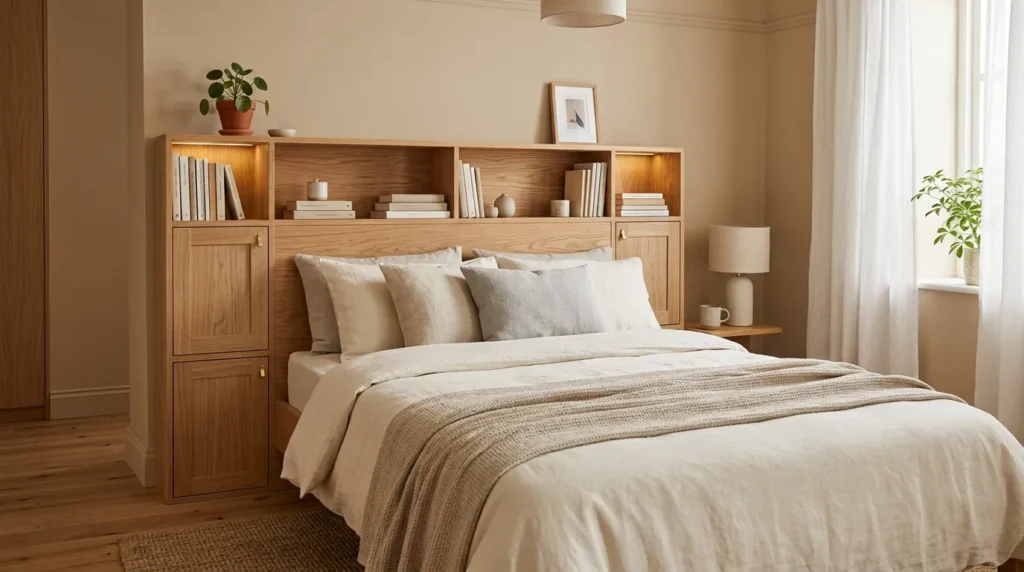
A storage headboard can include shelves, small cabinets, cubbies, or concealed compartments.
This can be especially useful when there is little room beside the bed for traditional nightstands.
Instead of adding another large piece of furniture, the headboard uses space that already belongs to the bed.
It also keeps frequently used items close by.
Books, reading glasses, chargers, small baskets, and other bedtime essentials can have a dedicated home without covering the nightstand.
How To Style It
Choose a headboard with closed storage if you want the room to look especially calm.
Open shelves can be useful, but they should be edited carefully because visible storage can quickly become visually busy.
Use one shelf for books and another for a small decorative object.
Keep charging cables contained with a simple cable organizer.
For a warm modern bedroom, choose a wood storage headboard with cream bedding.
For a softer look, an upholstered headboard with integrated side compartments can create a comfortable hotel-inspired feel.
Make sure the headboard does not interfere with electrical outlets, windows, or required access around the bed.
3. Ottoman Bench
Quick Benefits
- Adds hidden storage
- Provides useful seating
- Can hold extra bedding
- Works at the foot of the bed
- Reduces furniture clutter
Why It Works
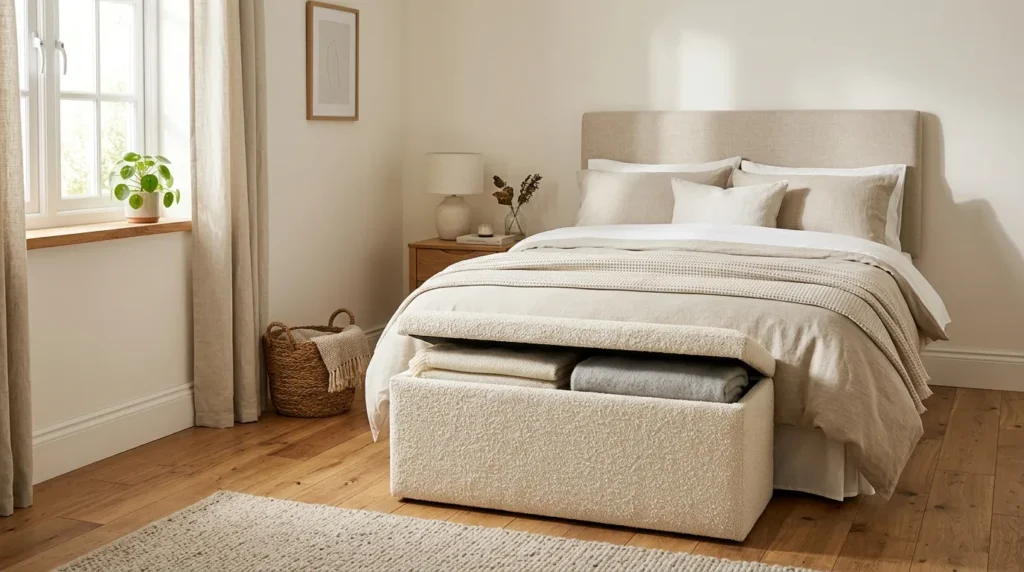
A storage ottoman or upholstered bench can solve two problems at once.
It provides a place to sit while putting on shoes, folding laundry, or getting ready, while the interior can store items that would otherwise require another cabinet or basket.
This is especially helpful at the foot of the bed, where the space might otherwise remain unused.
The trick is choosing a size that fits the room.
A bench that is too large can interrupt walking paths and make a small bedroom feel cramped.
How To Style It
Choose a narrow storage bench that leaves comfortable clearance around the bed.
Use it for bulky soft items such as extra blankets, decorative pillows, seasonal bedding, or rarely used accessories.
Avoid storing everyday clothing inside if opening the bench requires moving other objects.
For a cohesive look, coordinate the upholstery with the bedding or curtains.
Cream boucle can create a soft modern appearance.
Natural linen can work beautifully in an airy neutral bedroom.
A wooden storage bench can add warmth while keeping the room visually simple.
Keep the top relatively clear.
One folded throw is enough to make the bench feel styled without turning it into another clutter surface.
4. Bedside Drawers
Quick Benefits
- Hides everyday essentials
- Reduces nightstand clutter
- Makes charging easier
- Keeps personal items accessible
- Works in compact spaces
Why It Works
Nightstands often become clutter magnets.
A phone charger, water bottle, glasses, books, skincare products, tissues, and miscellaneous objects can quickly cover the entire surface.
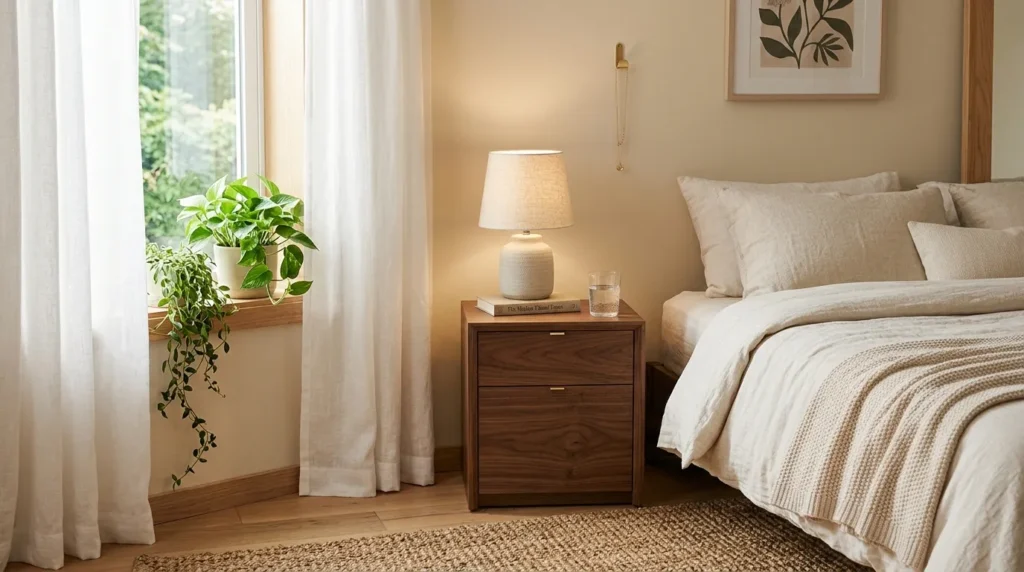
A nightstand with drawers gives each category a place to disappear when it is not being used.
In a small bedroom, this is especially valuable because reducing visible clutter can make the room feel more spacious even when the physical footprint has not changed.
The best bedside storage is convenient enough that you will actually use it.
If putting something away requires opening three drawers, the surface will probably become cluttered again.
How To Style It
Choose a nightstand with at least one accessible drawer.
Use the top for only the items you need regularly.
Keep the drawer organized with small dividers.
Create simple categories such as reading, personal care, and technology.
A small cable-management opening can keep chargers hidden while remaining accessible.
If you have room for only one nightstand, consider whether a narrow chest or wall-mounted shelf could provide the storage you need without crowding the bed.
Keep the finish consistent with the rest of the room.
Light wood, warm white, or soft beige can help a compact bedroom feel visually lighter.
5. Closet Door Storage
Quick Benefits
- Adds vertical storage
- Uses overlooked space
- Works without floor space
- Keeps accessories organized
- Can be inexpensive
Why It Works
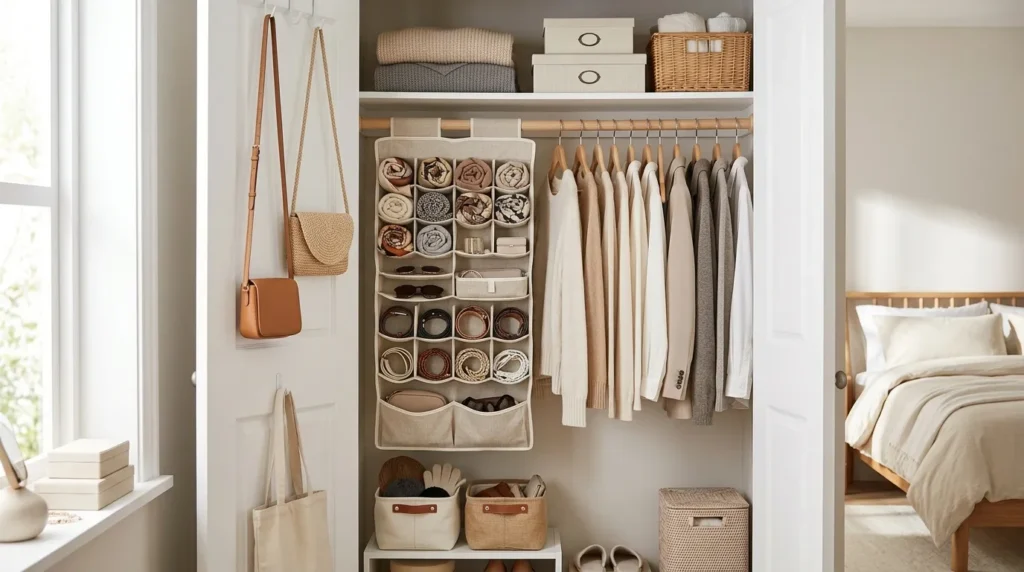
The back of a closet door is easy to overlook.
Yet it can provide a surprising amount of storage for lightweight items.
Accessories, scarves, belts, small bags, hair tools, jewelry organizers, and other compact belongings can sometimes be stored there without taking up valuable shelves or hanging space.
This solution is particularly useful in older homes and apartments where closets may be narrow.
The key is keeping the organizer slim enough that the door can still close properly.
How To Style It
Use an over-the-door organizer or a properly installed wall-mounted system suitable for your door.
Before purchasing, measure the door and check clearance.
Choose storage based on the weight of the items you plan to place there.
Lightweight accessories can work well in pocket organizers.
For heavier belongings, use a securely mounted solution designed for the load.
Group similar items together.
Keep everyday accessories at eye level.
Less frequently used items can go higher.
Avoid filling every pocket simply because it exists.
The objective is useful organization, not maximum capacity.
6. Window Bench Storage
Quick Benefits
- Turns unused space into storage
- Creates additional seating
- Adds architectural character
- Provides a reading spot
- Works well in larger windows
Why It Works
A window area can become one of the most charming storage opportunities in a bedroom.
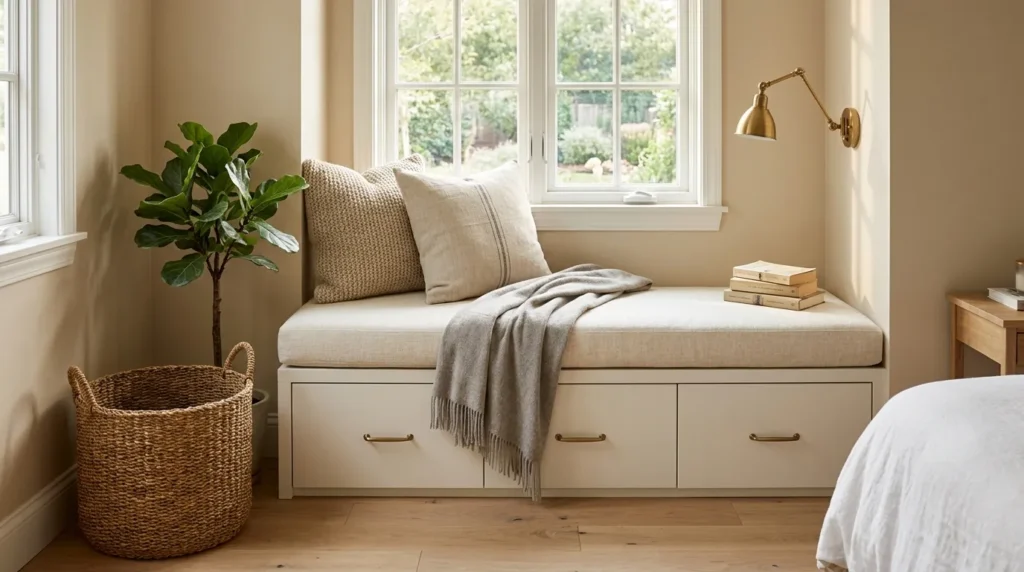
If your room has enough space beneath a suitable window, a storage bench can create a cozy reading or dressing area while concealing belongings underneath.
This works particularly well when the window area is too shallow for a conventional dresser but deep enough for a narrow bench.
The combination of seating and storage makes the furniture more useful without requiring another separate piece.
How To Style It
Choose a bench that fits the width of the window without interfering with heating systems, curtains, or required access.
Use drawers, cabinets, or a lift-up compartment depending on what works best for the room.
Store items that are used occasionally.
Extra blankets, seasonal accessories, books, and decorative pillows can work well.
Add a comfortable seat cushion.
Layer two or three pillows without filling the entire bench.
Keep the surrounding area open so the window remains a visual focal point.
Natural wood, cream upholstery, and woven textures can create a relaxed look.
7. Hidden Dresser Space
Quick Benefits
- Maximizes clothing storage
- Reduces visual bulk
- Keeps surfaces clear
- Improves bedroom flow
- Supports organized wardrobes
Why It Works
Traditional dressers can be surprisingly bulky in a small bedroom.
If a large dresser takes up too much floor space, look for furniture with a higher storage-to-footprint ratio.
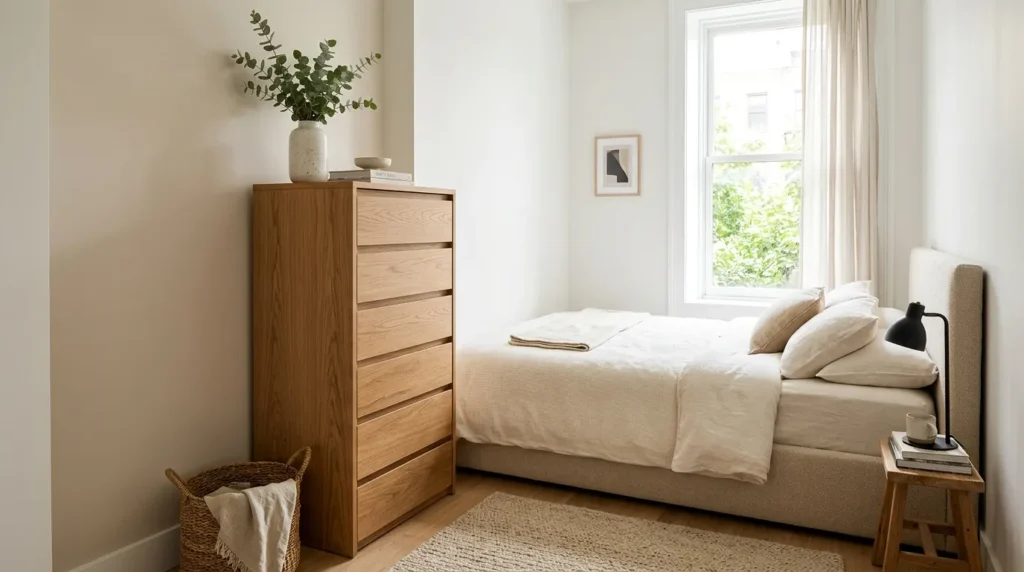
Tall narrow chests, built-in drawers, storage beds, and compact modular furniture can sometimes provide the capacity you need without spreading across a large section of the room.
Another option is using concealed storage within furniture that serves another purpose.
For example, a platform bed with drawers can reduce the need for a separate dresser.
The best solution depends on your room’s dimensions and wardrobe.
How To Style It
Measure the available wall before purchasing storage furniture.
Consider height as well as width.
A narrow tall chest can provide significant storage while preserving floor space.
Choose drawers that fully suit the clothing categories you plan to store.
Keep heavier items in lower drawers when appropriate.
Avoid placing oversized furniture directly in front of windows.
For a cohesive appearance, choose furniture finishes that connect with your bed frame or nightstands.
If the room already has substantial furniture, favor simpler silhouettes.
A clean facade with minimal hardware can help large storage pieces visually recede.
8. Floating Storage
Quick Benefits
- Frees floor space
- Creates a lighter appearance
- Uses vertical wall area
- Works in compact bedrooms
- Provides flexible organization
Why It Works
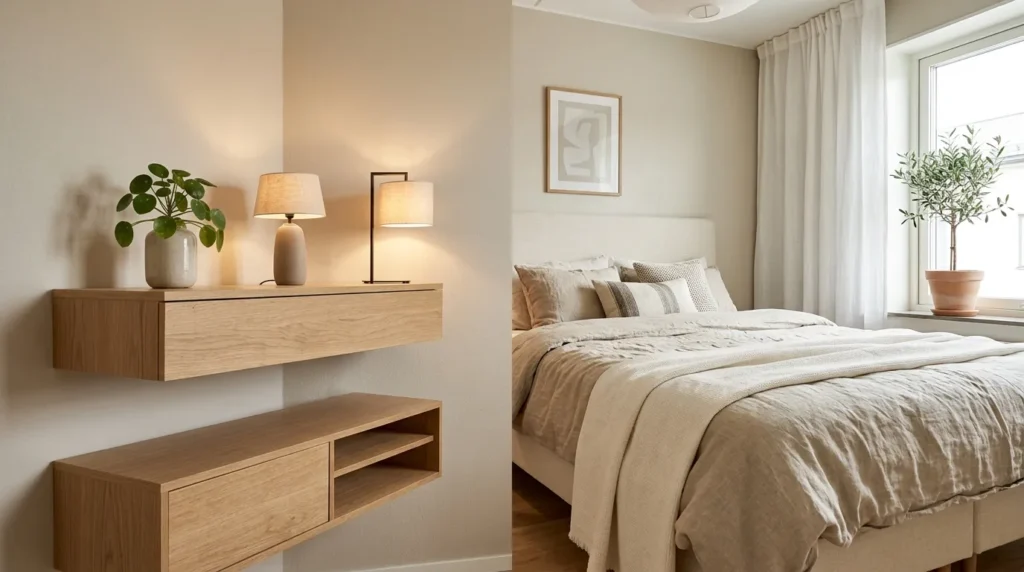
Wall-mounted furniture can make a small bedroom feel less crowded because the floor remains visible underneath.
A floating nightstand, wall-mounted cabinet, narrow shelf, or compact wall storage unit can provide useful capacity without adding another piece sitting directly on the floor.
This is particularly helpful when the bed already occupies most of the room.
Floating storage also makes cleaning around furniture easier because there are fewer obstacles on the floor.
However, installation matters.
Wall-mounted storage should be properly secured according to the manufacturer’s instructions and the wall construction.
How To Style It
Use a floating nightstand beside the bed.
A shallow wall-mounted cabinet can store small personal items.
Install a narrow shelf above a desk for books or accessories.
Keep wall storage visually simple.
Choose natural wood for warmth or white for a lighter appearance.
Avoid installing shelves too close to the bed if they create a safety concern or interfere with movement.
For renters, look for appropriately removable or freestanding alternatives when permanent installation is not allowed.
9. Basket Storage
Quick Benefits
- Conceals everyday clutter
- Adds texture
- Fits awkward spaces
- Easy to move
- Works with many decor styles
Why It Works
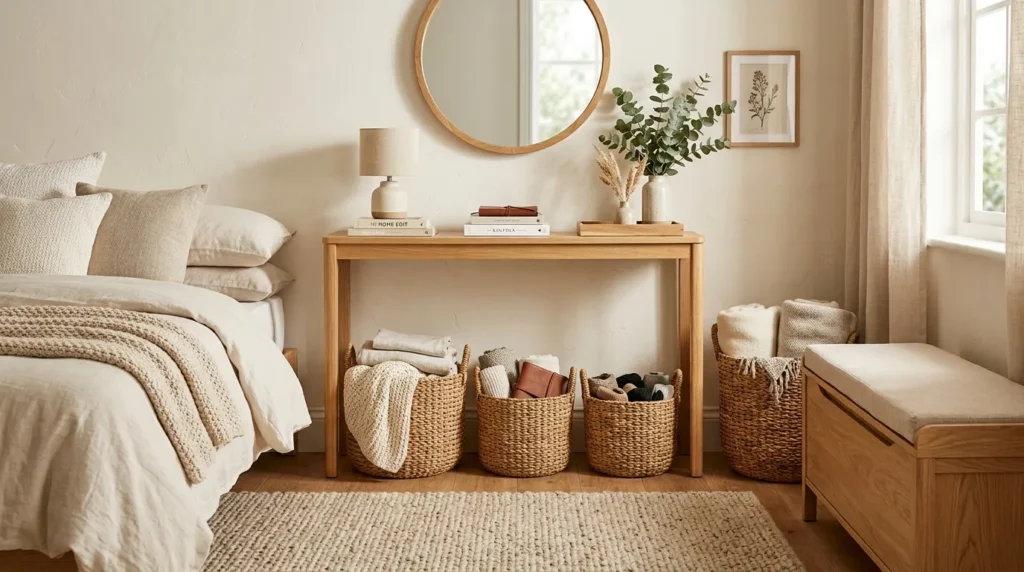
Baskets are useful because they provide hidden or semi-hidden storage without requiring a large furniture investment.
A basket can fit beneath a console, inside an open shelf, beside a dresser, or at the foot of a bed.
They are particularly helpful for belongings that need to be accessible but do not need to remain visible.
Woven baskets also introduce natural texture, which can make a small bedroom feel warmer.
The key is giving each basket a defined purpose.
When baskets become catch-all containers, they simply hide clutter rather than solving it.
How To Style It
Choose baskets that fit the available space.
Use one for extra blankets.
Another can hold accessories.
A smaller basket might collect charging cables or reading materials.
Keep the color palette consistent.
Natural seagrass, rattan, canvas, and woven fibers can complement neutral bedrooms.
Avoid using too many different basket styles.
Two or three coordinated baskets usually look more intentional than a collection of unrelated containers.
Place frequently used baskets where they are easy to reach.
If you have to move furniture to access them, the system will probably not last.
10. Multiuse Furniture
Quick Benefits
- Saves floor space
- Combines multiple functions
- Reduces furniture quantity
- Works well in small rooms
- Improves everyday efficiency
Why It Works
In a small bedroom, furniture should ideally work harder.
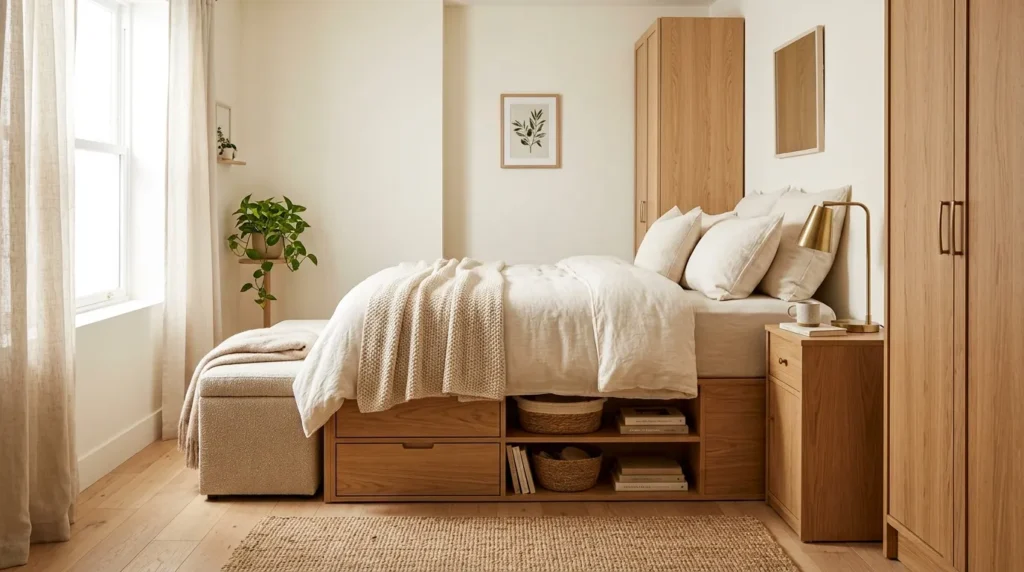
A storage bed can provide sleeping space and clothing storage.
A bench can provide seating and concealed storage.
A desk can include drawers for paperwork or accessories.
A bedside cabinet can function as both a nightstand and a small dresser.
This approach prevents the room from becoming crowded with single-purpose furniture.
One of the most useful questions to ask before buying anything is: Can this piece solve more than one problem?
If the answer is yes, it may be especially valuable in a compact room.
How To Style It
Start by listing the storage problems you actually have.
If bedding is the issue, prioritize a storage bed or ottoman.
If clothing is the issue, consider a tall narrow dresser.
If accessories are the problem, a storage headboard or bedside drawers may be more useful.
Choose furniture that fits the room’s proportions.
Avoid buying a multifunctional piece simply because it has many compartments.
The storage should be convenient and appropriate for the things you need to organize.
Keep the visible side of the furniture simple.
A calm bedroom benefits from fewer competing shapes and surfaces.
How To Decide What Belongs In Hidden Storage
Not everything should disappear into a storage container.
The best candidates are items that are:
- Used occasionally
- Seasonal
- Bulky
- Visually distracting
- Easy to categorize
- Not needed several times each day
Examples include:
- Extra bedding
- Winter clothing
- Luggage
- Special occasion accessories
- Spare pillows
- Seasonal decor
- Extra towels
- Rarely used handbags
- Keepsakes
- Occasional hobby supplies
Items you use every morning should usually remain easy to reach.
If you hide something you need constantly, you may create a system that looks beautiful but becomes frustrating to maintain.
Convenience matters.
Good organization reduces the number of steps required to put something away.
How To Make Hidden Storage Stay Organized
Hidden storage only works when you can find things later.
Start with categories.
Instead of throwing everything into one under-bed container, divide belongings by purpose.
For example:
Container 1: Winter accessories
Container 2: Spare bedding
Container 3: Shoes
Container 4: Sentimental items
Label containers clearly.
You can also create a simple inventory for less frequently used storage.
This is especially helpful for seasonal belongings.
Another useful rule is leaving some empty space.
A container filled completely to the top may look efficient, but it becomes difficult to use.
Leave enough room to remove individual items without emptying the entire container.
Small Bedroom Storage Mistakes To Avoid
Buying Too Many Organizers
Storage products cannot solve a clutter problem if the room already contains too many belongings.
Declutter first.
Blocking Walking Paths
Never sacrifice comfortable movement simply to gain additional storage.
Ignoring Measurements
Measure furniture, doors, drawers, closet clearance, and under-bed height before purchasing anything.
Using Every Wall
Not every empty wall needs a shelf.
Too much vertical storage can make a small bedroom feel visually busy.
Creating Catch-All Bins
Every storage container should have a clear purpose.
Storing Everyday Items Too Far Away
Convenience determines whether an organizational system survives.
Forgetting Lighting
Storage furniture should not make the bedroom darker or block natural light.
Overfilling Furniture
Leave room for belongings to move in and out easily.
The best small-bedroom organization system is one that you can maintain without thinking about it constantly.
FAQ
How can I add storage to a very small bedroom?
Start with unused areas rather than adding bulky furniture. Under-bed drawers, storage headboards, floating nightstands, closet-door organizers, storage benches, and tall narrow furniture can increase capacity without consuming much additional floor space. Before purchasing anything, measure the room carefully and identify the specific category of belongings that needs a home.
What should I store under my bed?
Under-bed storage is useful for seasonal clothing, spare bedding, shoes, luggage, accessories, and other belongings you do not need every day. Use containers appropriate for the environment and protect items from dust when necessary. Label each container so you can find things easily without pulling everything out.
How do I organize a small bedroom without a closet?
Use alternative storage areas such as a storage bed, tall dresser, slim wardrobe, under-bed containers, hooks, baskets, floating shelves, and an over-the-door organizer. A clothing rack can also work when there is no closet, although keeping it visually edited is important. Choose storage based on your actual wardrobe rather than trying to fit everything into the room.
Is hidden storage better than open storage?
Hidden storage can make a small bedroom feel calmer because fewer belongings remain visible. However, open storage can be useful for frequently used items. The best approach is usually a combination: keep everyday essentials accessible while concealing seasonal, bulky, or visually distracting belongings.
How do I organize a small bedroom with too much furniture?
Begin by identifying which furniture pieces provide the least value. Consider replacing separate pieces with multifunctional furniture, such as a storage bed or storage bench. Rearrange remaining furniture to improve walking paths. You may discover that removing one oversized piece creates more usable space than adding another organizer.
What is the best storage furniture for a small bedroom?
Storage beds, tall narrow dressers, compact wardrobes, storage ottomans, multifunctional benches, and floating nightstands can all work well. The best option depends on what you need to store and the room’s dimensions. Prioritize furniture that provides useful storage while preserving comfortable movement.
How do I keep a small bedroom organized?
Give every major category a designated home and make sure that home is convenient to reach. Perform short weekly resets, return belongings after use, and periodically review storage containers for items you no longer need. Avoid filling every available space. Leaving some capacity makes the system easier to maintain.
Conclusion
Organizing a small bedroom does not require a major renovation or a wall full of storage furniture.
Often, the biggest opportunity is hiding storage in places you already have.
The space beneath the bed can hold seasonal belongings. A storage headboard can replace a bulky bedside cabinet. An ottoman can provide seating while concealing blankets. Floating furniture can keep the floor open, while closet-door organizers can turn overlooked vertical space into useful storage.
The most important step is to organize according to your lifestyle.
Keep frequently used items within easy reach. Store seasonal and occasional belongings farther away. Give each container a specific purpose, and label things when that will make them easier to find.
Also remember that organization is not the same as filling every empty space.
A small bedroom needs breathing room.
If you are starting from scratch, declutter before buying storage products. Remove belongings that no longer serve you, then identify the categories that remain difficult to store.
From there, choose furniture and organizers that solve those specific problems.
Start with one area today—perhaps the space under your bed or one bedside drawer.
A small improvement can make the entire bedroom feel easier to use.
With the right combination of hidden storage, multifunctional furniture, and simple habits, even a compact bedroom can feel organized, comfortable, and intentionally designed.
Related Articles
- 10 Small Bedroom Organization Ideas That Save Space
- 11 Small Bedroom Ideas for a More Spacious Feel
- 10 Bedroom Storage Ideas Without a Closet
- 10 Small Bedroom Furniture Ideas for Better Organization
- 11 Minimalist Bedroom Ideas for a Calm, Clutter-Free Space