
How to Declutter Your Home Before Spring
There is something refreshing about opening the windows after a long winter and realizing your home is ready for a reset. But before you bring out spring flowers, lighter textiles, and fresh seasonal decor, there is one step that can make everything else feel easier: decluttering.
Winter has a way of making homes feel fuller. Coats accumulate near the entryway, heavier blankets stay on the sofa, seasonal decorations remain tucked into corners, and drawers gradually collect things that seemed useful at the time. By the time spring arrives, even a reasonably tidy home can feel visually crowded.
The good news is that spring decluttering does not have to mean spending an entire weekend emptying every closet.
A more practical approach is to work through your home by category and function. Remove things you no longer use, reduce duplicates, create homes for items that tend to wander, and make everyday spaces easier to maintain.
In my experience, the most successful decluttering sessions are not about creating an almost-empty house. They are about making the home work better for the people who live there.
That means keeping the winter items you genuinely need, donating things that no longer serve you, organizing seasonal belongings before storing them, and resisting the temptation to replace clutter with new storage containers.
Spring is also a useful time to notice which areas repeatedly become messy. If shoes always pile up by the door, the solution may be a better drop zone rather than another reminder to tidy. If the kitchen counter constantly fills with appliances, perhaps frequently used items need a more convenient home.
These ideas will help you approach spring decluttering room by room without turning the process into an overwhelming project.
You can work through the entire home in a few focused sessions or choose one area at a time. The goal is a home that feels lighter, easier to clean, and more comfortable as the new season begins.
Table of Contents

1. Start With Entryways
Clear winter clutter from the areas that create the first impression of your home.
2. Refresh Winter Storage
Sort coats, blankets, boots, and seasonal belongings before putting them away.
3. Simplify The Kitchen
Reduce duplicate tools and rarely used items that consume valuable cabinet space.
4. Clear Bathroom Counters
Create calmer bathrooms by removing expired, unused, and unnecessary products.
5. Edit Bedroom Closets
Make getting dressed easier by reviewing clothing, shoes, and accessories.
6. Reset Living Areas
Remove visual clutter and create more breathing room around everyday furniture.
7. Sort Paper Piles
Reduce paperwork and establish a simple system for important documents.
8. Tackle Hidden Drawers
Use small storage spaces as opportunities to remove forgotten clutter.
9. Create Donation Zones
Make unwanted items easier to remove so they do not return to the house.
10. Build Simple Habits
Use small daily routines to keep your newly decluttered home manageable.
1. Start With Entryways
Quick Benefits
- Creates an immediate sense of order
- Makes leaving home easier
- Reduces floor clutter
- Gives seasonal items a proper home
- Makes the entry feel more welcoming
Why It Works
The entryway often becomes a collection point for everything that comes in and out of the house. During winter, that can mean boots, coats, scarves, umbrellas, bags, gloves, and packages all competing for limited space.
Because you see the entryway every time you come home, clutter here can make the entire house feel messier than it actually is.
Starting with this area also provides an encouraging early win. You can usually make a noticeable difference without sorting hundreds of belongings.
A useful question is simple: What genuinely needs to live here?
Anything that belongs elsewhere should move. Anything you no longer use should leave. What remains should have an easy-to-reach home.
How To Style It
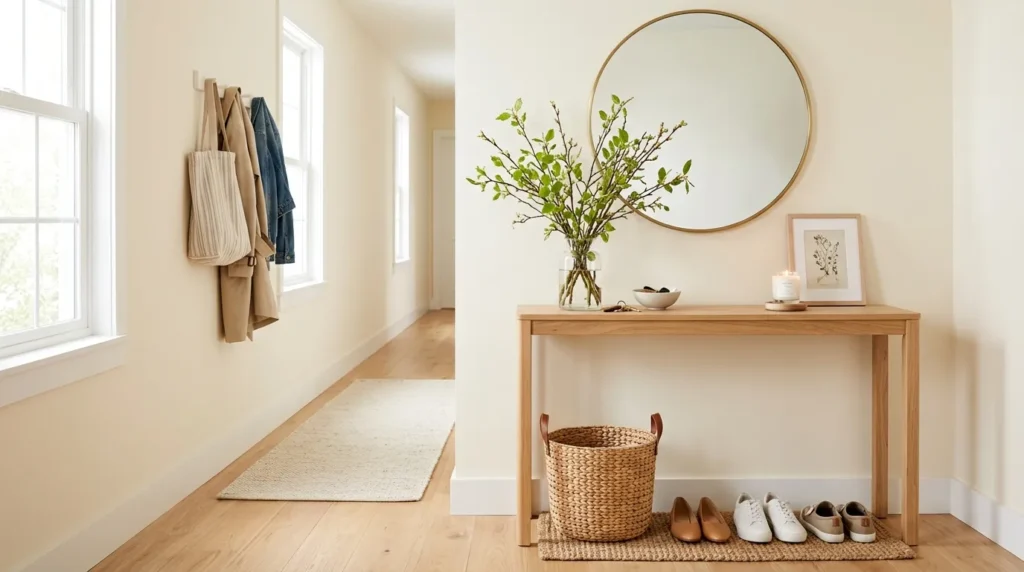
Begin by removing everything from the entryway floor, bench, console, hooks, or nearby baskets.
Separate items into four groups: keep here, move elsewhere, donate, and discard.
Store heavy winter accessories that you will not need regularly in a labeled basket or closet container.
Keep everyday items accessible.
A small tray can hold keys and sunglasses. A basket can contain frequently used accessories. A narrow bench can provide seating while also offering storage underneath.
For a small apartment entry, use vertical hooks and slim furniture rather than bulky cabinets.
Keep decorative accessories minimal.
One mirror, a small plant, or a simple vase may be enough to make the area feel finished without creating another surface that needs dusting.
2. Refresh Winter Storage
Quick Benefits
- Makes closets easier to use
- Prevents unnecessary storage
- Protects seasonal belongings
- Reveals items you no longer need
- Makes next winter easier
Why It Works
Spring is one of the best times to evaluate winter belongings because you have just spent several months using them.
Instead of automatically putting everything away, take a moment to ask whether each item earned its storage space.
Did you actually wear that coat?
Did the extra blankets get used?
Are there gloves with no matching pair?
Are there scarves you repeatedly skipped?
Seasonal storage can quietly become one of the largest sources of household clutter because items may remain untouched for most of the year.
Editing before storing means you are not simply moving clutter from one location to another.
How To Style It
Wash or clean seasonal textiles according to their care instructions before storing them.
Check coats, boots, blankets, hats, and accessories for damage.
Create a donation pile while the items are still in front of you.
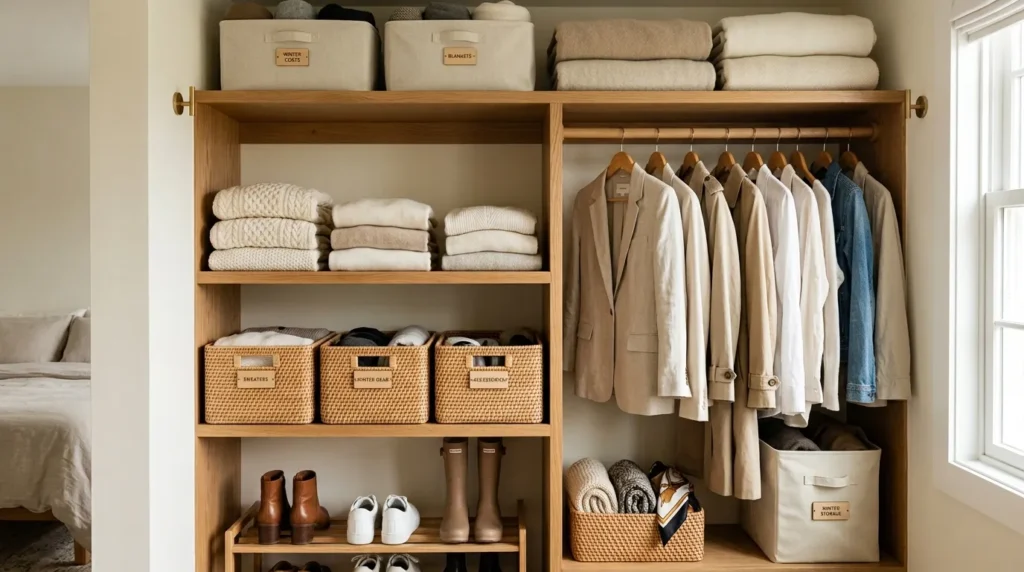
Use breathable storage appropriate for the materials rather than squeezing everything into oversized plastic containers.
Fold blankets neatly and store them together.
Keep winter accessories in clearly labeled bins.
If closet space is limited, use under-bed storage for suitable seasonal items.
Do not pack containers so tightly that removing one item requires unpacking everything.
Leave a little breathing room.
A simple label such as “Winter Accessories” or “Cold Weather Bedding” can save time when temperatures drop again.
3. Simplify The Kitchen
Quick Benefits
- Creates more usable counter space
- Makes cooking easier
- Reduces duplicate items
- Improves cabinet access
- Makes cleaning faster
Why It Works
Kitchen clutter is often less about having too many things overall and more about having too many things competing for convenient space.
You may own several water bottles, food storage containers without matching lids, duplicate utensils, specialty gadgets, or serving pieces that rarely leave the cabinet.
Spring cleaning gives you an opportunity to evaluate what actually supports your cooking habits.
A useful test is frequency.
If you use something weekly, it deserves convenient access.
If you have not used something in a very long time and it has no meaningful purpose, consider whether keeping it is worthwhile.
The goal is not a perfectly empty kitchen. It is a kitchen where useful things are easy to find.
How To Style It
Start with one cabinet or drawer rather than emptying the entire kitchen.
Remove everything and group similar items together.
Match food storage containers with their lids.
Recycle or discard damaged pieces according to local guidance.
Review duplicate utensils and appliances.
Pay special attention to counters.
If an appliance is used every day, leaving it accessible may make sense.
If it is used only occasionally, storing it can create valuable visual space.
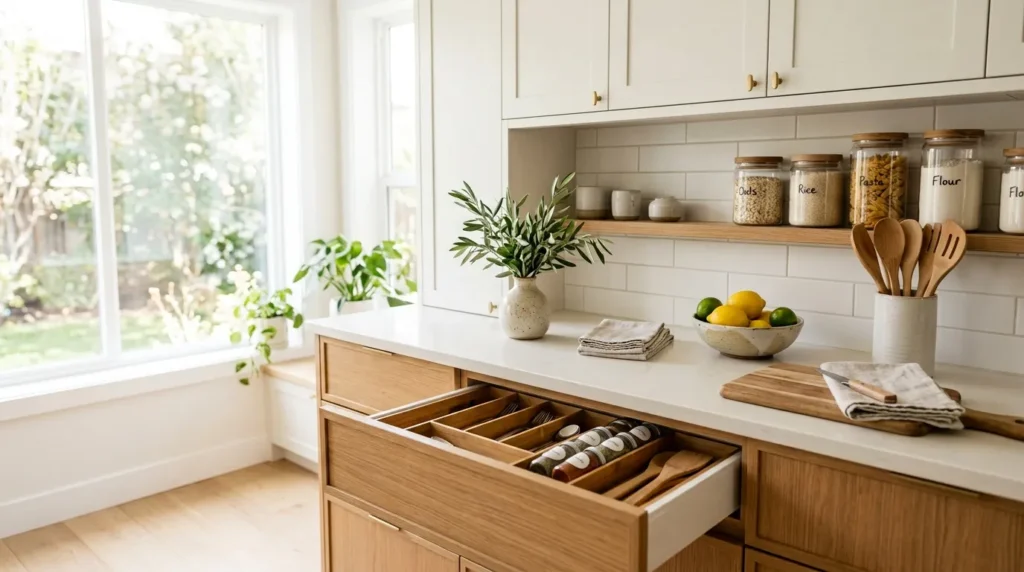
Use drawer dividers for utensils and simple shelf risers when they genuinely improve access.
Keep countertops as clear as practical.
A small cutting board, fruit bowl, or vase can provide warmth without turning the counter into a storage area.
4. Clear Bathroom Counters
Quick Benefits
- Makes the bathroom feel cleaner
- Simplifies daily routines
- Reduces expired products
- Creates more visible counter space
- Makes cleaning easier
Why It Works
Bathrooms often collect products gradually.
A new shampoo replaces an old one. Skincare products move onto the counter. Makeup accumulates in drawers. Travel-size bottles come home and somehow stay for months.
Because bathrooms are relatively small, even a few unnecessary items can make them feel crowded.
Spring is a good time to check expiration dates and usage.
If you consistently avoid a product because you dislike its texture, scent, color, or performance, keeping it simply because you bought it does not make the bathroom more functional.
The same applies to worn-out towels and empty containers.
How To Style It
Remove everything from the bathroom counter and sort products by category.
Check labels and expiration guidance.
Dispose of products according to their packaging instructions and local disposal requirements.
Group everyday skincare, haircare, and grooming items together.
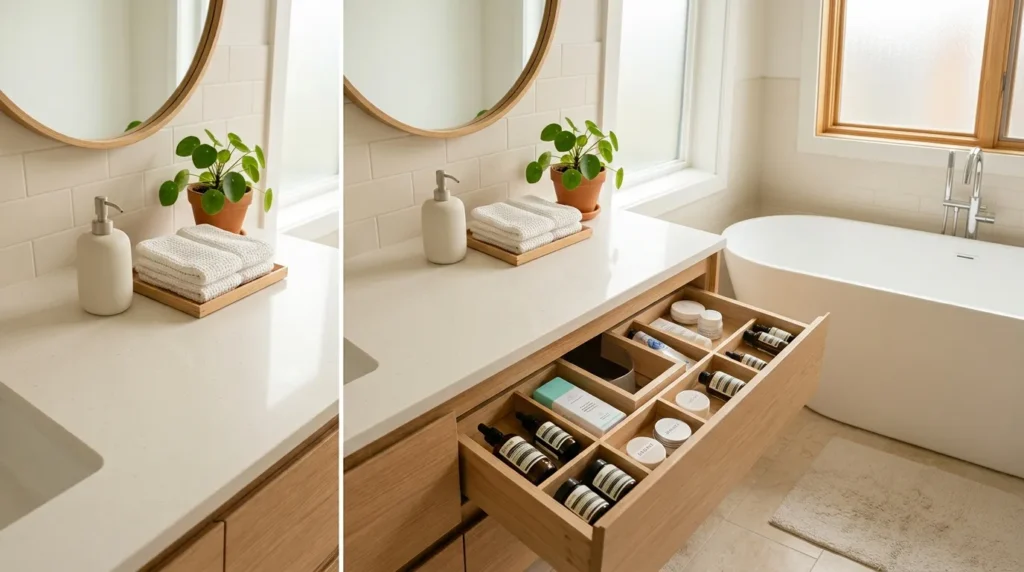
Use a small tray to contain frequently used products.
Store backup supplies in a cabinet or designated basket rather than mixing them with daily items.
Review towels and washcloths.
Keep the best-condition towels in regular rotation and repurpose or appropriately dispose of heavily worn ones.
For the visual finish, choose one or two simple decorative elements such as a small plant, ceramic container, or neatly folded hand towel.
The result should feel calm rather than crowded.
5. Edit Bedroom Closets
Quick Benefits
- Makes clothing easier to find
- Reduces wardrobe frustration
- Creates more closet space
- Reveals unworn pieces
- Simplifies seasonal transitions
Why It Works
Closets are easier to declutter when you evaluate clothes based on your actual lifestyle rather than an imagined version of yourself.
A piece may have looked perfect in the store but never become part of your regular wardrobe.
Another item may be uncomfortable, difficult to style, damaged, or simply no longer feel like you.
Spring is a natural transition point for reviewing these pieces.
You do not need to create an ultra-minimal wardrobe.
Instead, aim for a closet where the clothing you regularly enjoy wearing is easy to see and reach.
That makes mornings less frustrating and reduces the tendency to buy duplicates simply because you forgot what you already own.
How To Style It
Start with one clothing category.
For example, review sweaters before moving to tops or shoes.
Ask practical questions:
Does it fit?
Do I wear it?
Is it comfortable?
Would I buy it again today?
Does it need repair?
If you are keeping something only because you feel guilty about the money already spent, consider whether the item is actually helping you now.
Separate donations immediately.
Do not leave them in a closet corner.
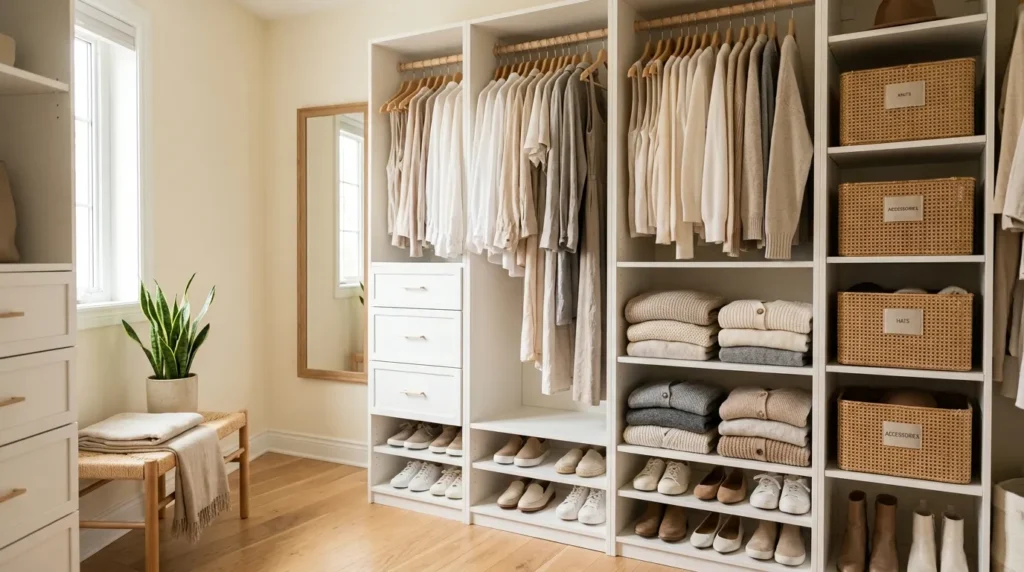
Use matching hangers if you already have them, but do not feel that you need to buy a complete organizing system.
Arrange clothes by category or color according to whichever method makes them easiest for you to find.
6. Reset Living Areas
Quick Benefits
- Creates visual breathing room
- Makes cleaning easier
- Improves furniture flow
- Highlights favorite decor
- Makes the room feel refreshed
Why It Works
Living rooms often accumulate clutter because they are used for so many different activities.
Books, toys, blankets, chargers, remote controls, mail, hobby supplies, and decorative objects can slowly take over tables and shelves.
The solution is not necessarily to make the room minimalist.
Instead, create a distinction between things that belong in the room and things that simply landed there.
Spring is also a great time to remove heavier winter layers.
A thick blanket may still be useful, but perhaps only one needs to remain on the sofa.
Reducing visual weight can make the room feel fresher without buying new decor.
How To Style It
Begin with surfaces.
Clear the coffee table, side tables, shelves, and media console.
Return misplaced objects to their proper rooms.
Then evaluate decorative items.
If every shelf is filled, remove a few pieces and see whether the remaining objects have more impact.
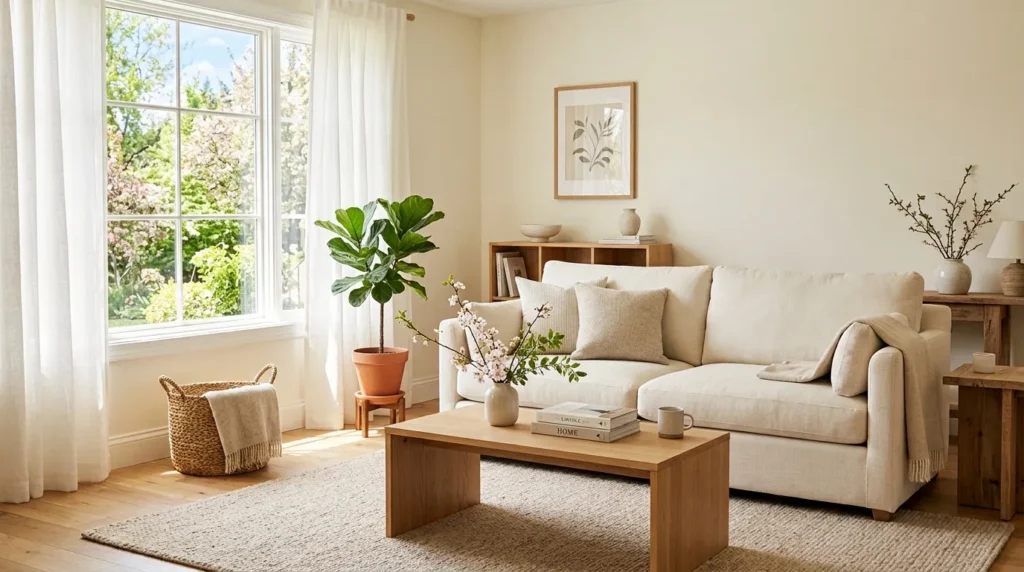
Use a basket for everyday throws.
Keep remote controls in one accessible location.
Create a small charging area if cords frequently accumulate.
Reposition furniture if the layout feels cramped.
Make sure pathways around sofas, chairs, and tables remain comfortable.
Finally, add a few spring touches if desired.
Fresh flowers, lighter pillows, a natural-texture throw, or a small branch arrangement can refresh the room without introducing significant clutter.
7. Sort Paper Piles
Quick Benefits
- Reduces visual mess
- Protects important paperwork
- Makes documents easier to locate
- Prevents duplicate paperwork
- Creates a sustainable system
Why It Works
Paper clutter can be particularly stressful because not every document can simply be thrown away.
Bills, tax records, insurance paperwork, receipts, warranties, school documents, medical records, and household information may all have different retention needs.
That is why paper decluttering should be handled carefully.
Rather than making decisions based on guesswork, identify what each document is and follow applicable financial, legal, tax, or professional guidance for records you may need to retain.
The biggest improvement often comes from separating action items from reference documents.
When everything sits in one pile, even important paperwork becomes difficult to find.
How To Style It
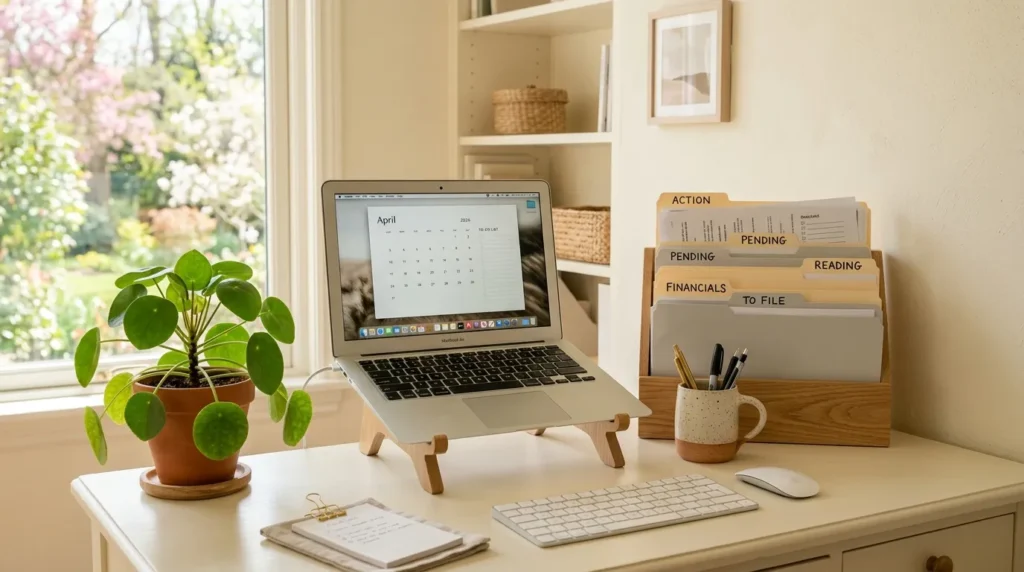
Create simple categories.
You might use:
- Action
- File
- Shred
- Recycle
Keep current action items in one clearly defined location.
File important records according to a system you can realistically maintain.
Digitize documents when appropriate and permitted, while keeping originals that are required.
Use a small desktop file box or drawer for frequently accessed papers.
Avoid buying a complicated filing system before you understand what you actually need.
If a document contains sensitive personal information, dispose of it securely rather than placing it directly into ordinary recycling.
A ten-minute weekly paper reset can prevent the next large pile from developing.
8. Tackle Hidden Drawers
Quick Benefits
- Finds forgotten clutter
- Creates useful storage space
- Reduces duplicates
- Makes small areas easier to maintain
- Builds momentum quickly
Why It Works
Some of the easiest clutter to ignore lives behind closed doors.
Junk drawers, bedside tables, desk drawers, bathroom cabinets, and utility cupboards can become storage zones for items that do not have a clear home.
Because the mess is hidden, it may not feel urgent.
But these spaces are often surprisingly easy to improve.
A single drawer can usually be completed in minutes, which makes it an excellent task when you do not have an entire afternoon available.
Small wins also create momentum.
Once one drawer is organized, tackling the next one feels much less intimidating.
How To Style It
Choose one drawer.
Empty it completely.
Group similar objects together.
Discard obvious trash and broken items.
Move objects that belong elsewhere.
Then decide what genuinely deserves to return.
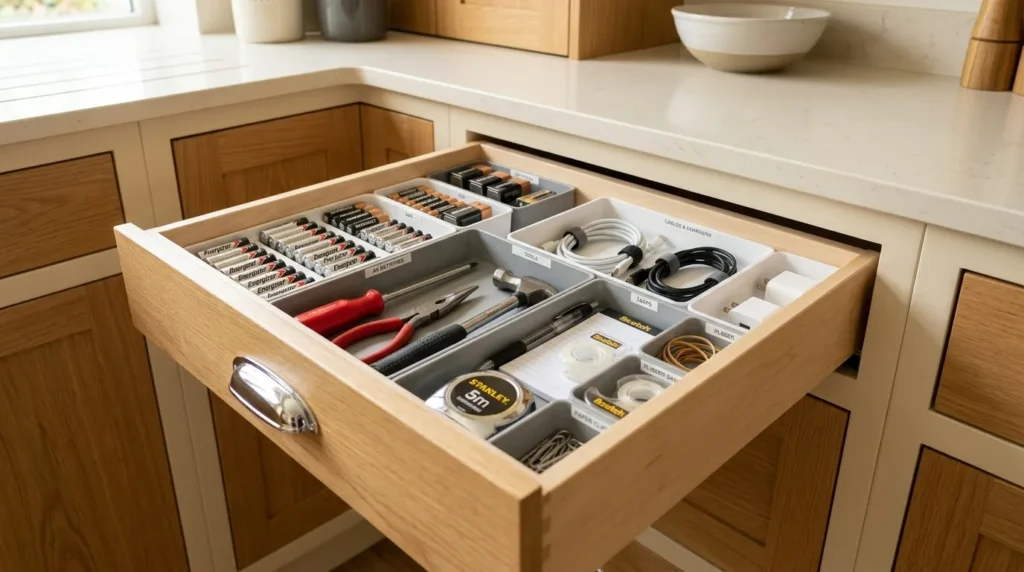
Use small containers or dividers only when they make the contents easier to access.
Do not create tiny categories for every individual object.
A simple divider with sections for batteries, small tools, and household odds and ends may be enough.
Keep frequently used items toward the front.
Rarely used items can move farther back or into more appropriate storage.
Repeat the process with another drawer when you have time.
9. Create Donation Zones
Quick Benefits
- Prevents unwanted items from returning
- Makes decluttering more decisive
- Keeps donations organized
- Encourages faster removal
- Simplifies future decluttering
Why It Works
One of the biggest problems with decluttering is the delay between deciding something should leave and actually getting it out of the house.
A donation bag sitting in the hallway for three weeks is technically no longer clutter you want, but it is still occupying your home.
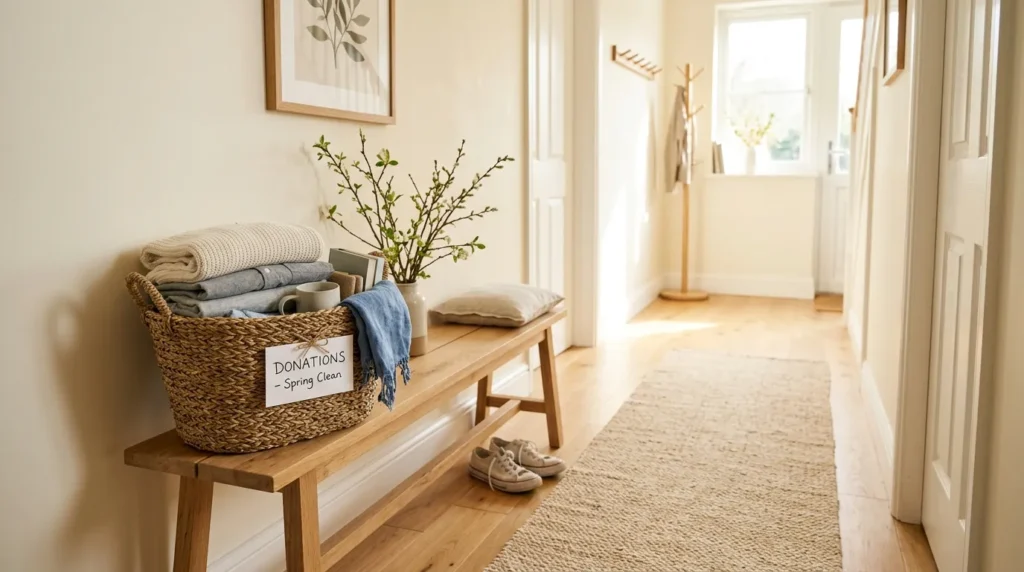
Creating a dedicated temporary donation zone gives unwanted belongings a clear next step.
The important part is setting a reasonable deadline for moving donations onward.
For items that can be donated, choose a reputable local organization or donation center and confirm its current acceptance policies before making the trip.
Not everything belongs in a donation bin.
Some damaged, unsafe, or unsuitable items need different disposal methods.
How To Style It
Keep one sturdy bag or box in an accessible but unobtrusive location.
As you declutter, place suitable donation items directly inside.
Do not let the container become an indefinite storage area.
When it is full, schedule the next step.
You can also create separate categories for recycling, household hazardous waste, electronic recycling, or other disposal methods where appropriate.
For valuable items you plan to sell, create a separate area and set a realistic deadline.
If something has not sold within your chosen timeframe, decide whether donating it is the better option.
The purpose is movement.
Decluttering works best when things actually leave.
10. Build Simple Habits

Quick Benefits
- Makes clutter easier to control
- Reduces future cleaning
- Protects your decluttering progress
- Creates predictable routines
- Prevents large buildup
Why It Works
A major decluttering session can make your home feel wonderful, but the long-term difference comes from what happens afterward.
The goal is not to constantly clean.
It is to make small habits automatic enough that clutter does not have time to become overwhelming.
A few minutes of daily resetting can be more sustainable than waiting for an entire weekend to clean the house.
The best routines are simple.
Put things back after use.
Deal with mail when it enters the house.
Return clothing to the closet or laundry area.
Keep surfaces reasonably clear.
Do a quick evening reset of the main living areas.
How To Style It
Choose routines that fit your actual schedule.
You might spend five minutes each evening returning misplaced items to their homes.
Once a week, review the refrigerator, entryway, or paper pile.
Once a month, choose one small storage area for a quick edit.
Avoid creating a long checklist that becomes another source of stress.
A useful rule is the “one in, one out” approach for certain categories.
If you buy a new sweater, consider whether an old one should leave.
If you bring home another decorative object, decide where it will live before purchasing it.
The purpose is not perfection.
It is creating a home that is easier to maintain because everything has a reasonable place.
A Simple Spring Decluttering Plan
If the idea of decluttering the entire house feels overwhelming, divide the project across several days.
Day 1: Entryway
Remove winter accessories, unnecessary shoes, bags, and miscellaneous items.
Day 2: Kitchen
Focus on one or two cabinets, the pantry, and countertop clutter.
Day 3: Bathroom
Review products, towels, drawers, and under-sink storage.
Day 4: Bedroom
Edit clothing, shoes, accessories, and bedside clutter.
Day 5: Living Room
Clear surfaces, review decor, and remove winter layers.
Day 6: Paperwork
Create action, filing, shredding, and recycling categories.
Day 7: Hidden Storage
Choose drawers, cabinets, baskets, or closets that repeatedly become messy.
You can complete the plan in seven consecutive days or spread it over several weeks.
The important thing is to keep the sessions manageable.
What To Declutter Before Spring
If you are unsure where to begin, these categories often provide a useful starting point:
- Winter clothing that went unworn
- Damaged shoes
- Single gloves or unmatched accessories
- Worn-out blankets
- Duplicate kitchen tools
- Food containers without matching lids
- Expired bathroom products
- Old makeup or skincare products
- Clothes that no longer fit your lifestyle
- Broken household items
- Unused decorative objects
- Outdated paperwork
- Empty packaging
- Old magazines
- Unused hobby supplies
- Duplicate cleaning products
- Toys or games no longer used
- Unnecessary cords and chargers
- Forgotten items in junk drawers
Do not automatically discard something simply because it has not been used recently.
Consider sentimental value, safety, future necessity, replacement cost, and whether the item has a specific purpose.
Decluttering should be thoughtful rather than impulsive.
How To Avoid Spring Decluttering Burnout
One mistake many homeowners make is trying to declutter the entire house in one enormous session.
That sounds productive, but it can quickly become exhausting.
You may end up with half-finished piles in every room and no energy to complete them.
Instead, work in contained zones.
Finish one drawer before opening another.
Finish one closet category before moving to another.
Complete the donation bag before creating a second one.
Take breaks.
Drink water.
If you become unsure about an item, create a small “decide later” box rather than spending ten minutes debating every object.
Set a deadline to revisit that box.
The goal is steady progress.
A home does not become clutter-free because you made hundreds of decisions in one afternoon.
It becomes easier to maintain because you consistently make useful decisions over time.
FAQ
When is the best time to declutter for spring?
Late winter and early spring are practical times to begin because seasonal belongings are naturally changing. You can review winter clothing and accessories before storing them, then gradually transition the home toward lighter seasonal items. There is no need to wait for a specific date. Starting when your household schedule allows is more useful than trying to complete everything at once.
What should I declutter before spring?
Start with items associated with winter and areas that became crowded during the colder months. Coats, boots, scarves, blankets, seasonal decor, unused clothing, bathroom products, kitchen duplicates, paperwork, and hidden drawer clutter are useful categories to review. Focus on things you no longer use, need, enjoy, or have a practical reason to keep.
How can I declutter my house quickly?
Work in small, defined zones rather than moving from room to room randomly. Choose one drawer, shelf, cabinet, or category and finish it before starting another. Use clear categories such as keep, relocate, donate, recycle, and discard. Removing unwanted items from the house promptly is also important because unfinished donation piles can become another form of clutter.
How do I decide what to get rid of?
Ask whether you use the item, whether it works, whether it fits your current lifestyle, and whether you would choose to own it again today. Also consider sentimental value and practical necessity. Avoid making decisions solely because something has not been used recently; some items are intentionally seasonal or needed only occasionally.
How do I declutter without becoming overwhelmed?
Break the project into short sessions and choose one contained area at a time. A drawer or small cabinet can take only a few minutes. Avoid emptying the entire house simultaneously. If you feel stuck, temporarily set aside uncertain items and continue with easier decisions. Progress does not need to happen all at once to make a meaningful difference.
What should I do with items I no longer want?
Choose the appropriate destination based on the item’s condition and type. Usable belongings may be donated or sold, while recyclable, electronic, hazardous, or damaged items may require specialized disposal. Check local rules and the current policies of donation or recycling organizations before dropping anything off.
How do I keep my home decluttered after spring cleaning?
Create small maintenance habits. Return items after using them, process incoming mail promptly, keep donation bags moving out of the house, and perform short weekly resets. Periodically review categories that tend to accumulate clutter. The goal is not to maintain a perfect home but to prevent small amounts of clutter from becoming overwhelming again.
Conclusion
Spring decluttering is about much more than making a home look tidy for a new season.
It is an opportunity to notice what is working, what is taking up unnecessary space, and what could make everyday life easier.
Start with the areas you see and use most often. Clear the entryway so coming home feels calmer. Review winter belongings before storing them. Simplify kitchen cabinets and bathroom counters. Edit your closet based on the clothes you genuinely wear. Then move into living spaces, paperwork, drawers, and other hidden storage areas.
You do not need to throw away everything.
A comfortable, personal home should contain things you use, love, and genuinely need. The objective is to remove the items that create friction while keeping the things that support your lifestyle.
Most importantly, give unwanted belongings a clear destination. Donations should leave the house, recyclable items should be recycled appropriately, and paperwork should be handled according to its importance.
Once the major reset is complete, focus on small habits rather than another giant cleaning project.
A five-minute evening reset, a weekly paper review, or a seasonal closet check can keep the home feeling manageable.
Spring is a natural opportunity for a fresh start, but you do not have to transform your entire house overnight.
Choose one drawer, one closet, or one room today.
Make a few thoughtful decisions.
Then keep going at a pace that works for you.
The result will not simply be a cleaner-looking home. It will be a home with more breathing room, easier routines, and more space for the things that actually matter.
Related Articles
- 10 Home Organization Ideas for a Clutter-Free House
- 11 Spring Home Decor Ideas for a Fresh Seasonal Look
- 10 Small Bedroom Organization Ideas That Save Space
- 10 Kitchen Decluttering Ideas for a More Organized Home
- 11 Easy Home Cleaning Tips for a Fresh Start