10 DIY Garden Projects That Save Money
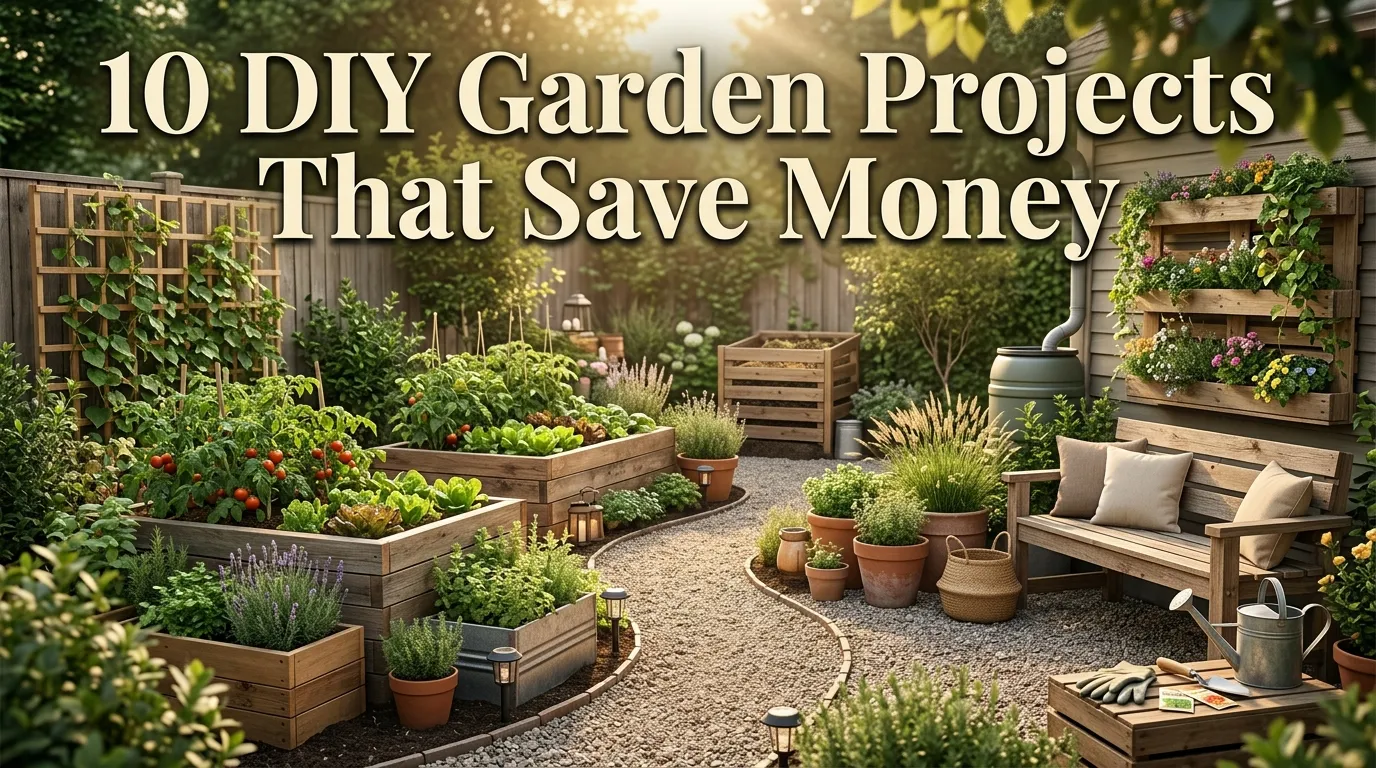
Creating a beautiful garden does not have to mean spending hundreds of dollars on raised beds, planters, garden décor, pathways, trellises, and outdoor storage.
In fact, some of the most useful garden improvements can be made with materials you already have around the house.
A few leftover boards can become a simple planter. An old container can become a colorful herb garden. Fallen branches can turn into rustic supports for climbing plants. Even cardboard, newspaper, stones, and kitchen scraps can become useful gardening resources instead of going straight into the trash.
That is one of my favorite things about DIY gardening: you can improve the way your garden looks and functions while being thoughtful about your budget.
The key is knowing where to spend money and where you can improvise.
For example, good soil is usually worth investing in when your existing soil needs improvement. Quality hand tools can also save frustration over time. But decorative planters, garden markers, trellises, edging, and some storage solutions can often be made for much less with basic materials.
If you’re gardening in a suburban backyard, a small patio, a rental property, or even a compact urban space, these ideas can be adjusted to fit what you already have.
The projects below focus on practical savings rather than complicated crafts.
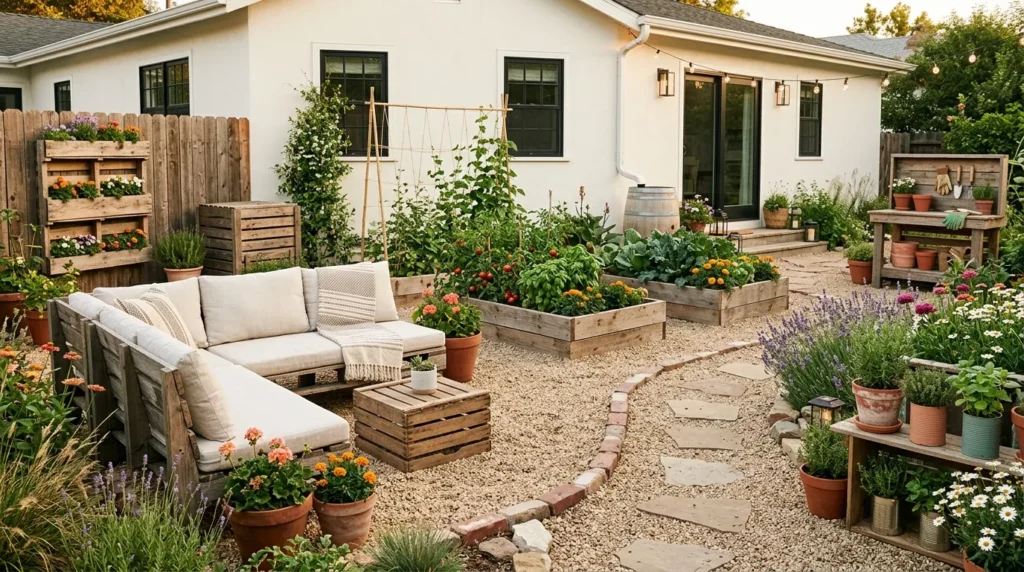
You will find ways to reuse containers, create inexpensive garden beds, make natural supports, build simple composting systems, save water, organize tools, and add decorative details without turning your garden budget into a major expense.
The best part is that these projects can also make your garden feel more personal.
Instead of buying everything from the same store, you can create a space with character—one that looks collected, useful, and lived-in.
Before buying another garden accessory, look around your home, garage, shed, or yard.
You may already have the materials for your next project.
Table of Contents
1. Upcycled Planters
Turn everyday containers into attractive homes for flowers, herbs, and vegetables.
2. Simple Raised Beds
Create productive growing areas with affordable materials and straightforward construction.
3. DIY Garden Trellis
Give climbing plants support without purchasing an expensive ready-made structure.
4. Homemade Compost Bin
Turn suitable household and yard materials into useful garden compost.
5. Recycled Garden Edging
Define garden beds using inexpensive or repurposed materials.
6. DIY Rainwater Collection
Capture suitable rainwater to reduce reliance on treated water for appropriate garden uses.
7. Budget Garden Path
Create an attractive walkway using affordable natural or reclaimed materials.
8. Homemade Plant Markers
Make simple garden labels from materials you already have.
9. DIY Tool Storage
Keep gardening tools organized without purchasing a dedicated storage system.
10. Seed Starting Station
Create an inexpensive setup for starting plants from seed at home.
1. Upcycled Planters
Quick Benefits
- Gives old containers a second life
- Costs less than buying decorative planters
- Adds personality to the garden
- Works for flowers, herbs, and some vegetables
- Makes small spaces more flexible
Why It Works
Planters are one of the easiest places to save money in a garden.
Commercial containers can become surprisingly expensive, especially when you want several matching pots for a patio, porch, balcony, or container garden.
But plants generally do not care whether their container came from a garden center.
What matters is whether the container is appropriate for the plant, has enough room for roots, and allows excess water to drain.
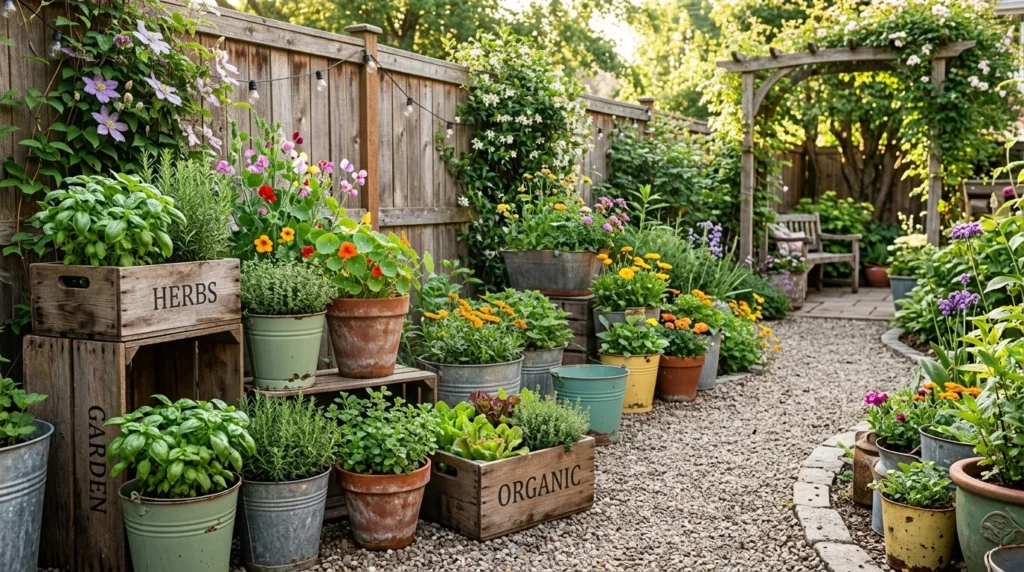
Old buckets, wooden crates, galvanized containers, large food-safe containers, baskets with suitable liners, and other sturdy items can sometimes be repurposed into useful planters.
The result can look more interesting than a collection of identical store-bought pots.
How To Style It
Begin by looking for sturdy containers around your home.
Clean them thoroughly before using them.
For containers that will hold plants, make sure they are suitable for gardening and can accommodate the plant’s eventual size.
Drainage is essential for most container plants, so containers need an appropriate drainage solution.
If you are using an old bucket or similar container, elevate it slightly so water can escape freely.
For a cohesive look, group several different containers together rather than trying to make them identical.
Paint can also help coordinate mismatched pieces, provided the coating is appropriate for outdoor use and the container’s intended purpose.
Use terracotta-colored, cream, muted green, or charcoal finishes for a modern garden.
For a cottage-style garden, leave weathered wood or galvanized metal exposed.
2. Simple Raised Beds
Quick Benefits
- Creates defined growing areas
- Can improve garden organization
- Makes soil management easier
- Works well in many backyard layouts
- Can be built with relatively simple materials
Why It Works
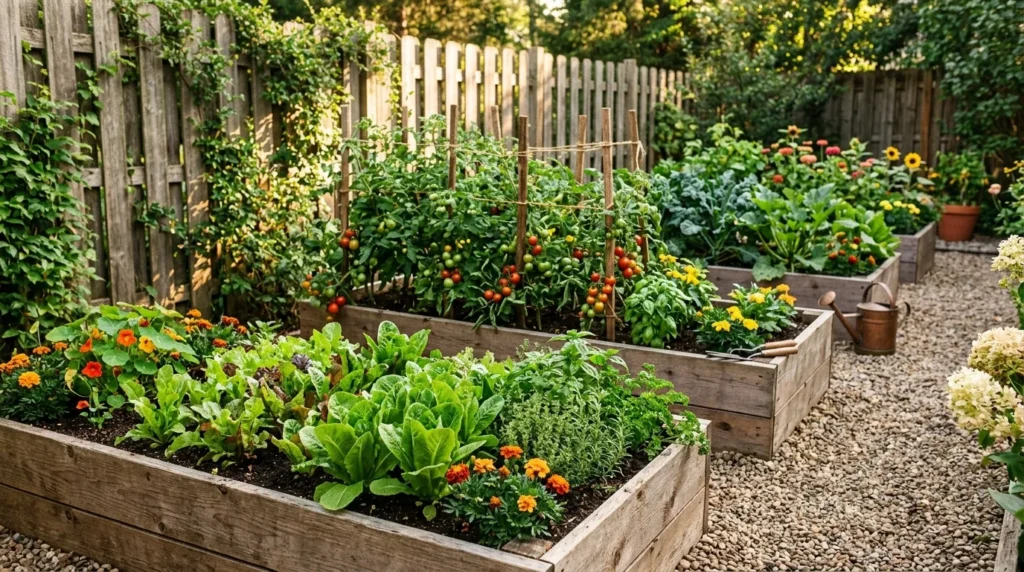
Raised beds are popular because they create a dedicated growing area that is easier to organize than a completely open garden.
You can control the soil mixture within the bed, separate vegetables from ornamental plants, and create a neat structure for a backyard.
But you do not need an elaborate raised-bed system to get the benefits.
A straightforward rectangular frame can be enough.
If you already have suitable untreated or appropriately rated lumber, reclaimed materials, or leftover landscaping materials, you may be able to reduce the cost considerably.
The most important consideration is choosing materials that are appropriate for contact with garden soil and intended for outdoor use.
How To Style It
Keep the design simple.
A rectangular raised bed is easy to construct and makes planting straightforward.
Before building, measure the area and think about how you will reach the plants.
Avoid making the bed so wide that you have to step into it to reach the center.
For many backyard layouts, a width that allows you to comfortably reach from the outside is easier to maintain.
Use soil suited to the plants you intend to grow.
You can divide the bed into sections for herbs, leafy greens, flowers, or vegetables.
Mulch the surface after planting to help reduce exposed soil and make the bed look finished.
For a polished appearance, repeat the same bed dimensions throughout the garden.
3. DIY Garden Trellis
Quick Benefits
- Supports climbing plants
- Adds vertical interest
- Saves horizontal garden space
- Creates a decorative focal point
- Can be made from simple materials
Why It Works
Vertical gardening is one of the smartest ways to make use of limited garden space.
Climbing plants naturally want support, so providing a trellis allows them to grow upward instead of spreading across the ground.
You do not need an expensive metal structure.
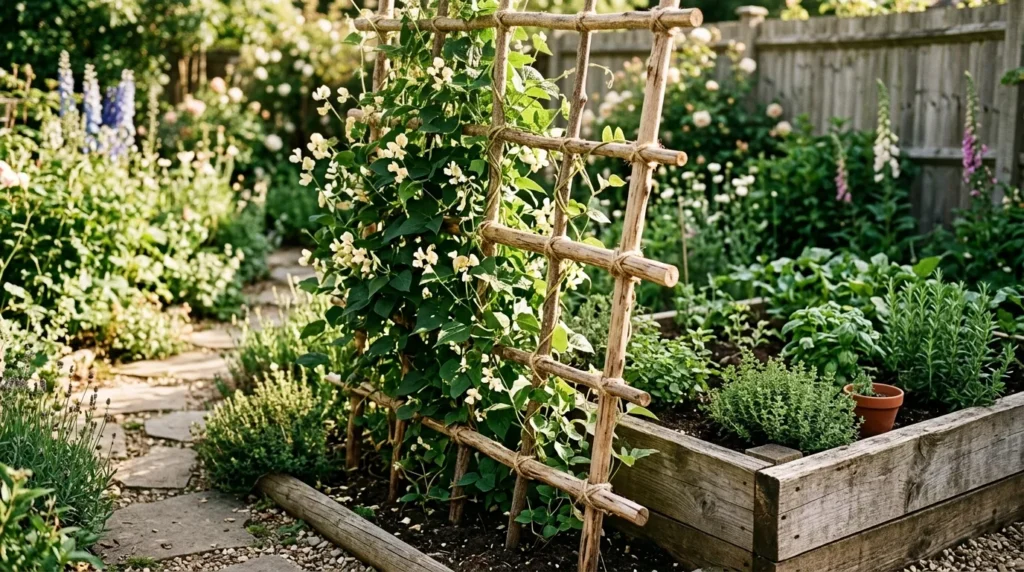
A simple arrangement of wooden stakes, garden twine, bamboo, suitable branches, or reclaimed materials can create effective support for appropriate plants.
A handmade trellis can also become a decorative feature.
This is especially useful around vegetable gardens, fences, patios, and narrow side yards.
How To Style It
For a rustic look, use straight branches or untreated garden stakes connected with natural garden twine.
For a cleaner appearance, use narrow wood strips arranged in a simple grid.
Install the structure securely before the climbing plant becomes heavy.
Choose the trellis according to the plant.
Lightweight flowering vines need less structural support than heavier fruiting plants.
Place the trellis along a fence or wall if space is limited.
You can also use one as a backdrop behind a raised bed.
Let the plant become the decoration.
A climbing vine covered in flowers or foliage can turn a simple handmade frame into a beautiful garden feature.
4. Homemade Compost Bin
Quick Benefits
- Reduces suitable household waste
- Creates useful organic material
- Can reduce reliance on purchased soil amendments
- Gives the garden a productive recycling system
- Can be built inexpensively
Why It Works
Composting is one of the most useful ways to turn certain organic materials into something valuable for the garden.
Instead of sending suitable food scraps and yard waste away, you can create a system that allows them to break down naturally.
A compost bin does not need to be complicated.
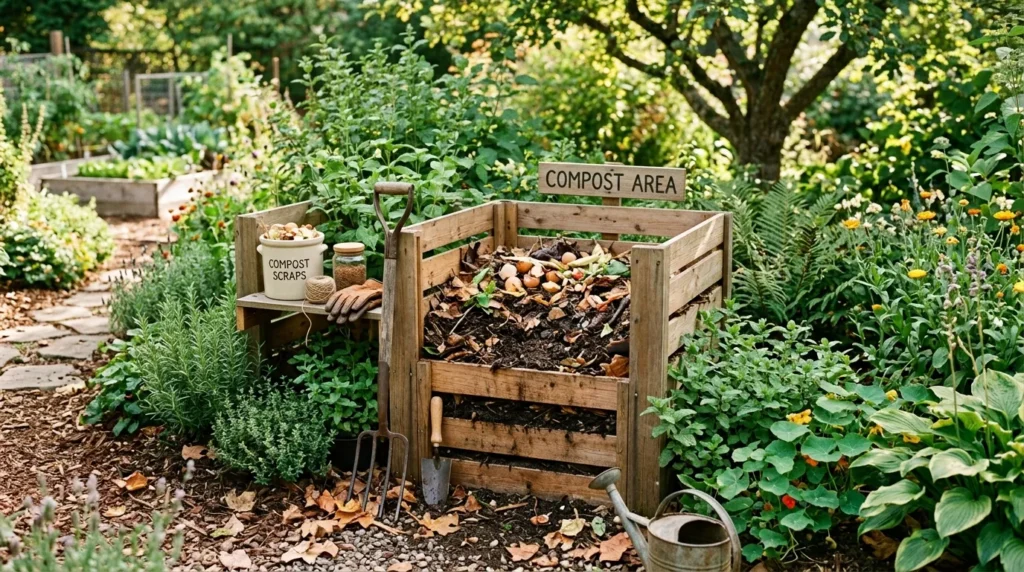
A simple contained area can work as long as it allows appropriate airflow, retains the composting materials, and is located somewhere practical.
The exact approach depends on your space.
A backyard gardener may have room for a larger open-bottom compost bin, while an apartment gardener might need a compact commercial or specialized system.
How To Style It
For a simple backyard setup, use suitable wire mesh, wood, or another durable material to create a contained composting area.
Choose a location with reasonable access and appropriate conditions for composting.
A good compost mix generally requires a balance of carbon-rich materials and nitrogen-rich materials, along with moisture and airflow.
Suitable “brown” materials can include dry leaves, shredded plain cardboard, and other appropriate carbon-rich materials.
“Green” materials can include certain fresh plant materials and suitable food scraps.
Avoid adding meat, dairy, diseased plants, or other materials that are unsuitable for your chosen composting method.
Turn or aerate the pile according to your system.
When finished, mature compost can be used appropriately to improve garden soil.
5. Recycled Garden Edging
Quick Benefits
- Defines planting areas
- Creates a cleaner garden appearance
- Helps separate lawn and beds
- Can reuse existing materials
- Reduces the need for expensive edging products
Why It Works
Garden edging does more than decorate a flower bed.
It visually separates different areas and can make a garden look much more intentional.
The good news is that you do not always need manufactured edging.
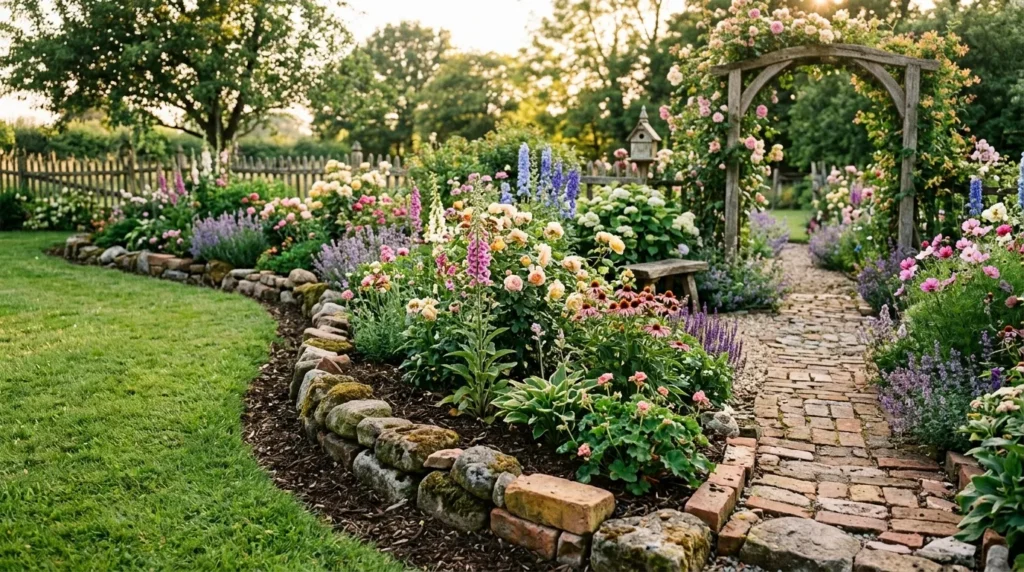
Stones collected from appropriate sources, reclaimed bricks, short pieces of suitable untreated wood, or other safe landscaping materials can sometimes create attractive boundaries.
The best material depends on your garden style and local conditions.
A cottage garden may look beautiful with irregular stones.
A modern backyard might benefit from clean brick or simple wood edging.
How To Style It
Begin by marking the shape of the garden bed.
For a relaxed landscape, gently curved edges can feel natural.
For a contemporary garden, straight lines usually look cleaner.
Place your edging material consistently along the boundary.
If using stone, choose pieces that are stable and safe.
If using reclaimed materials, inspect them carefully for sharp edges, contaminants, rot, or other hazards.
Avoid materials that could introduce harmful substances into the soil.
Keep the edging low enough that it does not become an obstacle when mowing or walking.
A simple, consistent border can make an inexpensive garden look remarkably polished.
6. DIY Rainwater Collection
Quick Benefits
- Makes use of rainfall
- Can reduce some outdoor water use
- Provides a backup source for appropriate garden tasks
- Encourages water-conscious gardening
- Can be incorporated into many backyard layouts
Why It Works
Water is one of the ongoing costs of maintaining a garden, particularly during hot or dry periods.
Rainwater collection can help make use of rainfall that would otherwise run away from the property.
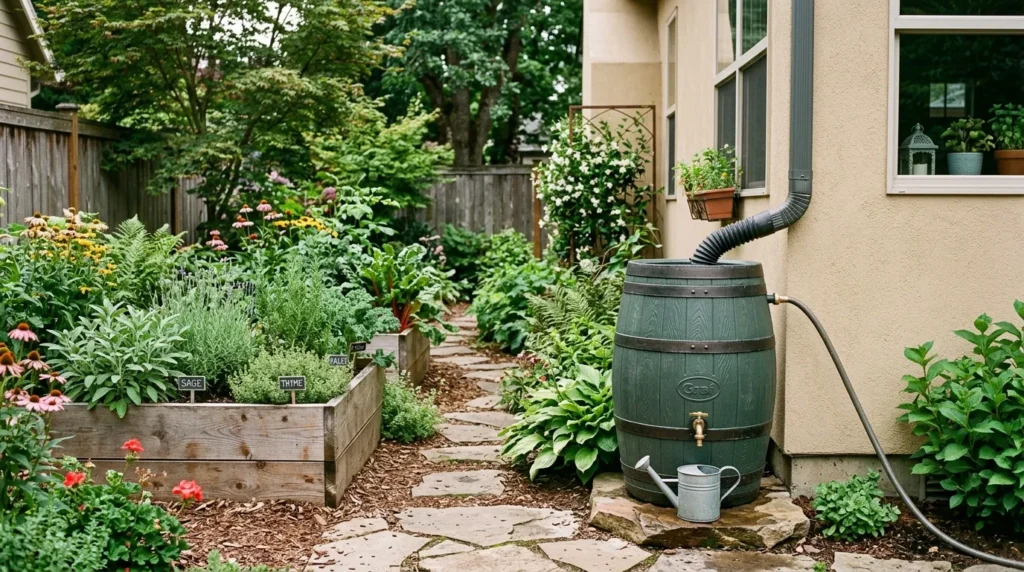
A basic rain barrel or purpose-built collection system can collect water from a suitable roof drainage point.
However, local regulations, water quality, roof materials, and intended use all matter.
Collected rainwater should be used only where appropriate.
For example, many gardeners use it for ornamental plants or other outdoor applications, while local rules may restrict collection or certain uses.
How To Style It
Choose a purpose-built rain barrel or a properly designed food-safe collection container rather than improvising with an unknown barrel.
Place it on a stable base near an appropriate downspout.
A raised base can make it easier to access the collected water.
Use a secure lid or screened opening to help keep debris and mosquitoes out.
Consider connecting an overflow hose so excess water is directed safely away from the home’s foundation.
Before installing a system, check local rules and any requirements that apply to rainwater harvesting in your area.
For a polished appearance, choose a barrel that coordinates with your home’s exterior or hide it behind suitable landscaping.
7. Budget Garden Path
Quick Benefits
- Creates clear walking routes
- Protects planted areas from foot traffic
- Adds structure
- Can improve garden accessibility
- Can be made with affordable materials
Why It Works
A garden path can make a backyard feel much more finished.
It gives the eye a route through the garden and provides practical access to planting areas.
But pathways do not have to be constructed from expensive pavers.
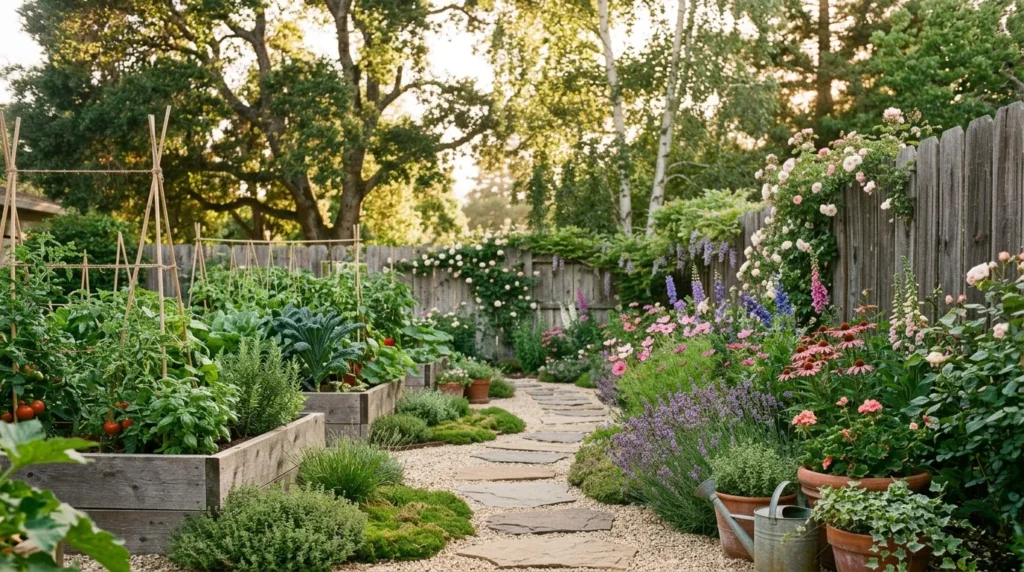
Depending on your garden and local conditions, inexpensive gravel, stepping stones, reclaimed brick, wood chips, or other suitable materials may work.
The best choice depends on drainage, slope, foot traffic, maintenance, and local climate.
A simple path can be especially useful around raised beds because it keeps walking areas separate from growing soil.
How To Style It
Start by deciding where you naturally walk.
There is little value in building a beautiful pathway that does not connect useful areas.
For a relaxed garden, use irregular stepping stones surrounded by gravel or groundcover.
For a vegetable garden, a simple mulch or gravel path may be more practical.
Keep the path wide enough for comfortable movement and garden tools.
Use edging where appropriate to keep loose materials contained.
Choose a color that complements the surrounding landscape.
Natural stone, warm gravel, brick, and wood chips can all create different moods.
Add low-growing plants along the edges if they are appropriate for the location and will not obstruct the pathway.
8. Homemade Plant Markers
Quick Benefits
- Keeps plants identified
- Adds personality
- Helps organize vegetable beds
- Uses inexpensive materials
- Creates a charming handmade detail
Why It Works
Garden markers are small, but they can make a garden easier to manage.
They are especially useful when growing herbs, vegetables, flowers from seed, or multiple varieties that look similar during early growth.
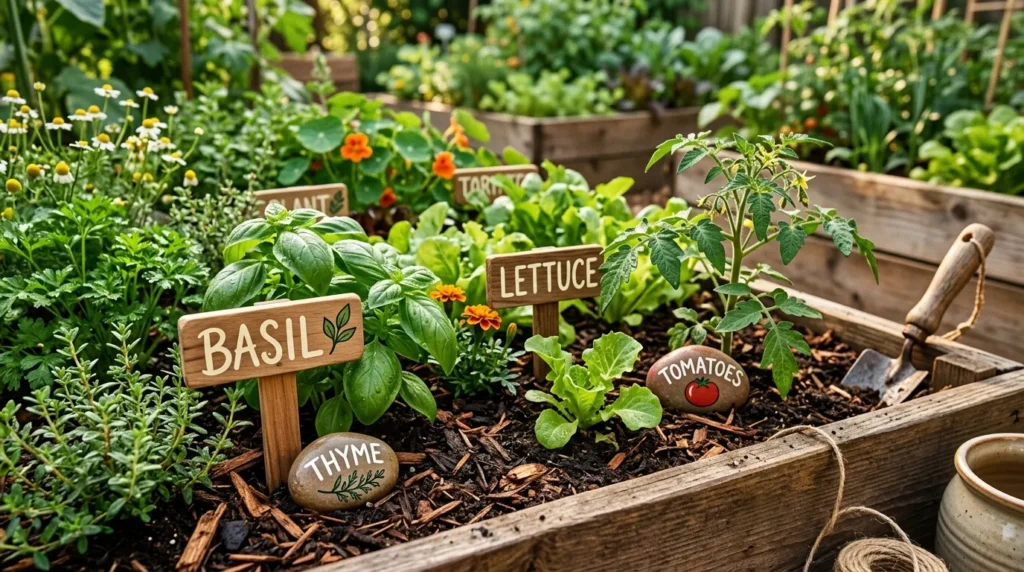
Instead of buying a matching set, you can make markers from materials such as smooth stones, untreated wood pieces, or other suitable outdoor materials.
Handmade markers also give the garden a more personal feeling.
How To Style It
Smooth stones can be painted with plant names and sealed appropriately for outdoor use.
Small wood pieces can be labeled with a permanent outdoor-safe marker or suitable paint.
For a farmhouse-inspired garden, simple handwritten labels look charming.
For a modern garden, use clean lettering and a limited color palette.
Keep the markers easy to read.
Avoid using materials with unknown coatings or finishes that could leach into soil.
Place each marker where it can be seen without interfering with plant growth.
If you’re starting seeds indoors, make markers before planting so you do not have to remember which container contains which variety.
9. DIY Tool Storage
Quick Benefits
- Keeps tools organized
- Protects equipment
- Saves time
- Uses unused wall space
- Can reduce the need for additional storage furniture
Why It Works
Garden tools have a habit of spreading everywhere.
A hand trowel ends up on the porch.
Pruners disappear into a basket.
Gloves get left beside the raised beds.
A simple storage system keeps everything easier to find.
You do not necessarily need an expensive garden shed or custom cabinet.
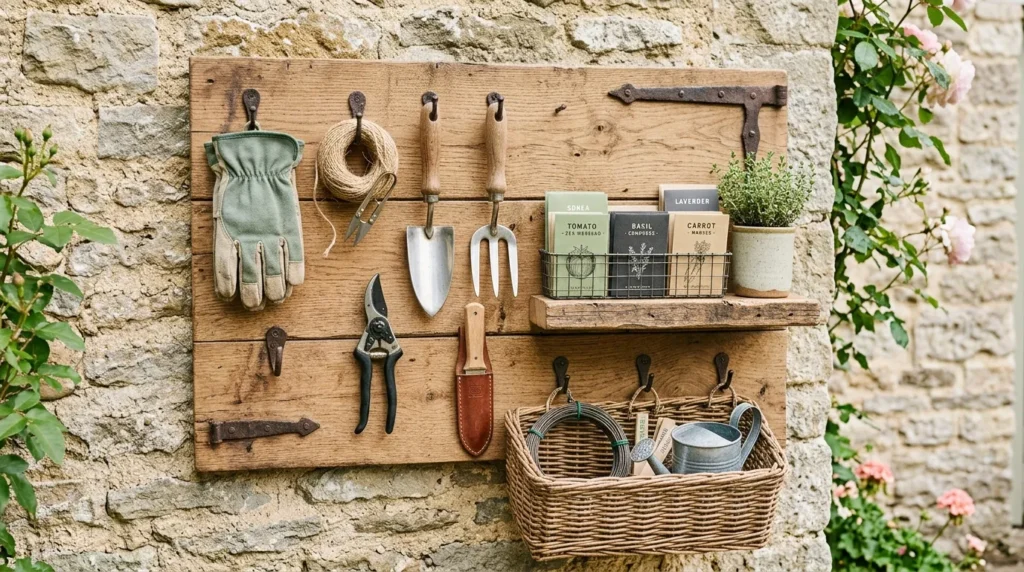
A wall-mounted rack, sturdy hooks, pegboard, or reclaimed wood organizer can provide useful storage in a garage, shed, utility area, or covered outdoor space.
The most effective storage system is the one that makes putting tools away easier than leaving them out.
How To Style It
Choose a location close to where you use your gardening tools.
Mount sturdy hooks or an appropriate tool rack at a comfortable height.
Place frequently used hand tools within easy reach.
Long-handled tools can hang vertically to save floor space.
Use a small container for gloves, plant ties, labels, and other accessories.
Add simple labels if multiple people use the garden.
If you have an old wooden board, it can sometimes become the base for a rustic tool rack.
Sand and finish suitable wood appropriately, then attach compatible hooks.
Keep sharp tools positioned safely and securely.
10. Seed Starting Station
Quick Benefits
- Can reduce the cost of buying established plants
- Makes seed organization easier
- Provides a dedicated growing area
- Works in small spaces
- Makes gardening more rewarding
Why It Works
Starting plants from seed can be an economical way to grow vegetables, herbs, and flowers.
Instead of purchasing a mature plant for every spot in the garden, you can start multiple seedlings from a packet of seeds.
The setup does not need to be elaborate.
A sunny windowsill can work for some plants, while others may benefit from supplemental grow lighting.
The important part is providing the appropriate temperature, moisture, light, containers, and growing medium for the specific plants you are starting.
How To Style It
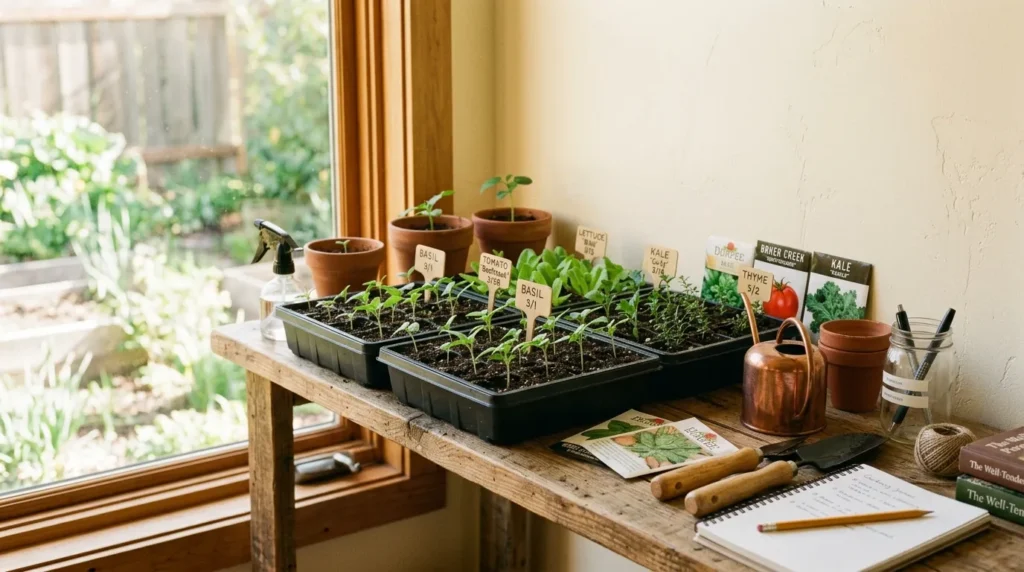
Use a small shelf, table, or dedicated corner.
Arrange seed-starting containers in shallow trays to keep water and soil contained.
Label everything with the plant name and planting date.
Use a suitable seed-starting mix rather than heavy garden soil for many indoor seed-starting situations.
Provide adequate light.
If natural light is insufficient, a suitable grow light can make the setup more reliable.
Do not overwater.
Seedlings need moisture, but constantly saturated conditions can create problems.
Once plants are appropriately established and outdoor conditions are suitable, gradually acclimate them before transplanting them outside.
How To Save More Money In The Garden
The easiest way to reduce gardening costs is to slow down before buying.
It is tempting to visit a garden center with a list of plants and come home with containers, soil amendments, tools, decorative signs, trellises, and accessories.
Before doing that, make a quick inventory.
What do you already own?
What can be reused?
What can be repaired?
What can be made?
What actually needs to be purchased?
This simple habit can prevent a lot of unnecessary spending.
Another useful strategy is to buy perennial plants appropriate to your growing conditions when they make sense for your landscape.
Once established, suitable perennials can return season after season, reducing the need to replace annual plants every year.
Saving seeds from appropriate plants can also reduce future costs, although not every plant reliably produces offspring identical to the parent.
You can also look for local plant swaps, community gardening groups, seed exchanges, and neighborhood gardening communities.
These can be excellent ways to discover plants and gardening knowledge without relying entirely on retail purchases.
Where To Spend Money In A DIY Garden
Saving money does not mean avoiding every purchase.
Some things are worth paying for.
Good Soil
If your soil needs improvement, quality soil amendments or compost can make a meaningful difference.
Reliable Tools
A sturdy hand trowel, pruners, shovel, and gloves can last much longer than very cheap alternatives.
Quality Seeds
Choose reputable seed sources and varieties appropriate for your growing conditions.
Watering Equipment
A reliable hose, watering wand, or efficient irrigation component can save time and reduce frustration.
Structural Materials
If you are building a raised bed, trellis, or other structure, use safe materials appropriate for outdoor use and the intended application.
The goal is not to spend nothing.
It is to spend intentionally.
DIY Garden Projects That Are Best For Beginners
If you are new to DIY gardening, start with projects that provide an immediate result.
Upcycled planters are a great starting point because they require relatively little construction.
Plant markers are another easy weekend project.
A simple trellis can teach you basic measuring, cutting, and assembly.
A small raised bed introduces you to garden layout and soil management.
Once you are comfortable, you can move into more involved projects such as composting systems, tool storage, or rainwater collection.
Do not feel pressured to complete the entire garden at once.
Gardens evolve.
One season you may focus on vegetables.
The next season you may add flowers, pathways, or a seating area.
Working gradually allows you to learn what your space actually needs.
How To Make DIY Garden Projects Look Expensive
The secret is usually consistency rather than expensive materials.
Choose a limited color palette.
Repeat materials.
Keep lines clean.
Remove unnecessary visual clutter.
For example, if you build three raised beds, make them similar in size and finish.
If you use painted planters, use the same two or three colors.
If you make garden markers, keep the lettering style consistent.
A garden can contain inexpensive materials and still look polished when the elements relate to one another.
Natural materials are especially helpful.
Wood, stone, gravel, terracotta, woven textures, and greenery naturally work together.
Also pay attention to maintenance.
A beautiful DIY project becomes less attractive when it is leaning, peeling, broken, or overgrown.
Choose materials that can tolerate the conditions of your climate and maintain them as needed.
FAQ
What are the cheapest DIY garden projects?
Some of the most budget-friendly projects include upcycled planters, homemade plant markers, simple trellises, recycled garden edging, basic tool organizers, and small composting systems. The exact cost depends on what materials you already have. Reusing suitable items is often the easiest way to reduce expenses.
How can I create a garden without spending much money?
Start by using what you already have. Repurpose suitable containers, collect appropriate natural materials, propagate plants when practical, start plants from seed, make simple supports, and organize your tools instead of buying additional storage. Spend money on essentials such as suitable soil, reliable tools, and healthy plants when necessary.
Are DIY raised beds cheaper than store-bought beds?
They can be, particularly if you already have appropriate materials and basic tools. However, the cost depends on lumber prices, soil, hardware, dimensions, and the materials you choose. Make sure any materials that contact garden soil are appropriate for that purpose.
What household items can be reused in a garden?
Suitable containers, wooden crates, certain buckets, glass jars for indoor seed starting, cardboard for appropriate composting or mulching applications, and other durable materials may be reusable. Always consider food safety, chemical exposure, drainage, weather resistance, and whether the material is appropriate for contact with soil or plants.
How can I save money on garden plants?
Starting plants from seed, propagating suitable plants, choosing appropriate perennials, participating in plant swaps, and buying plants at appropriate times can reduce costs. Choose varieties suited to your local growing conditions because plants that struggle in the environment can become more expensive to maintain.
Is homemade compost worth making?
For many gardeners, yes. Compost can turn suitable organic materials into a useful soil amendment while reducing certain household and yard waste. It does require time, appropriate materials, moisture, and airflow. Choose a composting method that fits your available space and local conditions.
How do I make a cheap garden look expensive?
Focus on consistency. Repeat a few materials and colors, keep garden beds clearly defined, organize tools and containers, and avoid excessive decoration. Simple wood, stone, gravel, greenery, and coordinated containers can create a polished appearance without requiring expensive accessories.
Conclusion
A beautiful garden does not need a huge budget.
Some of the most satisfying garden improvements begin with materials that are already sitting in a garage, shed, basement, kitchen, or backyard.
An old container can become a planter.
A few suitable pieces of wood can become a raised bed.
Garden twine and sturdy supports can create a useful trellis.
Leaves and appropriate organic materials can become compost.
Simple stones can define a flower bed.
Even a small piece of reclaimed wood can become a charming plant marker.
The key is to look at your garden differently.
Instead of asking, “What do I need to buy?” ask, “What can I reuse, repair, build, or grow?”
That one change in thinking can make gardening feel much more affordable.
At the same time, do not feel like you have to DIY everything.
Spend money where quality matters, particularly with soil, plants, tools, and structural materials that need to be safe and durable.
Then save money on the decorative and organizational pieces you can reasonably make yourself.
Start with one project.
An upcycled planter is a great weekend project. A simple trellis can help a climbing plant. A few homemade markers can organize a vegetable bed. A basic tool rack can make everyday gardening easier.
As your confidence grows, build from there.
The best DIY garden is not necessarily the cheapest one.
It is the one that uses resources thoughtfully, works for your lifestyle, and gives you a space you enjoy caring for season after season.
Related Articles
- 10 DIY Garden Projects with Raised Beds
- 10 Small Garden Ideas for Beautiful Outdoor Spaces
- 11 Easy Vegetable Garden Ideas for Beginners
- 10 DIY Garden Decor Ideas on a Budget
- 10 Small Backyard Ideas for Creating a Cozy Outdoor Retreat