

How to Stop Dining Room Chairs from Catching on the Bound Edges of Area Rugs
Introduction
You can prevent dining room chairs rug edges from catching by choosing low profile materials and ensuring your furniture placement allows for smooth movement. Addressing these common tripping hazards protects your floor coverings and keeps your space functional.
This guide covers practical strategies for managing the interface between your seating and your flooring. We discuss how specific rug constructions, such as flatweave or dense wool options, minimize friction for chair legs. You will also learn about the importance of proper rug sizing relative to your table dimensions and how to implement effective stabilization techniques. By following these design best practices, you can create a dining area that remains both aesthetically pleasing and easy to navigate.
Managing Chair Obstructions on Dining Area Rugs
You can prevent the annoyance of chair legs snagging on the perimeter of your floor covering by choosing the right materials and ensuring proper placement. When seating constantly catches on the raised borders of an area rug, it disrupts the flow of your space and creates unnecessary wear on both your furniture and the textile itself.
A well-designed dining area balances visual appeal with everyday utility. While a beautiful textile anchors the room, it should not hinder the movement of your furniture. If your chairs frequently struggle to slide over the textile boundary, the setup is likely failing to meet basic functional requirements. This issue often results from choosing a rug that is either too small or features an overly thick, bulky border that prevents smooth transitions.
Addressing these obstructions is essential for maintaining the longevity of your decor and protecting your household. Frequent snagging damages chair legs and can fray the edges of the rug, leading to an unkempt appearance. Furthermore, a chair leg caught on an uneven border creates a hidden tripping hazard for guests and family members as they push away from the table. Prioritizing a smooth, stable surface ensures your dining room remains both inviting and safe.
To maintain a functional and hazard-free environment, consider these common design goals:
- Ensure the rug is large enough so chairs remain on the surface even when pushed back.
- Select low-profile materials that allow for seamless movement.
- Use stabilizing underlays to prevent the rug from bunching or shifting during use.
Ideal Rug Size For Clearance
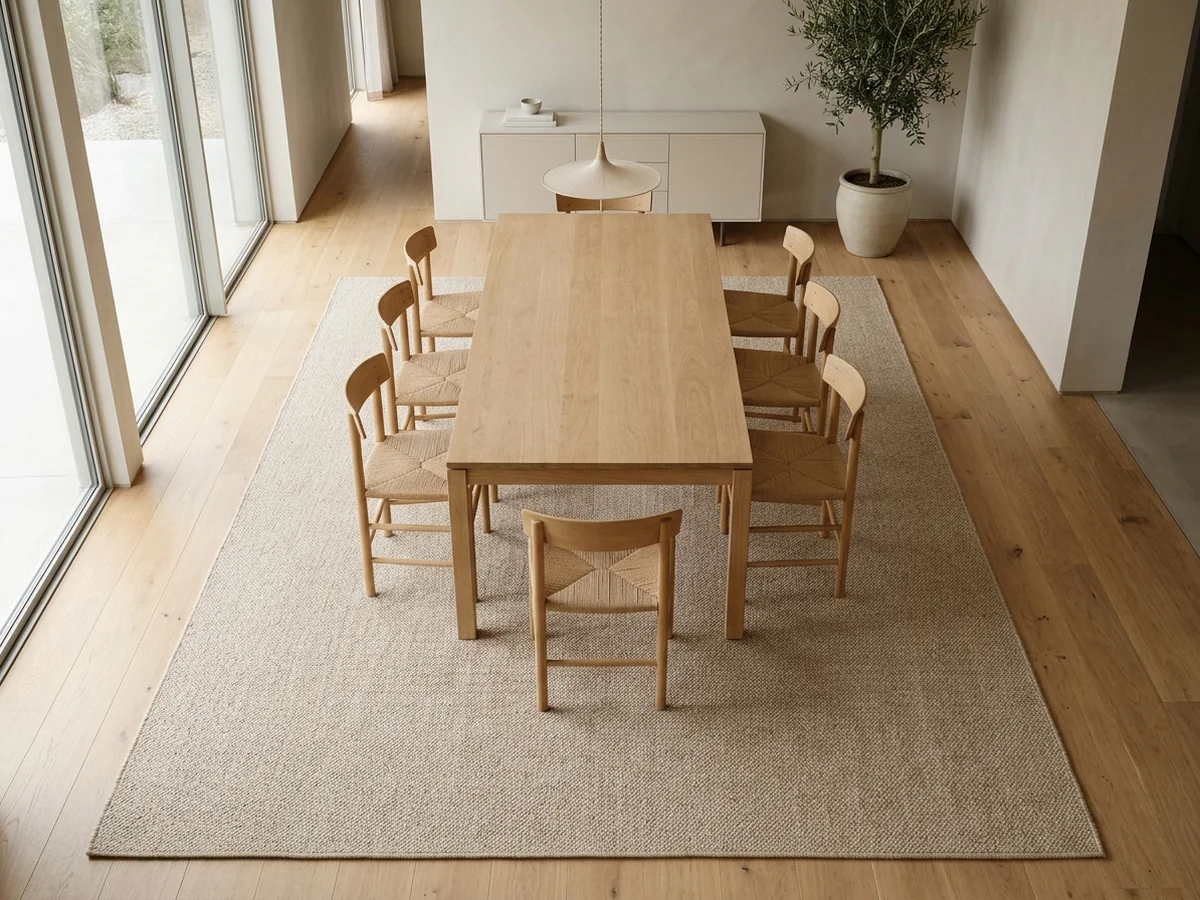
Selecting the right dimensions is the most effective way to keep chair legs from snagging on the perimeter of your floor covering. A common recommendation for dining room area rugs is to ensure the material extends by a margin of 24 to 30 inches beyond the table edge on every side. This buffer zone is typically sufficient to keep the back legs of your dining room chairs on the rug even when guests pull their seats away from the table.
When determining the correct rug sizing for a dining table, you must account for the full footprint of your furniture. Consider these steps to ensure consistent coverage and a balanced look:
- Measure your table with all leaves fully extended to ensure the rug remains functional during large gatherings.
- Check the distance from the table edge to the wall to maintain 12 to 18 inches of exposed floor, which is widely considered the ideal perimeter margin for a polished aesthetic.
- Avoid smaller rugs that might force chair legs to teeter on the transition between the rug and the hard floor surface.
- Prioritize a flat-woven or low-profile construction, as these styles are often recommended to allow chair legs to glide without snagging.
- Ensure your furniture placement allows for comfortable movement without pushing the chairs completely off the edge of the material.
Maintaining this buffer zone protects your flooring and the integrity of the rug binding. By planning for the maximum size your table reaches, you avoid the common frustration of constant adjustments or tripping hazards. A well-measured space allows for seamless movement and preserves the visual balance of your room by framing the dining area with a consistent border of exposed floor.
Best Rug Materials For Snagging
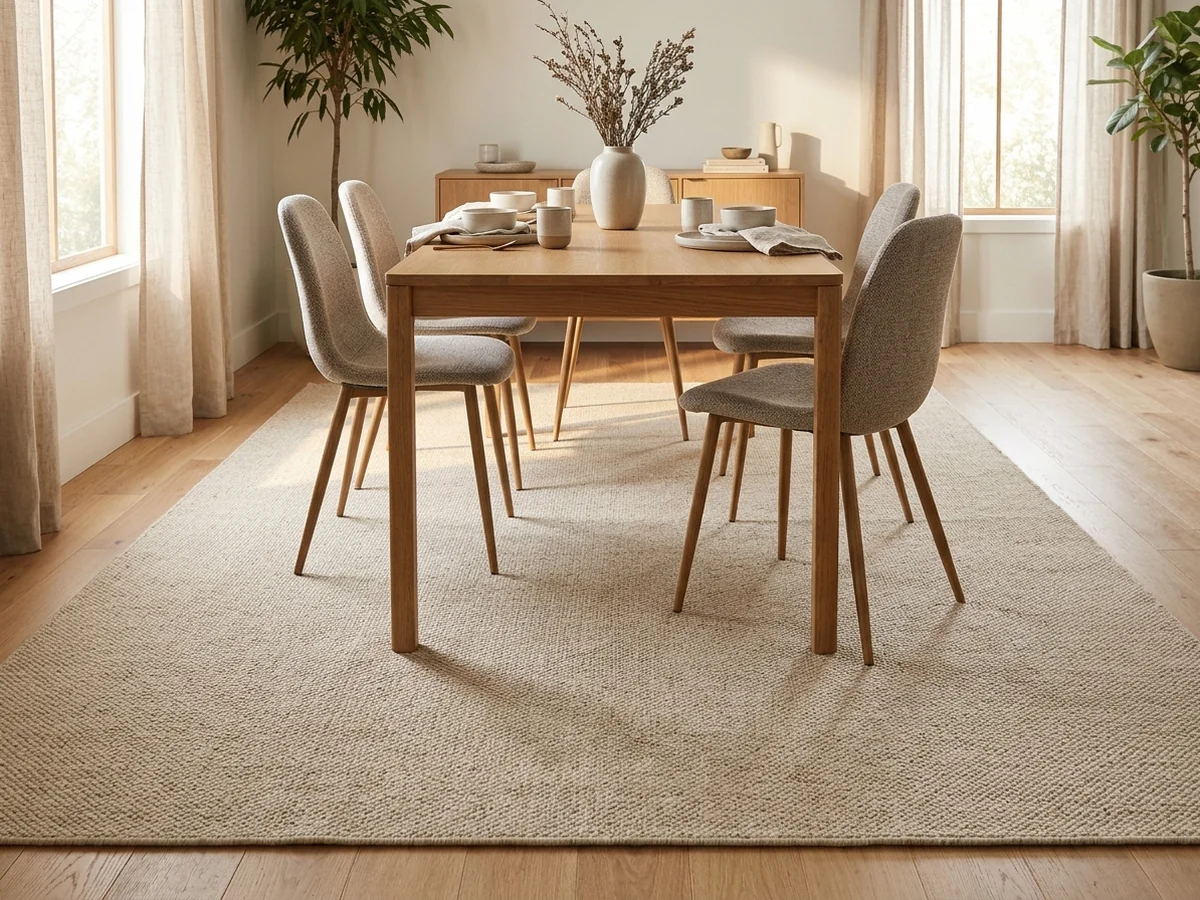
Low pile rugs for dining room areas are superior to high pile options because they provide a smooth, stable surface that allows furniture to move without obstruction. Dense, low-profile cut piles or flat-woven wool styles are commonly recommended as some of the best rugs for dining rooms because they prevent chair legs from getting caught in deep fibers.
When choosing between materials, flatweave rugs are often preferred for their tight construction and lack of vertical loops, which minimizes the risk of snagging during routine use. While wool area rugs offer excellent durability and natural resilience, a high-pile version can create significant resistance. Opting for a flat-woven wool construction maintains the quality of the material while ensuring your chairs glide across the surface easily.
Synthetic fibers like polypropylene are excellent for high-traffic dining zones due to their inherent stain resistance and structural consistency. These rugs are typically machine-made with a very tight weave, providing a durable floor covering that resists crushing under the weight of heavy furniture. Because polypropylene does not fray as easily as natural fibers, it remains a practical solution for busy spaces where furniture is moved frequently throughout the day.
- Select low-profile constructions to keep chair legs from catching on the surface.
- Prioritize flatweave patterns to eliminate the risk of loose loops or thick textures.
- Utilize synthetic materials like polypropylene in high-traffic areas for better stain management and long-term durability.
- Consider a quality rug pad to prevent shifting and ensure the rug remains perfectly flat under the table.
Managing Rug Edge Finishes
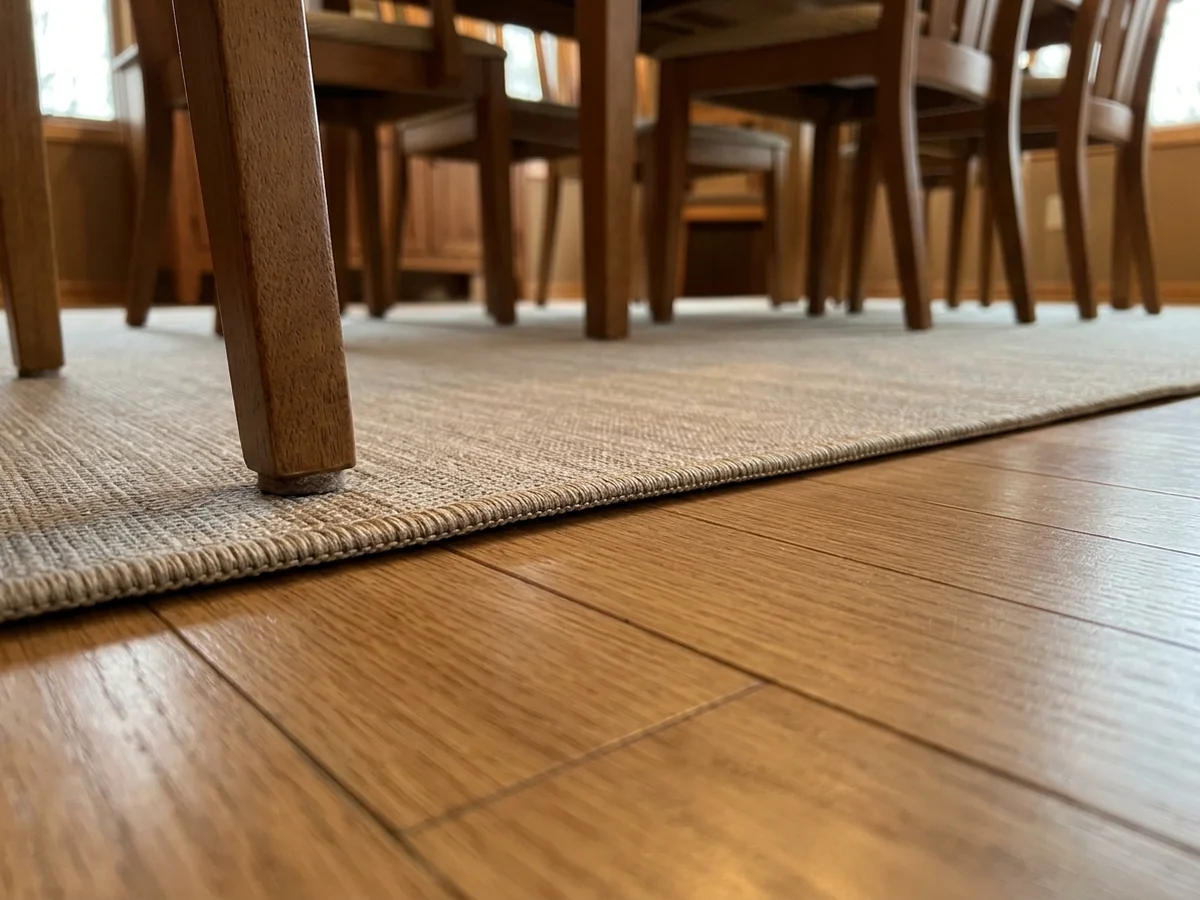
You can effectively prevent furniture from snagging by choosing rugs with low-profile, reinforced edges rather than decorative styles that create uneven transitions. The finish of your floor covering determines how easily your chairs slide across the perimeter when you push them in or pull them out. Dense, low-profile cut piles or flat-woven wool styles are recommended as a best practice to allow chair legs to glide without snagging.
| Edge Type | Snag Risk | Suitability for Dining |
|---|---|---|
| Serged | Low | High |
| Taped | Very Low | High |
| Fringed | High | Low |
Serged edges, which feature a thick yarn overcast stitch, provide a durable and smooth finish that rarely catches on chair legs. In contrast, fringed styles are prone to tangling and should be avoided in high-traffic eating areas. If your current rug has a problematic edge, you can transform it by applying custom rug binding. This process involves stitching a new, flat fabric border over the existing perimeter to create a seamless transition.
For a simpler, DIY approach, specialized binding tape can be used to retrofit existing rugs. This adhesive or sew-on tape flattens bulky edges and creates a secure slope that allows chair legs to glide over the surface without obstruction. Combining these secure edge treatments with a high-quality felt-and-rubber rug pad further stabilizes the rug, preventing the shifting that often causes curled corners and additional tripping hazards.
Stabilizing Rugs and Preventing Movement
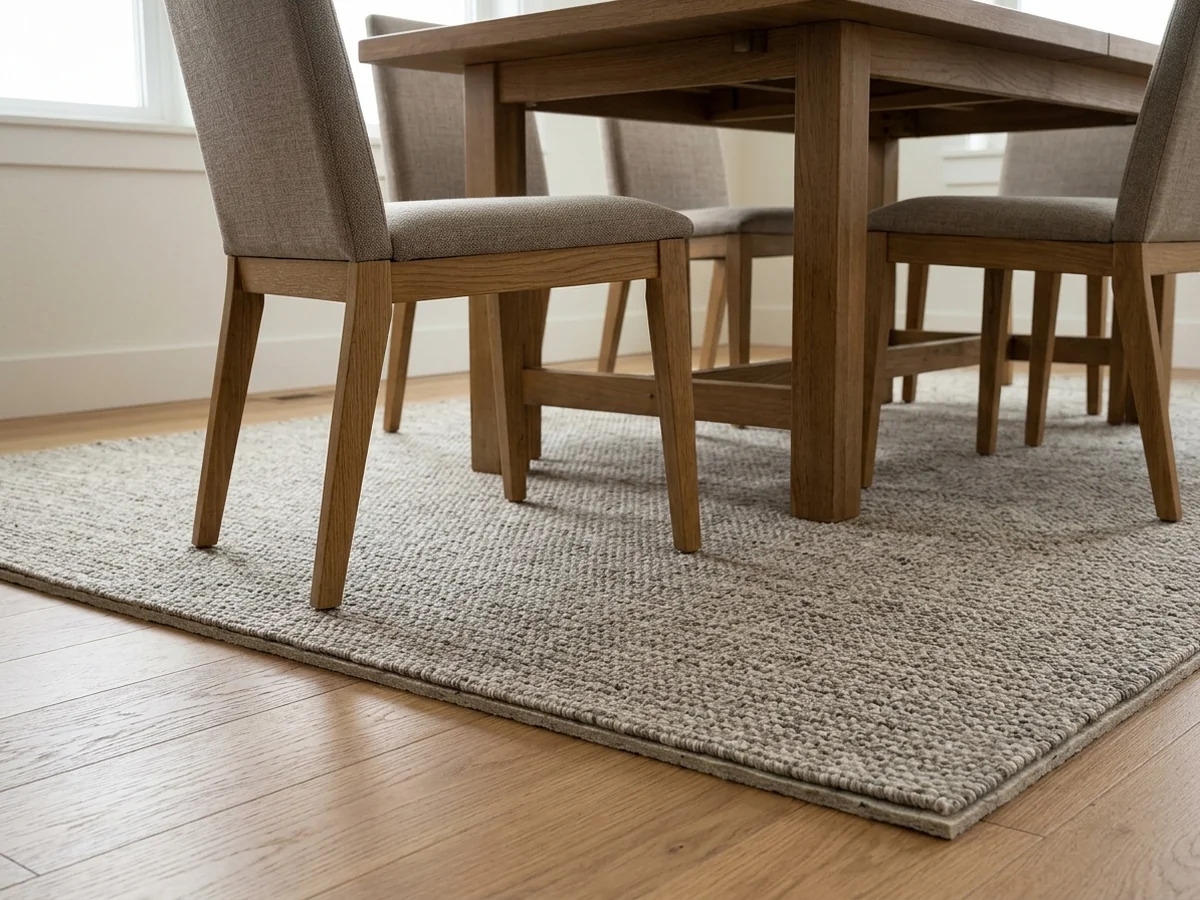
You can effectively stop dining room chairs from catching on the bound edges of area rugs by using a high-quality rug pad to create a stable, immovable foundation. When a rug shifts or bunches under the weight of chairs, the edges are more likely to curl or lift, creating an obstacle for chair legs.
It is common guidance to use a felt and rubber rug pad for dining room setups to ensure the rug remains flat against the floor. The rubber side grips the hardwood or tile, while the dense felt top provides a cushion that prevents the rug from stretching or buckling during daily use.
Pairing a low-profile rug with this type of dual-material pad is widely considered an ideal strategy to minimize movement. Because the pad provides consistent tension across the entire surface of the rug, it prevents the localized bunching that often leads to curled edges. When the rug remains perfectly flat, chair legs glide across the surface without snagging on the binding.
Proper anchoring is the most reliable way to maintain a smooth surface that keeps dining room chairs rug edges from becoming a tripping hazard or a point of wear. You should ensure that your rug is large enough to extend well beyond the table footprint. When the rug is heavy enough to sit securely under the chair legs, it naturally resists the pulling force created when guests push their seats away from the table. Using a high-performance pad enhances this effect by eliminating the friction that causes rugs to ripple over time.
Fixing Curled Rug Corners
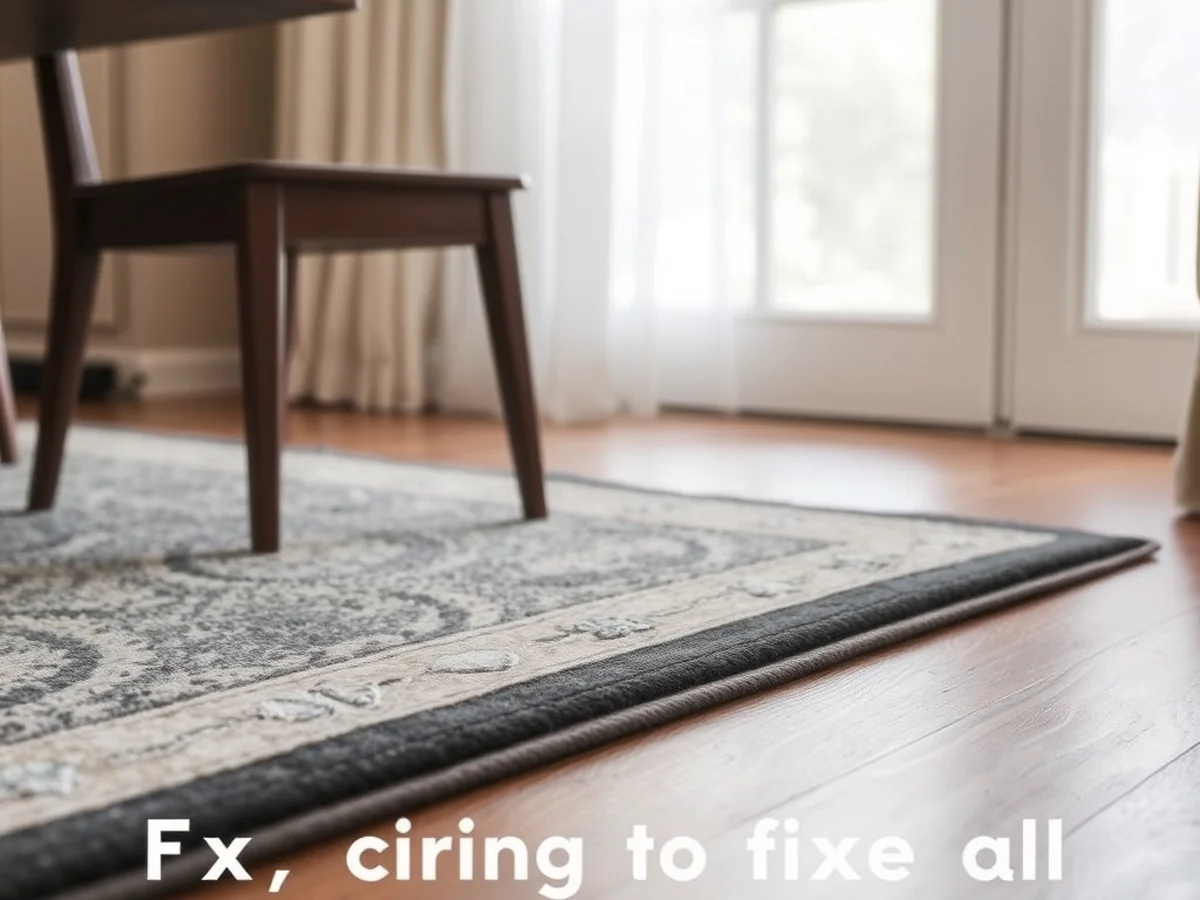
You can effectively flatten stubborn, curled rug corners by applying weight, moisture, or adhesive reinforcements to create a smooth transition for your furniture. Addressing these spots helps eliminate tripping hazards and prevents the fabric from snagging when you slide your seating in and out.
- Place a heavy, flat object like a stack of books or a brick wrapped in a towel on the corner for several days to encourage the fibers to relax into a flat position.
- Lightly mist the back of the corner with water and place a heavy weight on top, allowing it to dry completely while pinned down to help set the flattened shape.
- Apply professional-grade double-sided rug tape to the underside of the corner to anchor it firmly to the floor, which prevents the edge from lifting during daily use.
- Use specialized rug corner grippers, which are small, L-shaped adhesive pads designed to hold the edges flat while providing extra stability on hard surfaces.
- Consider using a felt-and-rubber pad beneath the entire piece, as this common practice adds cushioning and grip that helps keep the perimeter from curling upward.
If the edge binding is frayed, unraveling, or physically damaged beyond simple curling, it is often time to consider a professional repair or replacement. Attempting to DIY a repair on heavily compromised serged edges can lead to further fiber loss and an uneven finish that continues to catch. While minor curls are manageable with weights or tape, structural damage to the border often requires a specialist to re-bind the edge for a durable, long-term solution.
Avoid Rugs With Thick Bindings
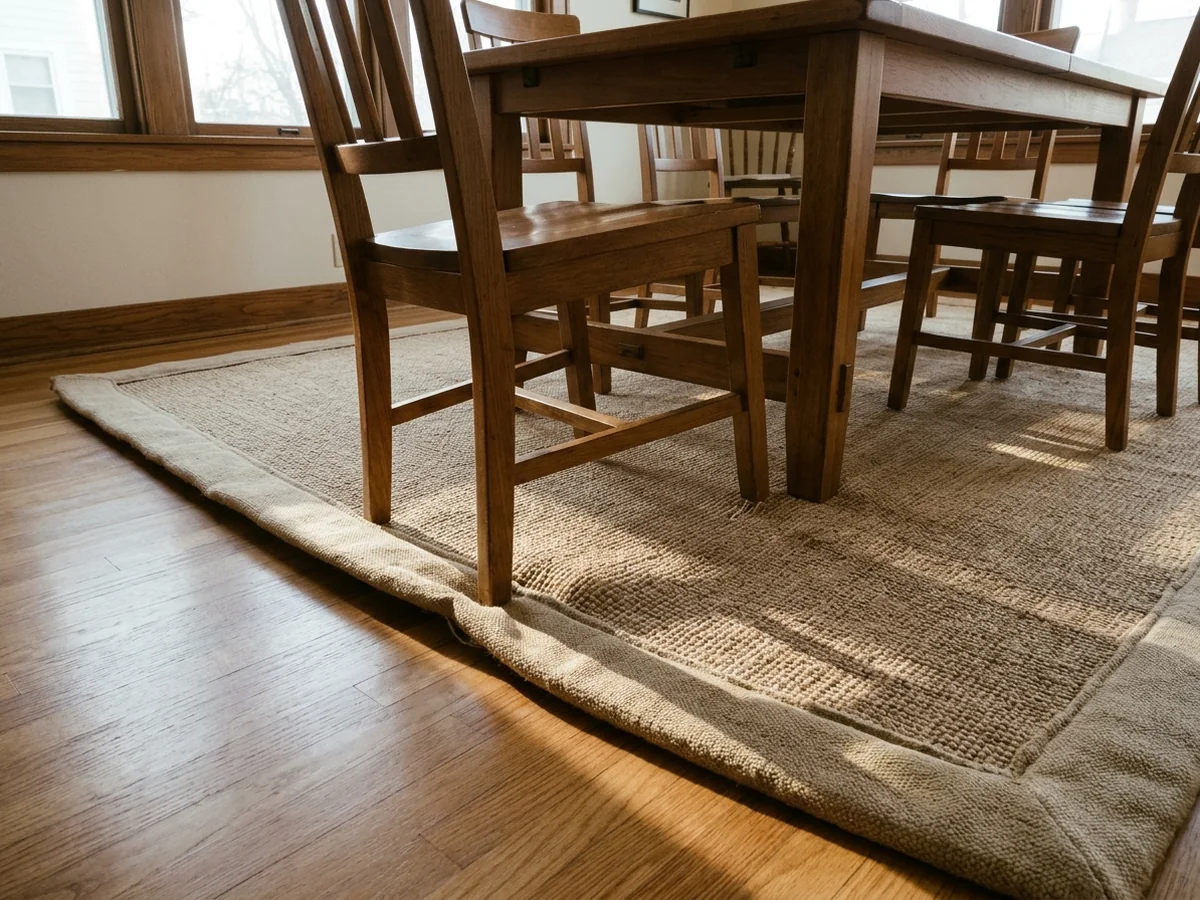
You can prevent seating from snagging by choosing low-profile finishes rather than heavy, thick bindings that create a physical barrier. When a rug is undersized, chairs frequently hover halfway across the border, causing the legs to trip over the raised edge every time someone pulls their seat away from the table.
Using delicate materials in high-traffic zones often leads to rapid deterioration of the border, making it even more likely to flip or bunch up. Historic homes often feature uneven flooring or transitions that complicate the placement of rugs, so selecting the right construction is critical to ensure the floor remains stable and safe.
Consider these guidelines to improve how chairs interact with your floor coverings:
- It is typical design practice to select a rug size that provides at least 24 to 30 inches of extra space around the table perimeter, which helps ensure chair legs stay on the rug surface when occupied.
- Durable options like flat-woven wool or dense, low-profile cut piles are typically recommended to allow chairs to glide smoothly without catching on the perimeter.
- You might pair a low-profile rug with a high-quality felt-and-rubber pad to add stability and prevent the material from shifting under the weight of guests.
- Avoid rugs with heavy serged or bulky taped edges if your furniture sits near the border, as these thick accents are the most common culprits for snagging.
- Measure your total floor space to ensure you can maintain the common practice of leaving 12 to 18 inches of exposed hardwood around the rug perimeter for a balanced look.
When To Replace Rug Edging
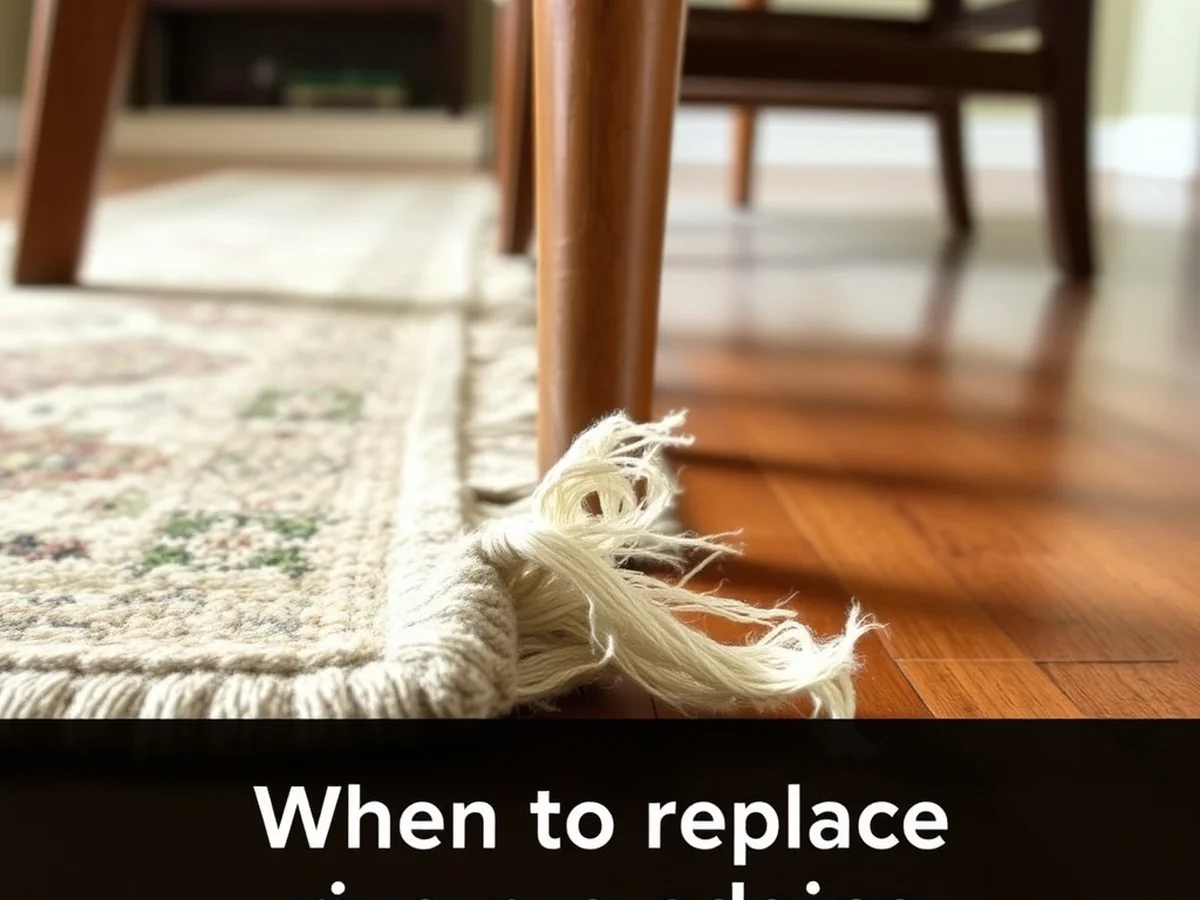
You should consider professional repair or replacement when the binding material becomes visibly frayed, separates from the rug backing, or curls persistently despite attempts to flatten it. These structural failures not only create trip hazards but also increase the likelihood of furniture legs snagging during daily use.
Professional rug repair becomes necessary when the damage compromises the integrity of the weave. An expert can perform custom resizing or re-binding if the rug is structurally sound but improperly sized for the space. If the foundation of the rug is dry-rotted, brittle, or suffering from extensive water damage, simple maintenance is no longer effective. In these cases, replacement is the most practical solution to prevent further deterioration and protect your flooring.
For rooms with non-standard layouts or unique architectural features, working with design professionals is often the best path to achieving a seamless look. These experts can help you source custom rugs that provide the correct coverage while ensuring the edges are finished with low-profile materials that prevent catching. Typical design guidance suggests that area rugs should extend 24 to 30 inches beyond the table on all sides, allowing chairs to remain on the rug even when pushed out. When your room dimensions make this difficult, a professional can assist in ordering a custom piece that fits your specific floor plan without creating awkward transitions.
- Fraying or unraveling of the decorative edge tape.
- Consistent curling of corners that remains after humidifying or weighting.
- Visible separation between the rug pile and the perimeter binding.
- Damage that exposes the inner latex or jute backing material.
FAQ
How large should a dining room rug be?
Designers typically suggest that your rug area extend between 24 and 30 inches beyond the table perimeter on all sides. This sizing helps ensure that your dining room chairs remain fully supported by the rug surface even when pulled out, which prevents the rear chair legs from catching on rug edges.
How does rug pile affect chair movement?
Dense, low-profile cut piles or flat-woven wool styles are typically recommended to allow chair legs to glide smoothly without snagging. High-pile or shag rugs often create resistance and increase the likelihood of dining room chairs rug edges getting stuck or damaged during daily use.
Should I measure with table leaves in or out?
You should always measure your space based on the table in its fully extended position to ensure the rug remains functional for all guests. If you only measure with the leaves out, the chairs may slide off the rug and catch on the binding when the table is expanded for larger gatherings.
How do I keep a rug from sliding on hardwood?
Pairing a low-profile rug with a felt-and-rubber pad adds significant stability and prevents shifting across the floor. This combination creates a firm, level surface that keeps the rug corners flat and minimizes the risk of chairs catching on the rug edges as they move back and forth.
Can I use a round rug under a rectangular table?
While you can use a round rug under a rectangular table, it often complicates the placement of chairs at the ends of the table. You may find that chairs at the center are well-supported, but those at the corners frequently step off the rug edge, leading to the exact catching issues you want to avoid.
Conclusion
The primary decision point involves choosing between replacing an existing rug with a low-profile, flat-woven style or modifying your current setup with specialized binding tape or transition strips. If your current rug continues to snag, evaluating the pile height and edge finish is the most effective next step to protect your flooring and furniture. By prioritizing a seamless surface and proper sizing, you can successfully prevent dining room chairs rug edges from causing daily frustration. Measure your table area once more to ensure any new rug allows for full chair movement while remaining flat against the floor.
You might also like: Low-Pile vs Flatweave vs Jute: Best Dining Room Rug Materials for Easy