
Spacing Buffet Lamps: What Height Lamps Look Proportional on a 36-Inch Server
Introduction to Dining Room Server Lighting Proportions
Achieving the right buffet lamp height depends heavily on the relationship between your dining room furniture and the lighting fixtures you choose. When you place a lighting fixture on a sideboard or console table, proper scaling ensures the display looks balanced rather than awkward or top-heavy.
This guide breaks down exact measurements for styling a standard 36-inch server. You will learn how to calculate proper dimensions, select the right lamp shade proportions, and arrange pieces for a cohesive aesthetic in your dining space.
Height Considerations for 36-Inch Servers
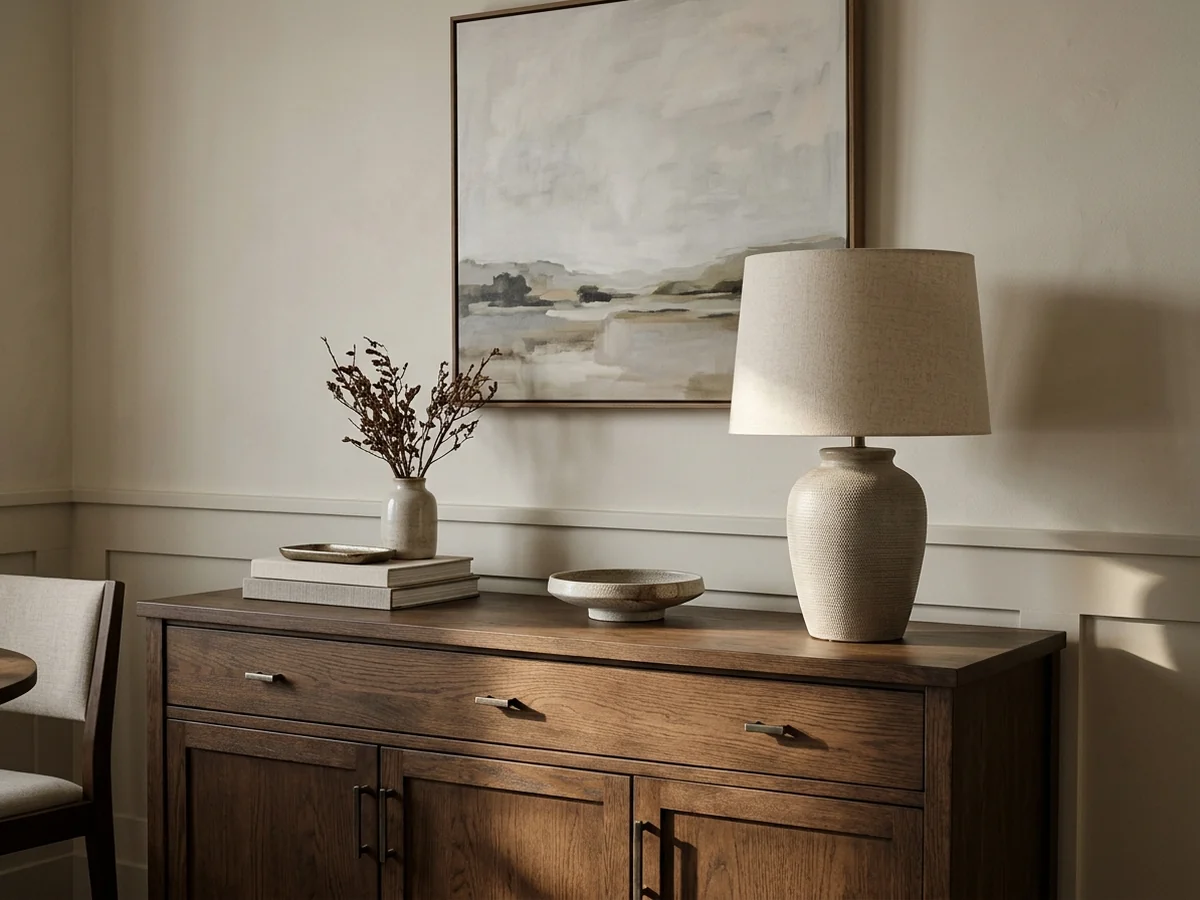
Dining room furniture typically features a standard height for a buffet of 36 inches, which creates a specific baseline for tabletop lighting fixtures. That horizontal surface sets the lower boundary for any lighting fixture you place on top of it. When planning your room layout, you need to understand how this baseline interacts with vertical elements, room scale, and sightlines across your dining space.
Achieving the right balance between the furniture surface and the items resting on it requires careful attention to total vertical span. If your lighting elements are too short, the arrangement looks stunted against the wall. If they stretch too high, they dominate the visual field and block sightlines across the dining room during gatherings. Determining the correct buffet lamp height helps avoid awkward proportions and ensures the room feels cohesive.
Proportional Math for Sideboard Lighting
Visual weight and vertical measurement work together to determine whether a lighting fixture looks balanced on a console table or sideboard. A slender design can easily disappear against a large wall, while a bulky piece overwhelms the furniture. Matching the scale of the base to the width of the wooden surface prevents the arrangement from looking top-heavy or cluttered. Interior designers frequently suggest keeping the shade height proportioned so that it measures roughly two-thirds to three-quarters the height of the lamp base to maintain proper visual harmony.
Avoiding Glare at Seated Eye Level
When working with a 36-inch server, homeowners often encounter a few common mistakes that disrupt the aesthetic. Placing standard bedside or reading lamps on a sideboard is a frequent error, as these fixtures are typically too short and cast light at the wrong angle. Another common misstep is ignoring the surrounding wall space, leading to a setup that feels disconnected from the room. To achieve a polished look, measure the total height of the furniture and the lamp combined, keeping the overall proportions tailored to your ceiling height and wall art.
Selecting the Right Fixture Type
Understanding the distinction between a standard table lamp and a dedicated buffet lamp ensures your dining room achieves the proper illumination level without creating harsh glare for seated guests. Buffet lamps are generally taller and narrower than regular table lamps, designed specifically to fit on narrow console tables and sideboards while keeping the light source at a flattering elevation. When evaluating buffet lamp height in inches, aim for a combined furniture and lamp height that prevents the bottom of the shade from shining directly into the eyes of people seated around the dining table.
Ideal Buffet Lamp Height Dimensions
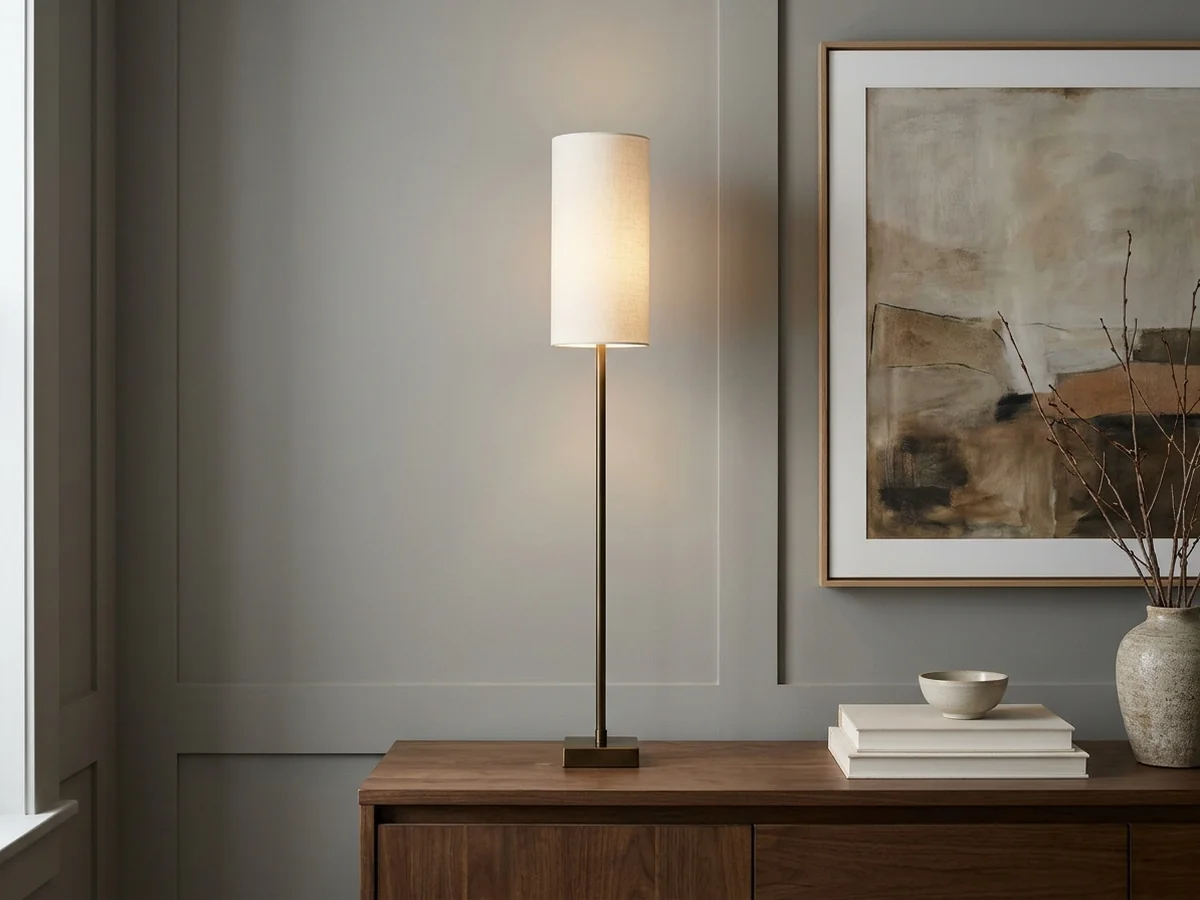
Achieving proper room proportions starts with understanding how slender profiles differ from wider lighting fixtures. Slender buffet lamps feature narrow, elongated columns and compact bases designed specifically for restricted dining room furniture surfaces. Traditional table lamps, by contrast, often feature wide bases and bulky bodies that overwhelm a narrow sideboard or console table. Selecting the right profile ensures the lighting fixture enhances the room rather than dominating it.
When determining the standard height for a buffet, most servers sit at approximately 36 inches tall. Adding a lighting fixture requires careful measurement to ensure the overall arrangement remains functional and visually balanced. Because these dining room surfaces are narrower than standard living room end tables, the buffet lamp vs table lamp distinction becomes crucial for maintaining physical clearance and proper scale.
| Lamp Type | Base Width | Body Shape | Best Furniture Placement |
|---|---|---|---|
| Buffet Lamp | Narrow | Elongated column | Dining server or sideboard |
| Table Lamp | Wide | Bulky or gourd shape | Living room end table |
Visual weight considerations play a major role when styling narrow servers. Slim designs draw the eye upward without making a sideboard feel cluttered or heavy, whereas traditional wide models consume valuable serving space and block sightlines across the room. Standard interior design rules typically suggest that shade proportions should measure roughly two-thirds to three-quarters the height of the lamp base to maintain a balanced look. Keeping these proportions in mind creates a graceful display that feels light, airy, and properly scaled.
To put these principles into practice, follow a few simple steps when styling your dining space. First, measure your server height to establish a baseline for your buffet lamp height in inches. Second, evaluate whether you plan to use one or two lamps on sideboard surfaces depending on the length of the furniture. A single lamp works well on smaller servers when balanced with decorative objects, while pairs create symmetrical elegance on longer sideboards. A common mistake is choosing a fixture with a bulky base that crowds serving platters, so always verify that the shade diameter leaves enough breathing room around the edges of the furniture.
Exact Proportional Formulas for Calculating Ideal Lamp Height
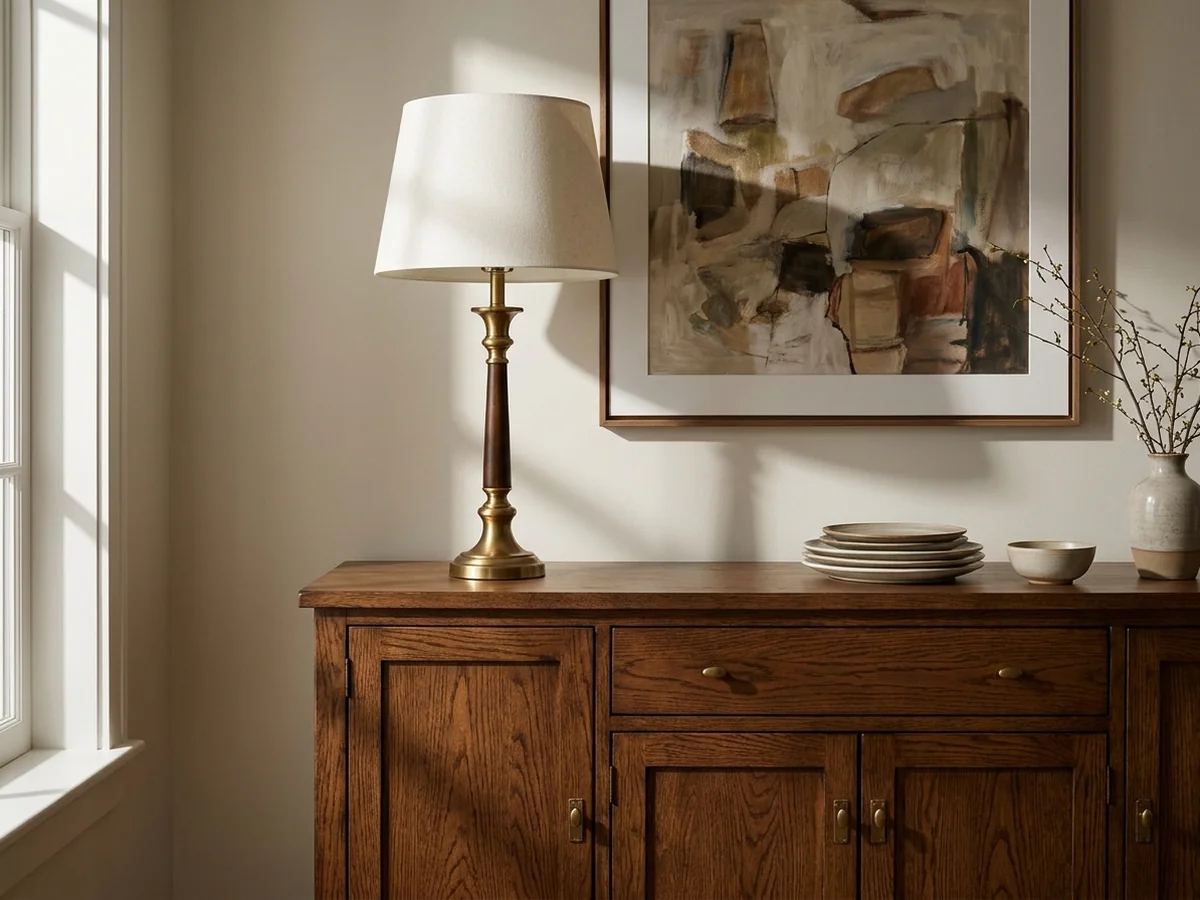
Determining the right buffet lamp height begins with understanding how furniture scale interacts with your lighting fixture. A standard height for a buffet or dining room server typically sits around 36 inches, which serves as your foundational baseline. When calculating the appropriate buffet lamp height in inches, interior designers look closely at the combined vertical measurement of both the dining room furniture and the lamp itself to ensure the arrangement anchors the wall space properly without feeling cramped.
Balancing Shade Proportions and Bases
According to typical design practices, designers often aim for a shade height that measures roughly two-thirds to three-quarters of the base dimension. This specific proportion prevents the top-heavy look that frequently ruins dining room centerpieces and console table displays. Matching the lamp shade dimensions to the base creates a visually stable piece that fits naturally onto any sideboard or console table.
Buffet Lamp vs Standard Table Lamp Distinctions
A frequent mistake homeowners make is choosing a standard living room table lamp instead of a specialized buffet lamp, which results in a stubby appearance that fails to fill the vertical gap below the ceiling. Buffet fixtures are typically taller and more slender than a standard table lamp to account for the height of the server, bringing the lighting fixture into proper proportion with the rest of the dining room furniture.
Avoiding Seated Glare
Another common error is ignoring seated eye level, which can cause the light source to create an uncomfortable glare for guests sitting across the table during a dinner party. Checking these vertical proportions before purchasing decor keeps the dining room balanced and prevents the lighting fixture from overpowering the sideboard. Keeping the light source above or below direct eye lines ensures comfort for everyone sharing a meal.
To apply these formulas successfully in your space, follow a few practical steps. First, measure your sideboard from the floor to its top surface. Second, select a table lamp designed specifically for buffet use, keeping in mind that these fixtures are typically taller and more slender than a standard table lamp to account for the height of the server. Third, check the shade dimensions so the lower edge maintains that balanced two-thirds to three-quarters ratio with the base.
| Element | Dimension Aspect | Proportional Focus |
|---|---|---|
| Server | Vertical Measure | Furniture foundation |
| Shade | Lower Edge Position | Base ratio relation |
| Fixture | Total Combined Scale | Overall visual balance |
Best Height to Prevent Glare

Preventing harsh glare during a formal dinner party starts by keeping the bottom of the lighting fixture at seated eye level. Proper buffet lamp height ensures that guests sitting around the dining room furniture do not stare directly into a bright bulb when looking across the room. Managing this visual comfort requires careful attention to both fixture proportions and furniture scale, especially when positioning a table lamp on a dining room server.
Dining spaces often benefit from applying specific lighting rules to keep illumination comfortably above seated eye level. When a console table or sideboard holds your lighting fixture, the bottom edge of the lampshade is typically expected to sit around two-thirds to three-quarters the height of the lamp base. This proportion helps balance the visual weight of the piece while keeping the light source hidden from direct view, preventing uncomfortable hotspots for anyone seated nearby.
Proportions for a 36-Inch Server
Most standard dining room servers sit at a specific height, often measuring around 36 inches from the floor. This baseline means your lighting setup must complement the lower furniture scale without leaving the room feeling dark. To figure out the ideal dimensions for this setup, measure your dining room furniture before shopping. A slender fixture designed specifically for narrow surfaces often features a taller, narrower base than a standard table lamp, which helps elevate the bulb safely above the line of sight.
Choosing the Right Lampshade Materials
Avoiding common mistakes in your dining space involves looking closely at the hardware and fabric of your lamp shade. To prevent glare, steer clear of transparent or ultra-short shades that fail to properly block the light bulb. Instead, choose opaque or heavy fabric materials to shield the eyes of diners while softening harsh sideways beams. The design of the shade should diffuse the illumination downward onto the sideboard surface rather than casting direct rays across the room.
Balancing Scale and Visual Weight
Understanding the why behind these measurements helps create a welcoming atmosphere. When a lamp sits too low on a sideboard, the exposed bulb creates an uncomfortable experience for guests. Raising the overall buffet lamp height or selecting a fixture with a longer base prevents this issue entirely. Homeowners and interior design enthusiasts decorating a dining room should always test the lighting from a seated position to ensure complete visual comfort before finalizing their decor.
Symmetry and Placement: One or Two Lamps on a Sideboard
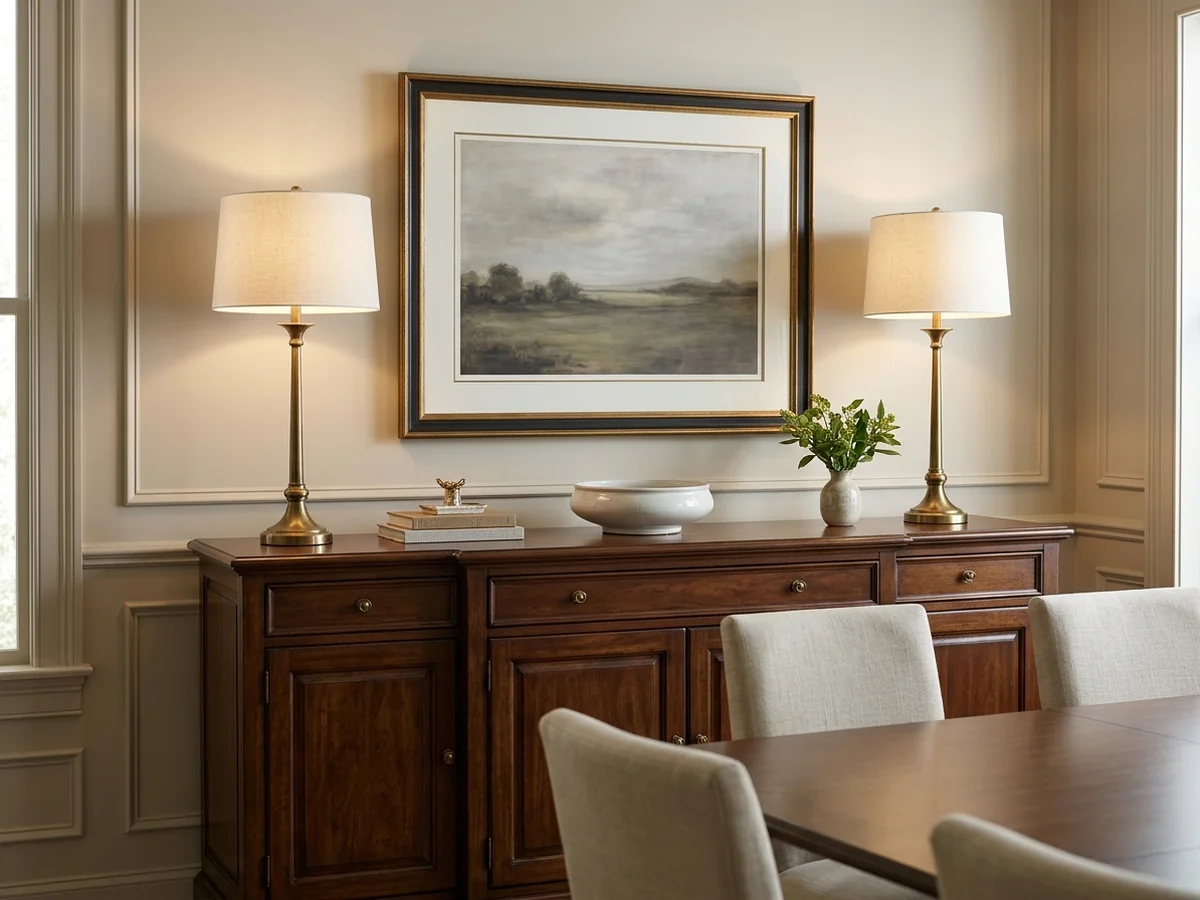
Deciding between a single statement lighting fixture and pairing multiple lamps on a dining surface comes down to the overall length of your dining room furniture and the visual weight you want to create. Symmetrical pairs bring formal elegance and even illumination to long dining room furniture, while a solitary source creates an asymmetrical focal point that leaves room for other decorative objects. For anyone styling a dining room or living space, mastering this arrangement requires looking at how a buffet lamp height interacts with surrounding pieces.
Balancing Proportions on Your Dining Room Server
When planning your layout for a server or console table, understanding the dynamics of lighting arrangements on sideboard displays helps achieve ideal visual balance. Typical buffet furniture usually sits around 36 inches high, which means the lighting placed upon it must respect this baseline to avoid looking clumsy or disconnected. Consider these practical placement steps and design guidelines:
- Positioning a matched pair of lamps on an extended buffet establishes formal symmetry and distributes light evenly across the entire surface. Measure carefully so both fixtures sit equidistant from the center point.
- Placing a single statement table lamp off center allows you to layer additional decorative items like framed art, a decorative tray, or serving platters on the remaining open surface of the console table.
- Keeping each lighting fixture slightly inward from the extreme outer corners of your server prevents the arrangement from looking overcrowded or top-heavy.
- Leaving adequate empty space around your lamp shade ensures the setup remains functional for serving food during gatherings and prevents accidental knocks.
- Matching the visual bulk of your chosen pieces to the sturdiness of the wood or metal frame prevents slender accessories from looking lost on a massive sideboard.
Buffet Lamp Versus Standard Table Lamp Design
Understanding the difference between a buffet lamp vs table lamp options ensures your chosen lighting fixture fits the scale of the room. Buffet lamps are typically taller and narrower, engineered specifically to cast light downward over serving dishes without obstructing conversations across the dining table. A standard table lamp, by contrast, has a wider base and a lower profile meant for reading or general ambient glow in a living area.
Avoiding Common Styling Mistakes
A common mistake in dining room styling is ignoring proportion when mixing accessories. Slender buffet lamps can look fragile on a heavy oak server, just as oversized fixtures overwhelm a delicate console. Another frequent error is pushing fixtures too close to the edge, which restricts functional workspace and creates an unbalanced silhouette. When incorporating a lamp shade into your design, typical practice suggests the bottom edge of the shade sits at about two-thirds to three-quarters the height of the lamp base, maintaining a cohesive look regardless of whether you choose a single fixture or a matched pair.
Lamp Shade Sizing and Proportional Width Guidelines
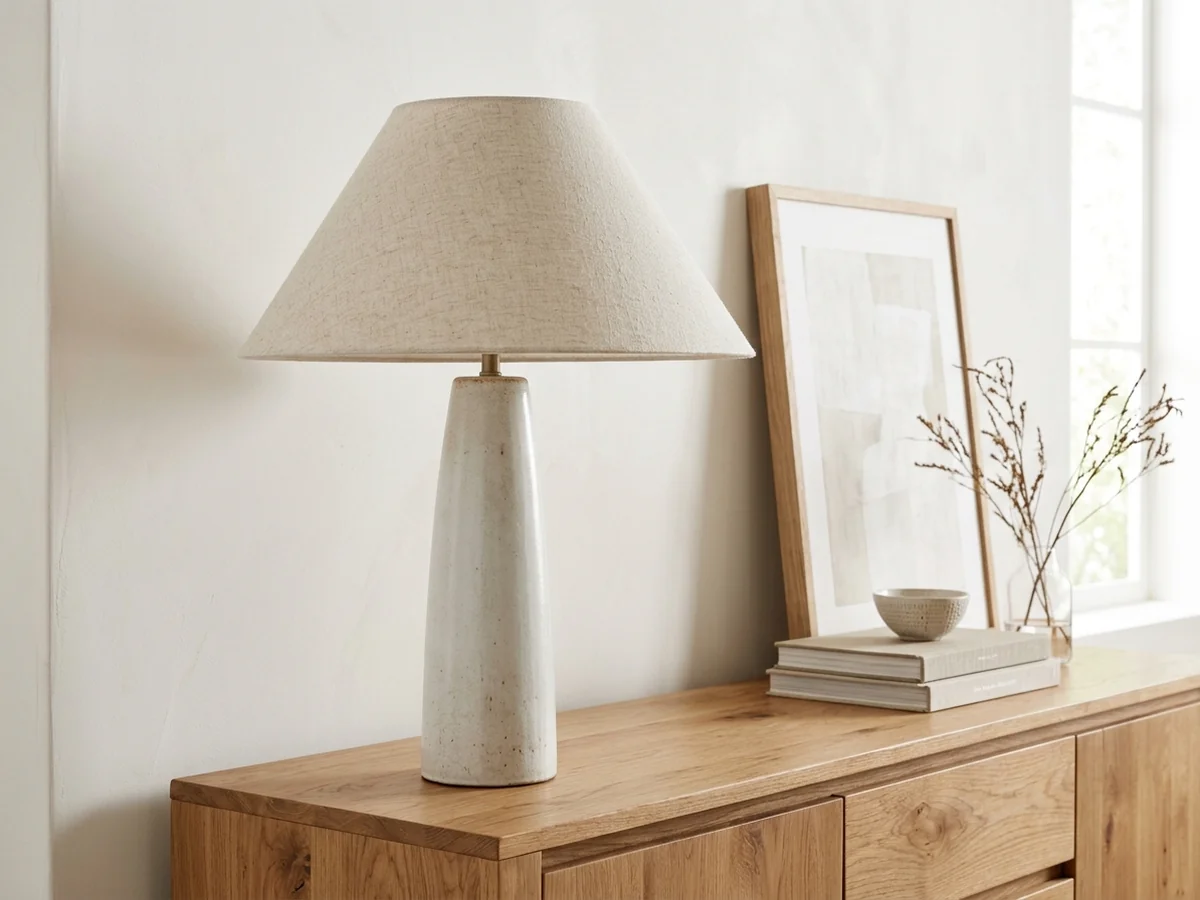
Selecting the right shade dimensions depends closely on balancing the width of your dining room furniture with the overall buffet lamp height. A well-proportioned shade complements the base without overwhelming the surface of a server or sideboard.
Common design guidance suggests that the bottom edge of the lampshade should measure about two-thirds to three-quarters the height of the lamp base. Matching this scale keeps the lighting fixture from looking too top-heavy or spindly.
The width of the shade must also harmonize with the console table below it. If the shade is too wide, it steals visual space from dishes and decor. If it is too narrow, the entire lamp looks unbalanced and weak.
Calculating Diameter and Base Proportions
To achieve the right balance, measure the width of your table lamp base at its widest point. The diameter of the shade should roughly equal that base measurement at a minimum, and can extend up to twice that width depending on the style of the fixture. When working with slender lighting profiles on a dining room sideboard, choosing a slightly wider shade adds necessary visual weight and prevents the fixture from getting lost against a large wall.
The Role of Shape and Geometry
Shade shapes dictate the silhouette of your lighting fixture and influence how light interacts with the room. Drum shades offer a clean, modern look, while tapered empire shapes distribute light over a wider area. Choosing the right geometry helps tie your room style together while maintaining the necessary clearances for surrounding dining room furniture.
Managing Light Diffusion and Opacity
Opacity plays a major role in how light diffuses across dining room furniture. Translucent fabrics cast a soft, ambient glow throughout the space, whereas opaque materials direct light strictly upward and downward for dramatic accent lighting. When placing a lamp on a low table or a standard server, keeping opacity in mind ensures that seated guests do not experience harsh glare at eye level.
A common mistake is choosing a shade that sits too high or too low on the harp. The bottom of the shade should align closely with the top of the lamp base where it meets the socket, hiding the internal hardware while maintaining proper proportions. Homeowners and interior design enthusiasts can easily evaluate these dimensions before purchasing a new lighting fixture by taking precise measurements of both the furniture surface and the intended lamp base.
Proportional Height for Walking Clearance
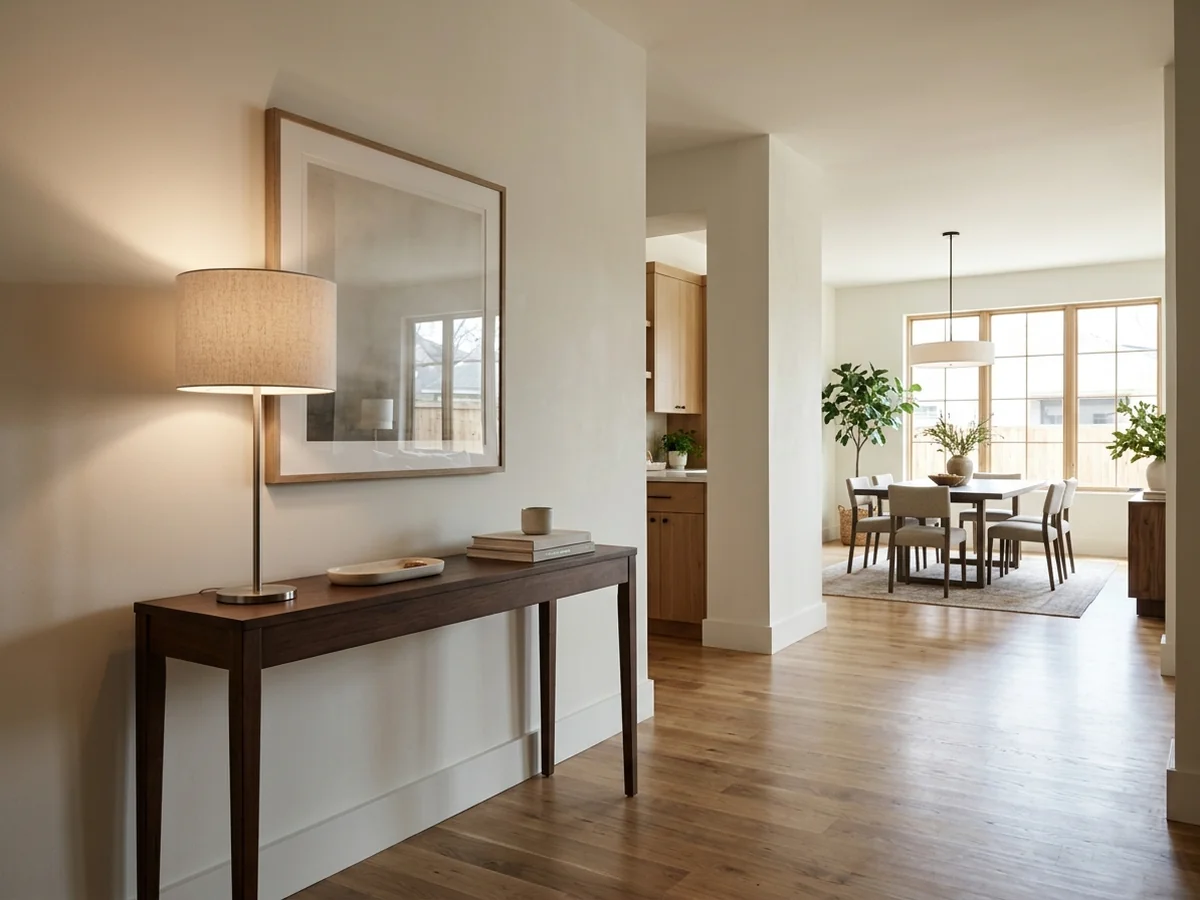
Maintaining clear walking paths around dining room furniture requires careful spatial planning, especially in open-concept floor plans where a sideboard or console table sits near high-traffic walkways. Placing a server too close to a main pathway creates a tight squeeze, while a poorly positioned lighting fixture can jut out and obstruct movement. Your goal is to establish enough physical space so that traffic flows naturally without anyone snagging a clothing hem or tripping over electrical wires.
Balancing Traffic Flow and Surface Depth
When selecting dining room furniture, homeowners and interior design enthusiasts must consider how the physical footprint of a buffet interacts with surrounding clearances. A typical serving furniture piece often rises roughly 36 inches from the floor, which means the items resting on top, including any tall table lamp, add significant vertical and horizontal dimensions. If your sideboard extends too far into a narrow hallway or dining pathway, even the most carefully chosen vertical lamp proportions will fail to save the room from feeling blocked and claustrophobic. Leave adequate distance between the edges of the furniture and nearby walls or chairs to ensure effortless movement.
Managing Cords and Fixture Stability
Safe placement extends beyond the physical footprint of the furniture and includes proper cord management. Cords that trail loosely across the floor create hazardous tangles. To prevent this, keep cords neatly bundled or run them directly down the back of the furniture piece so they remain completely out of foot traffic. Furthermore, verify that your table lamp base sits securely on top of the surface without overhanging the edge. A stable base stops accidental knocks from people passing by.
Protecting Your Decor and Line of Sight
Why do these clearance details matter for overall room aesthetics? When furniture and decor crowd a pathway, the entire living space feels cramped and uninviting. Proper spacing lets your lighting choices shine without creating functional obstacles. Taking the time to measure your room layout prevents awkward navigation during gatherings and protects your decor pieces from accidental damage.
- Keep walking paths clear by pushing dining room furniture far enough from primary traffic lanes.
- Route cords securely behind the server to eliminate tripping hazards on the floor.
- Choose slim lamp bases that do not crowd the surface or extend past the edges of the sideboard.
Frequently Asked Questions About Lighting Proportions
Is there a standard height for all table lamps?
Table lamp heights vary significantly based on the furniture piece and the height of the ceiling in the room. A standard nightstand requires a much shorter lighting fixture than a console table or a dining room server.
How wide should the lamp shade be?
The width of a lamp shade should generally match the width of the lamp base at its widest point for a balanced look. Common design guidance suggests that the bottom edge of the lampshade should measure about two-thirds to three-quarters the height of the lamp base itself.
Can I mix lamps of different sizes in a room?
Mixing lamp sizes works well as long as the pieces share a similar finish or design style to maintain visual harmony. Pairing mismatched heights creates an unbalanced appearance if the surrounding dining room furniture lacks symmetry.
How tall are typical sideboards?
A standard dining room server or sideboard typically measures around thirty-six inches tall to provide convenient surface space and serving access. Choosing the correct vertical dimension for your decorative pieces ensures the total fixture placement stays proportional to this surface without obstructing eye contact across the room.
Should bedside lamps be the same height as those in the living room?
Bedside lamps are usually shorter than living room table lamps because nightstands sit much lower than standard sofa end tables. Matching the lighting fixture height to the specific use of the room keeps the illumination functional and visually appealing.
Conclusion: Achieving Balance in Dining Room Decor
Selecting the right lighting scale depends heavily on matching your furniture dimensions and overall room proportions. Grab a tape measure and test out different dimensions before buying home decor pieces to ensure a polished look. Getting the ideal vertical measurement for your sideboard lighting makes your server look cohesive and prevents awkward sightlines during meals.
You might also like: Can You Fit an 8-Person Rectangular Table in a 12×14 Dining Room?