Linear Chandelier vs Single Round Drum: Best Shape for Long 8-Foot Tables
Introduction to Lighting Choices for Long Dining Tables
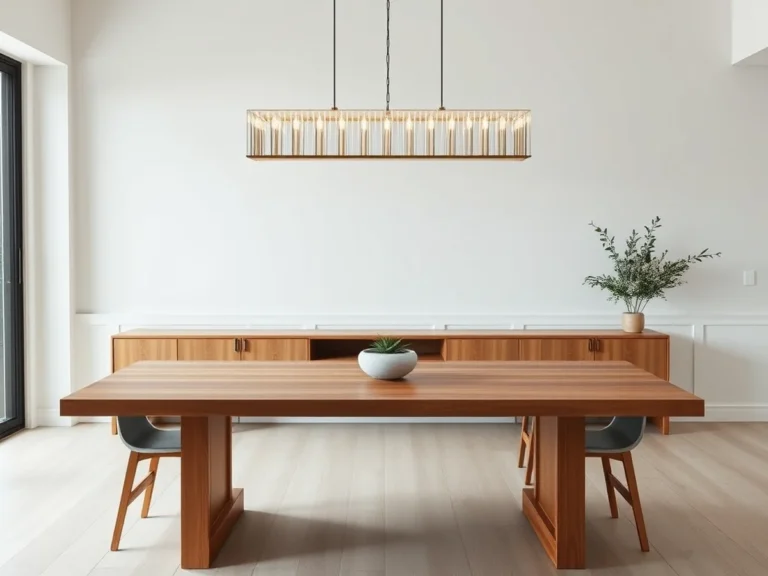
Choosing a linear chandelier vs drum fixture depends heavily on how well the silhouette matches an elongated piece of furniture. Homeowners planning decor for extended surfaces often weigh a linear chandelier vs drum option to achieve proper illumination and scale. Evaluating these two shapes ensures the finished room feels balanced and well-lit.
This guide breaks down the functional differences, proportions, and visual impact of each hanging style. Readers will learn how to select the right fixture width and length for an eight-foot surface without guessing.
Understanding Linear Fixtures and Drum Shades
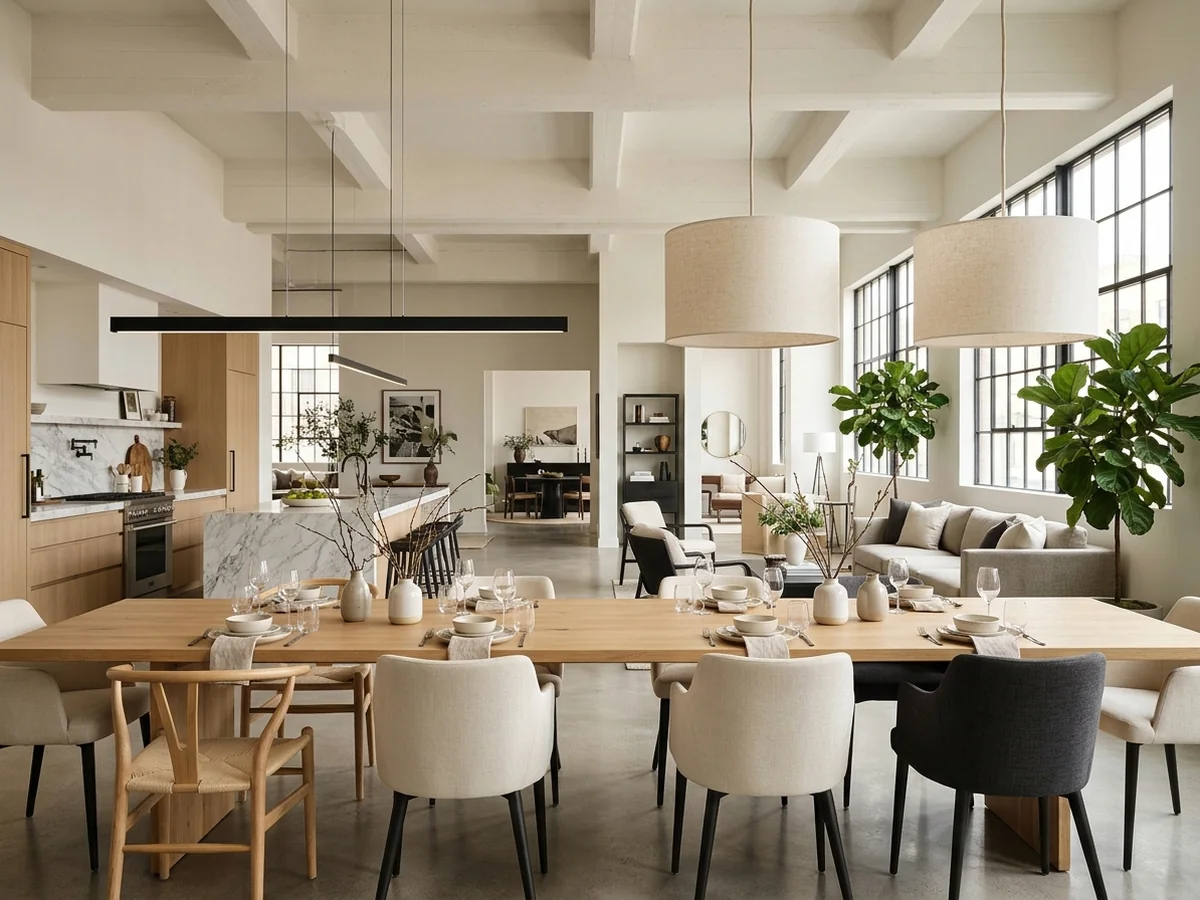
Choosing between a linear suspension lighting option and a round drum fixture comes down to how your lighting interacts with the furniture underneath. When planning a home decor layout, evaluating fixture width and length proportions ensures that your illumination matches the silhouette of your room. Different shapes create distinct visual focal points, making it essential to understand how each design functions in an open space.
Balancing Surface Geometry
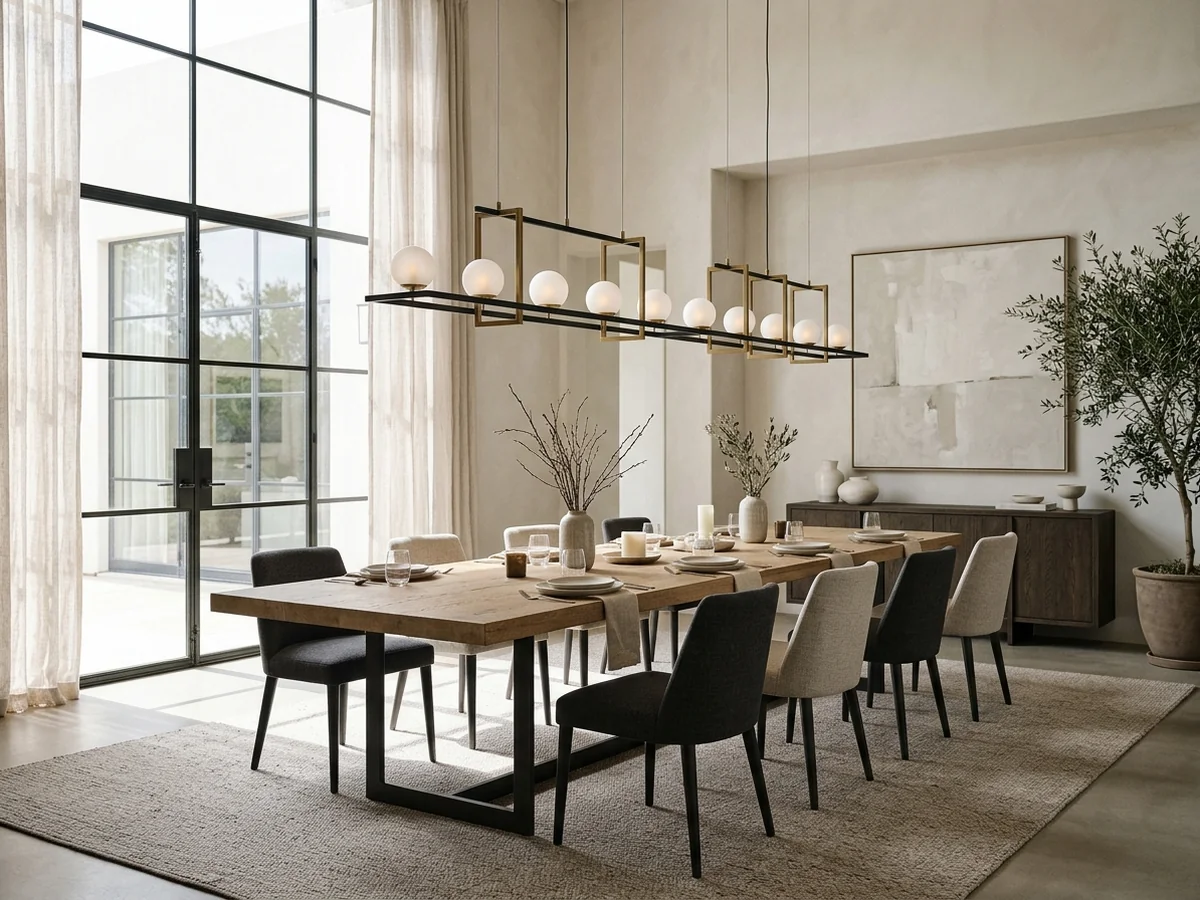
Common guidance suggests that linear chandeliers typically feature long, narrow proportions intended to sit above extended dining tables or kitchen breakfast bars. This elongated geometry creates a natural counterpart for extended surfaces, helping to anchor the design of a kitchen or dining area. Furthermore, standard interior design practices note that these fixtures can utilize multiple lights spaced across a linear frame, which distributes illumination evenly from end to end across long tables.
Selecting Scale for Rectangular Layouts
Round drum shades take a different approach by offering a centralized, softer pool of light, often diffused through fabric or hardback materials. Selecting the right profile requires examining practical steps like measuring your table length and evaluating ceiling clearance. A common mistake is choosing a fixture that fails to match the horizontal spread of the furniture, resulting in dark corners or an unbalanced visual weight. Reviewing your specific room dimensions helps clarify whether an extended linear frame or a centralized shade creates the best atmosphere.
Evaluating Styling Trends
Homeowners often wonder about current aesthetic preferences when reviewing the linear chandelier vs drum debate for a dining table or kitchen island. Both styles remain relevant in modern interior design, provided the scale matches the room dimensions. Selecting the best chandelier shape for a long table relies entirely on establishing a balanced proportion between the furniture length and the light fixture itself.
Fixture Width and Length Proportions for an 8 Foot Table
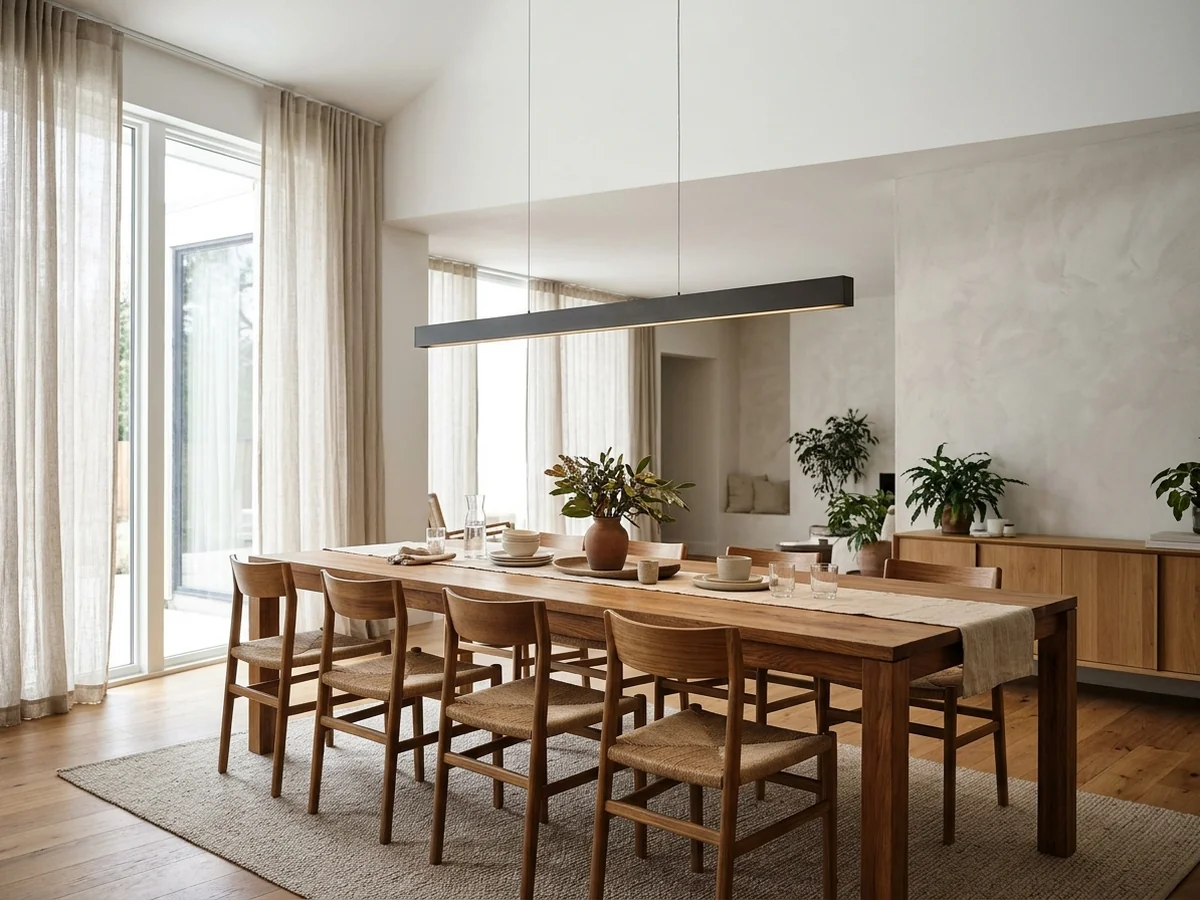
Choosing the right dimensions for lighting over an extended surface means matching the silhouette of the fixture to the rectangular shape of the furniture. Common guidance suggests that linear choices work well because they run long and narrow, mirroring the full span of an extended surface. When planning your layout, evaluating fixture width and length proportions ensures that your lighting does not overwhelm the room or leave the edges of the furniture in shadows.
To achieve the best chandelier shape for long table setups, homeowners often weigh practical distribution against visual scale. A single round fixture often leaves dark corners on an extended dining surface because the light radiates outward from one center point. In contrast, typical industry practice shows that linear suspension lighting over a rectangular table utilizes multiple lights spaced across a linear frame to provide even coverage from end to end.
| Fixture Type | Common Shape | Light Distribution |
|---|---|---|
| Linear Chandelier | Long and Narrow | Multiple Points |
| Round Drum | Circular Base | Single Center Point |
Practical steps for sizing fixtures over an 8 foot surface involve calculating the overall length of the table. Standard interior design recommendations advise that a hanging light should measure roughly one half to two thirds of the table length. For an 8 foot table, this means selecting a fixture between four and five feet long. Common mistakes include installing a round drum chandelier sizing that is too small for the room, which creates an unbalanced focal point, or hanging a linear model that extends past the edges of the table and interferes with seating.
Understanding why these proportions matter helps maintain visual harmony. When evaluating a linear chandelier vs drum for your space, consider how the physical footprint of the light interacts with ceiling height and room circulation. Selecting the appropriate scale ensures that the finished dining area feels intentional, balanced, and properly illuminated for daily use.
Light Distribution and Eliminating Dark Spots on Long Surfaces
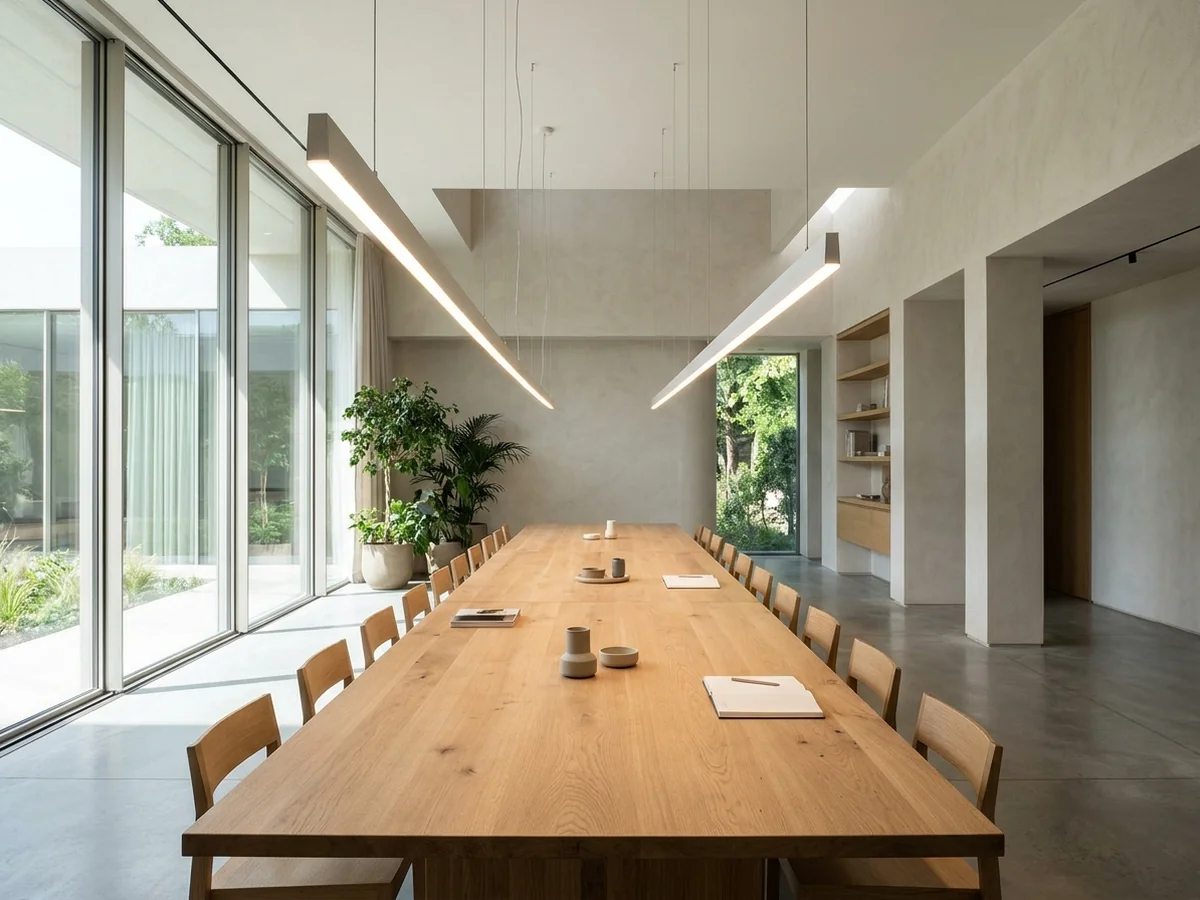
Lighting an extended surface requires careful planning to avoid peripheral shadows. When homeowners and interior designers evaluate options, common design guidance suggests that linear chandeliers are typically crafted in long, narrow profiles to sit above rectangular surfaces such as dining tables or kitchen islands. This elongated geometry influences how light travels across the room, contrasting sharply with the central focus of a single round fixture.
Single Source Limitations on Extended Tables
Single central lights tend to concentrate brightness right in the middle of an extended surface. That leaves the ends dimmer and forces you to add supplemental lighting if you need task clarity across the entire area. While a fabric drum shade provides soft diffusion, it still operates from a single central point. On an eight foot dining table, this central concentration creates noticeable light drop off at the far corners, requiring extra lamps or recessed ceiling spots to balance the space.
Multipoint Illumination across Linear Frames
When you are planning linear suspension lighting over rectangular table setups, you want to make sure the light sources span enough of the surface. Chandeliers can utilize multiple lights spaced across a linear frame to prevent the pooling effect that happens with single bulb sources. Evaluating fixture width and length proportions relative to your furniture prevents dark zones.
- Elongated frames distribute lumens evenly across all eight feet.
- Multiple bulbs eliminate harsh shadows at the table corners.
- Balanced spacing prevents hot spots in the center of the room.
Practical Steps for Balanced Room Styling
Achieving functional brightness from end to end involves matching your fixture shape to your furniture silhouette. A multi bulb linear setup lets you illuminate homework, dinner parties, and projects without dark patches. When reviewing visual scale and room styling considerations, ensure your linear installation leaves adequate clearance above the surface while spanning at least two thirds of the total table length.
Visual Scale and Room Styling Considerations
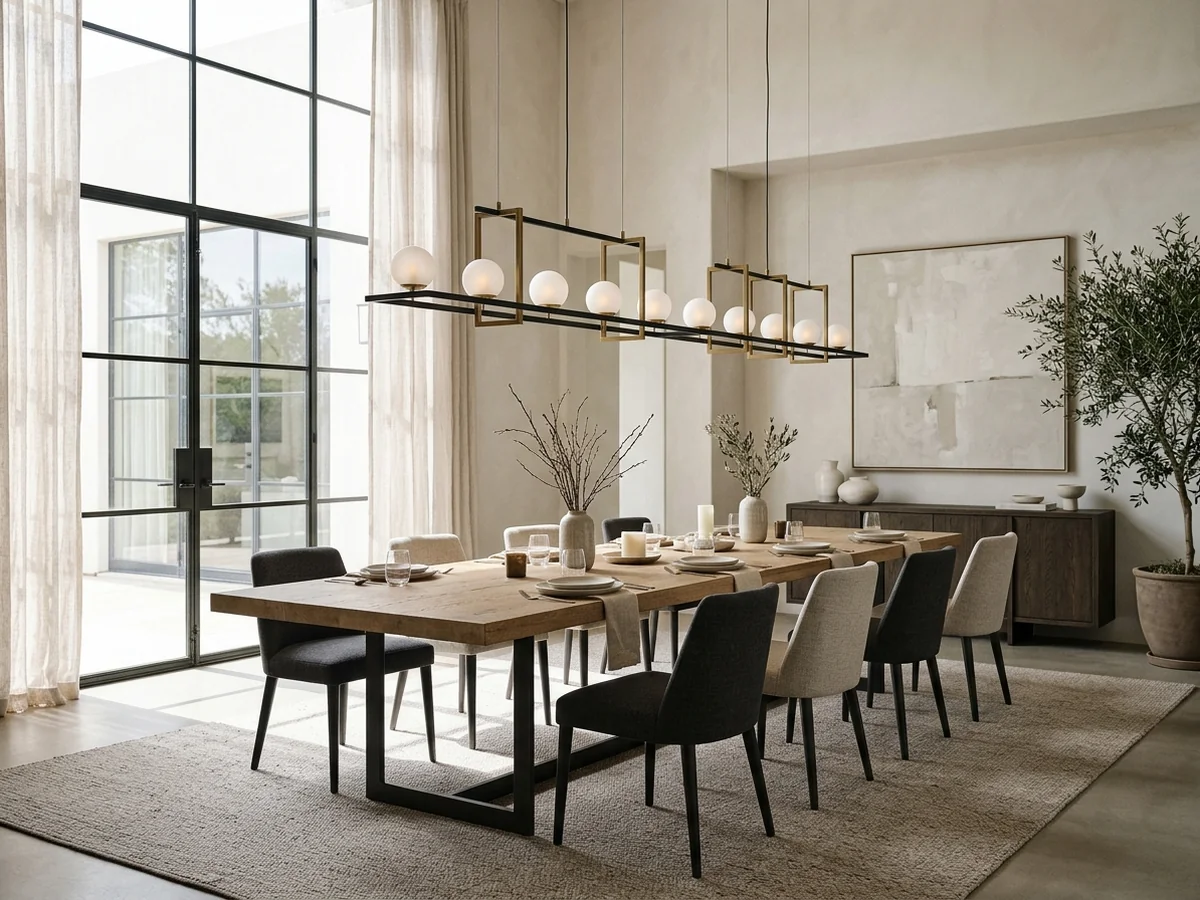
Choosing the right profile requires matching the silhouette of your lighting to the geometry of your furniture, especially when evaluating linear chandelier vs drum options for an extended dining setup. Long rectangular surfaces demand careful attention to fixture proportions so the space feels balanced and visually cohesive.
Interior design guidelines often suggest that linear chandeliers are typically designed in long, narrow shapes well suited for placement above elongated surfaces like kitchen islands or breakfast bars. This shape mirrors the horizontal lines of an eight-foot dining table, creating a unified look that guides the eye naturally down the length of the room.
Round fixtures create a distinct focal point by breaking up repetitive linear elements in a dining room. A single centered round profile introduces soft curves that contrast nicely against sharp architectural angles or rectangular chairs.
When planning your room layout, consider how different suspension styles interact with the surrounding decor elements:
- Linear options can utilize multiple lights spaced across a linear frame to provide even illumination across an extended surface.
- Round profiles concentrate light from a single center point, which can dramatically alter shadow placement and mood.
- Hardware finishes like brass linear suspension hardware add warmth and tie together nearby metallic accents.
Ceiling height and room volume also influence how heavy or light a fixture appears overhead. Slim metal frames keep sightlines open in rooms with standard ceiling heights, whereas substantial fabric shades command more visual weight and anchor larger open-concept spaces effectively.
Sizing and Scaling a Round Drum Chandelier
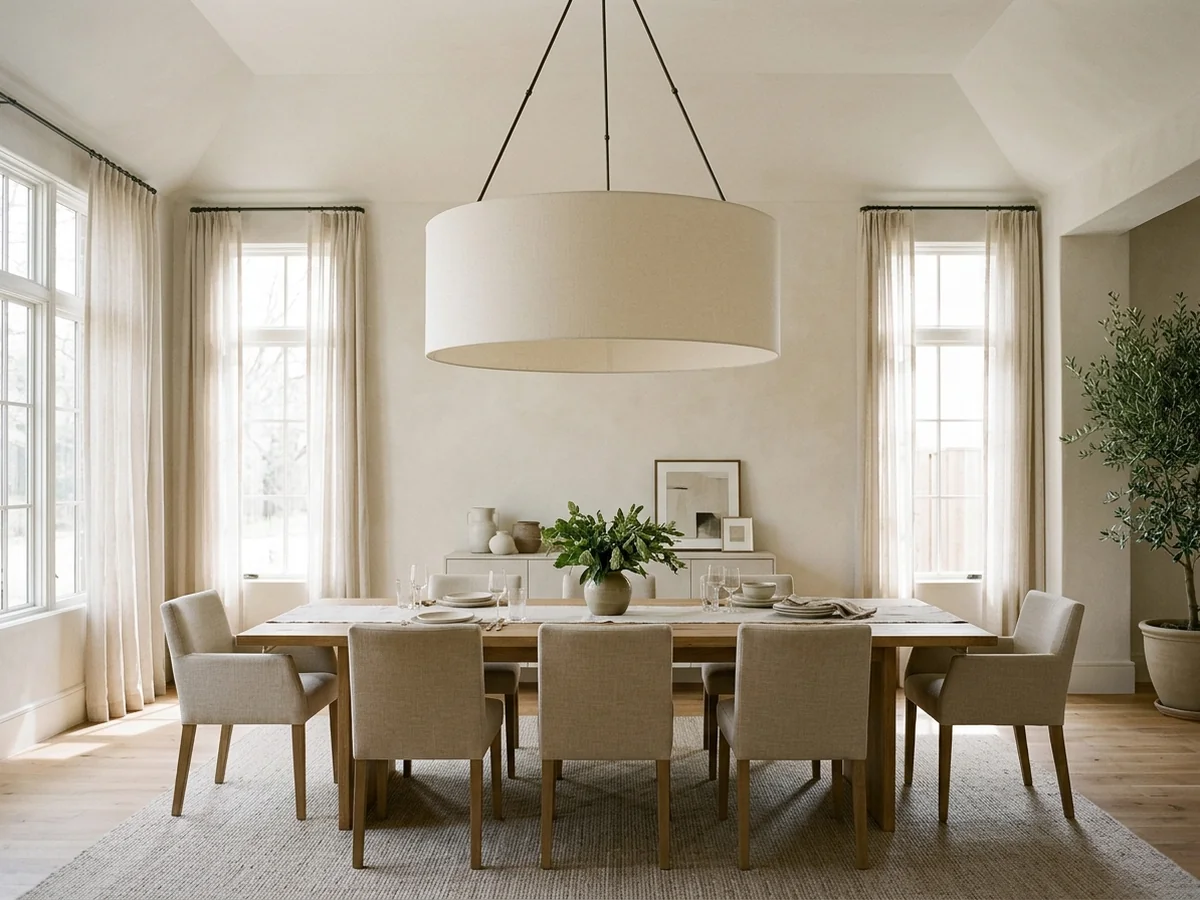
Sizing a single round fixture for a long surface requires careful proportioning so the light anchors the space without looking undersized. Common interior design guidance suggests that the diameter of a hanging fixture should measure roughly one half to two thirds the width of the dining table below it. When you work with an extended surface, getting these proportions right prevents the piece from looking lost against a large expanse of wood or marble. Homeowners and interior designers planning lighting over an eight foot dining table must balance round silhouettes carefully to avoid uneven illumination.
Proportional Guidelines for Extended Surfaces
Proper round drum chandelier sizing also depends on balancing the visual weight of the fixture with the height of the room. You have to consider how the circular footprint interacts with the linear nature of your furniture. Because linear suspension lighting over a rectangular table often mirrors the shape of the furniture, using a solitary round fabric drum shade requires thoughtful placement. Several key planning strategies help you achieve the right balance:
- Measure the total width of your dining table and choose a diameter that falls within the standard one half to two thirds proportion range.
- Keep the hanging height so that the bottom of the shade sits thirty to thirty six inches above the table surface for optimal clearance.
- Account for the ceiling height in your room, ensuring larger fixtures have enough vertical space so they do not crowd the overhead area.
- Check the lumen output of the internal bulbs to guarantee the single central point casts enough light across the entire length of the table.
- Pair the circular shade with complementary room decor elements that echo rounded shapes, such as circular mirrors or curved dining chairs.
Evaluating Single Points Versus Multiple Light Sources
When selecting the best chandelier shape for long tables, you need to evaluate how light spreads across an extended surface. A single central fixture relies on one focal point, which can sometimes leave the outer edges of an eight foot table in shadow. By contrast, common design practice shows that linear suspension lighting can utilize multiple lights spaced across a linear frame to distribute brightness more evenly from end to end. If you prefer the soft diffusion of a fabric shade, verify that the bulb wattage and lumen count are high enough to cover the entire dining area without creating dark corners.
Avoiding Common Scaling Mistakes
A frequent error in home decor planning is choosing a drum fixture that is too small for a grand dining room or an oversized table. If the diameter is less than half the table width, the arrangement feels disconnected. Conversely, a shade that is too wide can overwhelm guests and disrupt sightlines across the room. Assess your ceiling height and table dimensions simultaneously to ensure your overhead fixture dimensions enhance the overall aesthetic rather than fighting the natural geometry of the space.
Ceiling Height and Clearance Planning for Both Styles
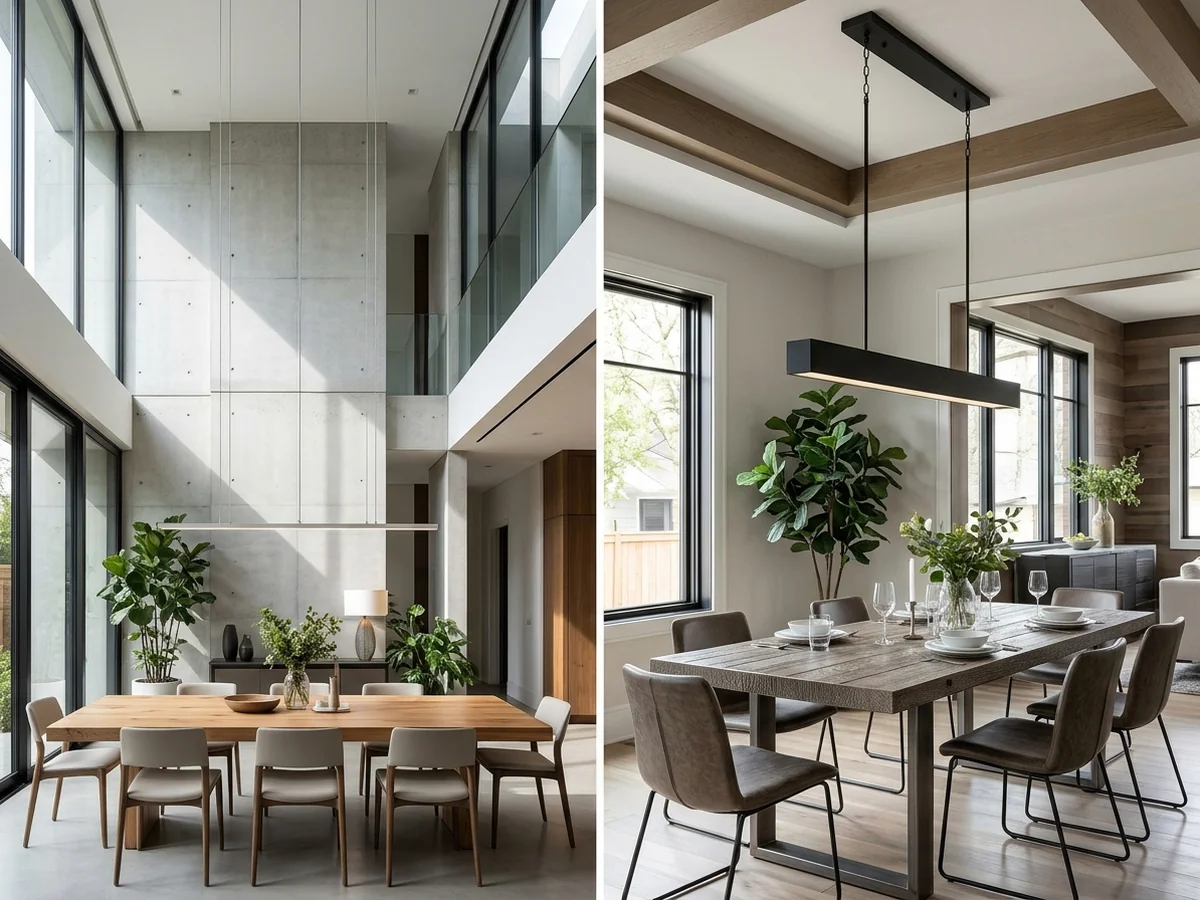
Proper ceiling height and vertical clearance require measuring the distance from the floor to the bottom of the lighting fixture. Hanging either a linear chandelier vs drum style over an extended dining surface means maintaining standard vertical separation so the room stays comfortable and balanced without casting harsh shadows. When evaluating a linear suspension lighting over rectangular table setup, understanding how height interacts with fixture width and length proportions prevents the hardware from overwhelming the room.
Standard design practice suggests keeping lighting fixtures at a consistent height above the furniture surface. For typical dining room installations, the bottom edge of the hardware should rest approximately thirty to thirty-six inches above the tabletop when dealing with standard eight-foot ceilings. Rooms with higher or vaulted ceilings require longer drop rods or suspension chains to bring the illumination down to the correct visual plane over the table, ensuring the light source remains functional rather than purely decorative.
Planning vertical clearance involves several practical steps to avoid common mistakes during installation:
- Measure total room height before selecting suspension hardware, adding three inches of clearance for every foot of ceiling height above eight feet.
- Account for the vertical drop of the fixture frame, ensuring multiple lights spaced across a linear frame do not obstruct sightlines across the table.
- Verify clearance between the bottom of the fixture and the table surface so diners can converse comfortably without looking directly into exposed bulbs.
- Test the proportion between fixture width and length proportions relative to the table footprint before final wiring.
A frequent mistake during clearance planning is failing to account for how fabric drum shade options or heavy metal frames distribute visual weight in open spaces. Because linear chandeliers are typically designed with elongated frames to sit gracefully above extended layouts like kitchen islands or serving counters, round drum fixtures tend to concentrate mass in a single center point. Matching the scale of the room prevents suspended hardware from feeling too low or entirely lost in an open concept layout.
Craftsmanship and Material Quality
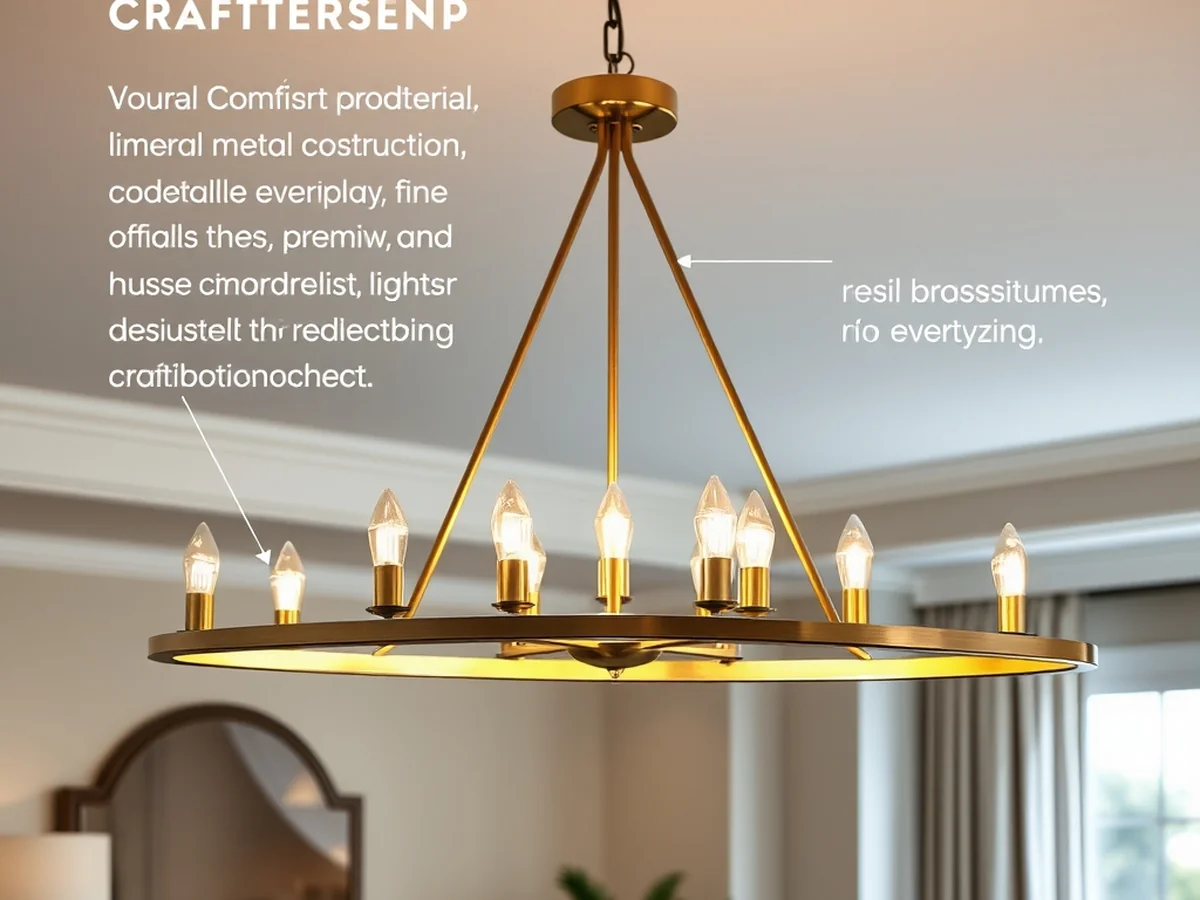
Craftsmanship and material quality define the longevity and visual impact of both lighting styles, especially when evaluating options from makers like Visual Comfort. Premium fixtures use solid metals and hand-worked finishes that resist tarnishing in everyday home environments. Selecting durable components ensures your investment maintains its structural integrity over years of daily use, which is essential when balancing fixture width and length proportions above a dining table.
Structural Integrity in Metal Frameworks
Common design guidance suggests that linear fixtures typically feature an elongated, narrow profile suited for placement above rectangular furniture pieces like kitchen islands or serving counters. Because chandeliers can utilize multiple lights spaced across a linear frame, this setup requires precise structural joints to keep the entire assembly level and secure. Solid brass or bronze frames prevent sagging over time, which matters greatly when spanning an eight-foot dining surface. Homeowners and interior designers must inspect the metal gauge thickness to guarantee stability across long spans.
Textile and Diffuser Durability
Round drum alternatives rely heavily on fabric shades or solid glass diffusers to soften the interior light source. Fabric components demand high-grade textiles that resist dust collection and fading under consistent bulb heat. Well-constructed shades maintain their taut silhouette without warping or yellowing. When evaluating the physical dimensions and proportions of a circular drum design, check the thickness of the glass or the quality of the fabric weave to avoid premature aging.
Practical Build Factors to Review
Consider these material factors when choosing your piece:
- Metal gauge thickness for structural stability over large furniture
- Finish durability against humidity and routine cleaning
- Shade fabric quality or glass thickness
- Internal socket wiring certification and safety ratings
Careful attention to these build details guarantees a refined look that complements high-end interior spaces. Evaluating the craftsmanship upfront prevents sagging frames and degraded shades later.
Frequently Asked Questions About Dining Table Chandeliers
Are drum shade chandeliers still in style?
Drum shade chandeliers remain a classic choice for interiors that benefit from soft, diffused illumination. They provide a tailored, grounded look that works especially well in transitional and casual dining spaces. Homeowners often choose a fabric drum shade when they want to soften harsh glare and create an intimate mood around a dining table dimensions layout. While very heavy traditional styles have faded, clean drum designs maintain lasting appeal by blending simplicity with texture.
Are linear chandeliers still in style?
Linear chandeliers are very much in style, particularly in modern and contemporary homes that feature elongated furniture layouts. Their streamlined profile makes them a top pick for designers balancing form and function over long surfaces. Common guidance indicates that linear fixtures are usually built with an extended profile suited for rectangular surfaces like kitchen islands or serving bars. Furthermore, these designs can utilize multiple lights spaced across a linear frame to eliminate dark corners and provide even brightness.
When to use a linear chandelier?
Linear fixtures are typically chosen when you need to distribute light evenly across a wide rectangle, such as an eight foot dining table or a kitchen island. They span the length of the furniture to ensure both ends receive adequate brightness without harsh shadows. When evaluating a linear chandelier vs drum for dining table setups, a linear option is best if the surface exceeds six feet in length, as a single center point often fails to illuminate the outer edges effectively.
What chandeliers are out of style?
Overly ornate, heavy iron fixtures with dated faux candle sleeves and shiny brass finishes tend to look tired in modern homes. Clean silhouettes and warm, matte metals like a brass linear suspension have largely replaced these heavy traditional designs. Choosing outdated shiny brass or overly complex wrought iron can instantly age a dining space, whereas streamlined fixtures maintain a fresh, intentional aesthetic.
Conclusion and Final Selection Guide for Your Dining Room
Choosing the right fixture comes down to matching your room layout and personal design preferences, especially when evaluating a linear chandelier vs drum for your dining space. Consider your table length, ceiling height, and desired light spread before making a final purchase. Taking precise room measurements ensures your new lighting creates a balanced and welcoming atmosphere for everyday meals.
You might also like: How to Stop Dining Room Chairs from Catching on the Bound Edges of Are