
Can You Put an 8×10 Rug Under a 7-Foot Dining Table (Visual Proportion Guide)?
Figuring out the ideal rug dimensions for your home can feel like a complex puzzle, especially when you are wondering if you can put an 8×10 rug under a 7-foot dining table (visual proportion guide). Achieving the right balance is essential for both the functionality of your chairs and the overall aesthetic of your dining room. A well-proportioned rug defines the space, protects your flooring, and keeps your furniture grounded.
By understanding how to measure your clearance and account for chair movement, you will gain the confidence to make the best choice for your specific layout. This article provides the practical steps needed to ensure your dining room design feels intentional, balanced, and perfectly scaled.
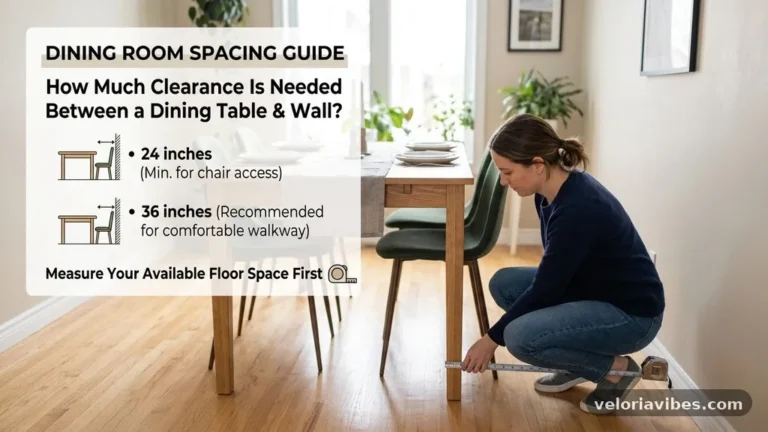
Measuring Your Available Floor Space

Before you commit to a specific rug size, you must understand the physical constraints of your dining area. A 7-foot table is a substantial piece of furniture, and it requires a generous footprint to avoid feeling cramped.
Start by measuring the length and width of your table, then map out the space around it. You need to ensure that the area allows for the rug to lie flat without bunching against walls or other furniture pieces like sideboards or bar carts.
Think about the transition zones in your dining room. If your rug extends too far, it might create a trip hazard where it meets the edge of a hallway or a different flooring material. Conversely, if it is too small, the rug will look like an afterthought, floating awkwardly beneath the center of the table.
Measuring your floor space isn’t just about the table; it’s about how the entire room functions during a meal. Take a tape measure and mark the floor with painter’s tape to see where an 8×10 rug would actually sit in your space before you buy it.
Calculating Chair Clearance Requirements
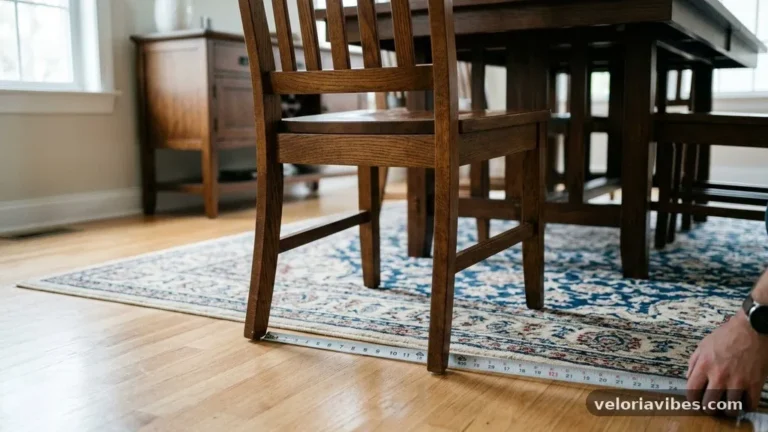
The most critical factor when selecting a rug for a dining room is the clearance required for chairs. When someone sits down to eat, they pull their chair back from the table.
If the rug is too small, the back legs of the chair will constantly catch on the edge of the rug, causing frustration and potential damage to the fabric. You want the chairs to remain on the rug even when they are fully pulled out from the table.
For a standard 7-foot table, which is 84 inches long, you need at least 24 to 30 inches of extra space on every side to accommodate a seated person. If your table is 40 inches wide, an 8×10 rug provides 120 inches of length and 96 inches of width. This leaves roughly 18 inches of extension on the long sides and 28 inches on the short ends.
While this is sufficient for many setups, you must verify that your specific chairs don’t require an extra-wide footprint. If your chairs are particularly bulky or have wide-set legs, you might find that 18 inches of clearance is just on the edge of being too tight.
Evaluating the 8×10 Rug Proportions
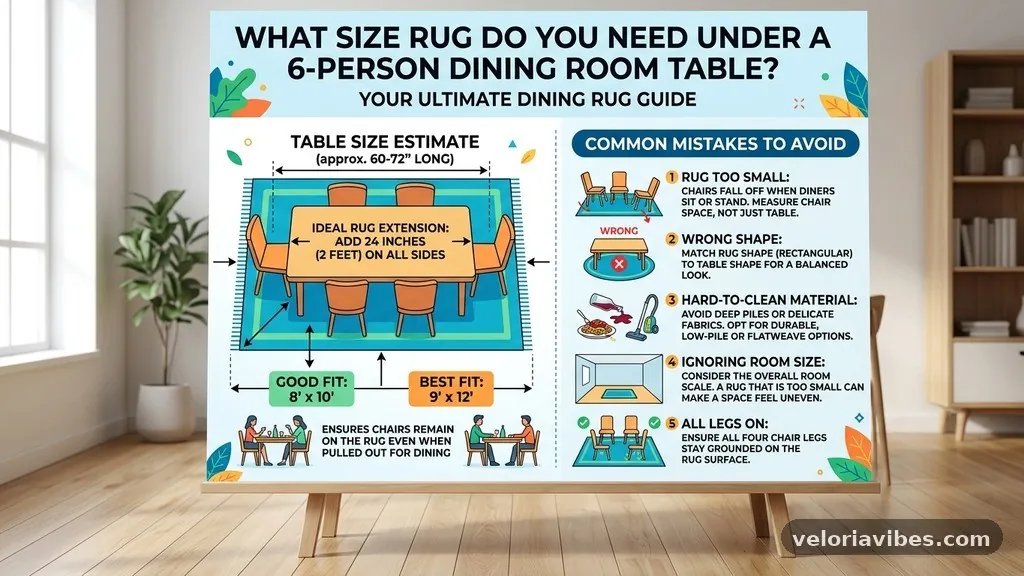
When you ask whether you can put an 8×10 rug under a 7-foot dining table (visual proportion guide), you are really asking about visual weight. An 8×10 rug is a classic rectangle, and it works best with rectangular or oval tables. If your table is 7 feet long, the 10-foot side of the rug provides a decent buffer, but the 8-foot width might feel slightly snug depending on the width of your table.
Visual proportion relies on the relationship between the table’s perimeter and the rug’s edge. A rug that is too narrow creates a “cut-off” effect where the chairs on the long sides of the table feel like they are falling off the rug. When the rug is wide enough, it frames the entire grouping, making the dining area look like a cohesive island.
If your table is standard width, an 8×10 rug will likely look balanced, but if you have a very wide table, you might find the rug looks a bit skimpy. Always look at the negative space between the rug edge and the wall; it should remain consistent to keep the room feeling organized.
Considering Rug Materials for High-Traffic Areas
Dining rooms are high-traffic zones prone to spills, crumbs, and heavy furniture movement. Choosing the right material is just as important as choosing the right size.
Wool is often considered the gold standard for dining areas because of its natural durability and resistance to stains. It holds up well under the weight of heavy oak or mahogany tables and doesn’t show wear as quickly as synthetic fibers.
If you are concerned about maintenance, consider low-pile or flat-weave rugs. These options are much easier to vacuum and don’t trap food particles the way high-pile shags do. You can find more information on selecting durable textiles at the Federal Trade Commission guidelines on textile labeling to ensure you are getting a quality product.
Avoid delicate materials like silk or viscose in the dining room, as these fibers are notoriously difficult to clean and can be permanently damaged by liquid spills. A durable, tightly woven rug will stand the test of time and keep your dining area looking sharp for years.
Managing Rug Placement on Hardwood vs. Carpet

The surface beneath your rug dictates how it behaves and how you should secure it. If you are placing an 8×10 rug on hardwood or tile, you absolutely must use a high-quality rug pad.
A rug pad prevents the rug from sliding when chairs are pulled out, which is a major safety concern. It also provides a bit of cushion that makes the floor feel more luxurious and protects the underside of your rug from friction wear.
If you are layering a rug over wall-to-wall carpet, the rules change slightly. You need a specific type of rug pad designed for carpet-to-rug contact to prevent slipping and bunching. However, many designers advise against layering in the dining room because it can create an uneven surface that makes the table wobble.
If your dining table is on carpet, you might be better off skipping the area rug entirely, unless you need it to define the space in an open-concept room. If you do proceed, ensure the rug is thin and flat to minimize the risk of a trip hazard.
The Role of Table Shape in Rug Selection
While this discussion focuses on a 7-foot rectangular table, the shape of your furniture significantly influences how a rug looks. A rectangular rug is the natural partner for a rectangular table, mirroring its lines and creating a sense of order. If you were using a round or oval table, an 8×10 rug might feel disjointed because the corners of the rug would create awkward, unused negative space.
With a 7-foot rectangular table, you have the advantage of symmetry. The 8×10 dimensions reinforce the linear nature of the table. If you find that the rug feels too long on the ends, you can shift the placement slightly to favor the sides where people sit.
Always ensure the rug is centered under the table, not the room. Even if the room is off-center, the rug must align with the table to maintain the visual integrity of the dining arrangement.
Common Mistakes to Avoid
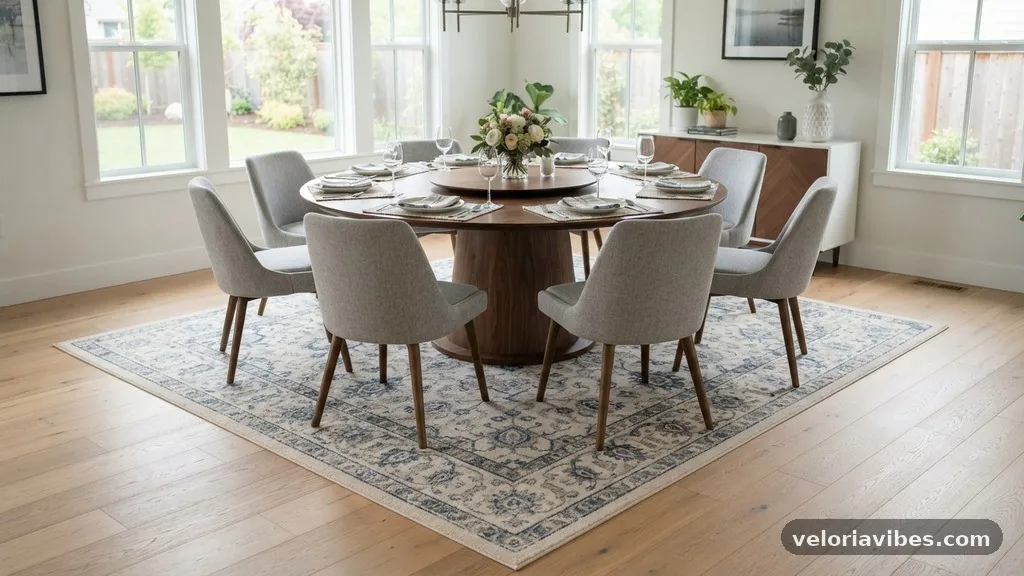
One of the most common errors people make is choosing a rug that is too small for the room. When the rug barely extends past the table, the room feels fragmented and disorganized. Avoid the temptation to save money by buying a smaller rug; it will inevitably lead to frustration when chairs catch on the edge.
Another mistake is failing to account for the thickness of the rug. A very thick, plush rug can make a dining chair feel unstable, which is the last thing you want when you are trying to enjoy a meal.
Don’t ignore the importance of color and pattern. In a dining room, the rug acts as the anchor for the entire space. If your table and chairs are very ornate, a busy, patterned rug might make the area feel chaotic.
Conversely, if your furniture is minimalist, a bold rug can serve as a beautiful focal point. Always consider the spill factor when choosing colors; a white rug might look stunning in a catalog, but it will show every drop of red wine or tomato sauce in a real-world dining environment.
Creating a Cohesive Look with Furniture
Your rug should complement the style of your dining chairs and table, not fight against them. If you have modern, sleek chairs, look for a rug with geometric patterns or clean, solid colors.
If your furniture is traditional or rustic, a vintage-inspired or distressed-look rug can add a layer of warmth and history to the room. The goal is to make the table, chairs, and rug feel like a single, unified set.
Think about how the rug connects to the rest of the room’s decor. If you have curtains, artwork, or wall paint, try to pull one of those colors into the rug’s design. This creates a sense of harmony that makes the room feel professionally designed.
An 8×10 rug provides a large canvas, so don’t be afraid to choose something with a bit of character, provided it doesn’t overwhelm the space. The rug should support your furniture, allowing the table and chairs to be the stars of the show.
Budgeting for Your Dining Room Rug
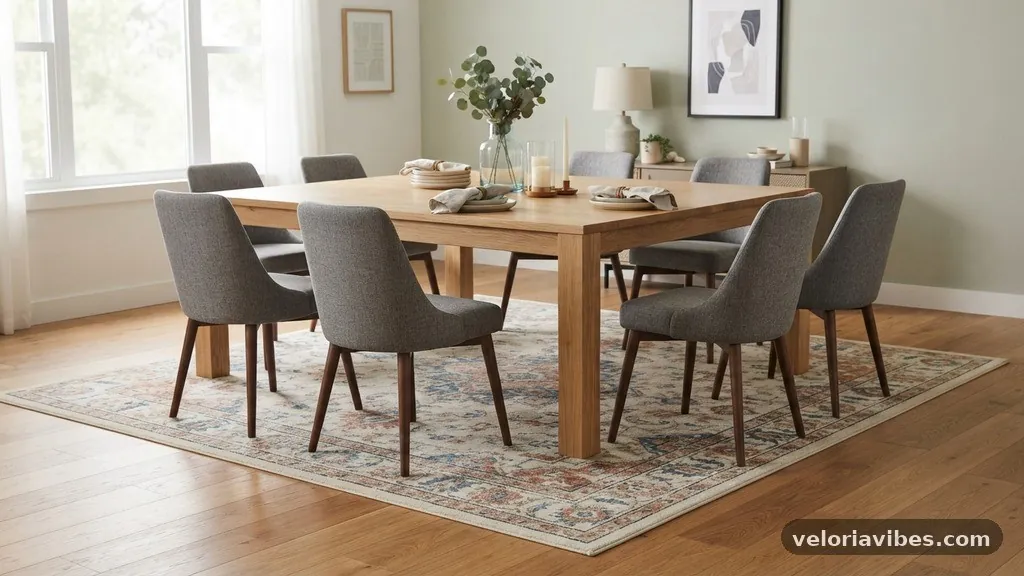
Rug prices vary wildly based on material, construction method, and brand. When you are looking for an 8×10 rug, you are shopping for a significant size, which means it will be a larger investment than a smaller accent piece.
Machine-made rugs are generally the most budget-friendly option and often come in highly durable synthetic fibers that are easy to clean. Hand-knotted rugs are the most expensive but offer unparalleled beauty and longevity.
Consider the “cost per use” when making your decision. A $500 rug that lasts ten years is a much better value than a $100 rug that looks worn out after one season. If you have a large family or frequently host dinner parties, prioritize durability over aesthetics.
If your dining room is rarely used, you might get away with a more delicate or expensive material. Always check the return policy, especially if you are buying online, as seeing the color and texture in person is the only way to be 100% sure it works in your space.
When to Consider a Larger or Smaller Size
While we are focusing on the 8×10 size, it is important to know when you might need something else. If your dining room is exceptionally large, an 8×10 might look lost in the middle of the floor.
In this case, a 9×12 rug would be a better choice to maintain the scale of the room. Conversely, if your dining area is restricted by walls or other furniture, a 6×9 rug might be the only option that fits, though it will likely be too small for the chairs to stay on comfortably.
The “right” size is the one that allows the chairs to be pushed out and pulled in without leaving the rug. If you find that an 8×10 is just slightly too large for your room, don’t force it. It is better to have a slightly smaller rug that fits the room’s footprint perfectly than a rug that is bunched up against the baseboards.
Use your painter’s tape to test different dimensions before you commit. This simple step saves you the hassle of returning a heavy, oversized rug.
Frequently Asked Questions
Can I use a round rug under a rectangular dining table?
Using a round rug under a rectangular table is generally discouraged because it creates conflicting geometries. It leaves the corners of the table unsupported by the rug, which can make the space feel unbalanced. A rectangular or oval rug is almost always the better choice for a 7-foot rectangular table.
How do I get wrinkles out of a new rug?
Most new rugs arrive rolled and will have creases. You can usually fix this by laying the rug flat and placing heavy books on the corners for a few days. For persistent wrinkles, try back-rolling the rug (rolling it in the opposite direction) or using a garment steamer on the underside of the rug.
Does the rug need to be centered in the room?
Your rug should be centered under the dining table, not necessarily in the center of the room. If your table is positioned off-center to accommodate a chandelier or architectural features, the rug should follow the table. The table and rug should always be treated as a single, centered unit.
How often should I clean a dining room rug?
You should vacuum your rug at least once a week to remove crumbs and debris that can grind into the fibers. For spills, act immediately by blotting with a clean cloth. Deep cleaning should be done professionally every 12 to 18 months, depending on how often the room is used and the type of material.
What if my chairs still catch on the rug edge?
If your chairs catch on the rug, you have two options. First, ensure the rug is lying perfectly flat, perhaps by using a rug pad or double-sided carpet tape. Second, consider using furniture glides on the feet of your chairs, which help them slide over the edge of the rug without snagging or pulling the fibers.
Final Thoughts on Dining Room Rug Placement
Choosing the correct rug is a transformative step in defining your dining space. By carefully measuring your floor and accounting for the movement of your chairs, you can ensure that your setup is both beautiful and practical. Using an 8×10 rug under a 7-foot dining table (visual proportion guide) is a popular choice for many, provided you have the necessary clearance to keep the chairs on the rug surface.
Remember that the rug is the foundation of your room, grounding your furniture and tying your design elements together. If you take the time to test your dimensions and select a durable, high-quality material, you will create a space that is ready for many memorable meals to come. We hope this guide helps you feel confident in your next home design project.