The 24-Inch Rug Extension Rule: Stopping Back Chair Legs from Falling Off
Following the 24-Inch Rug Extension Rule ensures your dining chairs remain stable and level, even when pulled out from the table. By extending the rug at least two feet beyond the edge of your dining surface, you create a consistent, flat foundation that prevents the back legs of your chairs from catching on the floor’s edge. This simple design principle eliminates the annoyance of chairs tipping or feeling uneven while guests are seated.
Implementing this measurement transforms your dining area into a more functional, professional-looking space. You will gain a deeper understanding of how proper rug placement balances aesthetics with daily utility, ensuring your furniture remains secure and your floors stay protected from unnecessary scuffs or scratches.
Measure Your Dining Table Footprint
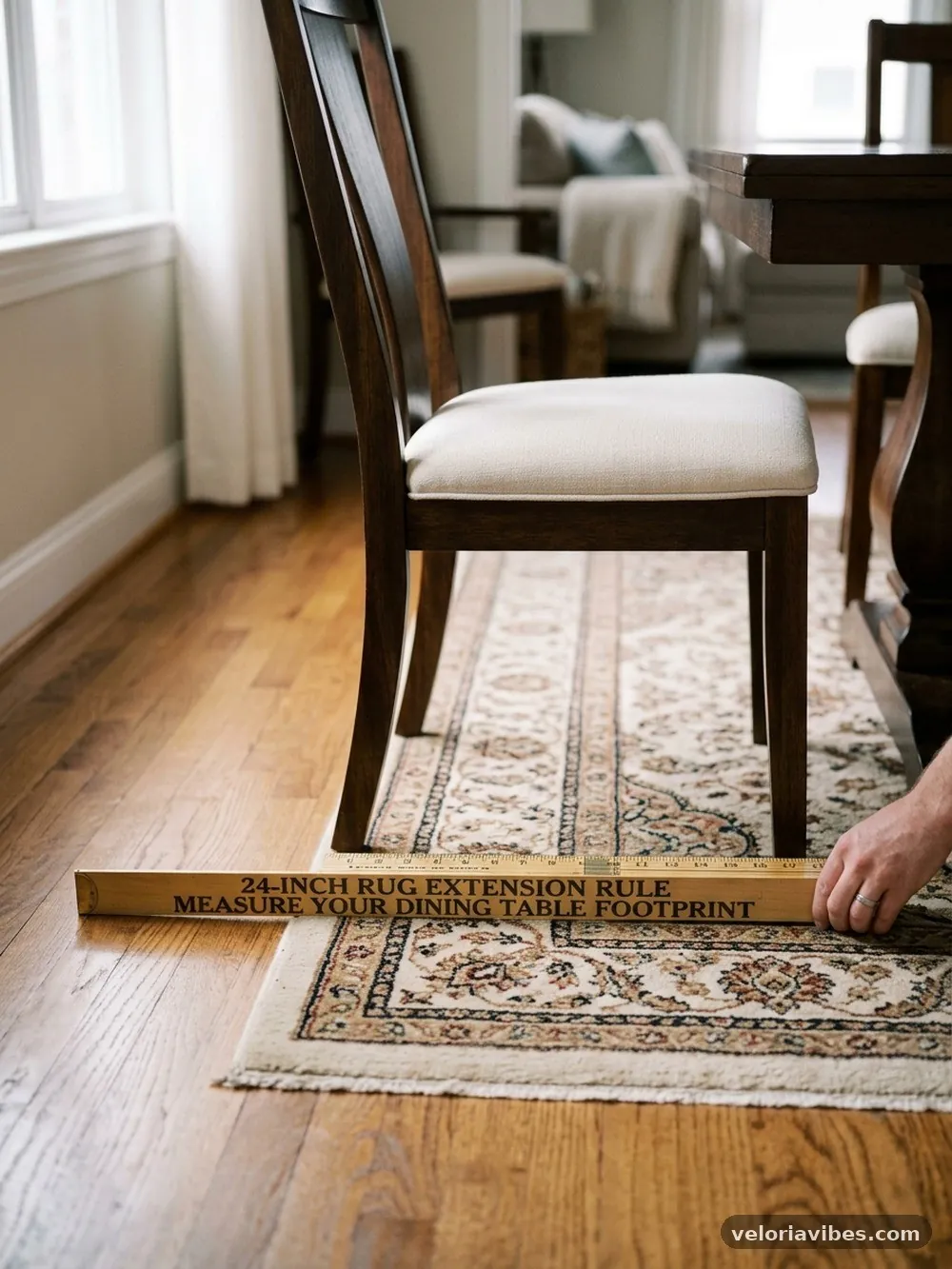
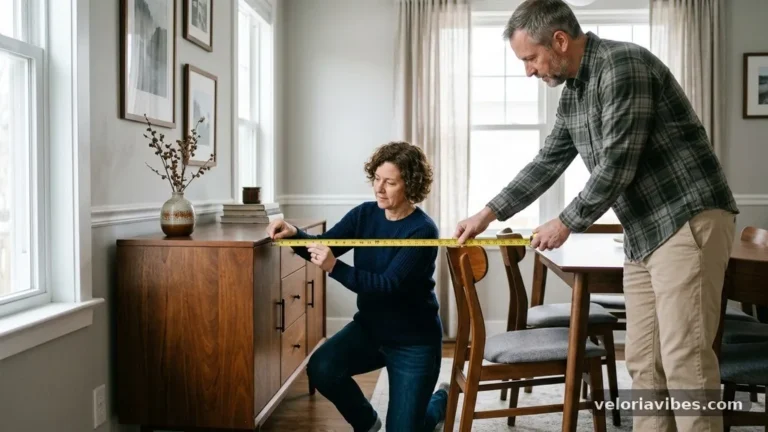
Before you commit to a specific rug size, you must establish the baseline dimensions of your dining area. Start by measuring the length and width of your table, including any leaves you typically keep inserted.
Many homeowners make the mistake of measuring only the tabletop, ignoring the footprint created by the base or the legs. You need the total surface area to determine how much space remains for chairs.
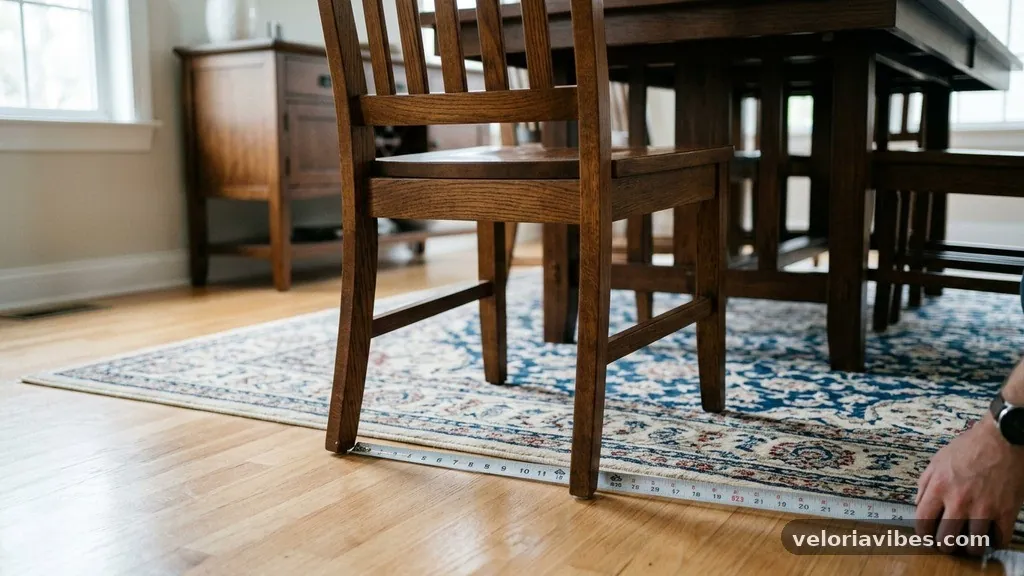
Once you have the table dimensions, pull your chairs out to the position they would be in if someone were sitting there. This is the “active” footprint of your dining set. Measure the distance from the edge of the table to the back legs of the pulled-out chair.
This distance is the starting point for your calculation. If you want to adhere to the 24-Inch Rug Extension Rule, you must add two feet to every side of this measurement.
Common mistakes include failing to account for the chair’s backrest or the angle at which people naturally push their chairs away from the table. If you have a small room, you might be tempted to shrink this distance to make the rug fit, but doing so compromises the stability of the chair. Always prioritize the functional space over the desire to fit a specific rug you might have already purchased.
Calculate the Required Rug Size
Calculating the total rug dimensions requires simple addition based on your previously gathered measurements. If your table is 40 inches wide and 72 inches long, and your chairs extend 20 inches from the table edge, you have a total active area of 80 inches by 112 inches. To follow the guidelines, you add 24 inches to all four sides.
This means adding 48 inches total to both the width and the length. Your ideal rug size would be 128 inches by 160 inches, or roughly 10.5 by 13 feet.
While these large dimensions might seem daunting, they are essential for keeping the back legs of the chairs on the rug at all times. Using a rug that is too small leads to that uneven “clunk” sound when a chair leg drops off the edge onto the hardwood.
If you struggle to find a rug in these exact dimensions, look for the closest standard size that exceeds your calculated minimum. Never round down.
If a standard 9×12 rug leaves the back legs of your chairs hanging in the air, the rug will eventually curl at the edges, creating a tripping hazard. Investing in the correct size upfront saves you from the frustration of constant adjustments.
Understand the Physics of Chair Stability
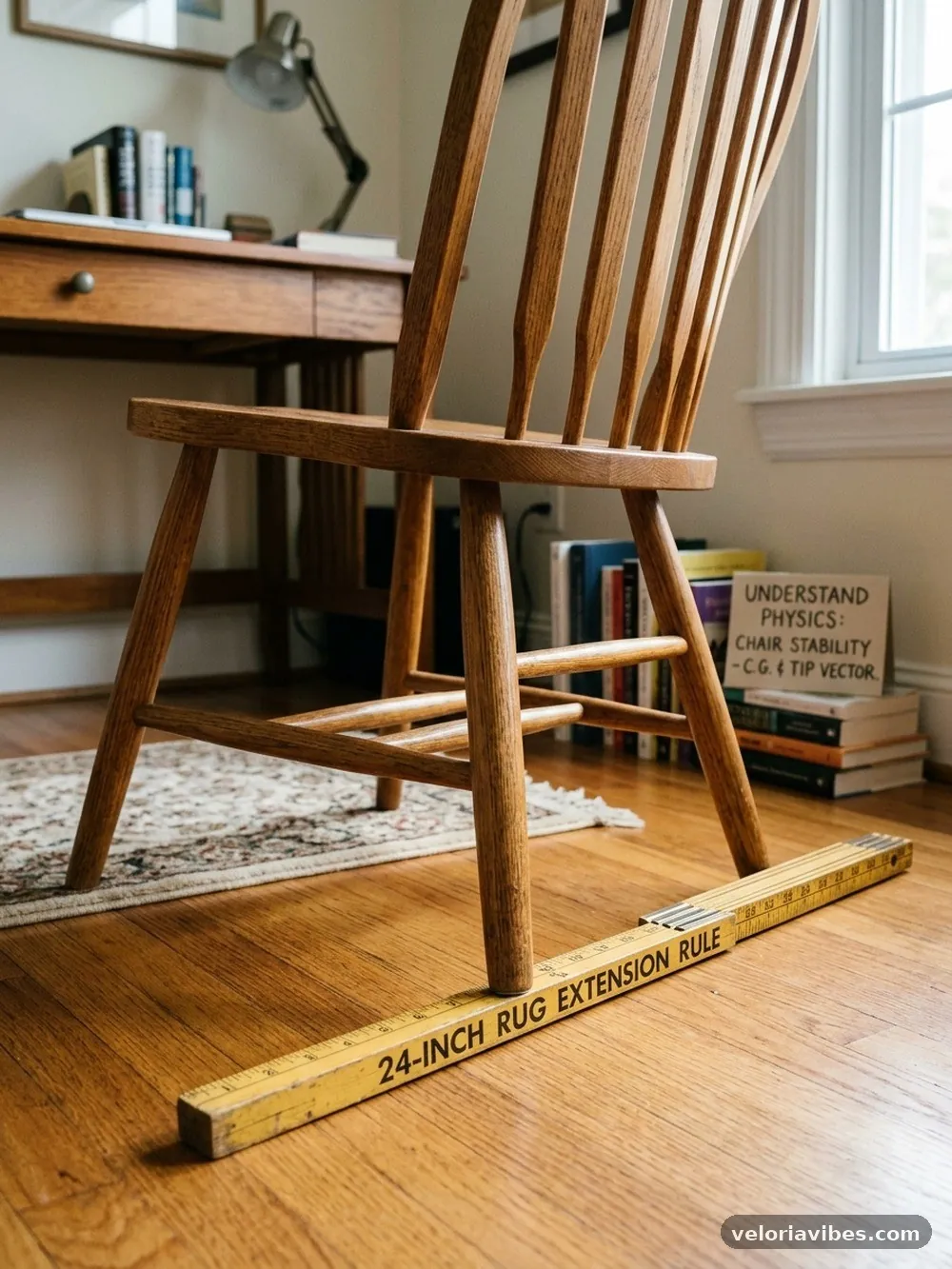
Chair stability relies on all four legs maintaining consistent contact with the surface. When you place a rug under a dining table, you create a “step” or a transition zone between the rug and the floor. If the rug is too thin or the transition is too abrupt, the weight of a person sitting in the chair can cause the back legs to sink or catch as they move backward.
The 24-Inch Rug Extension Rule acts as a buffer. By providing two feet of clearance, you ensure that even when a chair is pushed fully back to accommodate a guest, the rear legs are still resting firmly on the rug. This eliminates the mechanical instability that occurs when a chair straddles two different surface heights.
Think of the rug as a platform. If the platform ends exactly where the chair legs sit, the friction coefficient changes mid-movement. This causes the chair to feel “sticky” or uneven.
By extending the rug well beyond the range of motion, you keep the chair legs in a uniform environment. This preserves the life of your furniture and prevents the legs from wearing down unevenly over time.
Select the Right Rug Pile for Dining
The thickness of the rug, known as the pile, plays a massive role in how well your chairs slide. While a plush, high-pile rug feels luxurious in a living room, it is generally a poor choice for a dining room. High pile makes it difficult for chair legs to move, often causing them to get stuck or creating a “divot” in the rug that is hard to fix.
Opt for a low-pile or flat-weave rug. These options provide a smooth, stable surface that allows chairs to glide easily without catching on fibers.
A low-pile rug also makes it much easier to clean up crumbs or spills, which are inevitable in a dining setting. You want a surface that feels firm underfoot, not one that swallows the legs of your furniture.
When shopping, look for rugs labeled as “indoor-outdoor” or “low-profile.” These are specifically engineered to withstand heavy furniture weight and frequent movement. Avoid rugs with decorative tassels or fringe, as these will inevitably get caught in the chair legs and become damaged or trip someone walking past the table.
Use Rug Pads for Additional Grip
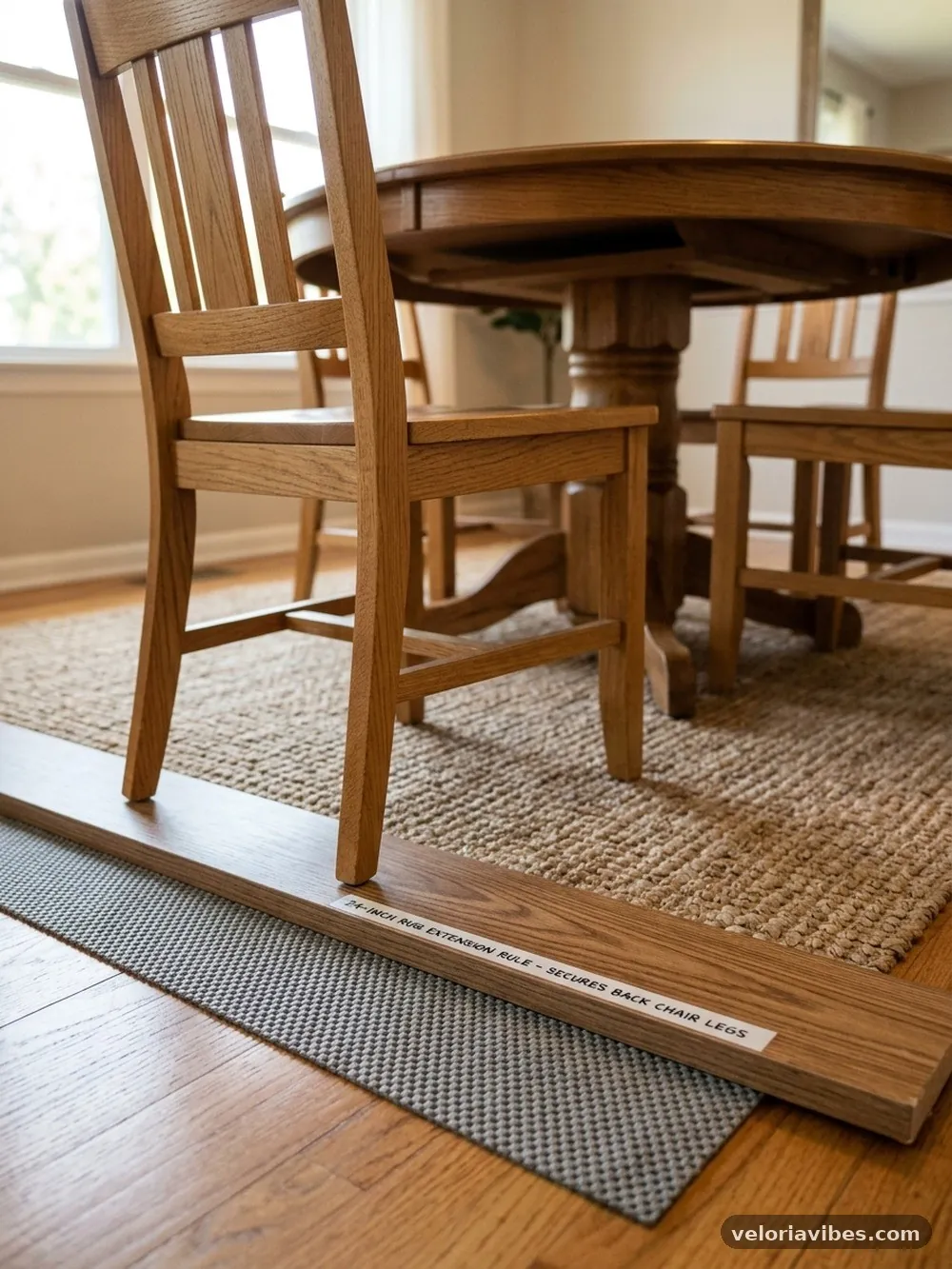
A rug pad is not just a luxury; it is a necessity for dining room stability. Without a pad, your rug will shift, bunch, and slide every time someone pushes their chair back. This movement can cause the rug to migrate away from the table, quickly violating the 24-Inch Rug Extension Rule even if you started with the correct size.
Choose a high-quality felt or rubberized pad that provides a firm grip on the floor. The pad should be cut slightly smaller than the rug so it remains hidden while providing maximum surface area coverage. A good pad also adds a layer of cushioning that protects the floor underneath from the pressure of the chair legs.
If you have a very large rug, a heavy-duty pad helps keep the edges flat. This is critical because a curled edge is the primary enemy of chair stability.
If the edge of your rug is lifted even half an inch off the floor, your chair legs will constantly catch on it. A quality pad keeps the rug pinned to the floor, ensuring the transition from rug to hardwood remains seamless.
Address Floor Protection and Scratches
Even with the best rug, you must protect your floors. Dining chairs are moved constantly, and the friction between chair legs and the floor—or even the rug—can leave permanent marks.
Use high-quality felt pads on the bottom of every chair leg. These pads allow the chair to glide smoothly across both the rug and the surrounding floor.
If you have heavy wooden chairs, consider using specialized sliders designed for rugs. These are often made of smooth plastic or Teflon, which reduce friction compared to felt.
However, if you move the chair off the rug, make sure the slider doesn’t scratch your hardwood. It is a balancing act that requires choosing the right material for the specific environment.
Always check your chair feet regularly. Over time, felt pads collect dust, hair, and crumbs.
These particles can become embedded in the felt, turning a soft protector into a piece of sandpaper that scratches your floor. Replacing these pads once or twice a year is a simple maintenance step that prevents long-term damage to your home’s surfaces.
Manage Rug Placement in Small Rooms
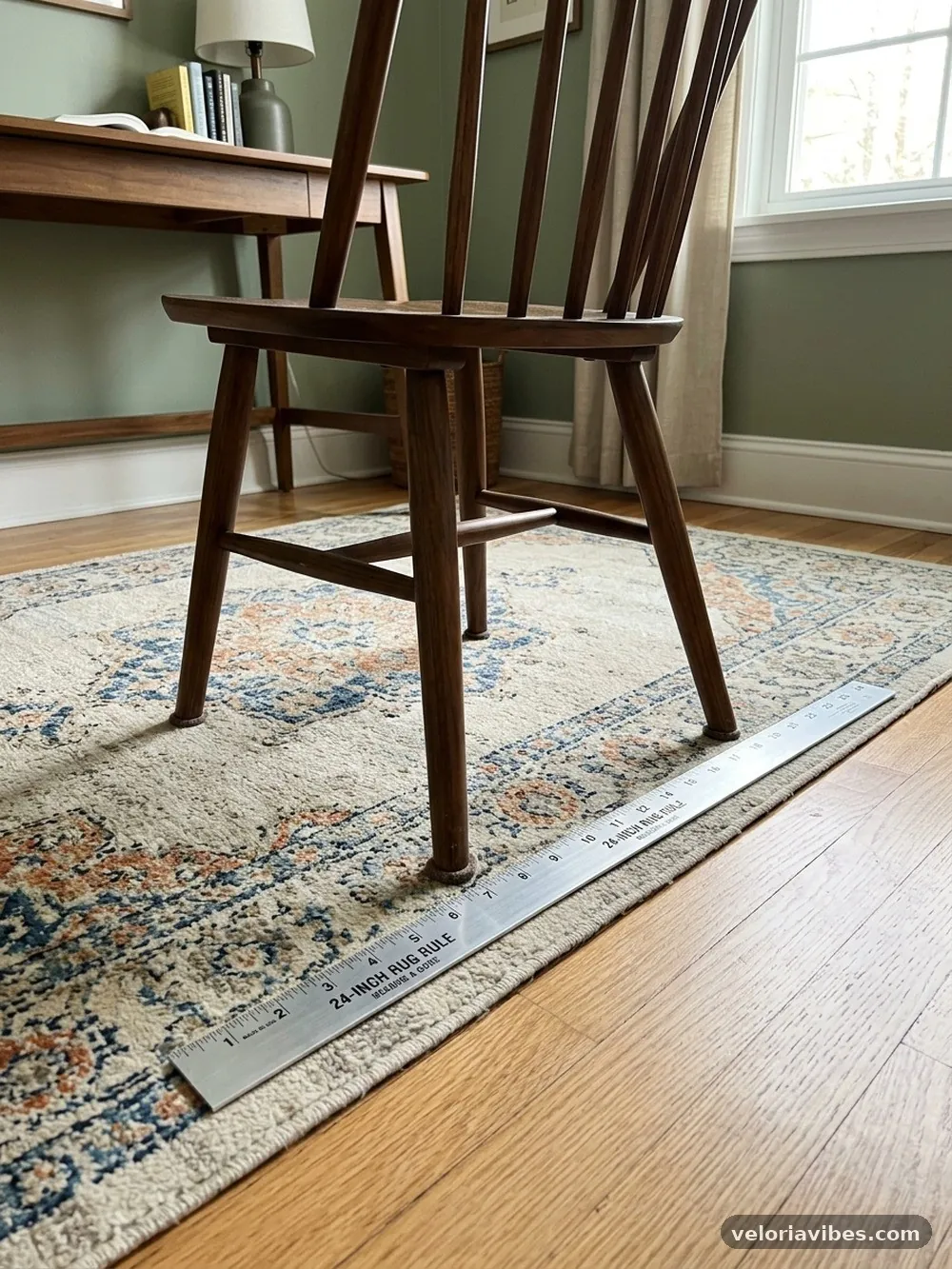
Many people worry that a large rug will make a small room look cramped. This is a common misconception.
In reality, a tiny rug under a dining table makes the space look fragmented and smaller than it actually is. A rug that follows the 24-Inch Rug Extension Rule actually anchors the room and makes the dining area feel like a deliberate, cohesive zone.
If your room is genuinely too small to accommodate a large rug, you might need to rethink your furniture. Could a round table work better than a rectangular one?
A round table often requires a smaller rug footprint while still allowing for adequate chair movement. Sometimes, removing a leaf from the table can free up the necessary floor space to allow for a properly sized rug.
Don’t be afraid to let the rug extend toward walls or other furniture. It is better to have a rug that fills the majority of the floor space than to have a small rug that looks like it is floating in the center of the room. When the rug is sized correctly, it creates a visual “frame” for your dining set, elevating the look of the entire house.
Clean and Maintain Your Dining Rug
Maintenance is the final piece of the puzzle. A rug that is covered in crumbs or debris will naturally feel less stable.
Crumbs can create small bumps under the rug, which, while minor, can cause the chair legs to wobble. Vacuum your dining rug at least once a week to ensure a perfectly flat surface.
If you spill liquids, treat them immediately. Moisture can penetrate the rug and affect the floor underneath, leading to warping or staining. For deep cleaning, follow the manufacturer’s instructions, but avoid steam cleaning too frequently, as it can weaken the rug’s backing and cause it to lose its structural integrity over time.
For more information on maintaining floor textiles, you can visit the Carpet and Rug Institute to learn about industry-standard care practices. Keeping your rug in good condition is just as important as choosing the right size. A well-maintained rug will lay flatter, last longer, and provide the consistent support your furniture requires.
Troubleshoot Common Rug Issues
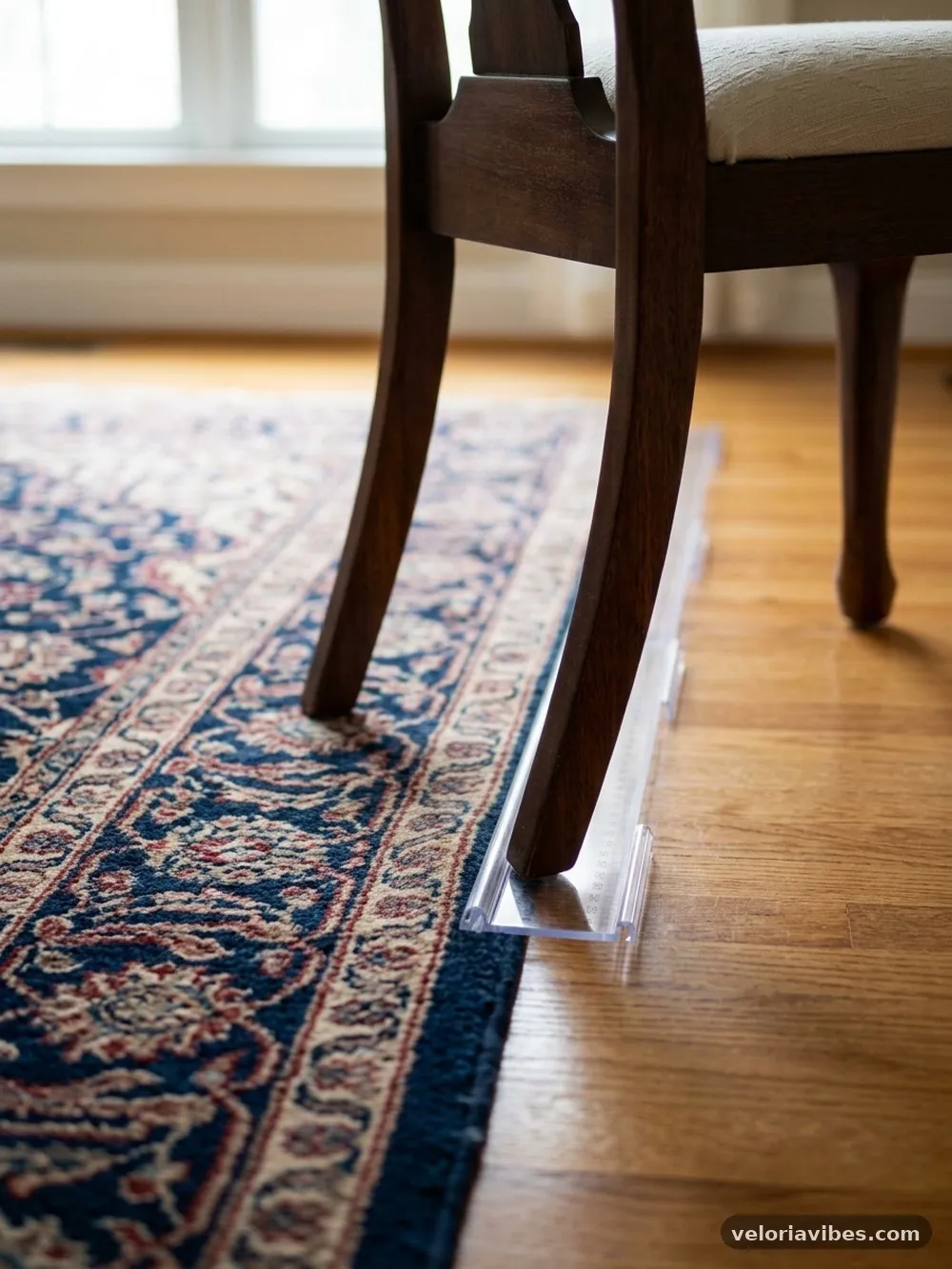
Even when you follow the rules, problems can arise. If your rug is constantly bunching up, your pad might be too thin or the wrong material.
If the edges are curling, you can try using double-sided carpet tape or rug anchors. These hold the corners down firmly, ensuring that the transition remains flat and safe for chair movement.
If you find that your chairs are still catching, check if the rug is “creeping.” Rugs often shift slightly over time due to the weight of the furniture and the force exerted by chairs.
Check the alignment of your rug once a month. It only takes a few seconds to shift it back into the center, but it prevents long-term frustration.
Another issue is the “divot” effect. If a chair sits in the same spot for a long time, it can leave a permanent impression in the rug.
Rotate your rug every few months if possible, or simply change the position of the chairs slightly. Small adjustments prevent the rug from wearing down in specific high-traffic spots, keeping the surface level for everyone.
Coordinate Rugs with Interior Design
Beyond the technical requirements, your rug should complement the style of your home. A dining room is a central gathering space, and the rug is often the largest visual element in that room. Choose colors and patterns that hide dirt well, such as busy patterns or mid-tone colors, rather than solid white or light beige.
Consider the texture of the rug in relation to your table. If your table is sleek and modern, a minimalist, low-pile rug works beautifully.
If you have a rustic wooden table, a textured flat-weave or a natural fiber rug like jute can add warmth. Just be careful with jute; while it looks great, it can be abrasive on chair legs and difficult to clean.
Always prioritize the 24-Inch Rug Extension Rule when selecting the design. If you fall in love with a rug that is too small, do not compromise the functionality of your dining set just for the aesthetic. There are almost always similar designs available in larger sizes if you take the time to look.
Frequently Asked Questions
Does the 24-Inch Rug Extension Rule apply to round tables?
Yes, the principle remains the same. You should measure the diameter of the table, add the distance the chairs extend, and then add 24 inches to the perimeter of that total footprint. For round tables, this often results in a large circular or square rug that provides ample room for movement.
Can I use a smaller rug if I have a small dining room?
While you can technically use a smaller rug, you will likely experience the very issues you are trying to avoid, such as chair legs catching on the edge. If the room is too small for a properly sized rug, it is often better to go without a rug entirely rather than using one that creates an uneven surface.
How do I stop my rug from bunching under the table?
Bunching is usually caused by the lack of a proper rug pad. A high-quality, non-slip felt or rubber pad is essential. If the rug still bunches, ensure it is centered and that the furniture weight is evenly distributed. You can also use heavy-duty rug tape on the corners to keep it anchored.
What materials are best for dining room rugs?
Synthetic fibers like nylon or polypropylene are excellent for dining rooms because they are durable, stain-resistant, and easy to clean. Wool is also a great option for its durability and natural stain resistance, though it comes at a higher price point. Avoid delicate silks or high-pile shags.
Is it okay to have the rug extend past the dining room area?
Absolutely. In open-concept floor plans, a large rug can act as a bridge between the dining area and the living space. As long as the rug is large enough to satisfy the requirements for your dining chairs, extending it further into the room can actually help define the space and make it feel more intentional.
Final Thoughts
Ensuring your dining area remains functional and comfortable requires attention to detail. By following the 24-Inch Rug Extension Rule, you create a stable, reliable foundation that allows your chairs to move freely without the annoyance of catching on the rug’s edge. This approach protects both your furniture and your floors while enhancing the overall visual harmony of your home.
Take the time to measure your space accurately and invest in a high-quality rug pad. These small steps ensure that your dining room remains a place of comfort rather than a source of daily frustration. If you have questions about specific rug materials or need help finding the right size for your unique layout, feel free to reach out for more advice on creating the perfect dining environment.