
How to Make a Small Bedroom Feel More Comfortable
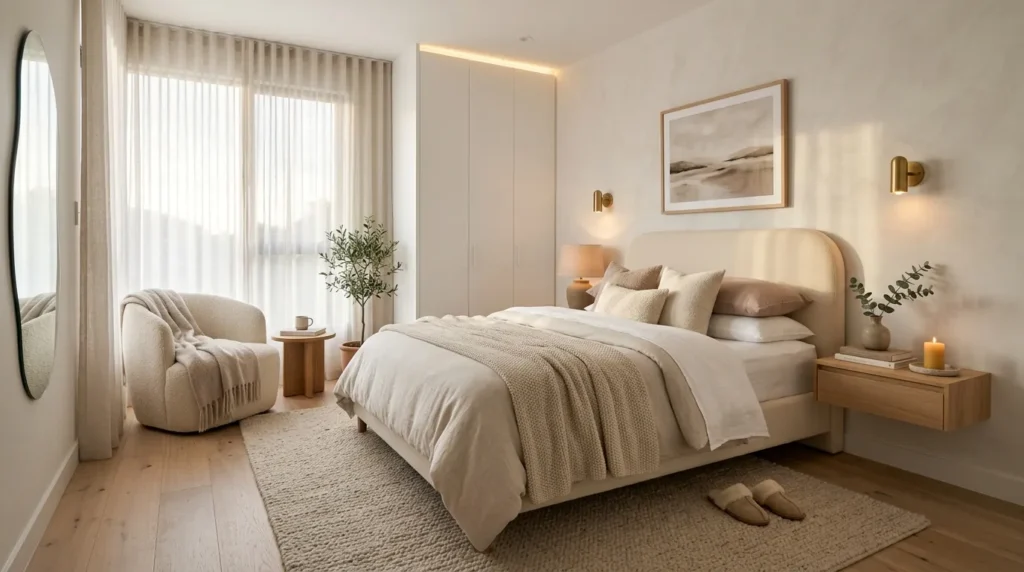
A small bedroom can be cozy, inviting, and genuinely comfortable. The challenge is making the most of limited space without filling the room with furniture, decorations, or storage solutions that make it feel even tighter.
When a bedroom feels uncomfortable, the problem is not always its size. Sometimes the issue is poor furniture placement, harsh lighting, uncomfortable bedding, too much visual clutter, or a lack of soft textures. Even a compact room can feel surprisingly spacious when the layout and atmosphere work together.
The most comfortable small bedrooms tend to have one thing in common: everything has a purpose.
The bed is comfortable. The lighting is gentle. There is enough space to move around. The nightstand holds the things you actually use. Curtains provide privacy and control sunlight. Soft textiles make the room feel welcoming, while storage keeps everyday clutter from taking over.
In my experience, comfort often comes from making a few thoughtful changes rather than attempting a complete makeover.
You do not necessarily need a larger bed, expensive furniture, or a major renovation. Sometimes moving the bed a few inches, replacing a harsh bulb, adding a soft rug, or simplifying the nightstand can completely change how the room feels.
Color matters too.
Warm whites, creamy neutrals, soft beige, muted sage, dusty blue, and natural wood can create a soothing backdrop. But color alone will not make a small bedroom comfortable. The room also needs good proportions, useful storage, soft layers, and enough visual breathing room.
The ideas below focus on practical ways to make a compact bedroom feel warmer, softer, calmer, and easier to live in.
Whether you’re decorating an apartment bedroom, a small primary bedroom, a guest room, or a compact rental, these ideas can be adapted without changing the basic structure of the room.
The goal is not simply to make the bedroom look bigger.
It is to make the space feel better.
Table of Contents
1. Soften The Bedding
Create a comfortable focal point with breathable layers and inviting textures.
2. Improve Room Lighting
Use layered lighting to make the bedroom warmer and more relaxing.
3. Choose Warm Colors
Build a soothing palette that makes the room feel welcoming.
4. Add A Soft Rug
Use texture underfoot to make the bedroom feel warmer and more comfortable.
5. Simplify Furniture
Choose appropriately scaled pieces that preserve movement and breathing room.
6. Create Bedside Comfort
Make the area around the bed practical, calm, and easy to use.
7. Use Soft Curtains
Add privacy, texture, and light control with comfortable window treatments.
8. Layer Cozy Textures
Combine fabrics and natural materials for a more inviting atmosphere.
9. Control Bedroom Clutter
Reduce visual noise so the room feels calmer and easier to enjoy.
10. Personalize Small Details
Add meaningful touches that make the bedroom feel like your own retreat.
1. Soften The Bedding
Quick Benefits
- Makes the bed more inviting
- Improves visual warmth
- Adds texture
- Supports better comfort
- Creates a cozy focal point
Why It Works
The bed is usually the largest piece of furniture in a bedroom, so it has a major influence on how comfortable the entire room feels.
Even if the bedroom is small, comfortable bedding can make it feel much more inviting.
Start with materials that feel good in your climate and against your skin. Cotton, linen, percale, flannel, and other suitable bedding materials can provide different sensations depending on the season and personal preference.
Layering also adds visual softness.
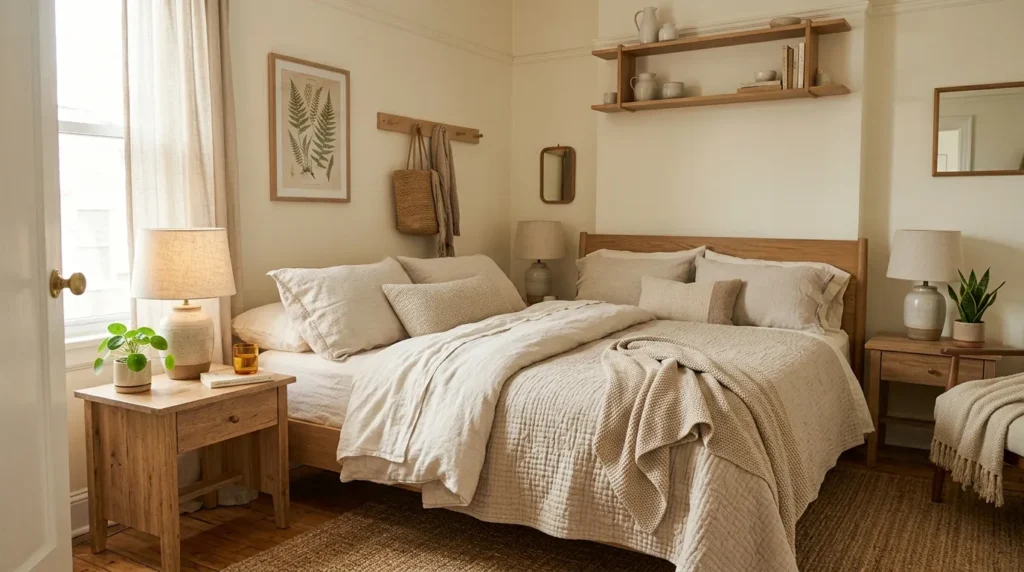
A simple combination of sheets, a duvet or comforter, a lightweight quilt, and a throw can make the bed look finished without making it overly decorative.
The goal is comfort first, appearance second.
How To Style It
Choose a breathable sheet set that suits your sleeping preferences.
Add a duvet or comforter in a warm neutral such as cream, ivory, beige, or soft gray.
Fold a quilt or coverlet across the lower third of the bed.
Then add a throw blanket for texture.
Keep decorative pillows to a reasonable number so you can easily remove them at night.
For a small bedroom, avoid extremely oversized bedding that spills heavily onto the floor.
A neat, softly layered bed can make the room feel more polished while preserving the walking area around it.
2. Improve Room Lighting
Quick Benefits
- Creates a warmer atmosphere
- Reduces harsh shadows
- Supports nighttime relaxation
- Makes the room feel more inviting
- Improves everyday functionality
Why It Works
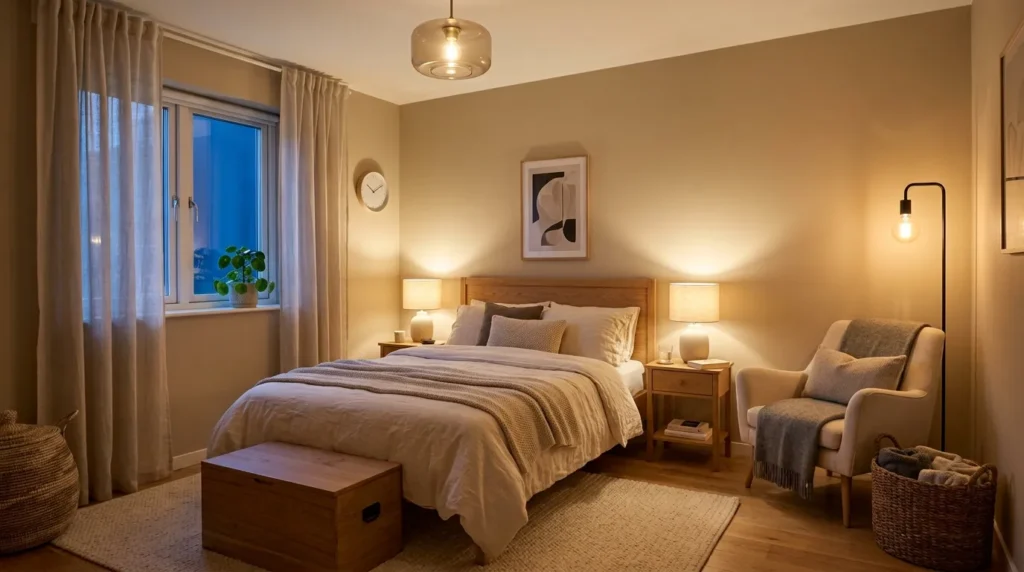
Lighting can completely change the mood of a small bedroom.
A single bright ceiling fixture often creates a flat or harsh atmosphere, especially at night.
Layered lighting gives you greater control.
A bedside lamp can provide focused light for reading. A floor lamp can brighten a darker corner. Wall sconces can provide useful illumination without occupying nightstand space.
During the day, natural light should be used whenever possible.
At night, warmer and adjustable lighting can make the room feel softer.
The objective is not to make the bedroom extremely bright.
It is to make the lighting appropriate for different activities.
How To Style It
Begin with the existing ceiling fixture.
If it is too harsh, use it primarily when you need general illumination.
Add a bedside lamp with a soft shade.
Fabric, frosted glass, ceramic, or paper-style shades can diffuse light.
If the room is narrow, consider wall-mounted sconces where appropriate.
A floor lamp beside a chair can create a small reading zone.
Use warm-toned bulbs where appropriate and select brightness based on the activity.
A dimmable light is particularly useful because you can make the room brighter while getting dressed and softer when winding down.
3. Choose Warm Colors
Quick Benefits
- Makes the room feel welcoming
- Creates visual cohesion
- Works well with natural materials
- Softens small spaces
- Makes decorating easier
Why It Works
Color can influence whether a small bedroom feels cold, energetic, calm, or inviting.
Warm neutrals are particularly versatile because they create softness without making the room feel overly decorated.
Cream, warm white, oatmeal, beige, taupe, muted brown, and gentle sage can all work beautifully.
This does not mean every surface needs to be the same color.
The most comfortable rooms usually use several related shades.
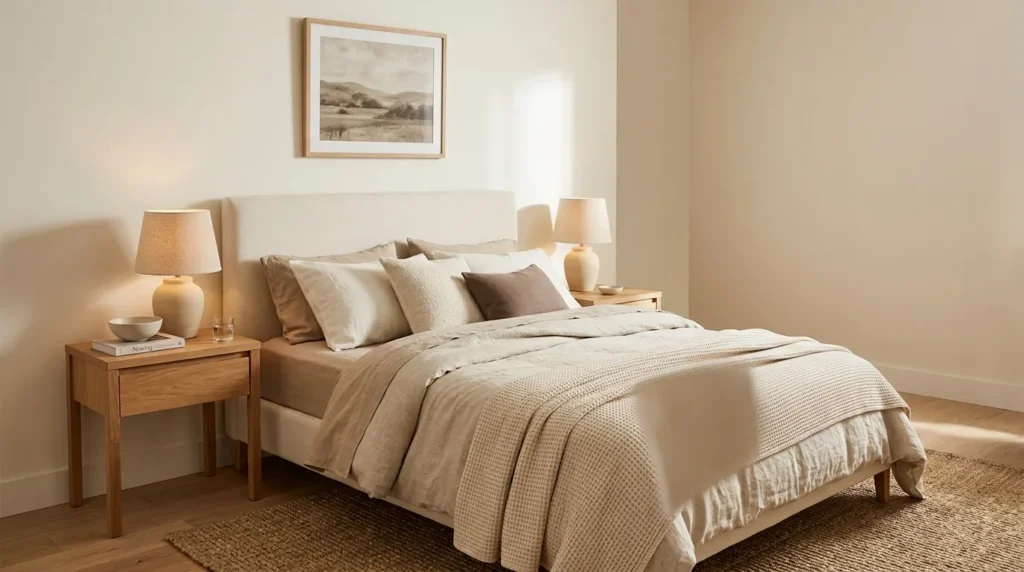
For example, warm white walls can pair with cream bedding, beige curtains, natural wood furniture, and a muted sage accent.
The subtle differences give the room dimension.
How To Style It
Choose one dominant color for the walls and larger surfaces.
Then select two or three supporting tones.
For a cozy neutral bedroom, try:
- Warm white walls
- Cream bedding
- Beige curtains
- Natural oak furniture
- Soft brown accents
If the room receives limited natural light, warmer tones can help prevent it from feeling stark.
If the bedroom gets abundant sunlight, slightly cooler neutrals may provide balance.
Use darker colors selectively.
A deep wood nightstand or charcoal accent can create contrast without overwhelming the room.
4. Add A Soft Rug
Quick Benefits
- Makes floors warmer
- Adds texture
- Reduces visual hardness
- Makes getting out of bed more pleasant
- Defines the sleeping area
Why It Works
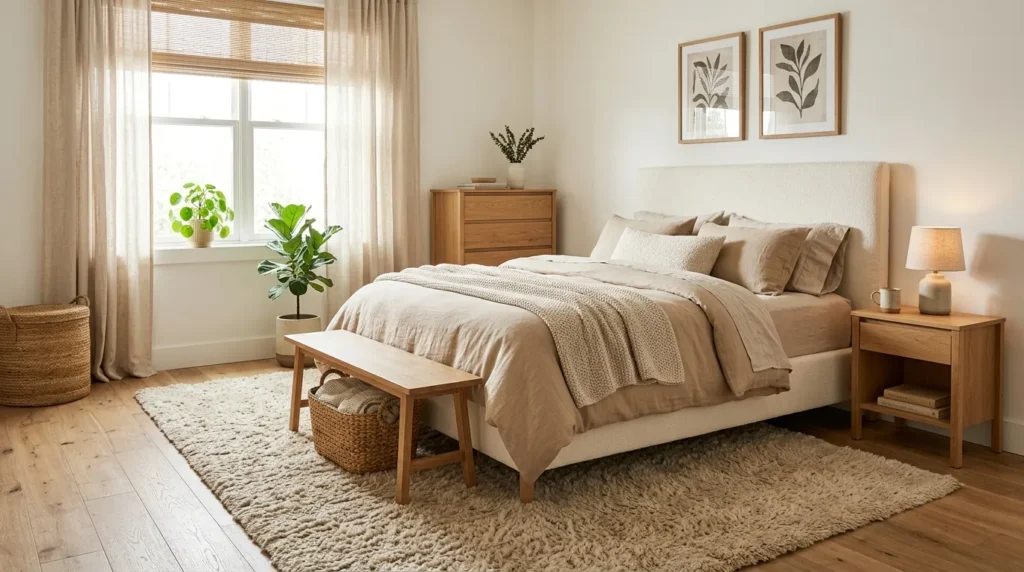
A rug can make a surprisingly large difference in a bedroom.
It adds softness beneath your feet and visually connects the furniture.
This is particularly valuable in rooms with hardwood, laminate, tile, or other hard flooring.
The rug does not need to cover the entire floor.
Even a properly positioned area rug can create a warmer feeling around the bed.
Texture also matters.
A soft wool-style, cotton, woven, or appropriately cushioned rug can introduce another tactile layer.
How To Style It
If possible, position a larger rug so it extends beyond the sides and foot of the bed.
For a very compact room, runners on either side of the bed can be an alternative.
Choose a rug that complements the room rather than introducing a completely unrelated pattern.
Cream, beige, oatmeal, muted gray, and soft earthy tones are easy to coordinate.
If the bedroom already contains many patterns, choose a subtle texture.
If the room is very plain, a low-contrast pattern can add interest.
Make sure the rug is positioned safely and does not create an unstable walking surface.
5. Simplify Furniture
Quick Benefits
- Improves walking space
- Makes the room feel calmer
- Reduces visual bulk
- Makes cleaning easier
- Improves furniture proportions
Why It Works
One of the biggest mistakes in a small bedroom is trying to fit everything that would work in a larger room.
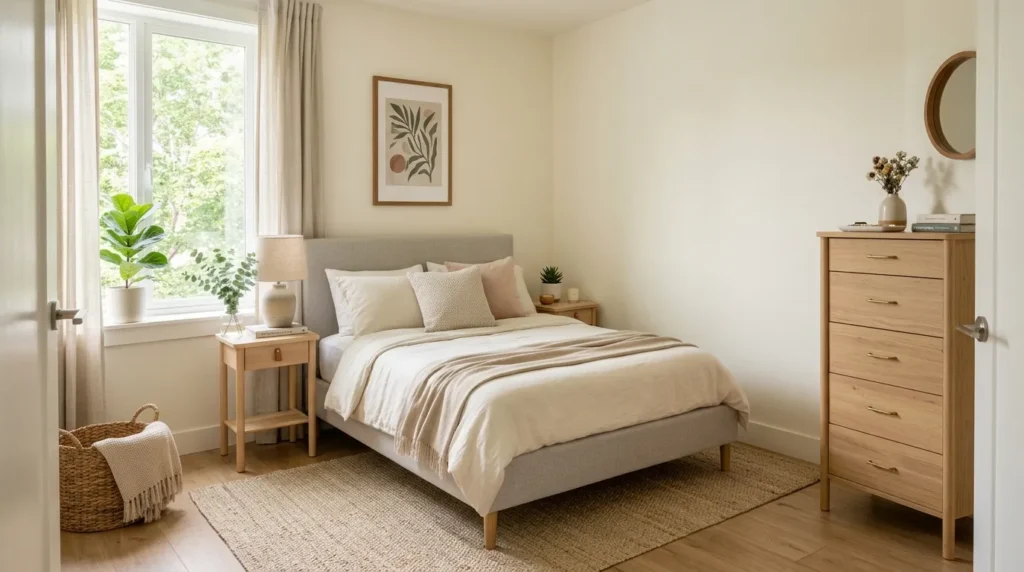
A large dresser, oversized nightstands, bulky chair, storage cabinet, and decorative bench can quickly consume the available floor area.
Comfort requires movement.
You should be able to get into bed, open drawers, walk around the room, and access windows or closets without constantly navigating obstacles.
This is why appropriately scaled furniture often matters more than the number of pieces.
A small bedroom can feel luxurious when there is enough space around the furniture.
How To Style It
Start by identifying the essential furniture.
Usually, this includes the bed and some form of clothing storage.
Then consider whether every additional piece is necessary.
A narrow nightstand may work better than a wide one.
A tall dresser can sometimes provide useful capacity without occupying as much floor width.
A storage bed may eliminate the need for another cabinet.
If you have a chair that is rarely used, consider removing it.
Keep pathways open.
Before buying furniture, measure the available space and mark the footprint with painter’s tape.
This simple trick can help you visualize how much room the piece will actually occupy.
6. Create Bedside Comfort
Quick Benefits
- Makes bedtime routines easier
- Reduces clutter
- Keeps essentials nearby
- Adds visual balance
- Improves everyday usability
Why It Works
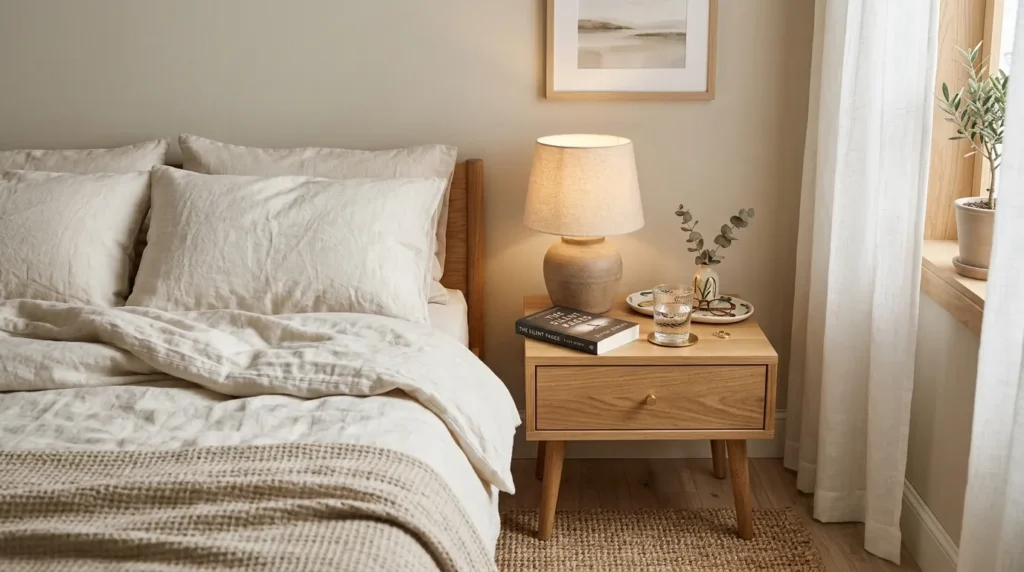
Your bedside area should support the things you do at the end and beginning of each day.
A comfortable bedroom needs practical access to essentials.
A lamp, water, book, phone, glasses, or other personal items should have somewhere to go.
When these things are scattered across the bed or floor, the room immediately feels less comfortable.
A small nightstand with a drawer can solve this problem.
For extremely compact rooms, a floating shelf or narrow wall-mounted nightstand can provide useful surface area without taking much floor space.
How To Style It
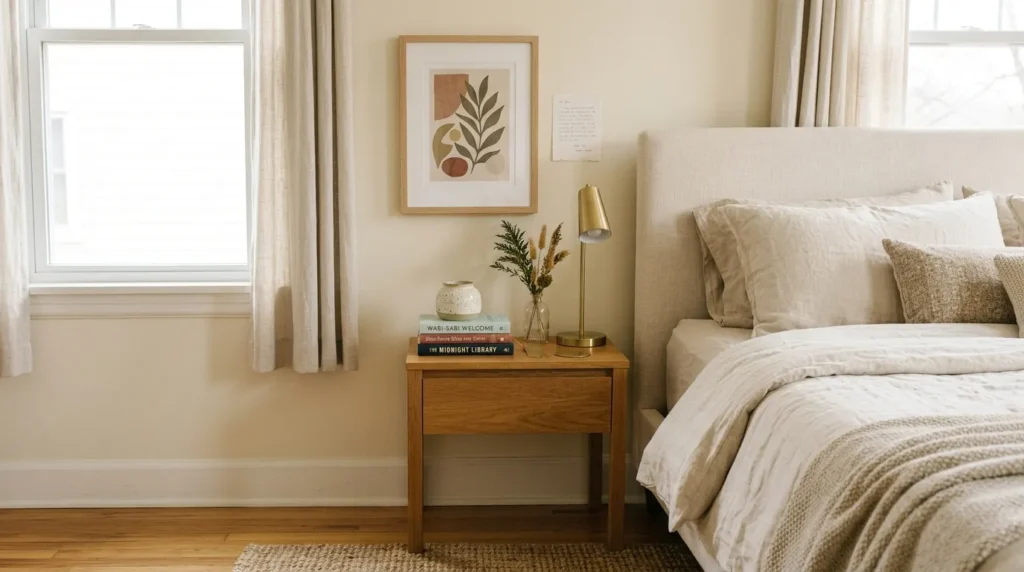
Keep the nightstand surface intentionally simple.
A lamp should usually be the main visual element.
Add one or two useful items such as a book or small ceramic tray.
Use the drawer for personal items and chargers.
A cable-management opening can keep charging cords accessible without leaving them tangled across the surface.
If you use a water glass beside the bed, place it on a stable tray.
Avoid allowing the nightstand to become a storage area for miscellaneous objects.
A few minutes of resetting the bedside area each evening can make the room feel noticeably calmer.
7. Use Soft Curtains
Quick Benefits
- Adds warmth
- Provides privacy
- Controls natural light
- Softens hard architectural lines
- Makes the room feel finished
Why It Works
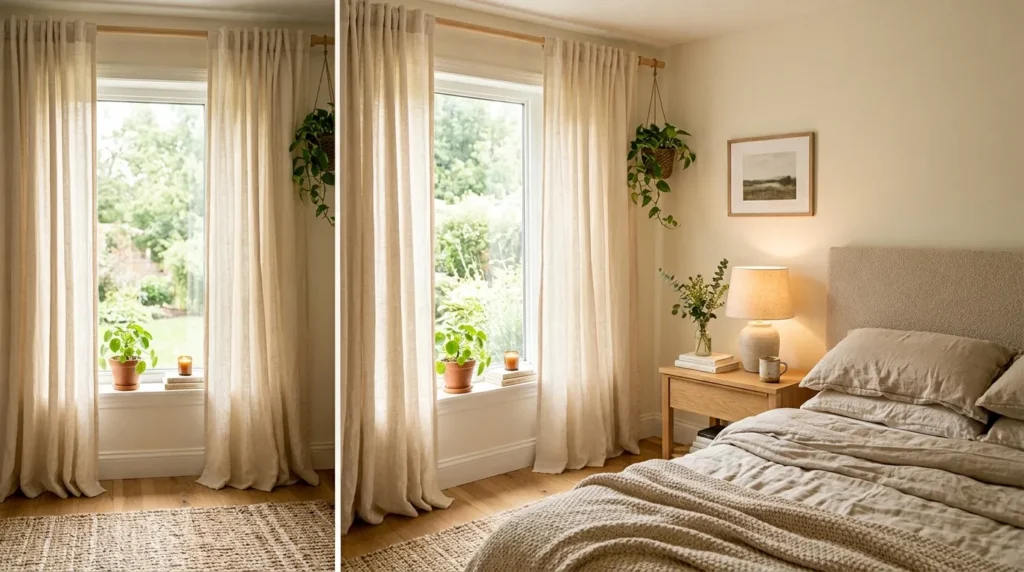
Windows can make a small bedroom feel bright and airy, but bare windows can sometimes leave the space feeling unfinished.
Curtains introduce softness.
They also provide control over privacy and daylight, which can be particularly important in bedrooms.
Light-filtering curtains can create a gentle daytime glow.
When stronger light control is needed, consider layering appropriate window coverings.
Comfort should always come first.
How To Style It
Choose curtains in a color close to the wall for a subtle look.
Warm ivory, cream, oatmeal, and beige are versatile choices.
If appropriate for your window and hardware, installing curtain rods higher and wider than the window frame can create a more elongated visual effect.
Choose a fabric with enough weight to hang naturally.
Linen-look, cotton, or blended fabrics can create a relaxed appearance.
If the bedroom faces a busy street or receives strong morning light, consider suitable room-darkening options.
Keep the curtain design relatively simple in a small bedroom so the window does not become visually overwhelming.
8. Layer Cozy Textures
Quick Benefits
- Adds warmth without clutter
- Creates visual depth
- Makes neutral rooms interesting
- Improves tactile comfort
- Supports a cozy aesthetic
Why It Works
A small room can feel cold when every surface is smooth and hard.
Texture introduces softness without requiring strong colors or additional furniture.
Think about the surfaces you interact with.
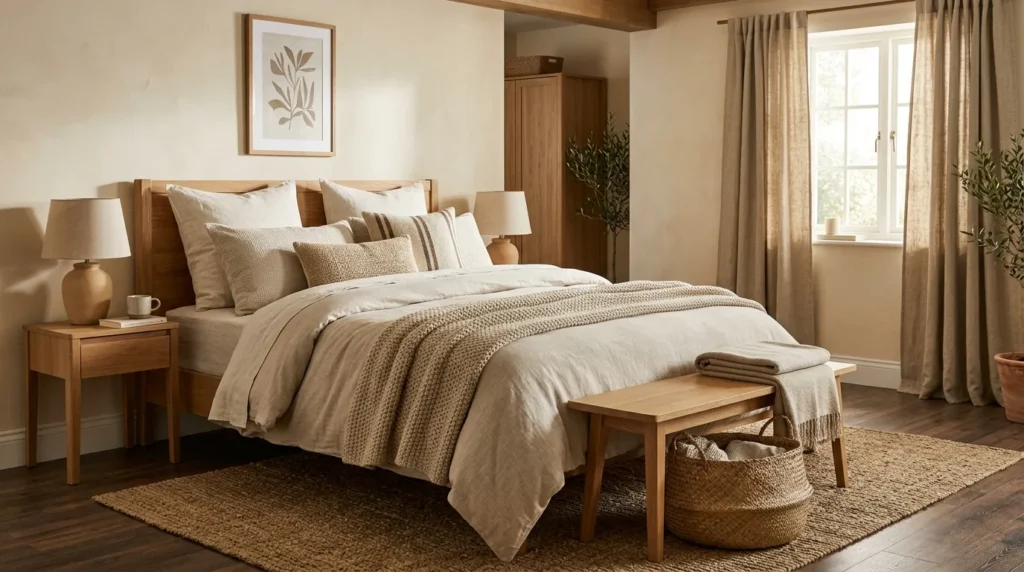
Bedding, curtains, rugs, cushions, upholstery, baskets, and throws all provide opportunities to add tactile variation.
The key is mixing materials rather than simply adding more objects.
Linen next to wood feels different from linen next to metal.
Wool or woven textures can create another layer.
These differences make the room feel more complete.
How To Style It
Combine three or four primary textures.
For example:
- Linen bedding
- Woven rug
- Natural wood
- Soft cotton throw
Then add a small ceramic or glass element for contrast.
Do not place textured accessories everywhere.
Use them strategically.
A woven basket in one corner can be enough.
A chunky throw at the foot of the bed can provide visual softness.
Keep the colors coordinated so the variety of textures does not become visually chaotic.
9. Control Bedroom Clutter
Quick Benefits
- Makes the room feel calmer
- Improves visual breathing room
- Makes cleaning easier
- Helps furniture stand out
- Supports better organization
Why It Works
A small bedroom has less visual capacity than a large one.
A few items scattered around can therefore make a bigger difference.
Clutter is not simply an aesthetic issue.
It can also make everyday routines harder.
When clothing accumulates on a chair and books cover the floor, the room becomes more difficult to use.
Good organization gives everything a place.
Hidden storage is especially useful because it allows necessities to remain accessible without keeping them visually exposed.
How To Style It
Start with the floor.
Put away shoes, clothing, bags, and miscellaneous items.
Then clear visible surfaces.
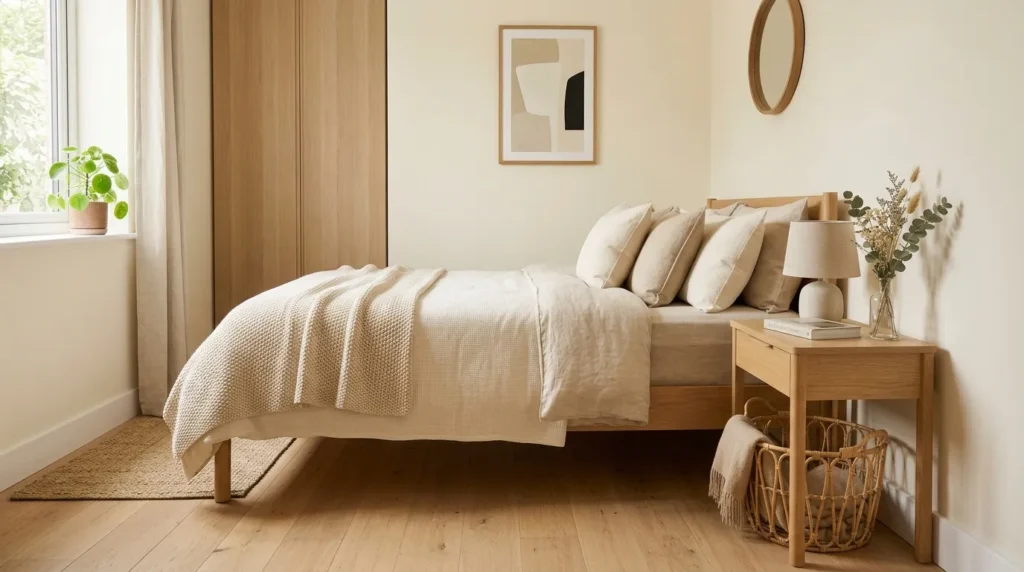
Use baskets for categories that tend to collect in the same place.
Place a laundry hamper where clothes naturally come off rather than hiding it somewhere inconvenient.
Use under-bed storage for seasonal items.
Keep the dresser top edited.
A useful rule is to avoid filling every available surface.
Leaving some empty space can make the bedroom feel more peaceful even when storage is limited.
10. Personalize Small Details
Quick Benefits
- Makes the bedroom feel personal
- Adds character
- Creates emotional comfort
- Prevents the room from feeling generic
- Works without major changes
Why It Works
A comfortable bedroom should feel like it belongs to you.
Too much emphasis on trends can create a room that looks attractive but does not feel personal.
The details matter.
A favorite photograph, meaningful artwork, a handmade ceramic piece, a beloved book, or a small collection can give the room character.
You do not need many objects.
In fact, one meaningful piece often has more impact than a shelf filled with decorative items.
Personal touches also make a small bedroom feel less like a staged space and more like a retreat.
How To Style It
Choose two or three meaningful details.
Place a favorite photograph in a simple frame on the nightstand.
Hang artwork above the bed or dresser.
Display a small object with sentimental value.
Use bedding colors that you genuinely enjoy rather than choosing a palette simply because it is trending.
If you collect something, display a small edited selection rather than the entire collection.
The room should reflect your personality while maintaining enough visual simplicity to remain comfortable.
How To Make A Small Bedroom Feel Bigger And More Comfortable
Comfort and spaciousness often work together.
When a room has enough visual and physical breathing space, it usually feels easier to relax in.
Start with the furniture layout.
Position the bed where it creates the most natural walking path.
Avoid blocking windows when possible.
Keep tall furniture away from areas where it makes the room feel enclosed.
Use mirrors thoughtfully if they suit your style and location.
A mirror can reflect light and visually expand the room, but it should not be used simply because the room is small.
Light-colored bedding and curtains can also create an airy appearance.
The floor matters too.
Keeping more floor visible can make the room feel less crowded.
This is one reason floating nightstands and beds with elevated frames can be effective.
But remember that the objective is not to make the room look empty.
It is to make it comfortable.
Best Bedding For A Comfortable Small Bedroom
There is no single best bedding material for everyone.
Personal preference, climate, allergies, washing habits, and sleeping temperature all matter.
For a comfortable bedroom, consider:
Cotton: Versatile and available in many weaves.
Linen: Breathable and naturally relaxed in appearance.
Flannel: Useful in colder seasons when warmth is desired.
Quilted Covers: Add texture without excessive bulk.
Lightweight Throws: Provide flexible warmth and visual softness.
Choose bedding that is easy to wash and maintain.
In a small bedroom, the bed is already a major visual element, so bedding with a simple palette can help maintain a calm appearance.
If you enjoy patterns, consider using one restrained pattern rather than several competing prints.
Small Bedroom Comfort Mistakes To Avoid
Oversized Furniture
Large furniture can eliminate the walking space that makes a room comfortable.
Too Much Decoration
Every decorative object takes visual attention.
Harsh Lighting
Bright, cool lighting can make an otherwise cozy bedroom feel clinical.
Poor Bedding
Beautiful bedding is not useful if it is uncomfortable to sleep in.
Blocked Windows
Covering natural light can make the room feel darker and smaller.
No Storage Plan
Without designated storage, clutter quickly returns.
Too Many Pillows
Decorative pillows should not make bedtime inconvenient.
Ignoring Airflow
Do not place furniture where it interferes with heating, cooling, or ventilation.
Matching Everything
A room can feel more comfortable when materials and tones coordinate without being identical.
Filling Empty Corners
Not every corner needs furniture.
Sometimes an open corner creates valuable visual breathing room.
FAQ
How can I make a small bedroom more comfortable?
Focus on comfort before decoration. Choose bedding that feels good, improve the lighting, keep walking paths clear, reduce clutter, and use soft textures such as rugs, curtains, and throws. Appropriately scaled furniture also makes a major difference because it preserves the space needed to move around comfortably.
What colors make a small bedroom feel cozy?
Warm white, cream, beige, oatmeal, taupe, muted sage, and soft brown can create a cozy atmosphere. You can also use dusty blue or soft gray if you prefer cooler tones. The key is choosing a coordinated palette rather than using many unrelated colors.
How do I make a small bedroom cozy without making it feel cluttered?
Use texture instead of adding lots of objects. Layer the bedding, add one soft rug, choose comfortable curtains, and use warm lighting. Keep decorative accessories limited and use hidden storage for everyday necessities. This creates warmth while preserving visual breathing room.
What furniture should I avoid in a small bedroom?
Avoid furniture that is oversized for the room or leaves little space to walk around. Extremely wide nightstands, deep dressers, oversized chairs, and unnecessary cabinets can make the room difficult to navigate. Choose furniture based on actual measurements rather than assuming standard sizes will fit comfortably.
How can I make a small bedroom feel luxurious?
Focus on quality and atmosphere rather than quantity. Comfortable bedding, layered lighting, coordinated colors, natural materials, full-length curtains, and carefully selected accessories can create a polished feeling. Keep surfaces uncluttered and choose a few substantial details rather than many inexpensive decorations.
Is a rug necessary in a small bedroom?
A rug is not essential, but it can add considerable comfort, especially over hard flooring. It provides warmth underfoot and helps define the sleeping area. If a large rug does not fit, consider narrow runners beside the bed or another appropriately sized option.
How can I make my small bedroom feel more personal?
Display a few meaningful objects rather than filling the room with generic decor. Favorite artwork, photographs, books, handmade pieces, or a small collection can add personality. Choose colors and materials that you genuinely enjoy, and let the room reflect your lifestyle rather than copying a trend exactly.
Conclusion
A small bedroom does not have to feel cramped, cold, or uncomfortable.
The most important thing is to think about how the room feels to use rather than focusing only on how it looks.
Start with the bed.
Comfortable bedding immediately creates a more inviting focal point. Then look at the lighting. Replace harsh illumination with softer layers that work for reading, getting dressed, and winding down.
Next, simplify the furniture.
Keep only the pieces that genuinely support your lifestyle and make sure there is enough room to walk comfortably.
From there, introduce softness through a rug, curtains, throws, cushions, and natural materials.
Then deal with clutter.
Hidden storage, baskets, drawers, and under-bed containers can keep necessities accessible without covering every surface.
Finally, personalize the room.
A favorite photograph, meaningful piece of artwork, beautiful book, or small sentimental object can make the bedroom feel like yours.
You do not need to change everything at once.
Start with the area that bothers you most.
If the bed feels uncomfortable, begin with the bedding. If the room feels harsh at night, improve the lighting. If it feels crowded, remove one unnecessary piece of furniture.
Small changes can have a surprisingly large impact.
The goal is not simply to create a bedroom that looks good in a Pinterest image.
It is to create a space that feels good when you wake up, feels easy to use during the day, and helps you unwind at night.
That is what makes a small bedroom genuinely comfortable.
Related Articles
- 10 Relaxing Aesthetic Bedroom Ideas
- 10 Modern Aesthetic Bedroom Ideas for Adults
- How to Organize a Small Bedroom with Hidden Storage
- 11 Cozy Bedroom Ideas for a Warm and Inviting Space
- 10 Small Bedroom Ideas That Make Your Space Feel Bigger