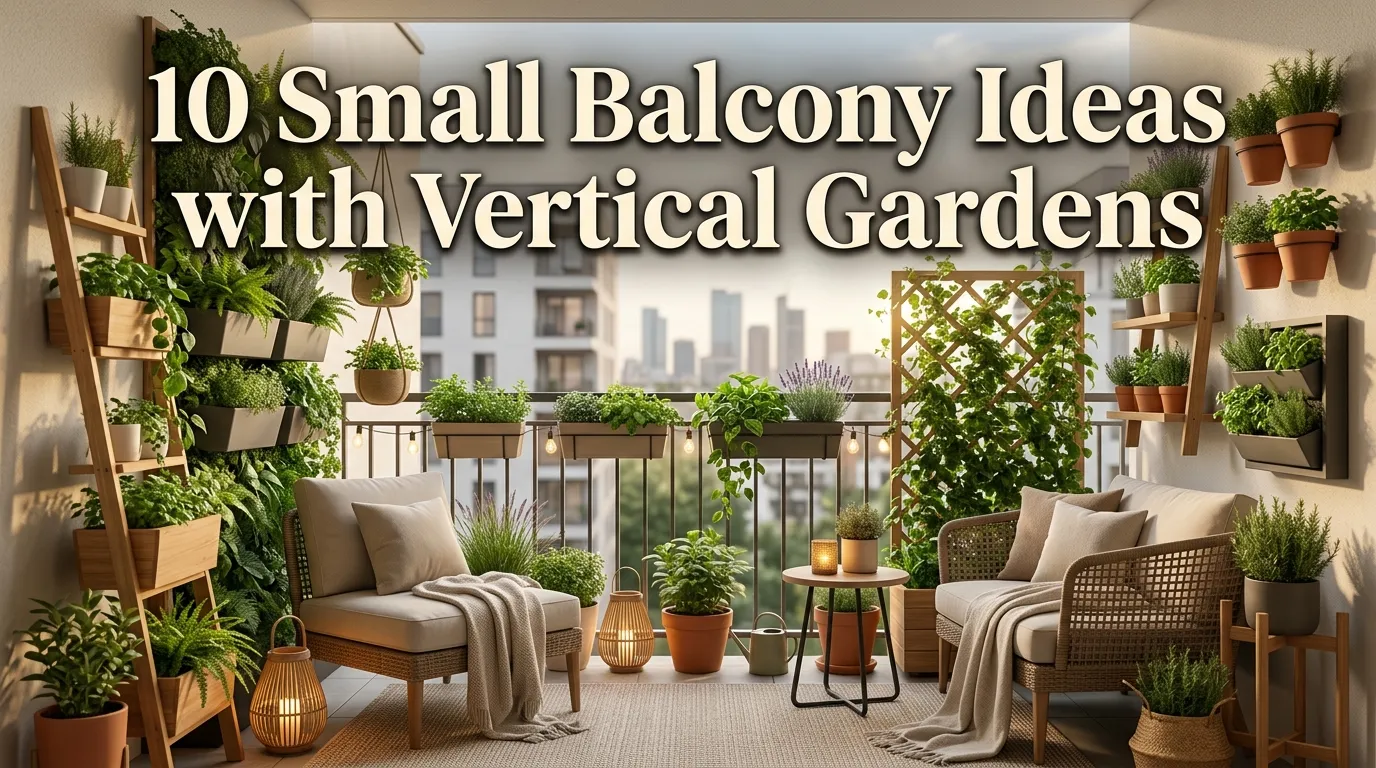
10 Small Balcony Ideas with Vertical Gardens
A small balcony does not have to feel like an unused strip of outdoor space. Even when you only have a few feet to work with, the right combination of vertical greenery, compact furniture, and thoughtful organization can turn it into a cozy little retreat.
One of the easiest ways to make a small balcony feel more inviting is to use the walls and railings for plants instead of placing everything on the floor. Vertical gardens take advantage of unused space while leaving valuable walking and seating areas open. That makes them especially useful for apartment balconies, rental homes, condos, and other compact outdoor spaces.
In my experience, the biggest challenge with a small balcony is not the lack of square footage—it is deciding what deserves that limited space. A large planter, bulky chair, or oversized storage box can quickly make the area feel crowded. Vertical gardening solves part of that problem by moving greenery upward.
You can create a vertical garden with wall-mounted planters, trellises, hanging pots, railing planters, tiered plant stands, or modular planting systems. Depending on your balcony’s sunlight and climate, you can grow flowers, herbs, trailing plants, ornamental foliage, or even compact vegetables.
The most successful small balconies usually combine plants with one clear purpose. Maybe you want a morning coffee spot, a private reading corner, a tiny herb garden, or simply a beautiful place to relax after work.
You do not need dozens of plants to make an impact, either. A few carefully arranged planters at different heights can create the feeling of a lush garden without overwhelming the space.
Before installing anything, check your building or lease rules, especially regarding railing attachments, hanging planters, wall mounting, and drainage. Make sure containers are secure and that water will not damage neighboring balconies or building surfaces.
With a little planning, even a narrow balcony can become a green, comfortable extension of your home.
Table of Contents
1. Wall Mounted Planters
Use vertical containers to create a lush green wall without taking up floor space.
2. Railing Herb Garden
Turn a balcony railing into a compact growing area for useful herbs and greenery.
3. Climbing Trellis Wall
Train climbing plants upward to add height, softness, and privacy.
4. Hanging Plant Layers
Use hanging containers at different heights to create a lush cascading display.
5. Tiered Plant Stand
Stack plants vertically with a narrow stand that keeps the balcony floor organized.
6. Vertical Privacy Screen
Combine greenery and screening to create a more secluded outdoor retreat.
7. Pallet Garden Wall
Repurpose a suitable wood structure into a compact vertical planting display.
8. Compact Veggie Garden
Grow useful vegetables vertically while keeping the footprint small.
9. Trailing Plant Display
Use cascading plants to soften railings and balcony edges.
10. Living Green Corner
Combine several vertical gardening techniques into one cozy balcony retreat.
1. Wall Mounted Planters
Quick Benefits
- Saves valuable floor space
- Creates an instant green focal point
- Works well on narrow balconies
- Easy to customize
- Makes blank walls useful
Why It Works
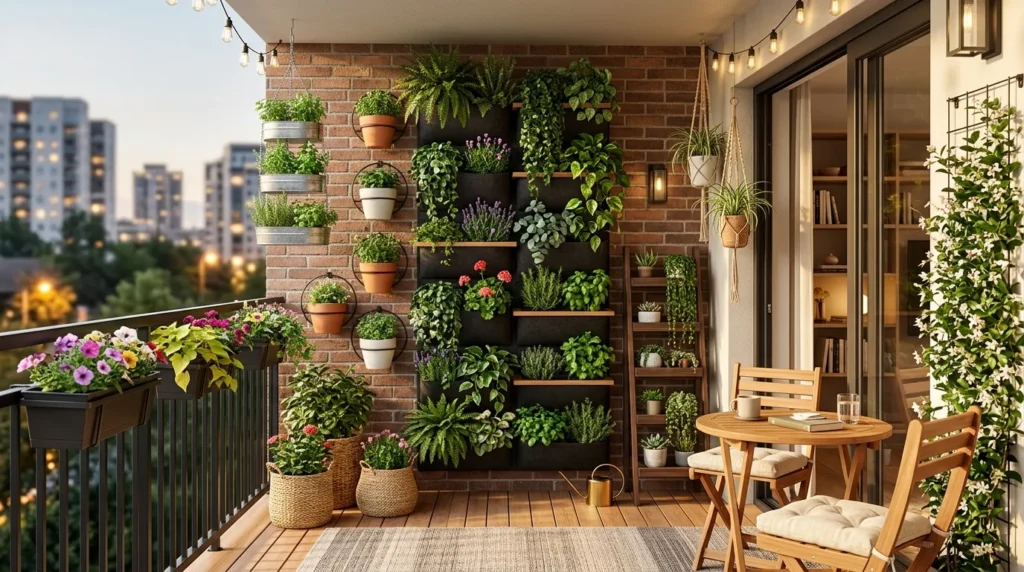
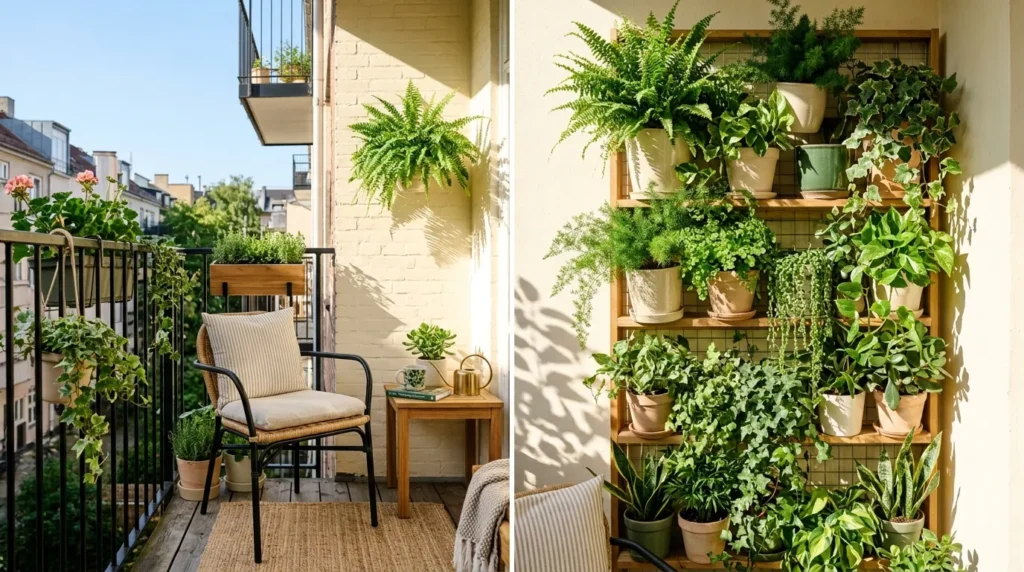
Vertical planters are one of the most efficient ways to add greenery when balcony space is limited.
Instead of arranging pots across the floor, you use a wall or approved vertical surface to create layers of plants. This leaves more room for a small chair, bistro table, outdoor rug, or walking area.
The repeated containers can also give a balcony a more intentional appearance. Rather than having several unrelated pots scattered around, you create a visual composition that acts almost like outdoor wall art.
A simple row of matching planters can look modern, while staggered containers create a more relaxed garden feeling.
How To Style It
Choose planters that suit the available wall space and the amount of sunlight.
For a modern balcony, try matte white, charcoal, terracotta, or natural wood-toned containers.
Arrange them vertically or in a staggered grid.
Use plants with different shapes to create visual variation.
Combine upright foliage with trailing varieties so some greenery extends downward.
If you rent, look for freestanding vertical planter systems or removable solutions rather than drilling into the wall.
Keep the surrounding furniture compact.
A small folding chair and narrow side table can create a comfortable seating area without competing with the greenery.
Always use secure mounting hardware appropriate for the surface and container weight.
2. Railing Herb Garden
Quick Benefits
- Makes unused railing space functional
- Great for apartment balconies
- Provides fresh herbs
- Requires little floor space
- Creates a charming garden appearance
Why It Works
Balcony railings are often completely underused.
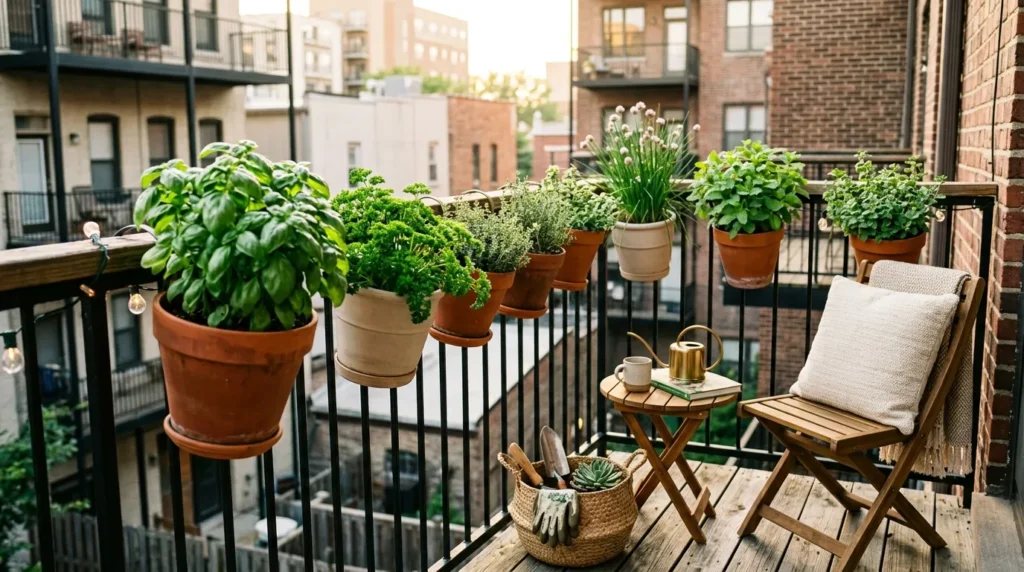
A railing planter can turn that narrow horizontal surface into a productive mini garden while keeping the floor clear.
Herbs are particularly well suited to this setup because many grow successfully in containers when given suitable light, water, drainage, and growing conditions.
Basil, parsley, chives, thyme, mint, oregano, and other herbs can provide both visual appeal and practical value, although the best choices depend on your local climate and the amount of sunlight your balcony receives.
A row of herbs also makes the balcony feel more connected to the kitchen.
How To Style It
Choose railing planters specifically designed for your railing style and dimensions.
Make sure they are securely fitted and do not interfere with building safety features.
Use matching containers for a polished appearance.
Place taller herbs toward one end and shorter plants toward the other to create a gentle visual rhythm.
Add small labels if you want a functional kitchen-garden feel.
Terracotta pots create a traditional garden appearance, while dark or neutral planters feel more contemporary.
Keep a compact watering can nearby.
Because balcony conditions can be warmer and windier than ground-level gardens, check the soil regularly rather than relying on a fixed watering schedule.
3. Climbing Trellis Wall
Quick Benefits
- Adds vertical height
- Can increase privacy
- Creates a garden-like atmosphere
- Uses very little floor space
- Works with many balcony styles
Why It Works
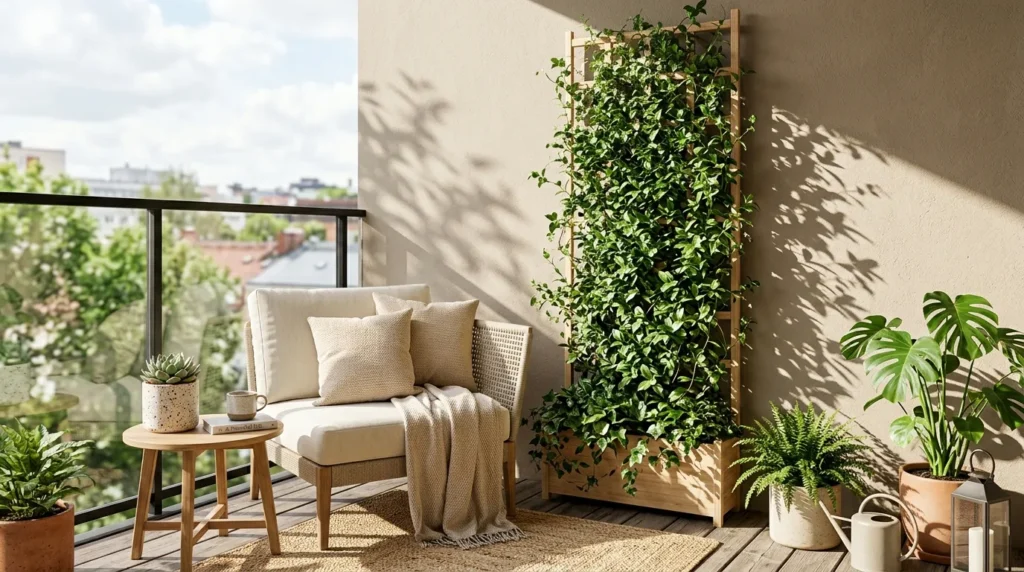
A trellis can transform a plain balcony wall or corner into a living backdrop.
Climbing plants naturally grow upward, making them ideal for narrow outdoor spaces.
The vertical structure also introduces height, which can make a small balcony feel more layered and visually interesting.
Depending on your plant choices and local growing conditions, you can use flowering vines, leafy climbers, or edible plants.
A trellis can also help create separation between the balcony and neighboring spaces.
However, growth rates vary, so choose plants based on the amount of sun, wind, container size, and maintenance you can realistically provide.
How To Style It
Place a freestanding trellis in a sturdy container if you cannot attach anything to the building.
Choose a narrow design that fits the available corner.
Train young stems gently along the support as they grow.
Keep the surrounding palette simple.
A wood trellis paired with terracotta containers gives a warm garden feeling.
Black metal creates a more contemporary look.
Add one compact chair and a small outdoor cushion nearby.
As the plant grows, the trellis becomes increasingly integrated into the balcony.
Make sure the finished setup remains stable in wind and does not obstruct doors, exits, or required access.
4. Hanging Plant Layers
Quick Benefits
- Keeps plants off the floor
- Creates beautiful height variation
- Works in very small spaces
- Adds a lush atmosphere
- Great for trailing plants
Why It Works
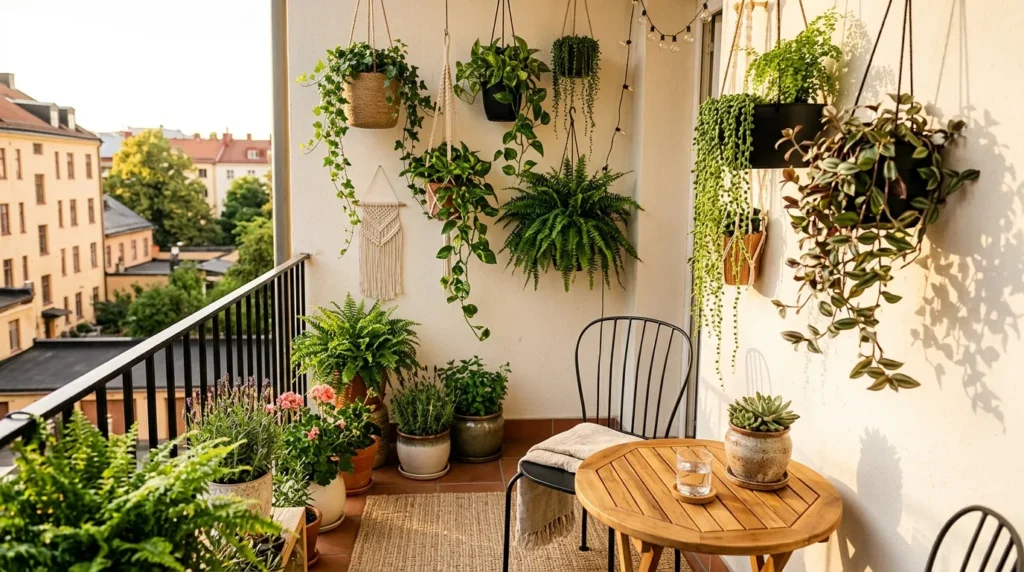
Hanging plants can make a small balcony feel much fuller without consuming valuable floor area.
Instead of placing every pot at the same height, hanging containers create layers that draw the eye upward.
Trailing foliage is especially effective because the leaves naturally fall downward, creating a soft curtain-like effect.
This can make hard architectural surfaces feel more welcoming.
However, hanging planters should always be installed with safety in mind.
Check building rules before attaching anything overhead or to a balcony structure, and use hardware appropriate for the load and surface.
How To Style It
Create two or three height levels rather than hanging dozens of pots.
Use one larger trailing plant as the focal point and smaller containers around it.
Macramé hangers can create a bohemian look, while simple metal brackets feel more contemporary.
Keep the color palette coordinated.
White pots with green foliage create a clean modern appearance.
Terracotta adds warmth.
Black containers provide stronger contrast.
Leave enough clearance for people to walk comfortably.
Watering can also create mess, so choose containers with suitable drainage and place them where excess water will not damage surfaces or neighboring areas.
5. Tiered Plant Stand
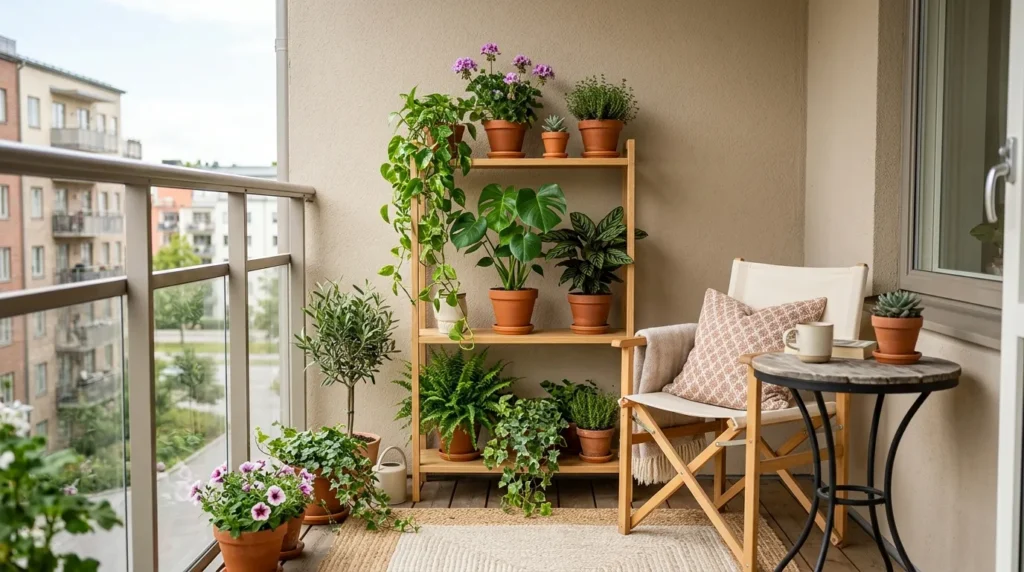
Quick Benefits
- Uses vertical floor space
- Easy to rearrange
- No wall mounting required
- Works well for renters
- Creates organized plant layers
Why It Works
A narrow tiered plant stand can provide many of the benefits of a vertical garden without requiring permanent installation.
This makes it especially useful for renters or anyone who wants flexibility.
Instead of spreading six or eight pots across the balcony floor, you can stack them vertically.
The result is a compact garden display that can be moved when needed.
Tiered stands also allow you to experiment with plant height.
Place taller plants toward the back and trailing or smaller varieties toward the front.
How To Style It
Choose a stand that is narrow enough to preserve walking space.
Wood works beautifully for warm organic balconies.
Metal works well with modern or industrial decor.
Place larger pots on lower shelves to keep the center of gravity low.
Use smaller containers above them.
Mix foliage shapes rather than choosing identical plants.
For example, combine broad leaves, upright foliage, and trailing greenery.
Add a small ceramic lantern or decorative object if space allows, but do not overcrowd the shelves.
If the balcony is exposed to strong wind, select a sturdy stand and position it securely.
6. Vertical Privacy Screen
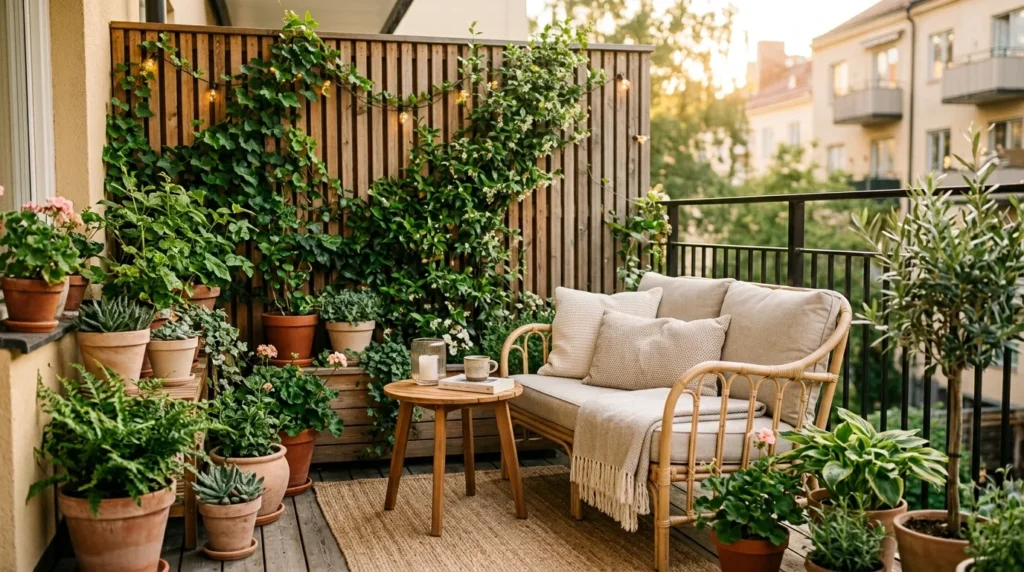
Quick Benefits
- Adds privacy
- Creates a relaxing atmosphere
- Uses vertical space
- Can soften harsh surroundings
- Makes the balcony feel more intentional
Why It Works
A small balcony can feel less relaxing when neighboring buildings, windows, or busy streets are constantly visible.
A vertical garden can help soften those views.
Instead of installing a visually heavy barrier, combine a privacy screen with greenery.
The plants make the structure feel more natural and can create the impression of a small outdoor room.
This is especially useful for balconies that function as personal retreats.
You can create privacy with a trellis, freestanding screen, tall planters, or a combination of vertical containers and climbing plants.
How To Style It
Choose the privacy solution based on your building rules and available space.
A narrow freestanding screen can work well in rentals.
Add planters at the base and train climbing greenery upward.
For a softer effect, combine tall plants with trailing varieties.
Use warm wood, natural fiber accessories, and neutral outdoor textiles to make the area feel like an extension of your interior.
A compact lounge chair can sit beside the screen.
Avoid blocking required exits or creating unstable structures.
Remember that added height can increase wind exposure, so stability is essential.
7. Pallet Garden Wall
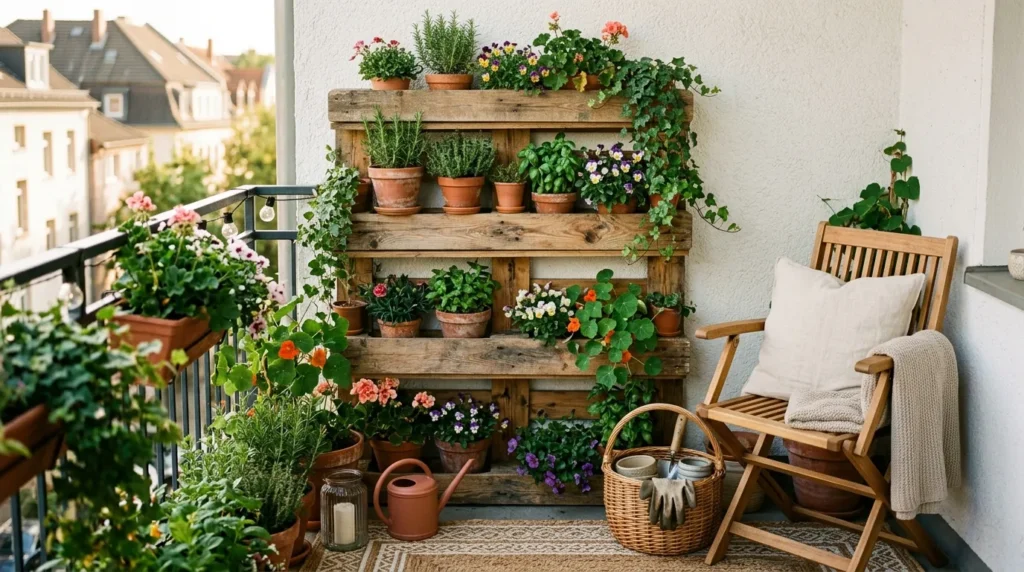
Quick Benefits
- Creates a rustic garden look
- Uses vertical space efficiently
- Can hold several small plants
- Adds natural wood texture
- Easy to personalize
Why It Works
A pallet-inspired vertical garden can create a charming DIY appearance by turning a simple wooden structure into a planting display.
The wood adds warmth and texture, while the plants soften the harder material.
However, not every pallet is appropriate for gardening.
If you use reclaimed wood, verify that it is suitable for your intended project and avoid unknown or contaminated materials.
You also need to consider drainage and the total weight of soil and plants.
For apartment balconies, a purpose-built vertical planter can provide a safer and more predictable alternative.
How To Style It
Use a compact wood planting structure rather than an oversized pallet that dominates the balcony.
Attach suitable planting containers securely.
Choose a consistent plant palette.
Herbs, compact flowers, and trailing foliage can work beautifully together.
Keep the wood natural for a rustic look or finish it appropriately for the intended outdoor conditions.
Pair it with a small folding chair and neutral outdoor cushion.
Add one or two terracotta pots at floor level to connect the vertical garden with the rest of the balcony.
8. Compact Veggie Garden
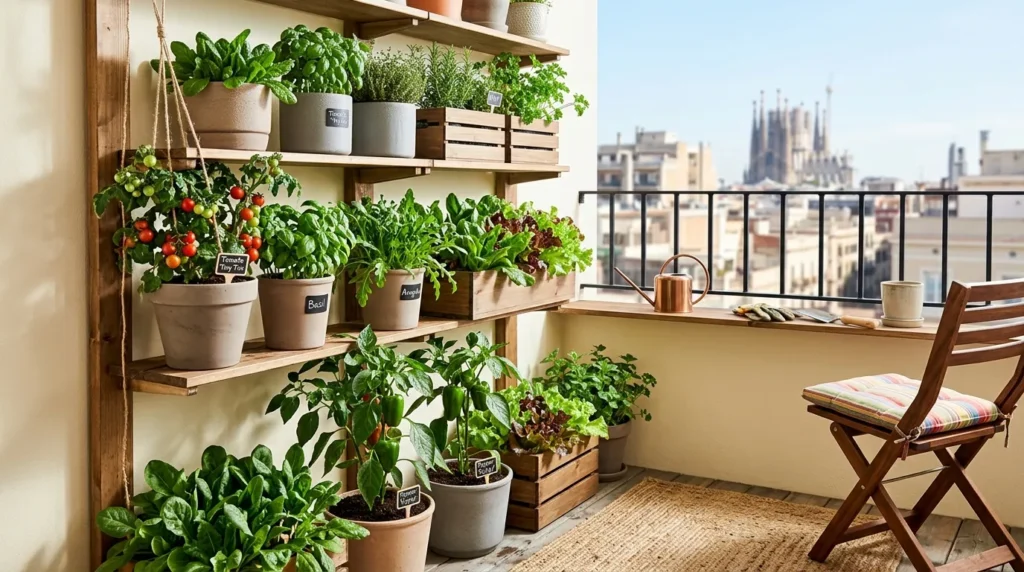
Quick Benefits
- Makes gardening productive
- Saves floor space
- Works well for apartment living
- Adds edible greenery
- Encourages regular outdoor use
Why It Works
You do not need a large backyard to grow some of your own food.
A vertical balcony garden can provide space for compact vegetables and edible plants when containers are properly sized and positioned.
Leafy greens, herbs, compact peppers, and certain tomato varieties may work in containers depending on your sunlight, climate, and available space.
The important thing is to choose plants based on realistic growing conditions rather than simply selecting whatever looks appealing at the garden center.
Vertical growing can make harvesting easier because plants are easier to see and reach.
How To Style It
Use sturdy containers with adequate drainage.
Place sun-loving crops where they receive appropriate light.
Use trellises or vertical supports for plants that need them.
Keep heavier containers low and stable.
Group edible plants together for easy watering and harvesting.
A narrow shelf can hold smaller herb pots while taller containers sit beneath it.
Labeling the plants can give the balcony a charming kitchen-garden appearance.
If you are growing food, use growing media and containers appropriate for edible plants and follow local guidance for safe growing practices.
9. Trailing Plant Display
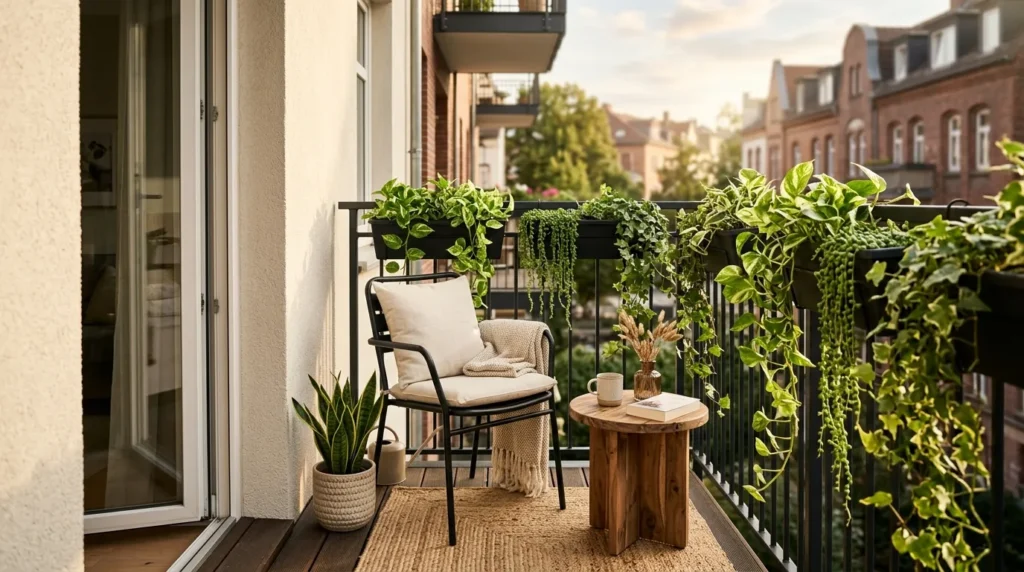
Quick Benefits
- Softens balcony edges
- Adds movement
- Creates a lush appearance
- Requires little floor space
- Works with modern and boho styles
Why It Works
Trailing plants are particularly useful on small balconies because their natural growth habit creates volume without requiring a large footprint.
When foliage spills over a railing or planter edge, it can soften the straight lines of the balcony architecture.
The movement also makes the space feel more alive.
You can use one type of trailing plant for a clean look or combine several complementary varieties for a more layered garden effect.
Always select plants according to your actual light, temperature, and wind exposure.
How To Style It
Use railing planters or elevated containers so the foliage can cascade naturally.
Place the largest trailing display at one end of the balcony rather than distributing identical plants everywhere.
Add upright greenery nearby for contrast.
For a modern look, use matching planters.
For a relaxed garden appearance, mix terracotta, ceramic, and natural-texture containers.
Keep the floor mostly open.
A compact outdoor rug and folding chair can complete the space without competing with the plants.
Trim or guide growth when necessary so the plants do not interfere with neighboring spaces or balcony access.
10. Living Green Corner
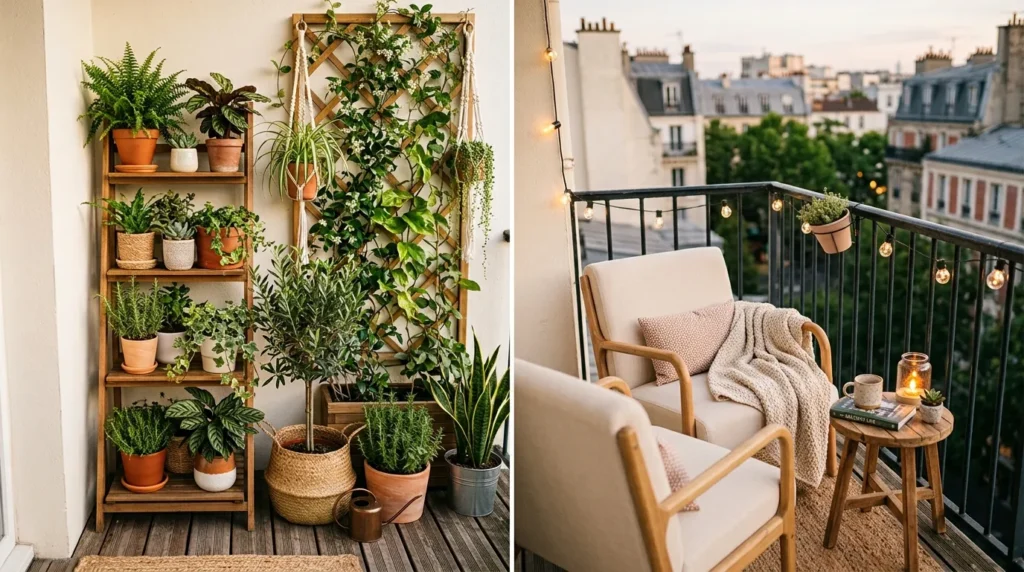
Quick Benefits
- Combines multiple vertical techniques
- Creates a cozy retreat
- Maximizes limited space
- Provides visual layering
- Works for relaxing or entertaining
Why It Works
Sometimes the best vertical garden is not one single system.
Combining a narrow plant stand, wall-mounted containers, a trellis, and one or two floor planters can create a miniature garden room.
The key is keeping the arrangement concentrated.
Instead of putting plants randomly around the entire balcony, create one lush corner.
This leaves the opposite side available for seating.
The contrast between a dense green corner and an open seating area can make the balcony feel larger and more purposeful.
How To Style It
Choose one corner as the garden zone.
Place a narrow tiered stand against the wall.
Add a trellis behind it and introduce a climbing plant.
Use a few small hanging or wall-mounted containers for additional height.
Keep the remaining floor area open.
Place a compact bistro chair, folding lounge chair, or small bench on the opposite side.
Add a washable outdoor cushion and a small side table.
Use warm lighting such as outdoor-rated string lights or lanterns where permitted.
The final effect should feel like a tiny garden retreat rather than a collection of unrelated plant pots.
How To Plan A Vertical Balcony Garden
Before buying plants or planters, measure your balcony.
Pay attention to:
- Available wall width
- Railing dimensions
- Door clearance
- Walking paths
- Sun exposure
- Wind exposure
- Drainage
- Weight limitations
- Building rules
Then decide what you want the garden to accomplish.
If privacy is the goal, prioritize tall plants and trellises.
If food production matters most, focus on herbs and compact edible crops.
If appearance is your main goal, combine plants with coordinated containers and decorative elements.
For a relaxing retreat, leave enough open space for seating.
The best vertical garden is not necessarily the one with the most plants.
It is the one that uses the available space intentionally.
Best Plants For Small Balcony Gardens
Plant selection should always depend on your local conditions, especially sunlight, temperature, wind, and container requirements.
Herbs
Basil, thyme, parsley, chives, oregano, and other suitable culinary herbs can work well in containers.
Trailing Plants
Choose varieties appropriate to your climate and light conditions for cascading displays.
Compact Flowers
Small flowering plants can add seasonal color without requiring large containers.
Leafy Greens
Some greens can grow successfully in containers with suitable light and moisture.
Compact Vegetables
Certain peppers, tomatoes, and other compact crops may work well when container size and sunlight are adequate.
Ornamental Foliage
Leaf-focused plants can provide a lush appearance without relying on flowers.
Always check the mature size and growing requirements before purchasing.
How To Make A Small Balcony Feel Bigger
Vertical gardening is only part of the equation.
Use furniture with a small footprint.
Folding chairs can be especially useful because they can be stored when the balcony is not being used.
Choose a narrow table instead of a large coffee table.
Keep the center of the balcony relatively open.
Use similar colors across planters, cushions, and accessories to create visual continuity.
Mirrors can sometimes add visual interest, but only use outdoor-appropriate products and place them where glare will not create a problem.
A simple outdoor rug can define the seating area.
The goal is to create clear zones without filling every available inch.
Balcony Vertical Garden Safety Tips
Small balconies require thoughtful planning because planters, soil, furniture, and structures can become heavy.
Before installing a vertical garden, check your building’s rules and any applicable structural or safety requirements.
Secure hanging and railing planters properly.
Do not overload railings or attach heavy containers to surfaces that are not designed to support them.
Keep exits and access points clear.
Use stable plant stands.
Consider wind exposure, especially on higher floors.
Make sure drainage does not create problems for the balcony below.
If you are unsure whether a structure can safely support your setup, consult the appropriate building management or a qualified professional.
FAQ
How do you make a vertical garden on a small balcony?
Use the walls, railing, and vertical corners instead of spreading plants across the floor. Wall-mounted planters, railing containers, trellises, hanging pots, and tiered stands are useful options. Choose plants according to your sunlight and climate, and make sure every container is securely supported and has appropriate drainage.
What plants are best for a small balcony?
The best plants depend on sunlight, wind, temperature, and available container space. Herbs, compact vegetables, flowers, trailing plants, and ornamental foliage can all work in the right conditions. Before purchasing, check each plant’s mature size, light requirements, watering needs, and suitability for container growing.
How do I create privacy on a small balcony with plants?
Use vertical trellises, tall containers, climbing plants, or layered foliage to create a natural screen. Concentrate the plants along the side where privacy is most needed rather than surrounding the entire balcony. Check building rules before installing screens or attaching anything to walls and railings.
Can I have a vertical garden in an apartment?
Yes, provided your building and lease allow it. Freestanding plant stands, railing planters designed for your railing, and movable trellises can be particularly useful for renters. Avoid permanent modifications unless you have permission, and make sure planters are secure and drainage will not affect neighboring units.
How do I keep a balcony garden from looking cluttered?
Limit your color palette, group plants into intentional zones, and use vertical space instead of covering the floor. Matching or coordinated planters can create a cleaner appearance. Leave enough open space for movement and seating rather than trying to fill every available surface with plants.
How often should I water balcony plants?
There is no universal schedule because watering depends on plant type, container size, weather, sunlight, wind, and growing medium. Balcony containers can dry faster than plants in the ground, especially in hot or windy conditions. Check the growing medium and follow the requirements of each plant instead of relying on a fixed calendar.
Are vertical gardens heavy?
They can be. Soil, water, containers, planters, and mature plants all contribute weight. This is especially important on balconies. Use appropriately sized containers, distribute weight carefully, and follow building requirements. Never assume a railing, wall, or balcony surface can safely support a heavy garden system without checking.
Conclusion
A small balcony can become one of the most enjoyable areas of your home when you stop thinking of it as limited floor space and start thinking vertically.
Walls, railings, corners, and overhead areas can all become opportunities for greenery. A simple row of herb planters can turn an ordinary railing into a useful kitchen garden, while a trellis covered with climbing foliage can create height and privacy.
For renters, tiered plant stands and movable containers offer flexibility without permanent modifications. For homeowners, a combination of vertical planters, trellises, and carefully selected containers can create a more permanent garden retreat.
The key is not to add as many plants as possible.
Choose a purpose first.
Do you want a private reading nook? A place to grow herbs? A colorful flower display? A quiet morning coffee spot?
Once you know how you want to use the balcony, choose the vertical garden elements that support that purpose.
Keep the floor open, coordinate your containers, and select plants that actually suit your light and growing conditions.
Most importantly, remember that safety and building rules come before aesthetics. Secure planters properly, consider weight and wind, protect drainage areas, and keep access points clear.
With thoughtful planning, even a narrow apartment balcony can feel lush, personal, and surprisingly spacious.
Start with one vertical garden feature, add a comfortable seat, and let the space evolve over time. You may be surprised by how much personality a few well-placed plants can bring to a very small outdoor area.
Related Articles
- 10 Small Balcony Decor Ideas for Apartment Living
- 11 Small Patio Ideas for Cozy Outdoor Spaces
- 10 Apartment Balcony Privacy Ideas
- 10 DIY Outdoor Decor Ideas for a Small Space
- 11 Small Garden Ideas for Beautiful Outdoor Spaces