10 DIY Wall Art Ideas with Textured Canvas
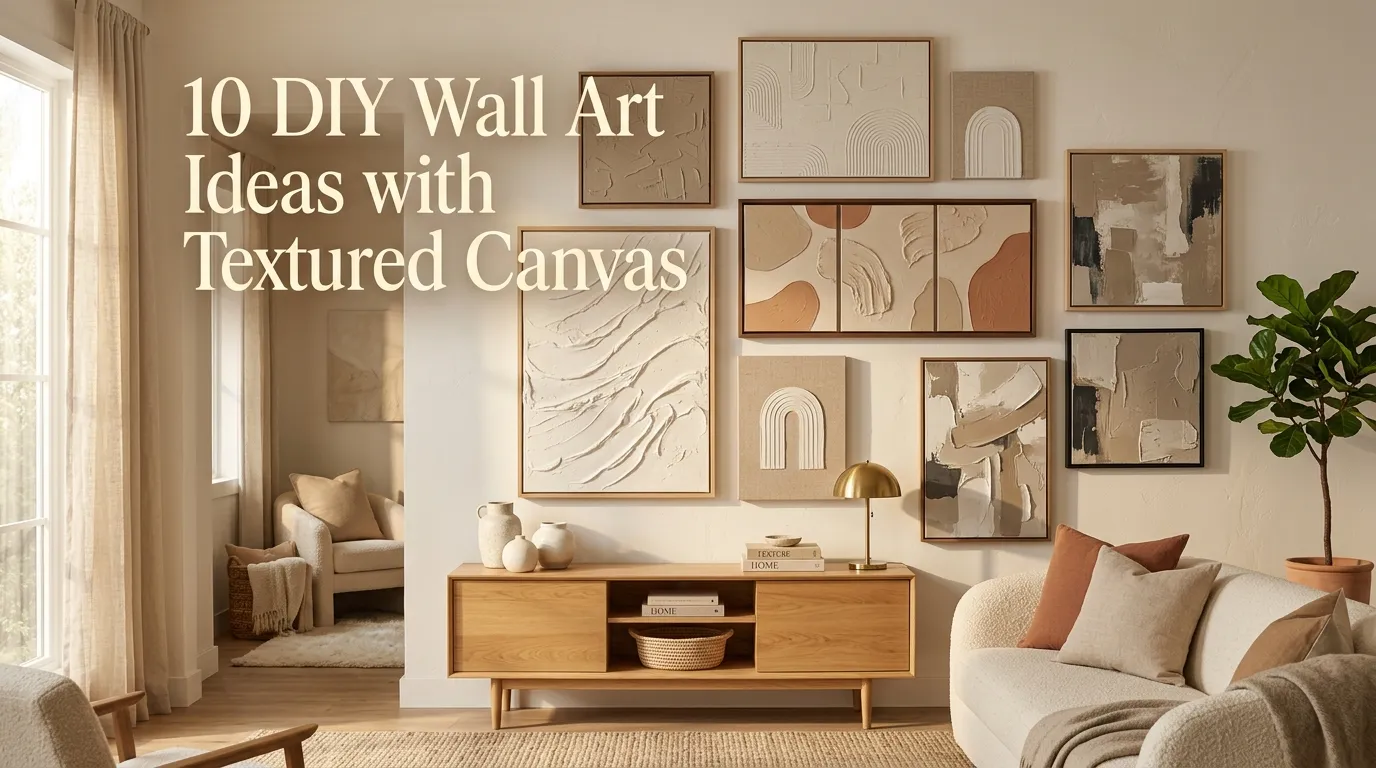
A blank wall can make an otherwise beautiful room feel unfinished, but filling it with expensive artwork is not always necessary. One of my favorite ways to add personality to a room is with textured canvas art because it brings dimension, softness, and handmade character to the walls without requiring advanced artistic skills.
Textured canvas is especially appealing for modern home decor because it can look sophisticated while still feeling personal. Simple materials such as canvas, modeling paste, joint compound, plaster, paint, brushes, and palette knives can be transformed into artwork with subtle ridges, sweeping curves, raised patterns, or abstract shapes.
The beauty of DIY textured art is that perfection is not the goal. Small variations in the surface can actually make the finished piece feel more organic and expensive-looking. You can create a neutral statement piece for a living room, a soft abstract painting for a bedroom, or a collection of smaller canvases for a hallway or entryway.
Another advantage is complete control over the color palette. If your home uses warm ivory, beige, taupe, soft gray, sage, or earthy brown, you can create artwork that works specifically with those colors rather than trying to find a ready-made piece that matches.
Before starting, choose materials that are suitable for the canvas and intended application. If you’re using heavy texture, make sure the canvas is sturdy and properly supported. Let thick layers dry completely before adding paint or hanging the artwork.
These projects range from incredibly simple minimalist designs to more expressive sculptural pieces. You can follow the techniques closely or use them as starting points for your own artwork.
The goal is to create something that looks intentional, complements your existing decor, and gives your walls the handmade detail that mass-produced art often lacks.
Table of Contents
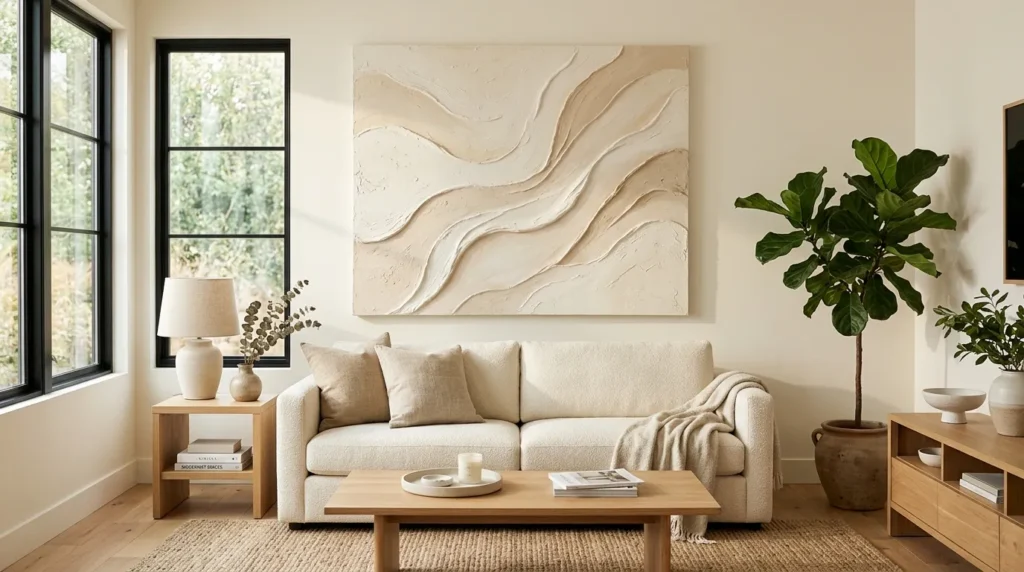
1. Soft Plaster Waves
Create gentle raised curves for a calming piece of contemporary wall art.
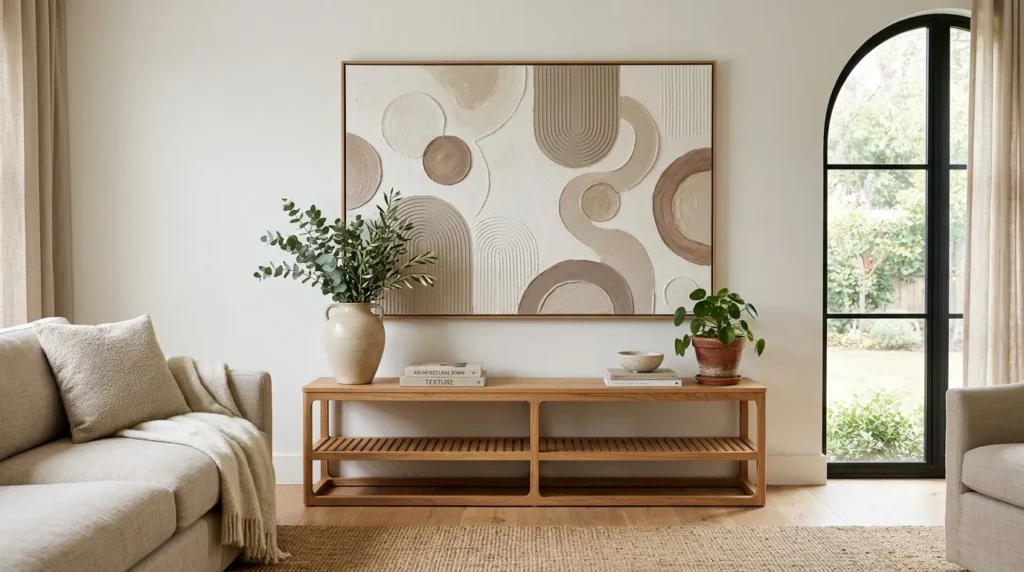
2. Neutral Abstract Shapes
Combine simple organic forms with a restrained palette for sophisticated modern decor.
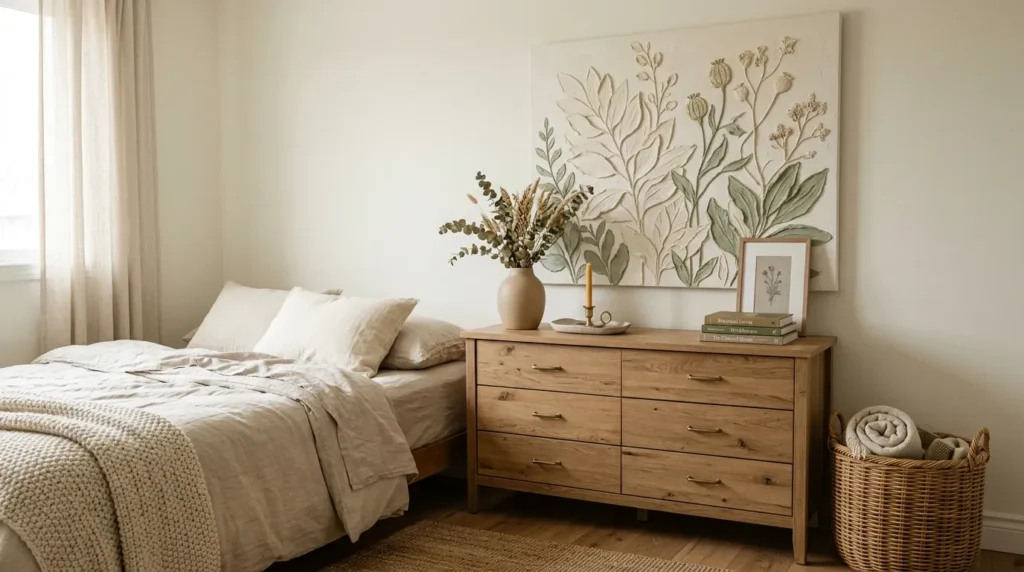
3. Raised Botanical Art
Use textured foliage-inspired patterns to bring an organic element indoors.
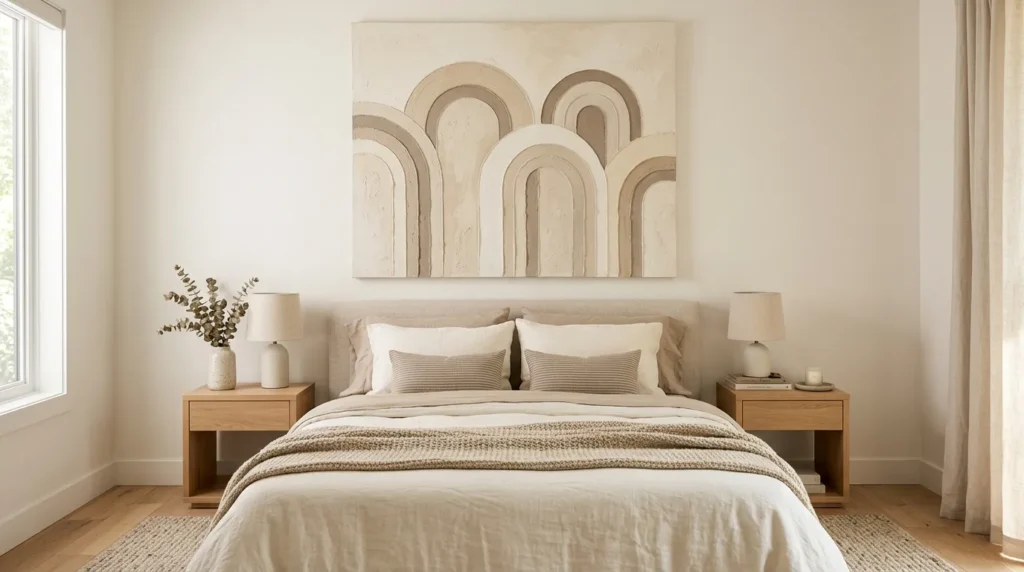
4. Sculptural Arch Canvas
Create dimensional arches that add architectural interest to a blank wall.
5. Minimal Texture Lines
Use subtle raised lines to create understated artwork with a clean modern appearance.
6. Earth Tone Texture
Layer warm neutral colors and tactile texture for a cozy, natural look.
7. Textured Color Blocks
Combine geometric shapes with raised surfaces for contemporary statement art.
8. Organic Plaster Forms
Create irregular sculptural shapes inspired by stone, clay, and natural landscapes.
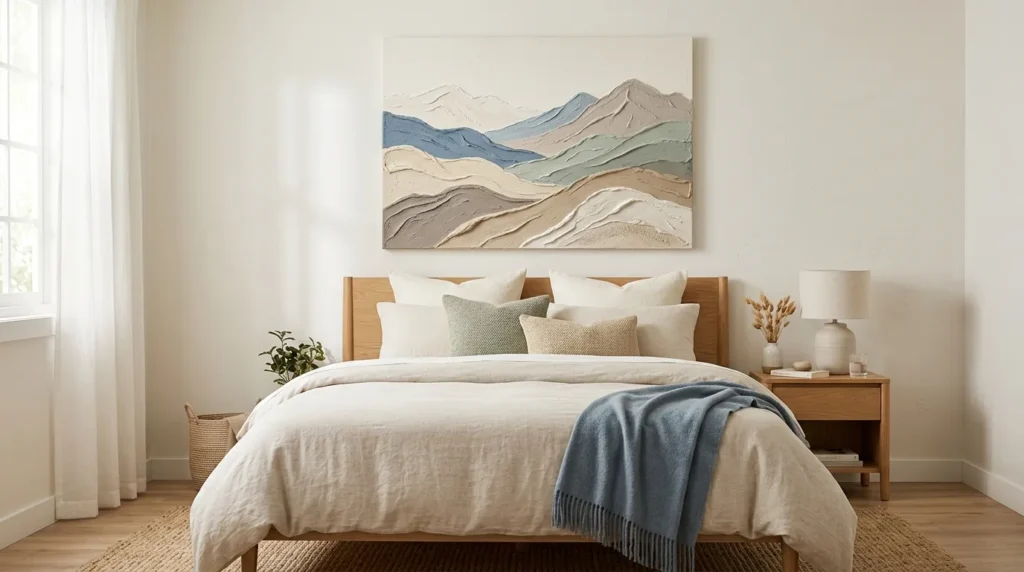
9. Tonal Landscape Canvas
Use texture and subtle color shifts to suggest mountains, hills, or abstract landscapes.
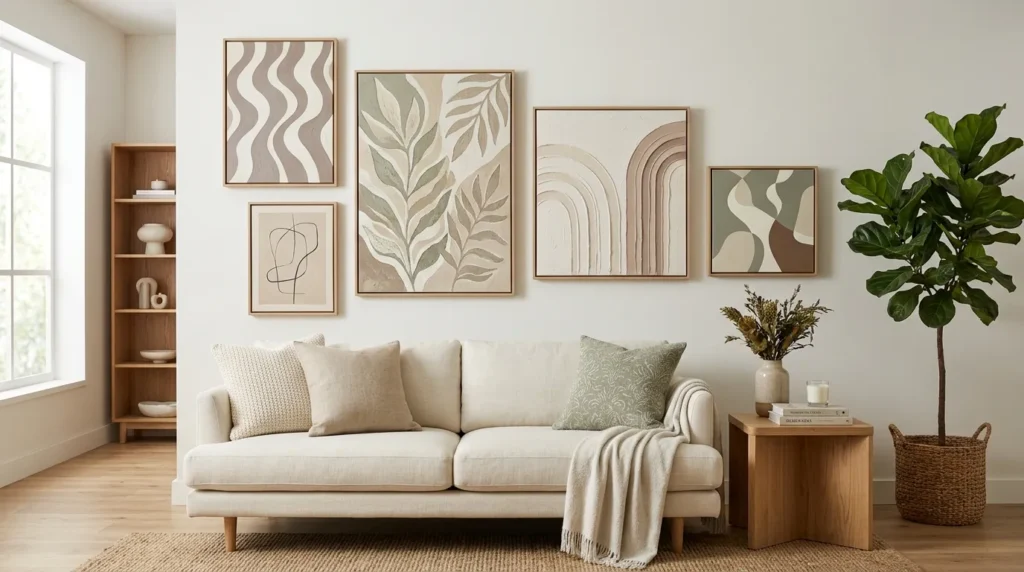
10. Layered Gallery Set
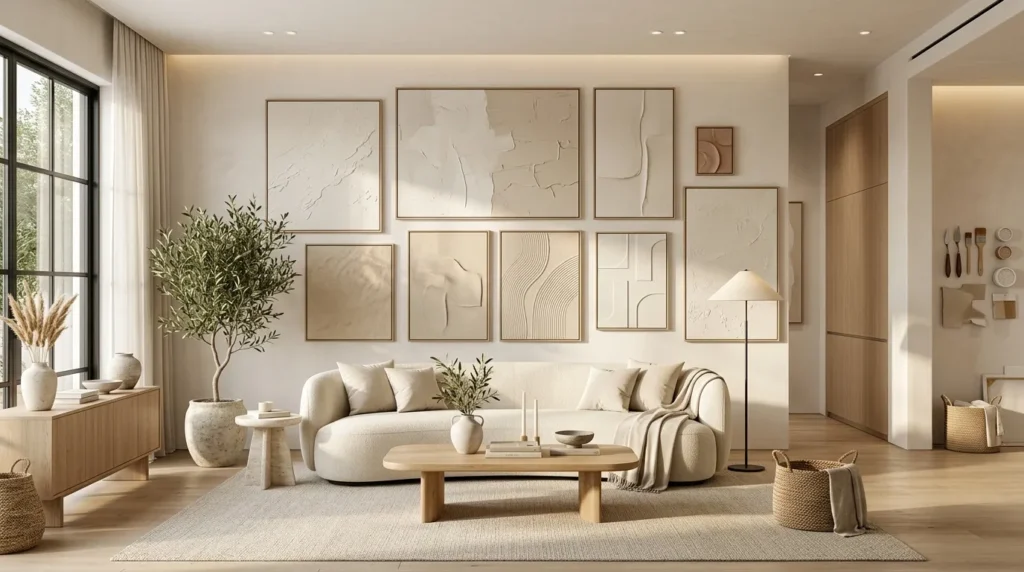
Create several coordinated textured canvases for a custom gallery-wall arrangement.
1. Soft Plaster Waves
Quick Benefits
- Beginner-friendly technique
- Creates strong visual texture
- Works with neutral interiors
- Looks sophisticated and handmade
- Easy to customize
Why It Works
Soft plaster waves are one of the easiest ways to create textured artwork that feels architectural rather than overly crafty. The raised curves catch light differently throughout the day, giving the canvas subtle shadows and depth.
This technique works particularly well in living rooms, bedrooms, entryways, and dining spaces where you want visual interest without introducing a complicated color palette.
The secret is keeping the movement simple. A canvas covered with too many competing lines can become visually busy, while a few broad sweeping curves can look much more intentional.
Neutral shades make the texture the main feature. Warm white, ivory, beige, and soft taupe can create a particularly calming result.
How To Style It
Start with a stretched canvas and a suitable texture medium.
Use a palette knife, flexible scraper, or similar tool to create broad curved lines across the surface. Work in one direction rather than trying to make every wave perfectly symmetrical.
Allow the texture to dry completely according to the product instructions.
Once dry, you can leave it in its natural neutral tone or paint the entire canvas in a soft warm white.
For a more dimensional appearance, lightly brush a second shade over the raised areas.
Use a thin wood frame if you want a polished contemporary finish.
For hanging, choose a wall large enough to let the artwork breathe.
A single oversized wave canvas above a sofa or console table can create a beautiful focal point.
2. Neutral Abstract Shapes
Quick Benefits
- Coordinates easily with existing decor
- Works with modern interiors
- Requires minimal artistic precision
- Creates a sophisticated focal point
- Easy to personalize
Why It Works
Abstract shapes are ideal when you want handmade artwork without needing to reproduce a specific image.
Organic circles, arches, half-moons, curved blocks, and imperfect geometric forms can create a composition that feels modern and artistic.
The neutral palette keeps the artwork versatile.
Instead of relying on bright colors to create interest, the piece gets its personality from shape, texture, layering, and shadow.
This makes neutral textured canvas especially useful for homes with beige, cream, white, gray, or natural wood interiors.
The artwork can complement the room instead of competing with furniture or architectural details.
How To Style It
Choose three or four related colors.
A combination of warm white, beige, taupe, and soft brown is an easy starting point.
Sketch your composition lightly before adding texture.
Create one dominant shape and several smaller supporting shapes.
Use texture on selected areas rather than covering everything equally.
You can apply a thick raised section to one shape and leave another mostly smooth.
Once everything dries, paint the different areas using your chosen palette.
A thin natural wood frame can reinforce the warm, organic look.
Place the artwork above a neutral sofa, bed, console, or dining bench.
If your room already has strong patterns, keep the shapes simple.
3. Raised Botanical Art
Quick Benefits
- Brings nature-inspired texture indoors
- Works with neutral and earthy palettes
- Creates delicate visual detail
- Fits bedrooms and living spaces
- Can be made highly personal
Why It Works
Botanical-inspired artwork can bring softness to a room without requiring actual plants.
Instead of painting realistic flowers or leaves, use raised texture to suggest botanical forms.
A few sculpted leaves or abstract stems can create a sophisticated interpretation of nature.
This approach works particularly well with organic interior styles that use wood, linen, woven materials, stone, and natural colors.
The raised texture also creates subtle shadows that make the artwork more interesting as lighting changes.
Keep the design relatively restrained.
The goal is a refined botanical impression rather than a highly detailed floral painting.
How To Style It
Begin with a neutral canvas background.
Sketch a simple leaf, branch, or stem pattern.
Use a texture medium to build the shapes.
A palette knife can create broad leaves, while a smaller tool can add narrow stems and veins.
Allow the texture to dry completely.
Paint the canvas in warm white or a muted earthy tone.
For a more modern look, use monochromatic colors.
For a little more contrast, add sage green, dusty olive, or muted clay.
Frame the finished piece in natural oak or another warm wood tone.
One large botanical canvas can work beautifully above a dresser, console, or bed.
4. Sculptural Arch Canvas
Quick Benefits
- Adds architectural character
- Works with modern interiors
- Creates strong shape contrast
- Easy to coordinate with decor
- Makes a blank wall feel intentional
Why It Works
Arches are naturally pleasing shapes in interior design because they soften the hard lines of rectangular furniture and architecture.
A raised arch canvas brings that shape into the artwork itself.
You can create one large arch, several overlapping arches, or a combination of smooth and textured forms.
The dimensional surface makes the design feel more like a sculptural wall piece than a traditional painting.
This is especially effective in minimalist rooms where there are fewer decorative objects.
How To Style It
Draw one or more arches onto the canvas.
Use painter’s tape or a carefully drawn guide if you want cleaner edges.
Apply texture inside selected shapes.
You can create a raised arch surrounded by a smooth background or reverse the treatment.
Try warm ivory with a slightly darker beige arch for subtle contrast.
For a more dramatic room, use charcoal, muted brown, or deep olive.
Let each layer dry before applying additional texture or paint.
Hang the canvas vertically in a narrow wall section or horizontally above a console.
A large arch canvas also works well as a bedroom focal point above a simple upholstered headboard.
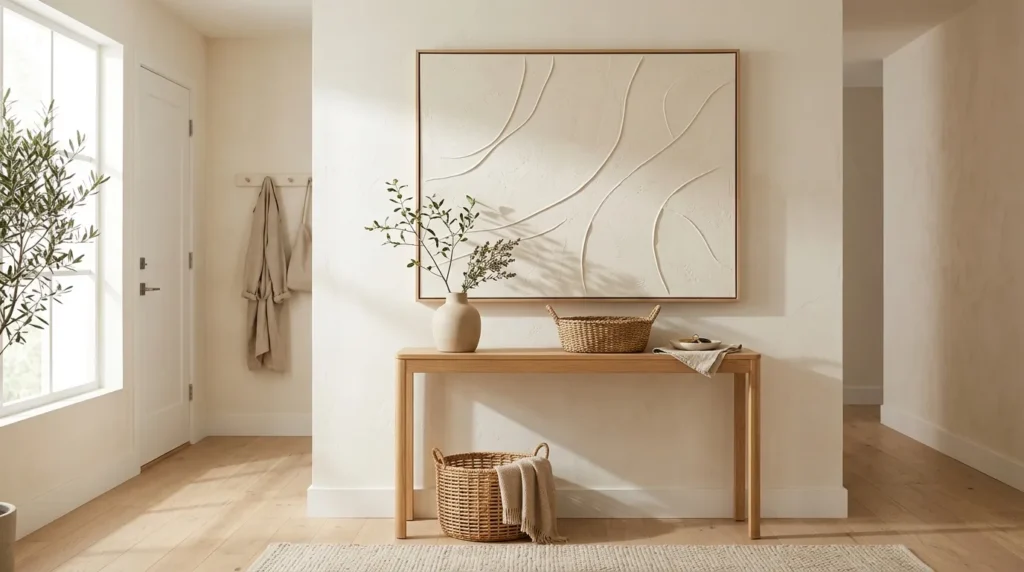
5. Minimal Texture Lines
Quick Benefits
- Creates subtle dimension
- Works in minimalist spaces
- Easy to customize
- Uses a restrained color palette
- Adds interest without visual clutter
Why It Works
Sometimes the most effective artwork is the quietest.
Minimal texture lines can create movement across a canvas without overwhelming the room.
This technique is particularly useful when your furniture, rugs, or lighting already provide strong visual elements.
Instead of introducing another bold pattern, the artwork adds texture that becomes noticeable when light moves across the surface.
The result can feel sophisticated and almost architectural.
Think of it as a wall texture that happens to be art.
How To Style It
Use a canvas in a warm neutral shade.
Apply thin raised lines using a small palette knife or texture tool.
You can create horizontal lines, vertical lines, gentle curves, or a loose abstract pattern.
Avoid making every line identical.
Small differences can make the artwork feel handmade.
For an understated piece, keep the entire canvas one color.
For additional depth, paint the raised lines a slightly warmer or cooler shade.
Use a slim frame for a finished appearance.
This style works particularly well above a narrow console, beside a doorway, or in a bedroom where you want decoration that does not dominate the room.
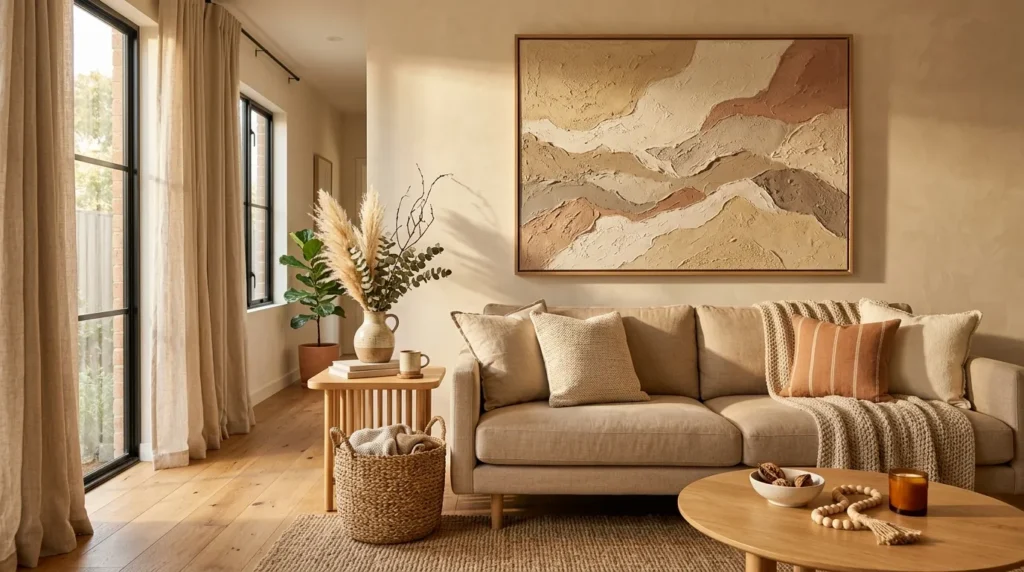
6. Earth Tone Texture
Quick Benefits
- Creates a warm atmosphere
- Works beautifully with natural materials
- Adds depth through layered color
- Complements neutral interiors
- Feels cozy and organic
Why It Works
Earth tones can make textured artwork feel especially rich.
Colors such as sand, clay, warm beige, muted brown, cream, and soft olive connect naturally with materials commonly found in home decor, including wood, linen, rattan, stone, and leather.
Texture adds another layer to this palette.
Instead of seeing only color, you see and feel the variation across the artwork.
This combination is ideal for rooms that lean toward organic modern, warm minimalist, Southwestern-inspired, rustic, or contemporary styles.
How To Style It
Choose two or three earthy shades.
Begin with a warm neutral base.
Add texture in broad organic sections.
Allow the first layer to dry before adding a second color.
Try overlapping areas rather than creating rigid geometric divisions.
A small amount of darker brown can create depth, but keep the darkest tone limited.
You can also incorporate a subtle sandy texture using an appropriate fine-texture medium.
Frame the finished canvas in natural wood.
Pair it with woven baskets, linen pillows, ceramic accessories, and greenery.
The artwork should feel connected to the materials already present in the room.
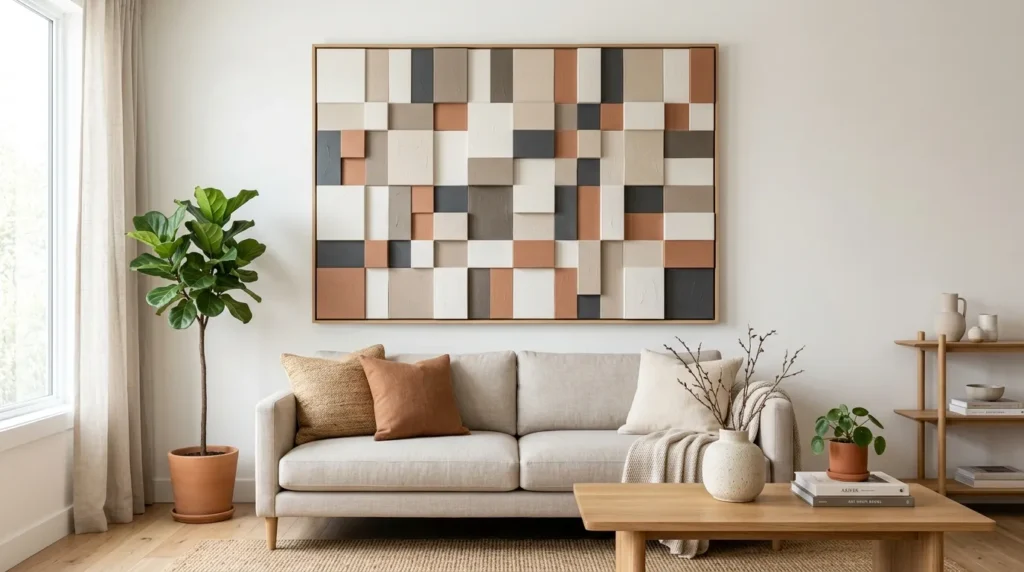
7. Textured Color Blocks
Quick Benefits
- Creates a contemporary appearance
- Adds structure to abstract art
- Easy to personalize
- Works with bold or muted colors
- Looks great in modern rooms
Why It Works
Color-block artwork provides an easy way to combine texture with graphic shapes.
Instead of creating a completely freeform composition, divide the canvas into several areas.
Each area can receive a different color, texture, or finish.
The geometric structure makes the artwork feel intentional, while the raised surfaces keep it from looking flat.
This is a particularly good project if you enjoy modern interiors but still want your artwork to have a handmade quality.
How To Style It
Choose a limited palette.
For a sophisticated neutral version, use ivory, beige, taupe, and charcoal.
For a warmer composition, add terracotta or muted rust.
Sketch the shapes first.
Use painter’s tape where you want crisp boundaries.
Apply texture to one or two sections and leave others smooth.
Once dry, paint each area carefully.
Remove tape according to the manufacturer’s recommendations for the materials you use.
Frame the canvas in black for a sharper contemporary appearance or natural wood for warmth.
A large color-block canvas can work particularly well above a modern sofa or dining table.
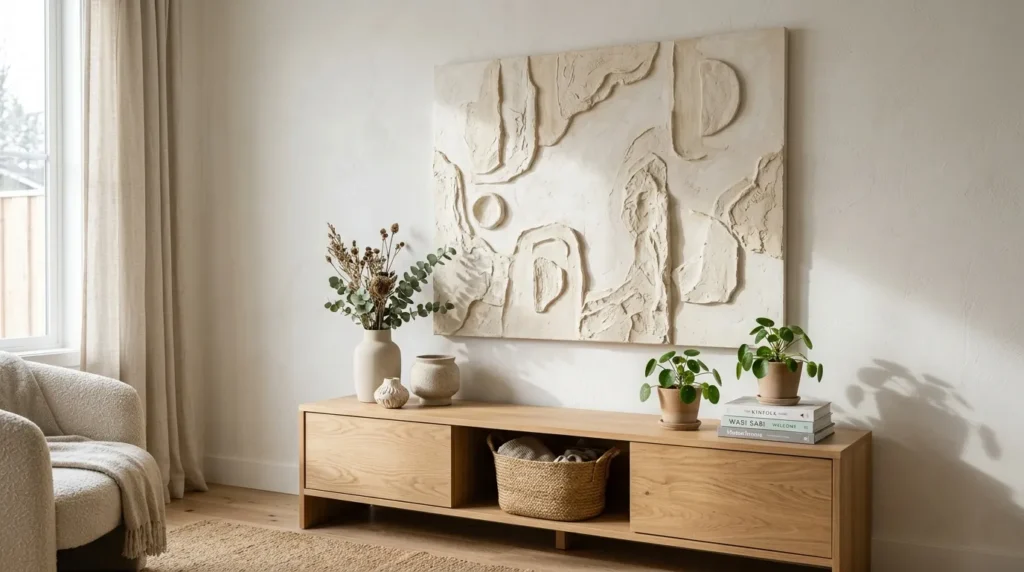
8. Organic Plaster Forms
Quick Benefits
- Mimics natural materials
- Creates sculptural depth
- Works with organic interiors
- Looks sophisticated in neutral colors
- Allows creative freedom
Why It Works
Organic plaster forms are inspired by the irregular shapes found in stone, clay, sand, and natural landscapes.
Instead of perfect circles or straight lines, the design uses imperfect edges and gently raised forms.
That irregularity is part of the appeal.
It creates an artwork that feels handmade and natural rather than mechanically produced.
This style works beautifully with warm minimalist interiors because it introduces texture without requiring bright colors.
The shadows created by raised areas make the artwork change subtly throughout the day.
How To Style It
Start with a warm white or cream canvas.
Sketch a few irregular forms.
Use a suitable texture or modeling medium to build the shapes.
Smooth some areas while leaving others slightly rough.
Do not worry about making the surface completely uniform.
Once dry, paint the entire piece in one neutral shade for a sculptural monochromatic look.
Alternatively, use two closely related colors to emphasize individual forms.
A raw wood frame can enhance the natural quality.
Place the artwork near linen upholstery, light wood furniture, ceramic accessories, and woven textures.
9. Tonal Landscape Canvas
Quick Benefits
- Creates calming wall art
- Adds depth without bright colors
- Works in bedrooms and living rooms
- Can be highly personalized
- Combines texture and painting
Why It Works
You do not need to be a landscape painter to create artwork inspired by nature.
A tonal landscape can suggest distant hills, mountains, dunes, or rolling fields using simple shapes and subtle changes in color.
Texture can help define the different layers.
A raised foreground may appear closer, while smooth lighter sections can suggest distance.
The technique is particularly effective when you use related shades instead of strong contrast.
Soft beige, cream, taupe, dusty blue, muted green, and warm gray can create a peaceful landscape-inspired palette.
How To Style It
Begin with a neutral base.
Sketch several overlapping horizon lines.
Build texture gradually so the foreground has more dimensionality than the background.
Use lighter colors toward the distance and slightly deeper shades toward the foreground.
Keep the shapes broad and simplified.
You are creating an impression rather than a realistic scene.
For a bedroom, choose calming neutrals.
For a living room, you could introduce muted blue gray or sage.
A natural wood frame can reinforce the connection to nature.
Hang one large piece above a bed, sofa, or console for a serene focal point.
10. Layered Gallery Set
Quick Benefits
- Creates a custom gallery wall
- Works with multiple room sizes
- Lets you experiment with techniques
- Provides visual repetition
- Can be built gradually
Why It Works
One textured canvas can look beautiful, but a coordinated collection can have an even stronger effect.
A set of smaller canvases allows you to repeat colors, shapes, and textures while varying the compositions.
The artwork feels connected without requiring every piece to be identical.
This is particularly useful for large blank walls where one small canvas would look undersized.
It also allows you to experiment.
You might create one wave design, one abstract shape, one botanical piece, and one organic plaster canvas while keeping the palette consistent.
How To Style It
Choose a unified color palette before starting.
For example, use warm white, cream, beige, taupe, and natural brown.
Create three to five canvases in different sizes.
Repeat at least one element across the collection, such as curved shapes or raised lines.
Lay everything on the floor before hanging.
Experiment with spacing and alignment.
Keep the overall arrangement balanced rather than perfectly symmetrical.
Matching natural wood frames can make the collection feel cohesive.
Alternatively, leave the canvases unframed for a more relaxed contemporary appearance.
A gallery set works beautifully above a sofa, dining area, staircase, or large bedroom wall.
How To Make Textured Canvas Art Look Expensive
The finished appearance often depends less on the cost of materials and more on execution.
Choose A Strong Palette
Too many colors can make handmade art look less cohesive.
Stick with a small group of complementary shades.
Build Texture Carefully
Thick texture can crack if applied incorrectly or if layers are not allowed to dry properly.
Follow the instructions for your chosen medium.
Use Large Shapes
Oversized forms often look more sophisticated than dozens of tiny details.
Leave Negative Space
Not every part of the canvas needs texture.
Frame It Thoughtfully
A simple natural wood, black, or white frame can dramatically change the finished piece.
Match The Room
Pull one or two colors from your existing decor.
The artwork should feel like part of the room rather than something randomly added to it.
Best Colors For DIY Textured Canvas
Neutral textured art is especially versatile, but there are plenty of directions you can take.
Warm White
Clean, soft, and minimalist.
Beige
Adds warmth without becoming visually heavy.
Taupe
Works beautifully with wood and natural materials.
Terracotta
Adds earthy warmth.
Sage Green
Creates a subtle botanical feeling.
Dusty Blue
Works well in calm bedrooms and coastal-inspired rooms.
Charcoal
Adds contrast to lighter interiors.
Soft Brown
Creates an organic, grounded appearance.
When selecting colors, test them in the room where the artwork will hang. Natural and artificial lighting can change how neutral colors appear.
How To Hang Textured Canvas Art
The size of the artwork should relate to the furniture beneath it.
A common mistake is choosing art that is too small for a large sofa or console.
For a single statement piece, look for a size that visually anchors the furniture without overwhelming it.
For gallery arrangements, place the pieces on the floor first.
Photograph the arrangement from standing height before transferring it to the wall.
Keep spacing relatively consistent.
Also consider the texture itself.
Highly dimensional artwork may cast stronger shadows, so lighting direction matters.
Avoid placing heavy textured pieces where they could be easily bumped.
Use appropriate hanging hardware for the artwork’s weight and the wall type, following manufacturer recommendations.
FAQ
What can I use to create textured canvas art?
Depending on the design, you can use modeling paste, texture paste, suitable joint compound, plaster-style mediums, palette knives, brushes, sponges, and acrylic paint. Always choose a product appropriate for your canvas and follow its application and drying instructions. Very thick layers may require additional support or longer drying time.
Is textured canvas art easy for beginners?
Yes. Many textured art techniques are beginner-friendly because they rely more on shapes and texture than precise painting skills. Simple waves, arches, organic forms, and neutral abstract designs are particularly approachable. Start with a small canvas and practice your texture technique before working on a large statement piece.
How do I keep textured canvas from cracking?
Cracking can occur when texture is applied too thickly, dries unevenly, or is used in a way the product was not designed for. Follow the manufacturer’s instructions, build thick texture in appropriate layers, and allow each layer to dry completely. Using a suitable medium for the intended thickness is important.
What colors look best for textured wall art?
Warm white, cream, beige, taupe, soft brown, sage, muted blue, and terracotta are popular choices because they create dimension without overwhelming a room. The best color depends on your existing furniture, flooring, textiles, and lighting. Neutral artwork is especially versatile in modern and organic interiors.
How do I make DIY canvas art look professional?
Use a restrained color palette, create intentional shapes, allow texture to dry properly, and avoid overcrowding the canvas. Framing can also make a major difference. Natural wood, black, white, or slim metallic frames can complement different interior styles. Most importantly, take time with the finishing details.
Can I make textured art without painting skills?
Absolutely. Many textured canvas designs rely on sculptural forms rather than realistic painting. Simple curves, arches, lines, raised botanical shapes, and abstract blocks can look sophisticated without requiring traditional artistic techniques. Start with one or two shapes and focus on creating a balanced composition.
Where should I hang textured canvas art?
Large textured canvases work well above sofas, beds, dining tables, consoles, and substantial entryway furniture. Smaller pieces can work in hallways, bedrooms, shelves, or gallery arrangements. Consider the scale of the wall and furniture so the artwork does not appear lost or disproportionately large.
Conclusion
DIY textured canvas art is one of those projects where a few simple materials can create an unexpectedly sophisticated result.
You do not need to be an experienced painter to make something beautiful. Texture does much of the visual work, creating shadows, dimension, and movement that can make a simple neutral canvas feel like a custom piece of artwork.
Start with a technique that feels manageable.
Soft plaster waves are excellent for beginners. Neutral abstract shapes allow plenty of creative freedom. Botanical forms can bring a natural feeling into a bedroom or living room, while arches and geometric blocks create a more contemporary appearance.
If you love warm interiors, experiment with cream, beige, taupe, clay, and natural brown. For cooler rooms, soft blue gray or muted sage can introduce color without overpowering the space.
The most important thing is to let the artwork work with your room.
Look at your furniture, flooring, textiles, lighting, and existing colors before choosing the final palette. Repeat one or two of those elements in the artwork so it feels intentionally connected.
And remember that handmade does not have to mean imperfectly finished.
Take your time with the texture, allow each layer to dry properly, clean the edges, and choose an appropriate frame or hanging method.
Whether you make one oversized statement canvas or a collection of smaller pieces, the result can give your home something store-bought artwork cannot always provide: a piece that was created specifically for your space.
Related Articles
- 10 DIY Wall Decor Ideas for a Beautiful Home
- 11 Easy DIY Canvas Art Ideas for Beginners
- 10 Neutral Wall Art Ideas for Modern Interiors
- 10 DIY Living Room Decor Projects
- 11 Bedroom Wall Decor Ideas for a Cozy Space