Round Rug Under a Round Table: How Much Border Carpet Should Show?
Placing a round rug under a round table creates a sense of harmony in your dining space by echoing the soft curves of the furniture. Achieving the perfect balance depends on selecting a diameter that provides enough clearance for chairs to slide out without catching on the edge.
When you get the proportions right, you define the zone, protect your floors, and add a layer of texture that grounds the entire room. This guide breaks down the simple math and design principles needed to ensure your chosen design frame fits your specific furniture setup perfectly, helping you avoid common pitfalls like rugs that are too small or visually cluttered.
Calculating the Ideal Rug Diameter
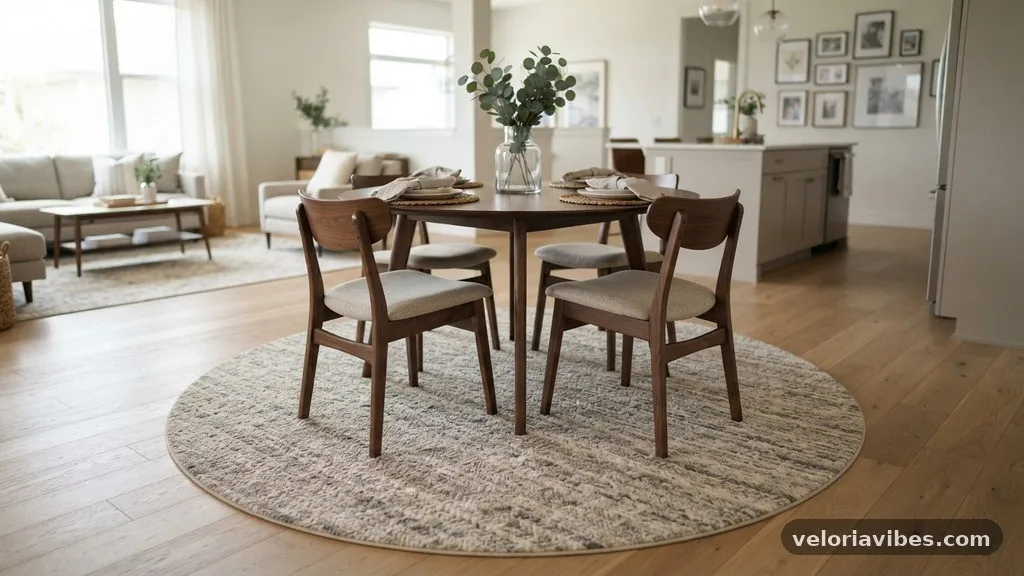
The golden rule for any dining area is that the rug must extend far enough beyond the tabletop to accommodate the chairs while they are in use. For a round dining setup, you should aim for the rug to extend at least 24 to 30 inches beyond the edge of your table on all sides.
This distance ensures that when a guest sits down and pushes their chair back, the back legs remain firmly on the carpet. If the rug is too small, the chair legs will constantly snag on the edge, causing frustration and potential damage to the rug fibers over time.
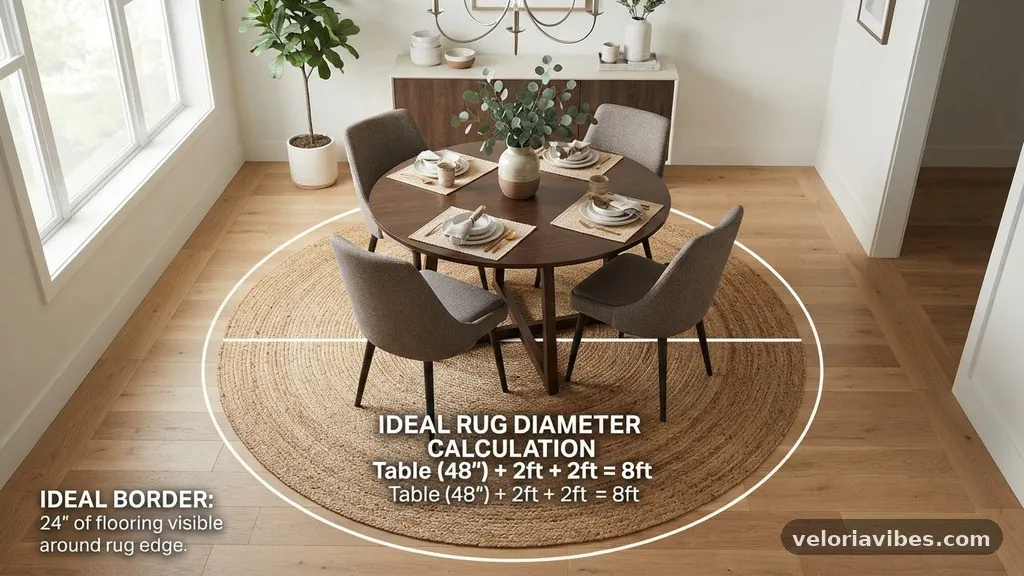
To find your target size, start by measuring the diameter of your table. If your table is 48 inches wide, you need to add 24 to 30 inches to both sides of that measurement. This calculation means adding 48 to 60 inches total to the table’s diameter.
In this example, your rug should be between 96 and 108 inches, or 8 to 9 feet in diameter. Using this formula prevents the common mistake of buying a rug that barely clears the table base, which makes the room feel cramped and unbalanced.
Considering Chair Movement and Floor Clearance
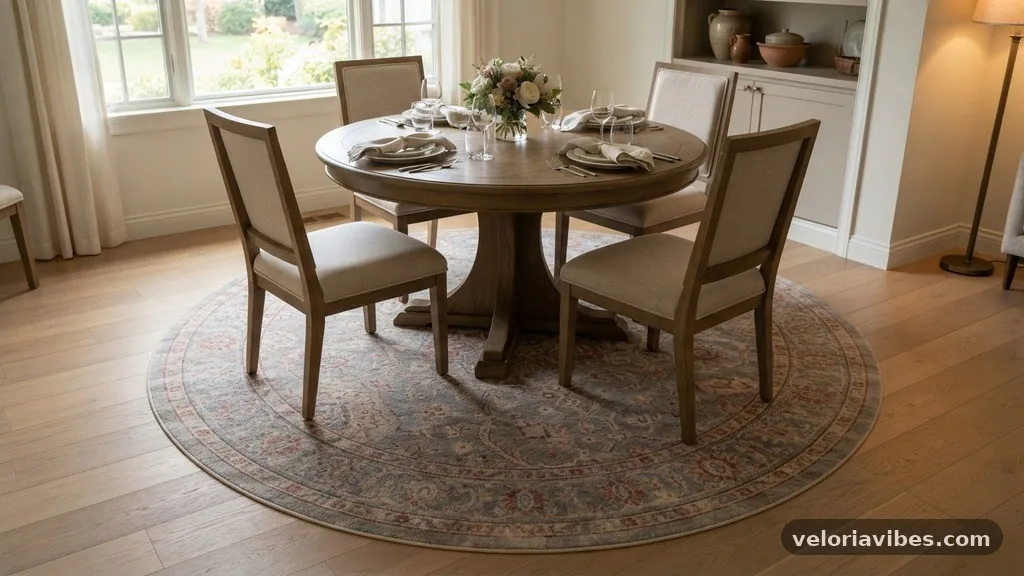
When guests pull out their chairs to sit or stand, the movement is the primary functional test of your rug choice. A rug that is too small forces the chair legs to balance on the edge of the carpet, creating an uneven surface that is both annoying and potentially unsafe.
You want the chairs to remain on a flat, stable surface throughout their full range of motion. By ensuring the rug extends well beyond the footprint of the table and chairs combined, you create a seamless experience for your diners.
Think about the weight of your chairs as well. Heavier wooden chairs with narrow legs can leave deep indentations or even damage the pile of a high-end carpet.
Choosing a low-pile or flat-weave rug is often the best choice for dining areas because it provides a stable base and is much easier to clean when spills inevitably happen. If you have limited space, you might be tempted to shrink the rug size, but it is better to have no rug at all than one that creates a tripping hazard or an awkward transition between the carpet and the hard floor.
Matching Shapes to Room Architecture
While a round rug under a round table is the most intuitive choice, it isn’t the only option available for your home. Using a circular rug in a square or rectangular room can help soften the sharp angles of the walls and cabinetry.
This design choice draws the eye toward the center of the room, creating an intimate focal point that feels intentional. However, if your dining room is quite long or narrow, a round rug might leave too much empty space on the sides, making the room feel disconnected.
In larger, open-concept spaces, a circular rug helps delineate the dining area without blocking the flow of traffic. It acts as a visual anchor, signaling that this specific area is reserved for meals.
If you are struggling with a room that feels too boxy or rigid, the curved lines of a round rug provide the perfect counterbalance. Always walk around the space before finalizing your purchase to see how the rug interacts with the surrounding furniture and the natural pathways through the room.
Selecting the Right Material for Dining Areas
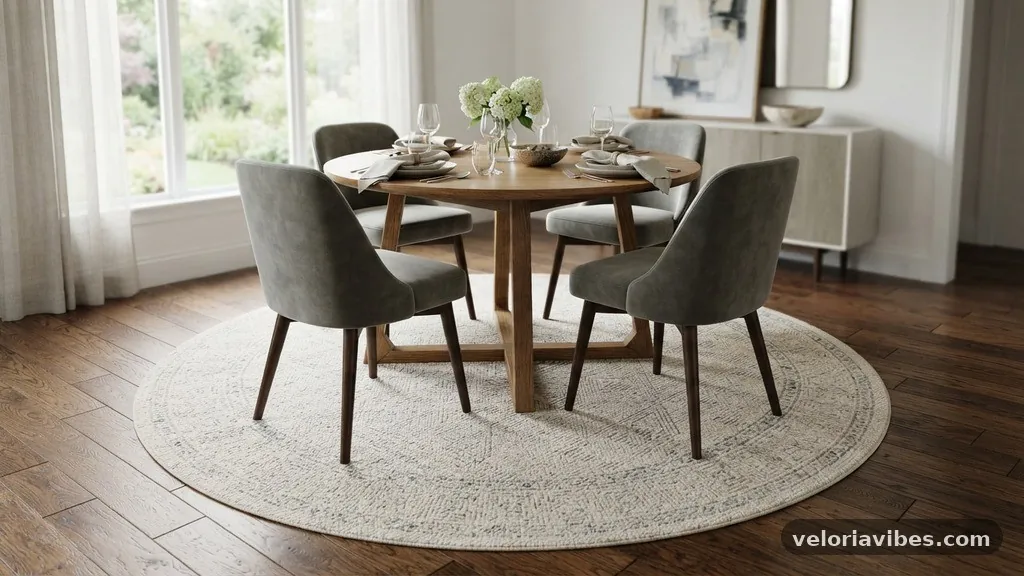
Dining rooms are high-traffic zones prone to crumbs, spills, and heavy furniture movement. Because of this, the material of your rug is just as important as its size.
Natural fibers like wool are excellent because they are inherently durable and resist stains, though they come at a higher price point. Synthetic options like polypropylene are incredibly resilient and often feature stain-resistant treatments, making them a practical choice for families with children or pets.
Avoid long-pile shag rugs at all costs. These are a nightmare to clean and make it nearly impossible to slide chairs in and out smoothly. Instead, look for a tight, low-profile weave that allows chair legs to glide easily.
You can find more information on material durability and maintenance through the Carpet and Rug Institute, which offers detailed insights into the longevity and safety standards of various flooring products. Choosing the right material ensures your investment remains beautiful for years to come.
Visual Balance and Room Proportion
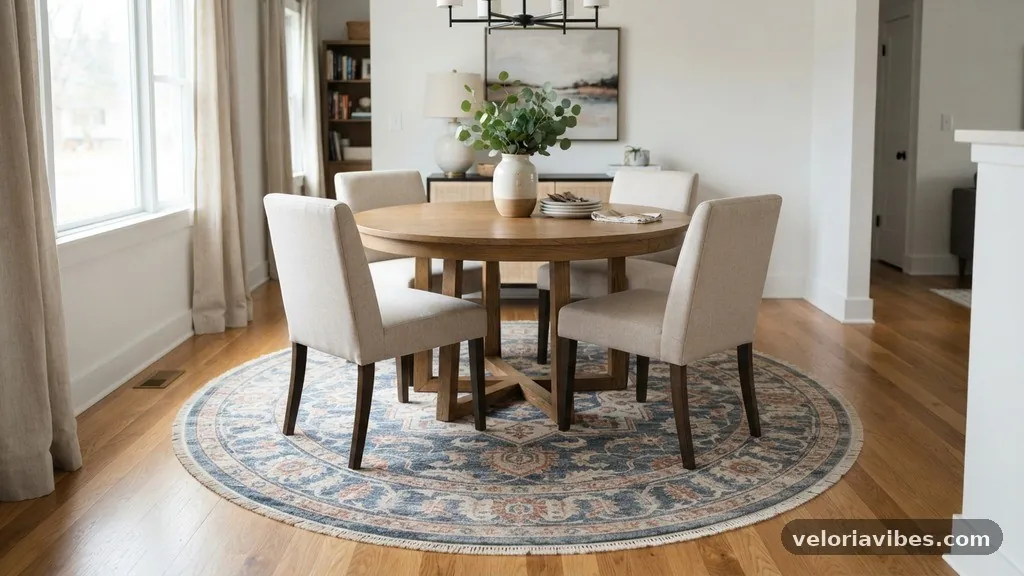
The scale of your furniture relative to the room size plays a massive role in how the space feels. A tiny table with a giant rug will make the table look lost, while a massive table on a small rug will make the entire arrangement feel top-heavy and chaotic.
You want the rug to act as a frame for the table, not compete with it. If your dining table is the centerpiece of a formal room, ensure the rug color and pattern complement the overall color palette rather than clashing with it.
Consider the relationship between the rug and the floor underneath. If you have beautiful hardwood floors, you might want a rug that leaves a border of exposed wood around the perimeter of the room.
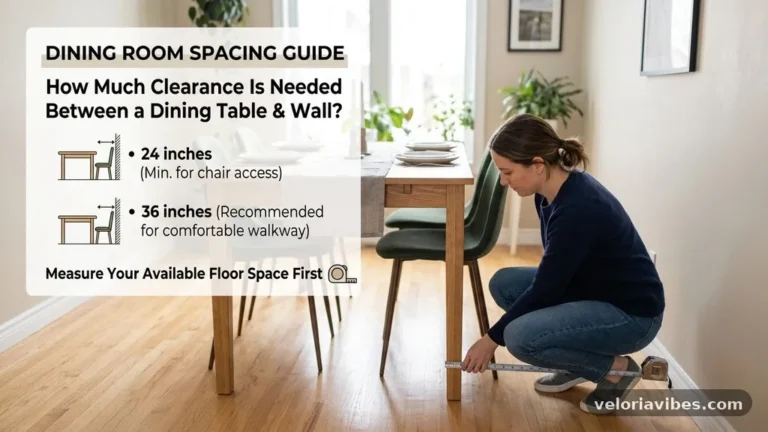
This provides a nice contrast and prevents the room from feeling like it is entirely covered in carpet. A good rule of thumb is to leave at least 12 to 18 inches of floor space between the edge of the rug and the walls, which keeps the room feeling airy and spacious.
Addressing Obstacles and Room Layout
Before you buy, look for immovable objects like floor vents, electrical outlets, or door swings. A round rug can sometimes be tricky if it sits directly over a floor vent, as it can restrict airflow or cause the rug to bunch up.
Similarly, if your dining area is near a doorway, ensure the rug isn’t so thick that it prevents the door from opening and closing smoothly. These practical details are often overlooked but are essential for a functional, frustration-free room.
If you find that your desired rug size interferes with a doorway, you might need to adjust your layout or select a slightly smaller size. However, always prioritize the seating clearance first.
If you have to choose between a rug that fits the room perfectly and one that allows for comfortable seating, prioritize the seating. An uncomfortable dining experience will eventually lead you to remove the rug altogether, regardless of how good it looks.
The Role of Rug Pads
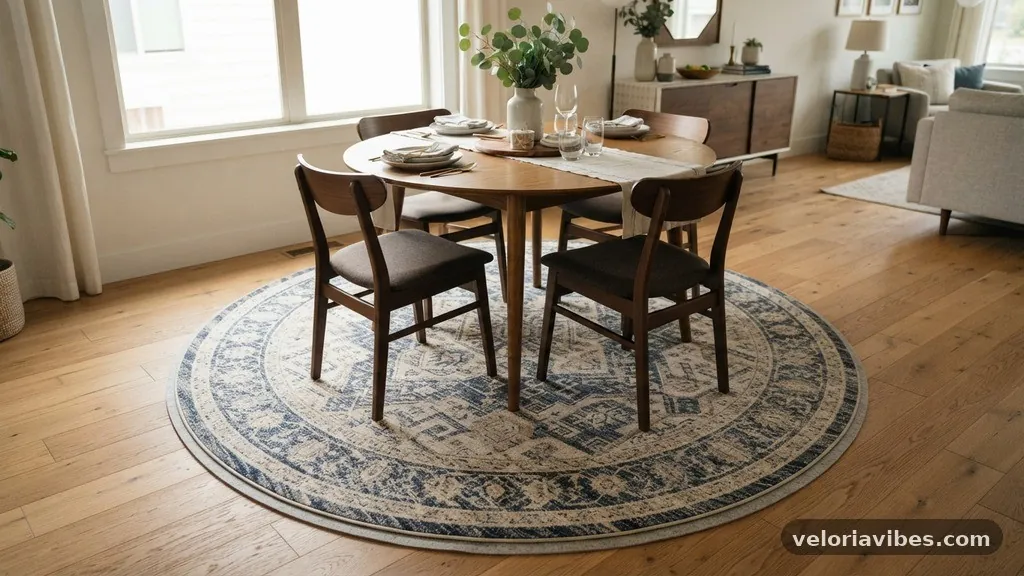
Never skip the rug pad. A quality pad prevents the rug from shifting when chairs are pulled out and adds an extra layer of cushioning that protects your floor.
It also acts as a grip, ensuring that your round rug stays perfectly centered under your round table. Without a pad, the rug will eventually bunch up or wrinkle, creating a messy appearance that ruins the clean lines you worked so hard to achieve.
Choose a pad specifically designed for hard surfaces if you have wood, tile, or laminate flooring. The pad should be slightly smaller than the rug itself—usually about an inch smaller all the way around—so that it remains completely hidden from view. This simple addition is one of the most effective ways to extend the life of your rug and keep your dining area looking polished and professional.
Handling Patterns and Textures
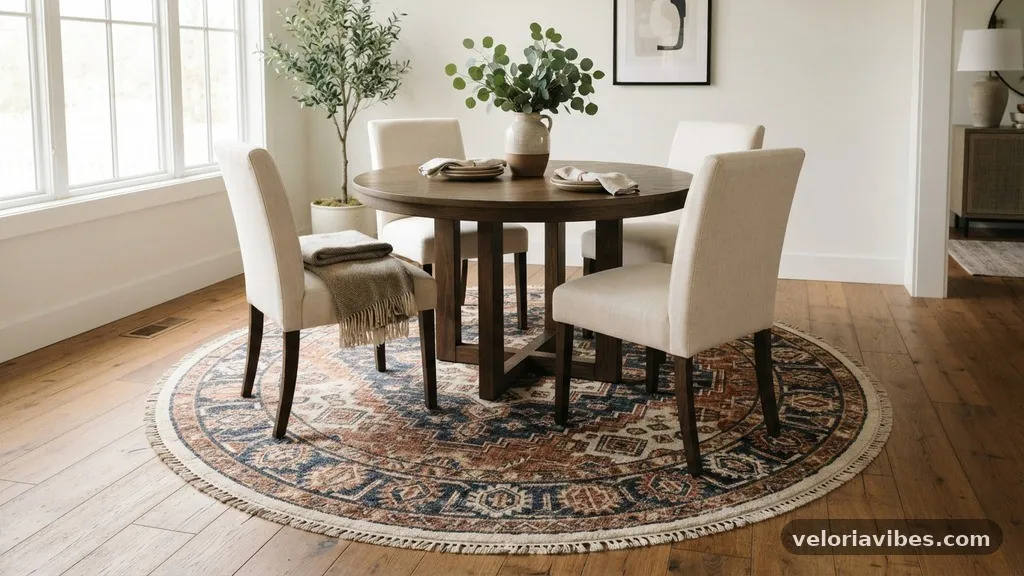
When working with a round rug, the pattern can significantly affect the perception of space. Bold, busy patterns can make a small room feel crowded, while solid colors or subtle textures can make a room feel larger and more serene.
If your dining chairs are upholstered in a patterned fabric, consider a solid-colored rug to avoid visual competition. Conversely, if your dining set is simple and minimalist, a patterned rug can add the personality and warmth the room needs.
Consider the texture of the rug as well. A jute or sisal rug adds a natural, organic feel that works well in coastal or farmhouse-inspired homes.
A flat-weave cotton rug offers a softer touch and is often machine washable, which is a significant advantage for dining areas. Think about the mood you want to create and select a texture that reinforces that aesthetic while meeting the practical demands of your household.
Common Mistakes to Avoid
One of the most frequent errors is choosing a rug that is exactly the same size as the tabletop. This creates a visual “floating” effect that looks disjointed and makes the rug appear like a coaster rather than an intentional design element.
Another common mistake is failing to account for the chair legs. If the back legs of your chair are off the rug while the front legs are on it, the chair will sit at an angle, which is uncomfortable for guests and bad for your posture.
Avoid rugs with fringe or decorative tassels in a dining room. These features are difficult to clean and can become caught in chair legs, leading to tripping hazards or damaged fringe. Stick to clean, finished edges that provide a smooth transition from the rug to the floor.
Finally, don’t be afraid to measure twice. It is much easier to spend an extra ten minutes with a tape measure before you order than it is to deal with the hassle of returning a rug that doesn’t fit your space.
FAQ: Common Questions About Dining Rugs
Does a round rug look good under a round table?
Yes, a round rug under a round table is a classic design choice that reinforces the shape of the furniture. It creates a cohesive, intentional look that softens the room’s edges and centers the dining area perfectly.
What is the minimum size for a rug under a round dining table?
The rug should extend at least 24 to 30 inches beyond the edge of the tabletop on all sides. This ensures that the chairs remain entirely on the rug even when pulled out for seating.
Should a rug be lighter or darker than the dining table?
This depends on your overall aesthetic. A rug that is darker than the table can ground the furniture, while a lighter rug can make the space feel brighter and more open. Consider the contrast against your flooring as well.
Can I use a square rug under a round table?
You certainly can. A square or rectangular rug under a round table can create a striking geometric contrast. However, ensure the rug is large enough so that the corners don’t look awkward or create tripping hazards in the flow of traffic.
Final Thoughts on Dining Room Styling
Achieving the right look with a round rug under a round table is all about respecting the scale of your furniture and the functionality of your dining space. By measuring your table, adding the necessary clearance for chair movement, and selecting a durable, low-profile material, you can create a dining area that is as practical as it is stylish. Remember that the rug serves as the foundation for your gathering space, so take the time to choose one that reflects your personal taste while standing up to the rigors of daily use.
If you find yourself stuck between two sizes, always opt for the larger one if your floor space allows. A rug that is slightly too big will almost always look better and function more effectively than one that is even an inch too small. We hope this guide helps you feel confident in your design choices; please let us know how your dining room transformation turns out or reach out if you have further questions about balancing your home decor.