
10 Relaxing Aesthetic Bedroom Ideas
A bedroom should be more than a place to sleep. Ideally, it should feel like a quiet retreat where you can close the door, slow down, and leave the busyness of the day behind.
Creating that atmosphere does not necessarily require expensive furniture or a complete bedroom makeover. Sometimes the biggest difference comes from a softer color palette, better lighting, natural textures, less visual clutter, and a few carefully chosen details that make the room feel personal.
An aesthetic bedroom can still be practical. In fact, the most relaxing spaces usually combine beauty with function. A beautifully styled bed is much more inviting when the bedding is genuinely comfortable. A minimalist nightstand feels better when it still has room for the things you use every evening. A decorative lamp becomes more useful when it provides warm, comfortable light.
If you’re anything like me, you probably want a bedroom that looks beautiful in natural light but also feels cozy at night.
That balance is what makes relaxing bedroom design so appealing.
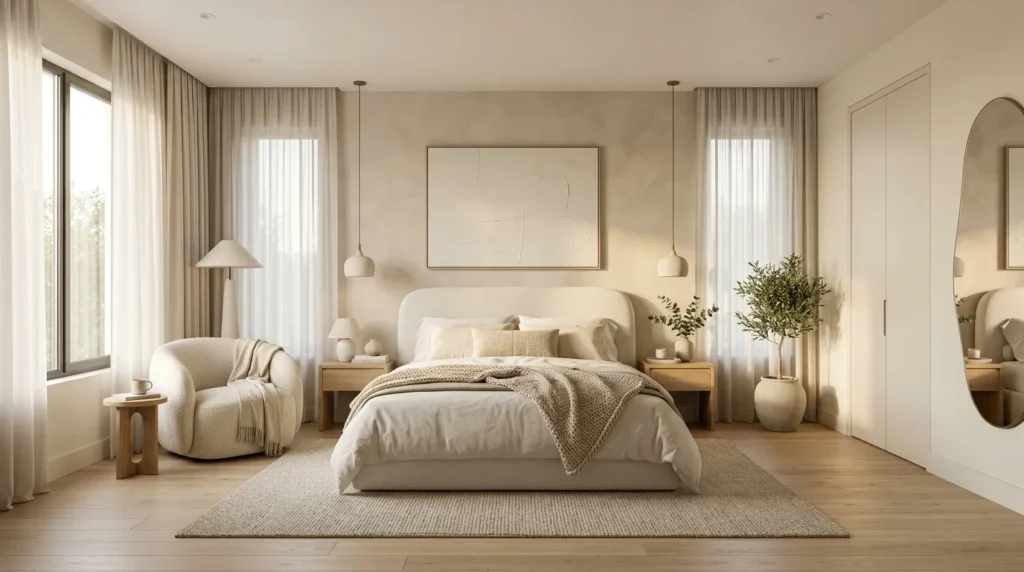
Soft creams, warm whites, muted greens, dusty beige, natural wood, linen, woven textures, and subtle patterns can create a calm foundation. From there, you can introduce personal touches without making the room feel visually crowded.
The ideas below focus on creating a bedroom that feels peaceful rather than overly decorated.
You will find practical ways to layer bedding, soften lighting, create a calming color palette, bring in natural materials, improve bedside styling, and make the entire room feel more intentional.
Whether you have a spacious primary bedroom, a compact apartment bedroom, or a guest room that needs more personality, these ideas can be adapted to your space.
The goal is simple: create a bedroom you genuinely look forward to returning to at the end of the day.
Table of Contents
1. Soft Neutral Palette
Build a peaceful foundation with warm, understated bedroom colors.
2. Layered Linen Bedding
Create a relaxed bed with breathable textures and inviting layers.
3. Warm Ambient Lighting
Use gentle lighting to make evenings feel calmer and more comfortable.
4. Natural Wood Details
Bring warmth and organic character into the room with natural materials.
5. Minimal Nightstand
Keep bedside essentials accessible without creating visual clutter.
6. Cozy Reading Corner
Turn an unused corner into a quiet place for reading and relaxing.
7. Textured Accent Wall
Add subtle depth without overwhelming the peaceful atmosphere.
8. Soft Window Treatments
Use curtains and shades to control light while adding softness.
9. Calming Greenery
Bring natural color and texture into the bedroom with plants.
10. Clutter-Free Styling
Create visual breathing room by carefully editing the room.
1. Soft Neutral Palette
Quick Benefits
- Creates a calm visual foundation
- Makes the bedroom feel airy
- Works with many decor styles
- Makes layering easier
- Helps reduce visual distraction
Why It Works
Color has a powerful effect on how a room feels.
A soft neutral palette can make a bedroom appear calmer because the eye is not constantly moving between strong contrasts.
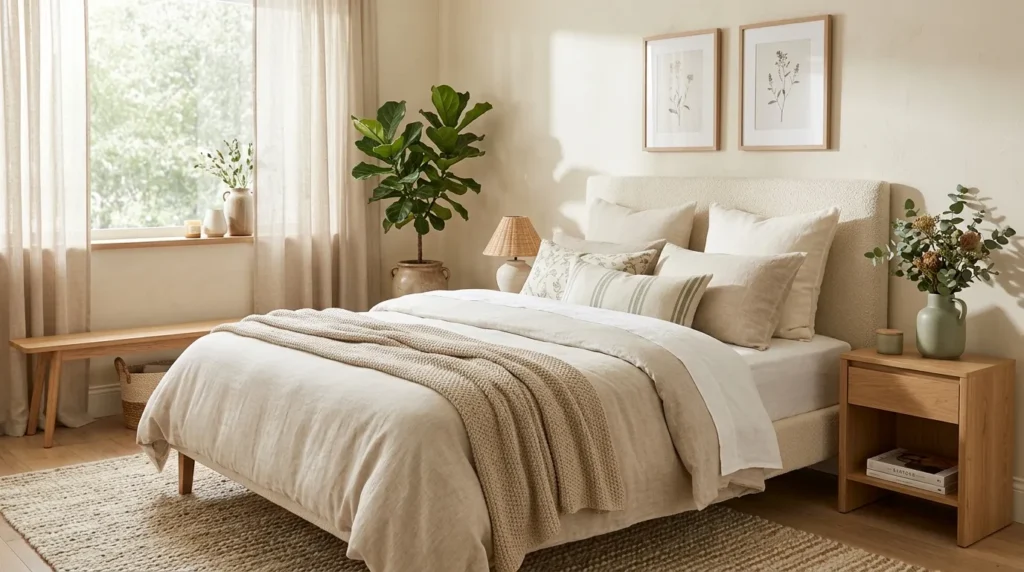
Warm white, cream, beige, taupe, oatmeal, and muted gray can create a gentle backdrop that allows textures to become the main source of interest.
This does not mean the bedroom needs to be completely plain.
The most successful neutral bedrooms usually contain several slightly different tones.
A cream wall might sit behind a warm beige upholstered bed, while ivory bedding, natural wood, and muted sage accessories add subtle variation.
The result feels layered without becoming visually loud.
How To Style It
Start with two or three main neutrals.
For example, use warm ivory on the walls, beige for the larger furniture, and cream for the bedding.
Then introduce one muted accent color.
Soft sage green, dusty blue, warm terracotta, or muted brown can work beautifully.
Avoid matching everything exactly.
Instead, vary the textures.
Use linen bedding, a woven rug, wood furniture, ceramic accessories, and soft cotton cushions.
If the room already has cool gray flooring or furniture, introduce warmer accessories to prevent the space from feeling cold.
Keep larger surfaces relatively simple so the bedroom retains its restful character.
2. Layered Linen Bedding
Quick Benefits
- Makes the bed more inviting
- Adds tactile interest
- Creates a relaxed appearance
- Works with neutral interiors
- Makes the bedroom feel finished
Why It Works
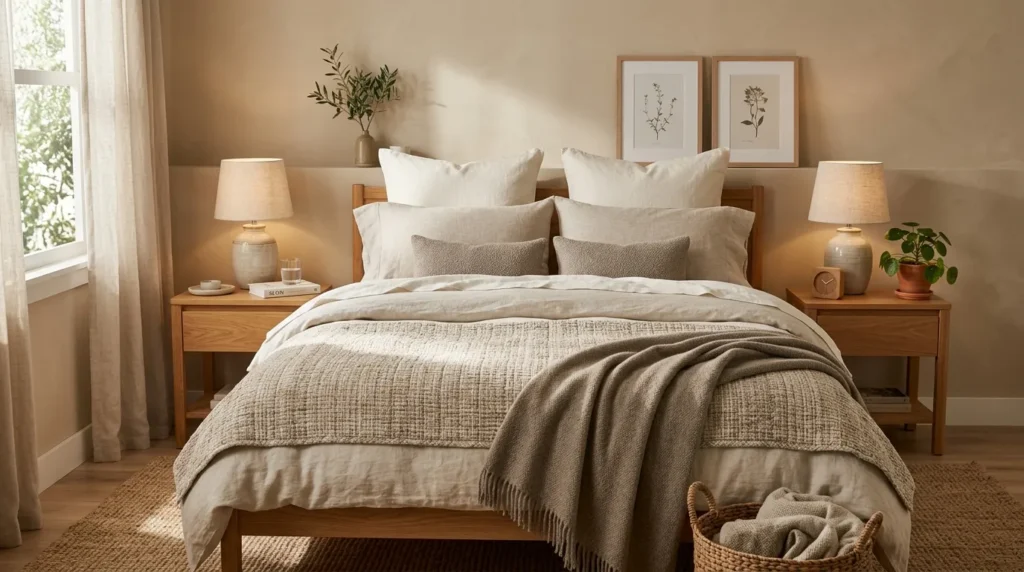
The bed is usually the largest visual element in the bedroom, so its styling has an immediate effect on the atmosphere.
Layered bedding creates softness without requiring complicated decoration.
Linen, cotton, quilted covers, lightweight throws, and textured cushions can create the slightly relaxed look associated with boutique hotels and cozy homes.
The key is avoiding excessive layering.
Too many pillows and blankets can make the bed look beautiful but become annoying when you actually need to sleep.
A relaxing bedroom should prioritize comfort.
Choose bedding that feels good against your skin and suits the climate of your home.
How To Style It
Begin with simple sheets.
Add a duvet or comforter in a warm neutral.
Fold a lightweight quilt or coverlet near the foot of the bed.
Add two sleeping pillows followed by one or two decorative layers.
Finish with a textured throw casually placed across one corner.
Linen works especially well when you want a slightly relaxed, lived-in appearance.
For a polished aesthetic, keep the colors within the same tonal family.
Cream, oatmeal, beige, and soft taupe create an effortless combination.
If you want more contrast, add a muted sage or dusty blue accent pillow.
3. Warm Ambient Lighting
Quick Benefits
- Creates a relaxing evening mood
- Softens the room visually
- Makes the bedroom feel warmer
- Improves bedside functionality
- Adds decorative interest
Why It Works
A bedroom can have beautiful furniture and still feel uncomfortable if the lighting is harsh.
Bright overhead lighting can make a relaxing space feel more functional than restful.
Layered lighting gives you more control.
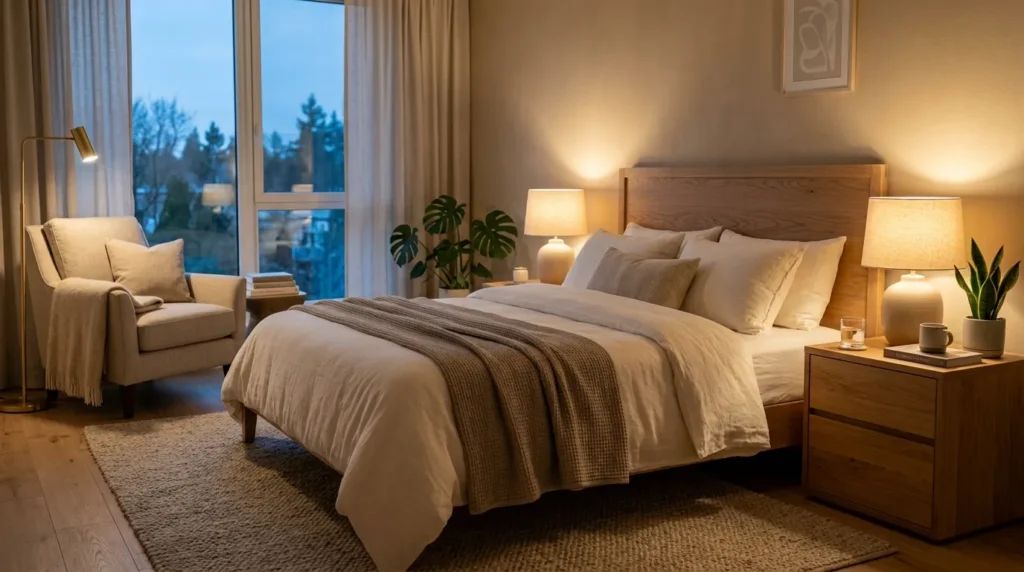
Instead of relying on one central fixture, use bedside lamps, wall sconces, floor lamps, or subtle accent lighting where appropriate.
The goal is to create several gentle pools of light.
This makes the room feel more intimate at night.
Warm-toned bulbs can also contribute to the cozy atmosphere, while dimmable fixtures allow you to adjust brightness according to the time of day.
How To Style It
Place matching bedside lamps on both sides of the bed if symmetry suits your room.
For a smaller bedroom, wall-mounted sconces can free up nightstand space.
A floor lamp beside a reading chair can create a dedicated relaxation zone.
Choose lamps with linen, fabric, paper, ceramic, or other materials that complement the room.
Avoid making every light identical.
Instead, coordinate finishes.
Warm brass, matte black, natural wood, and ceramic can all work depending on the overall style.
Keep the brightest lighting reserved for times when you genuinely need it.
4. Natural Wood Details
Quick Benefits
- Adds warmth
- Introduces organic texture
- Balances soft fabrics
- Works with neutral colors
- Makes the room feel grounded
Why It Works
Natural materials can make an aesthetic bedroom feel more connected to the outdoors.
Wood is especially useful because it adds warmth without requiring a strong color.
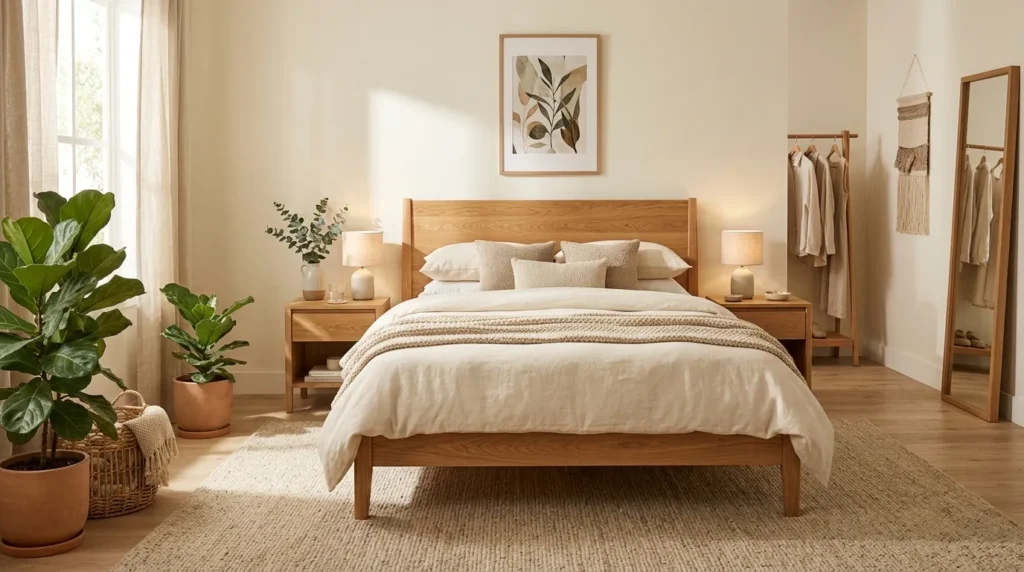
A natural oak nightstand, walnut dresser, bamboo bench, or wooden bed frame can give a neutral bedroom visual depth.
The contrast between wood and soft bedding is particularly appealing.
It prevents the room from becoming a collection of pale fabrics and creates a more balanced composition.
Different wood tones can work together, but the easiest approach is choosing one primary tone and repeating it throughout the space.
How To Style It
Start with one substantial wood element.
This might be the bed, dresser, or nightstands.
Repeat the tone through smaller pieces such as a tray, picture frame, stool, or decorative bowl.
Pair warm wood with cream walls and linen bedding.
Add woven baskets to reinforce the natural feeling.
If your furniture is dark wood, balance it with lighter bedding and curtains.
If your room already contains a lot of pale furniture, medium-toned wood can introduce needed depth.
Keep the finish natural-looking when possible.
5. Minimal Nightstand
Quick Benefits
- Reduces visual clutter
- Keeps essentials accessible
- Creates a calmer bedside area
- Makes cleaning easier
- Improves the room’s aesthetic
Why It Works
A cluttered nightstand can make the entire bedroom feel less peaceful.
Because it is one of the last things you see before sleeping and one of the first things you see in the morning, it deserves thoughtful attention.
A relaxing nightstand does not need to be empty.
It simply needs to contain the things that genuinely belong there.
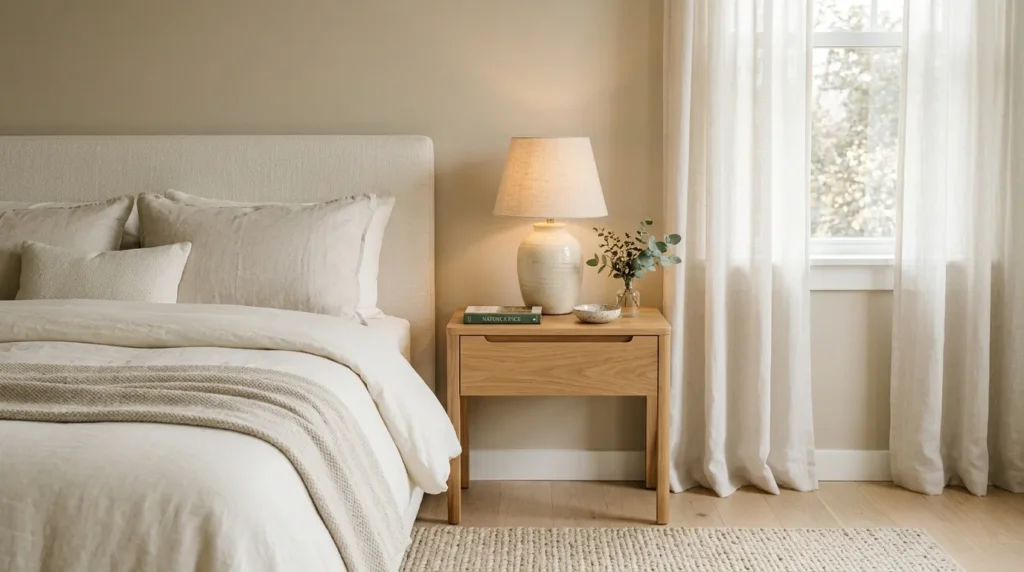
A lamp, book, water glass, and small decorative object may be enough.
Everything else can have a hidden home inside the drawer.
How To Style It
Start with a nightstand that offers at least a small amount of concealed storage.
Keep the surface simple.
Choose one lamp as the main focal point.
Add a small ceramic dish for jewelry or glasses.
Place one book underneath or beside the lamp.
A tiny plant can add life if the lighting and plant variety are appropriate.
Use a drawer organizer for chargers and personal items.
Avoid filling the surface with decorative objects simply because there is empty space.
The empty area is part of the design.
6. Cozy Reading Corner
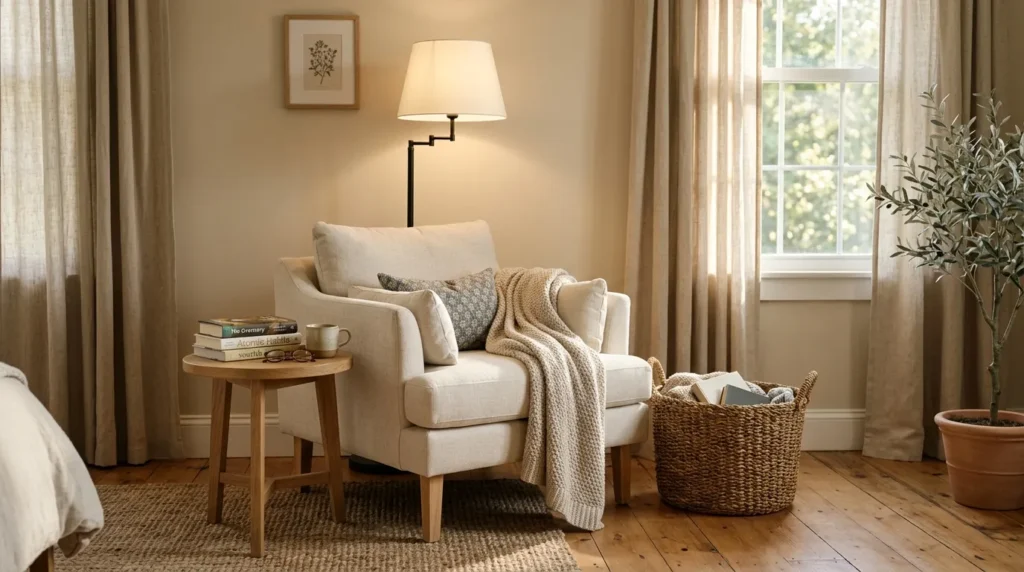
Quick Benefits
- Creates another relaxing zone
- Uses unused corners
- Adds personality
- Encourages screen-free downtime
- Makes the bedroom more functional
Why It Works
A bedroom can become more relaxing when it offers something to do besides sleeping.
A small reading corner creates a separate destination.
It also makes awkward corners feel intentional.
You do not need a large chair.
A compact upholstered armchair, comfortable lounge chair, or small bench may be enough.
Add a side table and appropriate reading light, and the corner becomes immediately more useful.
This works especially well in larger bedrooms where the area away from the bed feels empty.
How To Style It
Choose a chair in a fabric that complements the bedding.
Cream boucle, linen, soft cotton, or muted leather can work beautifully.
Add a small round side table.
Place a floor lamp nearby.
Use a basket to hold a blanket or a few books.
Keep the area visually simple.
A single piece of artwork above the chair can provide a focal point.
If your bedroom is small, consider a compact chair with narrow arms rather than a large lounge chair.
7. Textured Accent Wall
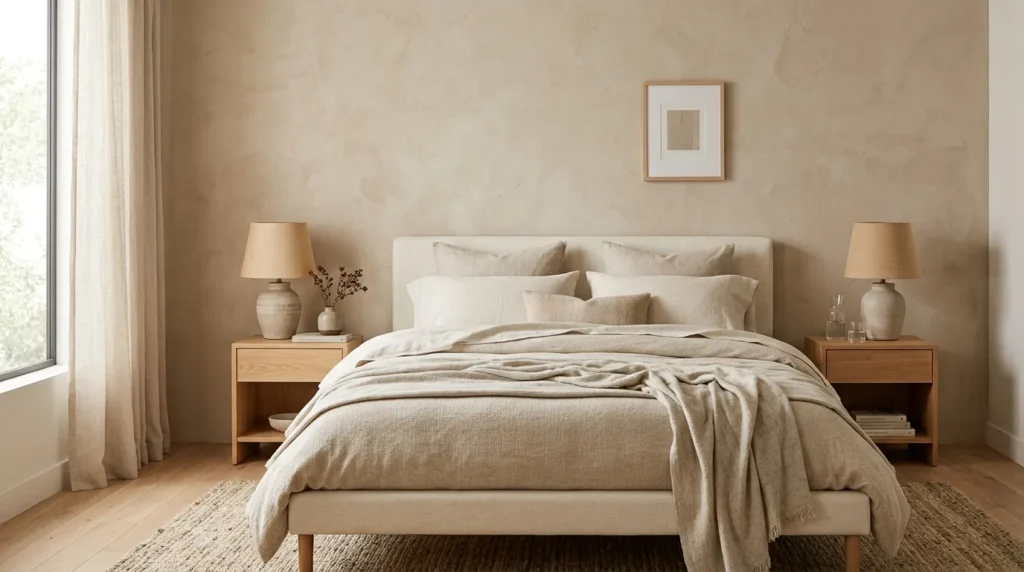
Quick Benefits
- Adds depth
- Creates a focal point
- Makes neutral rooms more interesting
- Can emphasize the bed
- Adds personality without bright color
Why It Works
A relaxing bedroom does not need a dramatic accent wall.
Subtle texture can create the same sense of visual interest while preserving a calm atmosphere.
Depending on the room, this could mean limewashed walls, subtle plaster-inspired finishes, vertical wood slats, grasscloth-style wallpaper, or another suitable textured treatment.
The important part is restraint.
The wall behind the bed is often the best location because the bed already acts as the room’s main focal point.
How To Style It
Choose a finish that stays within your existing color palette.
A warm beige textured wall can add dimension to an ivory room.
A soft taupe treatment can complement cream bedding.
If you use wallpaper, choose a subtle pattern rather than something highly energetic.
Keep the surrounding decor simple.
Avoid placing too many competing artworks or shelves on the accent wall.
The texture itself should provide the visual interest.
For renters, removable wallpaper or fabric-based decorative treatments may offer alternatives, depending on the property and product.
8. Soft Window Treatments
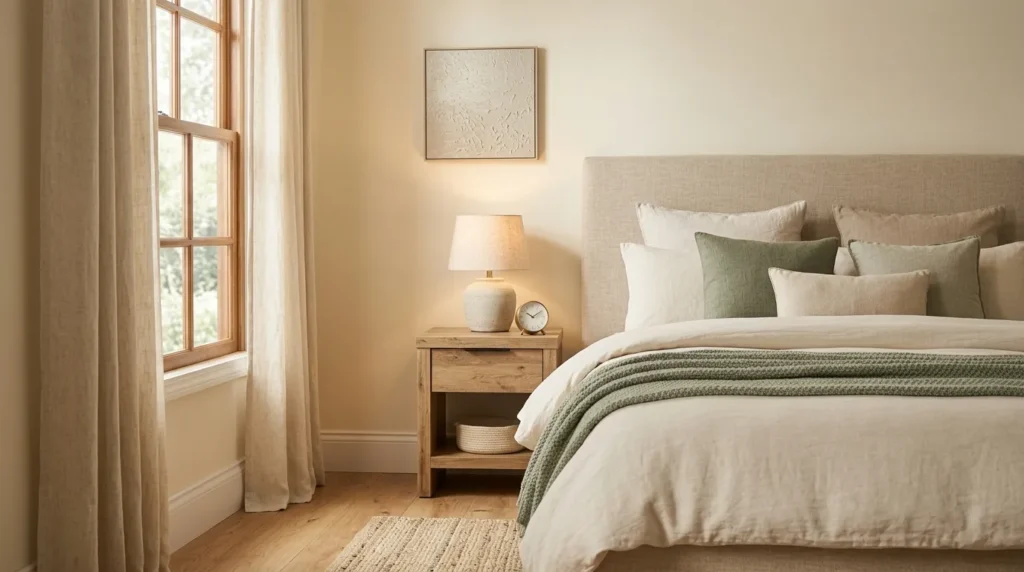
Quick Benefits
- Softens the room
- Controls natural light
- Adds privacy
- Improves visual warmth
- Creates a finished appearance
Why It Works
Windows often occupy a large amount of wall space, which means the treatment around them can significantly influence the room.
Soft curtains can make a bedroom feel warmer and more finished.
They also allow you to control natural light and privacy.
For a relaxing atmosphere, avoid overly stiff or highly formal treatments unless they suit the architecture.
Light-filtering fabrics can create a gentle glow during the day.
For bedrooms that need stronger light control, consider layering appropriate shades with curtains.
How To Style It
Choose curtains that complement the walls rather than competing with the bedding.
Cream, ivory, oatmeal, beige, and soft gray are versatile choices.
When appropriate for the window and installation, mounting curtain hardware higher and wider can create a more elongated visual effect.
Let curtains fall naturally.
Avoid choosing a length that creates excessive puddling unless that is intentionally part of the style.
Use blackout or room-darkening solutions where needed for sleep and privacy, while considering the manufacturer’s specifications and installation requirements.
9. Calming Greenery
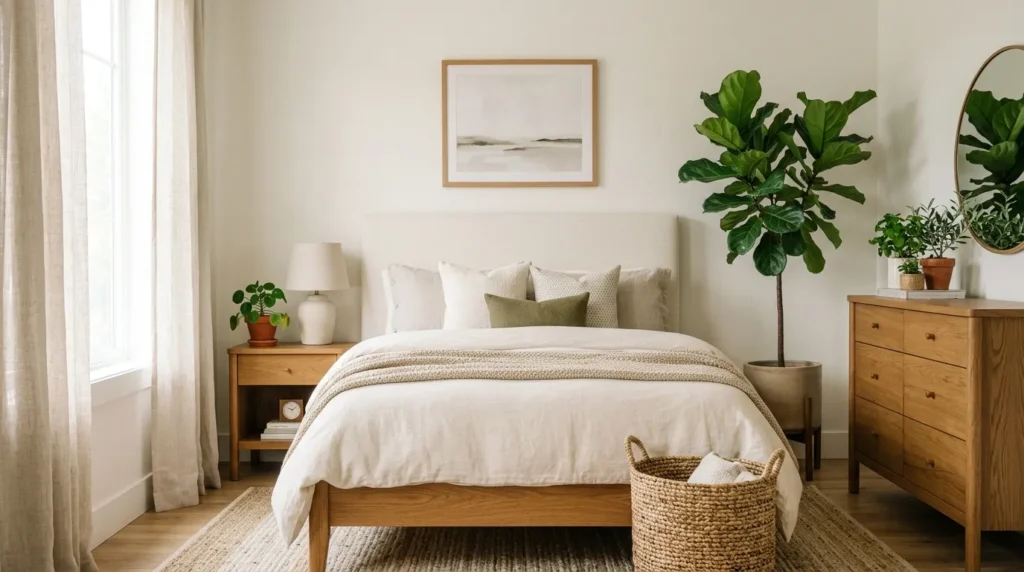
Quick Benefits
- Adds natural color
- Introduces organic texture
- Makes the room feel fresh
- Softens neutral decor
- Creates visual interest
Why It Works
Greenery can bring a natural element into a bedroom without requiring a major color change.
A small plant on a dresser, a taller plant in an empty corner, or a simple branch arrangement can add life to a neutral space.
The most important consideration is suitability.
Not every plant thrives in every bedroom.
Think about natural light, temperature, humidity, watering needs, and whether the plant is appropriate for your household.
If real plants are difficult to maintain, high-quality artificial greenery can still provide visual texture.
How To Style It
Choose one larger plant rather than filling every surface with small pots.
Place a suitable plant near a window if its light requirements allow.
Use a ceramic, woven, or natural stone planter that coordinates with the room.
For a small bedroom, a single branch arrangement in a tall vase can provide height without taking much floor space.
Repeat green subtly through pillows, artwork, or a small decorative object.
Keep the overall effect natural rather than overly botanical.
10. Clutter-Free Styling
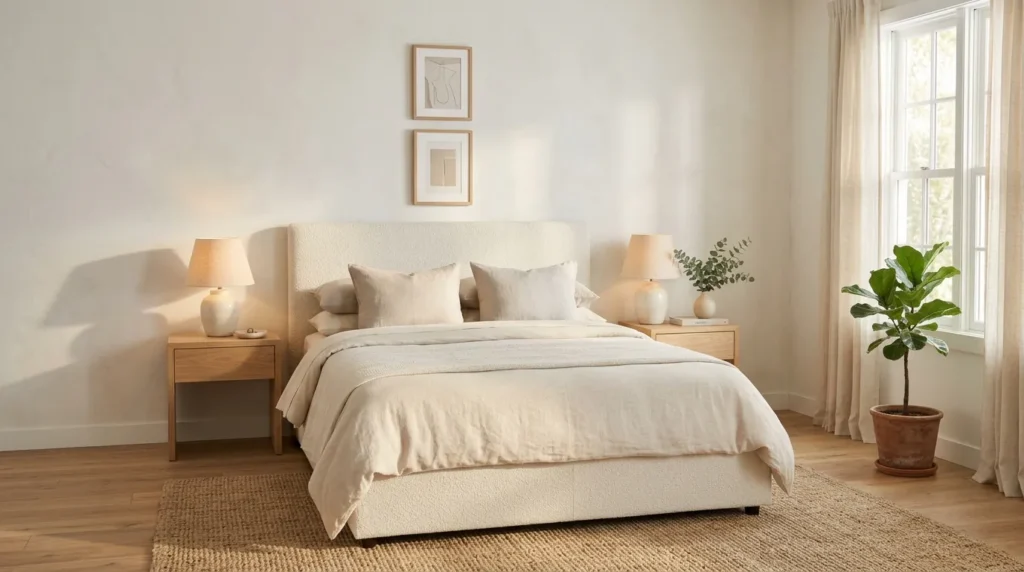
Quick Benefits
- Creates visual breathing room
- Makes cleaning easier
- Highlights favorite decor
- Supports relaxation
- Makes the room feel more spacious
Why It Works
One of the simplest ways to make a bedroom feel relaxing is to reduce visual noise.
This does not mean removing everything.
It means becoming more selective about what remains visible.
When every surface contains accessories, the eye has no place to rest.
A calmer bedroom usually has a few intentional focal points rather than dozens of competing details.
The bed, lighting, artwork, and one or two decorative areas may be enough.
Hidden storage can keep everyday necessities accessible without leaving them scattered around the room.
How To Style It
Begin with the visible surfaces.
Clear the dresser, nightstands, shelves, and window ledges.
Return anything that belongs elsewhere.
Then choose your favorite decorative pieces.
Keep those.
Remove objects that are only filling space.
Use trays to group small items.
Place baskets where clutter tends to accumulate.
Keep the floor relatively open.
Finally, step back and look at the room from the doorway.
If one area feels visually heavy, edit it.
A relaxing bedroom should feel intentional without looking overly staged.
How To Create A Relaxing Bedroom On A Budget
You do not need to replace your entire bedroom to create a more aesthetic atmosphere.
Start with what you already own.
Rearrange the furniture to improve flow.
Remove unnecessary objects from surfaces.
Wash or refresh bedding.
Fold a throw neatly at the foot of the bed.
Move a lamp to a darker corner.
Bring in a plant from another room if it suits the light conditions.
Change the arrangement of artwork.
These small changes can have a surprisingly large visual effect.
If you want to spend money, prioritize items that influence comfort first.
Bedding, lighting, curtains, and a good rug can make a bigger difference than a collection of decorative accessories.
Another useful approach is choosing one material to repeat.
For example, add natural wood through a tray, frame, and small stool.
Or use woven textures through baskets and a rug.
Repeating materials makes a room feel designed without requiring everything to match.
Best Colors For A Relaxing Bedroom
A calming palette does not have to be completely white.
Consider these combinations:
Cream + Warm Beige
Soft, timeless, and easy to layer.
Ivory + Sage
Fresh and natural without becoming overly colorful.
Beige + Dusty Blue
Relaxed and slightly cooler while remaining sophisticated.
Oatmeal + Warm White
Excellent for a cozy minimalist bedroom.
Taupe + Cream
Creates depth while maintaining a soft appearance.
Soft Gray + Natural Wood
A good choice when you prefer a slightly cooler modern aesthetic.
Muted Terracotta + Beige
Adds warmth without overwhelming the room.
Choose colors based on the natural light in your bedroom.
A shade that looks warm and beautiful in a sun-filled room can appear very different in a darker space.
How To Make A Bedroom Feel Like A Retreat
Think about the experience rather than simply the appearance.
What do you want to feel when you enter?
If the answer is calm, reduce unnecessary visual stimulation.
If the answer is cozy, prioritize texture.
If the answer is luxurious, focus on quality materials, layered lighting, and restrained styling.
If the answer is natural, use wood, linen, woven textures, and appropriate greenery.
Then make the room support that feeling.
Keep a book beside the bed if reading helps you unwind.
Create a comfortable chair if you enjoy quiet time.
Use warm adjustable lighting in the evening.
Keep charging cables organized.
Choose bedding that feels comfortable rather than simply photogenic.
These practical details are what transform an aesthetic bedroom into a genuinely relaxing one.
FAQ
How do I make my bedroom look relaxing?
Start with a calm color palette, comfortable bedding, soft lighting, natural textures, and less visual clutter. Use warm neutrals such as cream, beige, taupe, and oatmeal, then add one muted accent color. Keep surfaces edited and choose a few meaningful decorative pieces instead of filling every available area.
What colors are best for a relaxing bedroom?
Warm white, cream, beige, taupe, soft gray, muted sage, and dusty blue can all create a calming atmosphere. The best choice depends on natural light and your existing furniture. Warm neutrals are particularly versatile because they work with wood, linen, woven materials, and many different decorating styles.
How can I make my bedroom aesthetic without spending much?
Start by decluttering surfaces and rearranging existing furniture. Refresh your bedding, change lamp placement, add a throw, bring in suitable greenery, and simplify your decor. If you buy anything, prioritize pieces that improve both appearance and comfort, such as quality bedding, warm lighting, or simple curtains.
What makes a bedroom feel cozy at night?
Warm, adjustable lighting, soft bedding, layered textiles, comfortable seating, and a visually calm environment can make the room feel cozy after dark. Avoid relying solely on bright overhead lighting. Bedside lamps, sconces, and a floor lamp can create softer pools of illumination throughout the room.
Should a relaxing bedroom be minimalist?
It does not have to be. A relaxing bedroom can be traditional, modern, bohemian, farmhouse, organic, or eclectic. The common element is usually visual balance. Keep enough open space for the room to breathe and be selective about what remains visible.
How can I make a small bedroom feel more peaceful?
Use fewer large visual elements, choose lighter colors, keep the floor open, and use furniture with built-in or hidden storage. Wall-mounted nightstands, under-bed storage, soft window treatments, and multifunctional furniture can help. Avoid overcrowding the room with decorative pieces or oversized furniture.
What should I put on my bedroom nightstand?
Keep only what you genuinely use. A lamp, book, water glass, small dish, or simple decorative object may be enough. Use the drawer for chargers, personal items, and other necessities. Keeping the top surface relatively clear creates visual breathing room and makes the bedroom feel calmer.
Conclusion
A relaxing bedroom does not have to look expensive, perfectly coordinated, or professionally staged.
The most inviting bedrooms usually feel personal.
They combine comfortable bedding with soft lighting, warm materials, practical storage, and a few details that make the room feel like your own private retreat.
Start with the foundation.
A soft neutral palette can immediately create a calmer backdrop. Layered bedding adds comfort and texture. Natural wood brings warmth, while curtains soften the windows. A reading chair can create another destination, and a few plants can add a natural touch.
Then look at what you can remove.
Clear unnecessary items from the nightstand. Edit crowded shelves. Put everyday clutter into appropriate storage. Leave some surfaces intentionally empty.
That negative space is not wasted.
It gives the room room to breathe.
Most importantly, design the bedroom around how you actually relax.
If you love reading, make space for a comfortable chair. If you prefer quiet mornings, keep the bedside area simple and welcoming. If you need darkness for sleep, prioritize suitable window coverings.
An aesthetic bedroom should not simply look beautiful in a photograph.
It should feel good when you walk into it at the end of a long day.
Start with one change tonight—perhaps softer lighting, freshly layered bedding, or a cleared nightstand—and gradually build from there.
The result can be a bedroom that feels calm, comfortable, personal, and genuinely worth coming home to.
Related Articles
- 10 Modern Aesthetic Bedroom Ideas for Adults
- 10 Small Bedroom Ideas That Make Your Space Feel Bigger
- 11 Cozy Bedroom Ideas for a Warm and Relaxing Retreat
- 10 Neutral Bedroom Ideas with Warm Modern Style
- 10 Bedroom Organization Ideas for a Calm, Clutter-Free Space