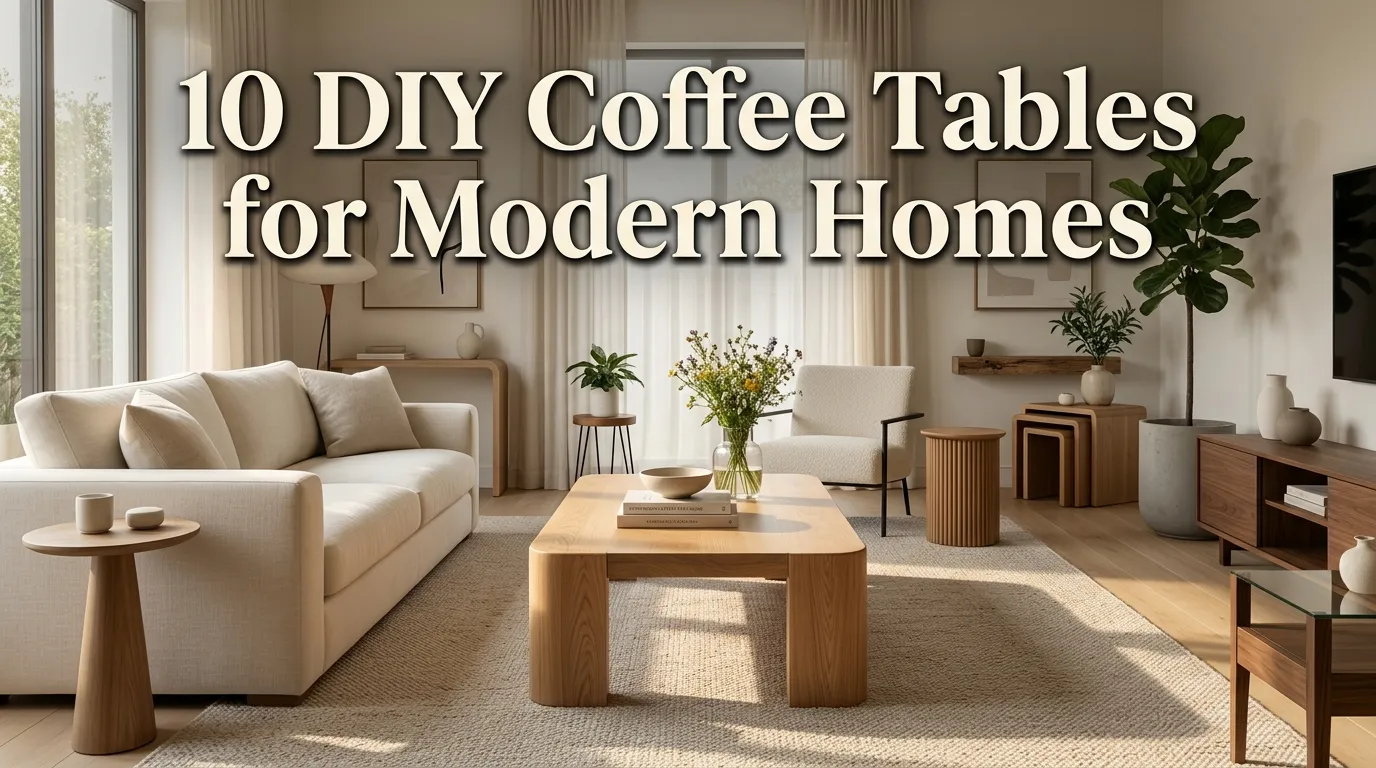
10 DIY Coffee Tables for Modern Homes
A coffee table can completely change the way a living room feels. It sits at the center of the seating area, gives you a practical surface for everyday use, and often becomes one of the first pieces people notice when they walk into the room. But finding a coffee table that has the right size, shape, color, and style can be surprisingly difficult.
That is where a DIY coffee table can be a smart alternative.
Building your own table allows you to control the dimensions, materials, finish, and overall character. You can make something specifically for a small apartment, a large sectional, a family room, or an open-concept living area. Even better, you can create a custom-looking piece without necessarily paying the price of high-end furniture.
Modern design is particularly well suited to DIY furniture because it often relies on straightforward shapes, natural materials, clean lines, and restrained finishes. A simple wood slab, a painted geometric base, or a combination of wood and metal can look remarkably polished when the proportions are right.
In my experience, the biggest mistake with DIY furniture is focusing too much on the project itself and not enough on how the finished piece will function in the room. A beautiful coffee table that is too large can make a living room feel cramped. A table that is too low may be uncomfortable for everyday use. And a design with too many decorative details can compete with the rest of the room.
These ideas focus on creating coffee tables that are useful, durable, visually appealing, and adaptable to modern interiors.
Before beginning any project, select materials and hardware appropriate for the table’s intended weight and use. Follow the manufacturer’s instructions for tools, finishes, adhesives, and fasteners, and use appropriate safety equipment.
Whether you prefer warm natural wood, sleek painted surfaces, industrial metal, or sculptural forms, these projects can help you create a centerpiece that feels made specifically for your home.
Table of Contents
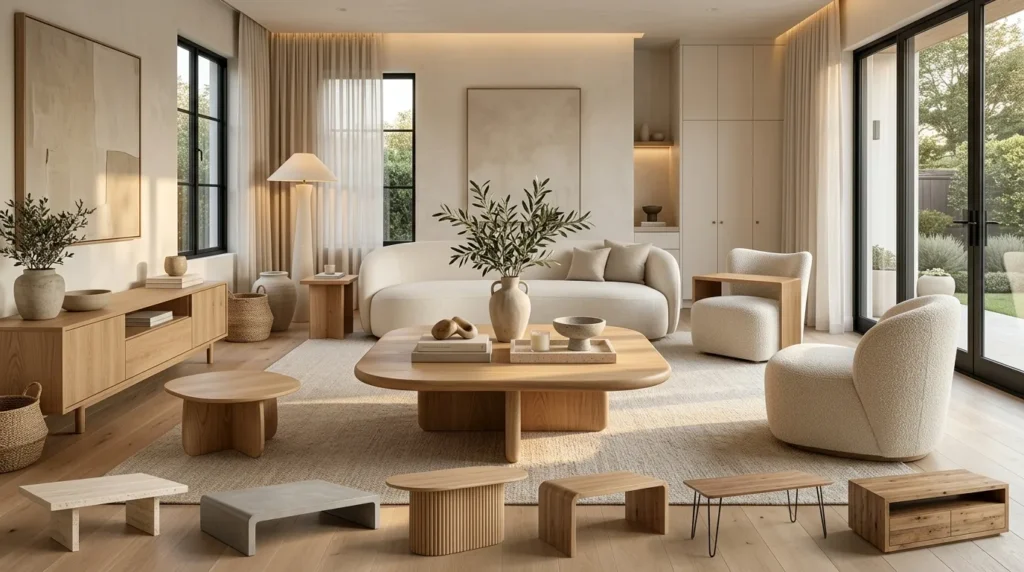
1. Chunky Wood Table
Create a substantial wood coffee table with a simple silhouette and warm natural finish.
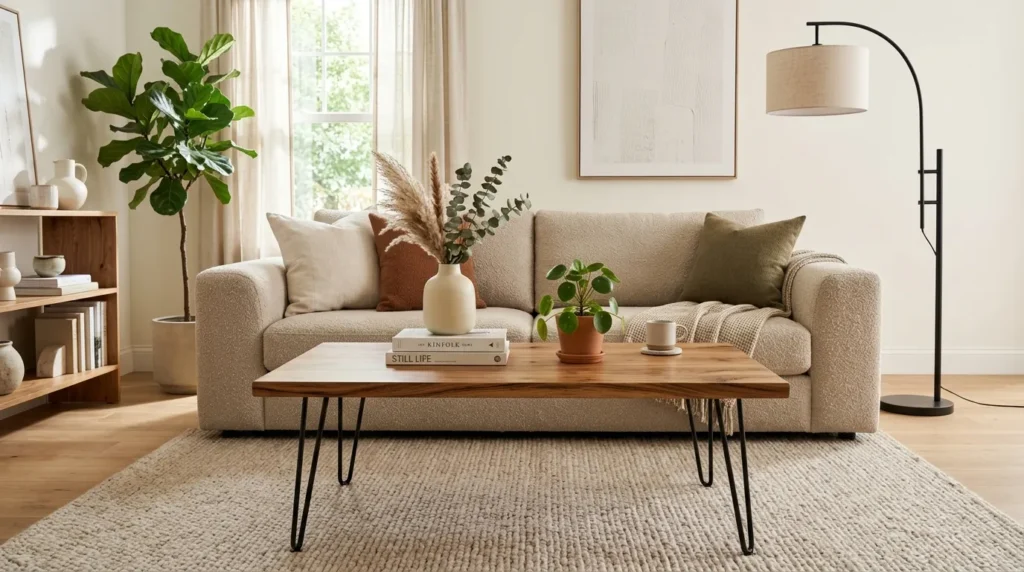
2. Hairpin Leg Table
Combine a simple wood top with metal hairpin legs for an easy modern look.
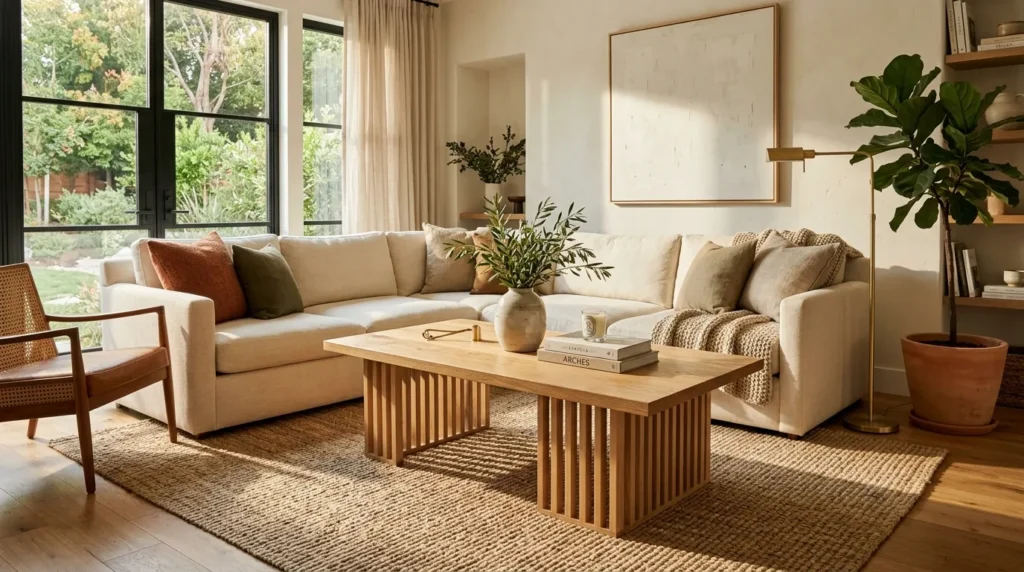
3. Slatted Wood Table
Use evenly spaced wood slats to create texture and architectural interest.
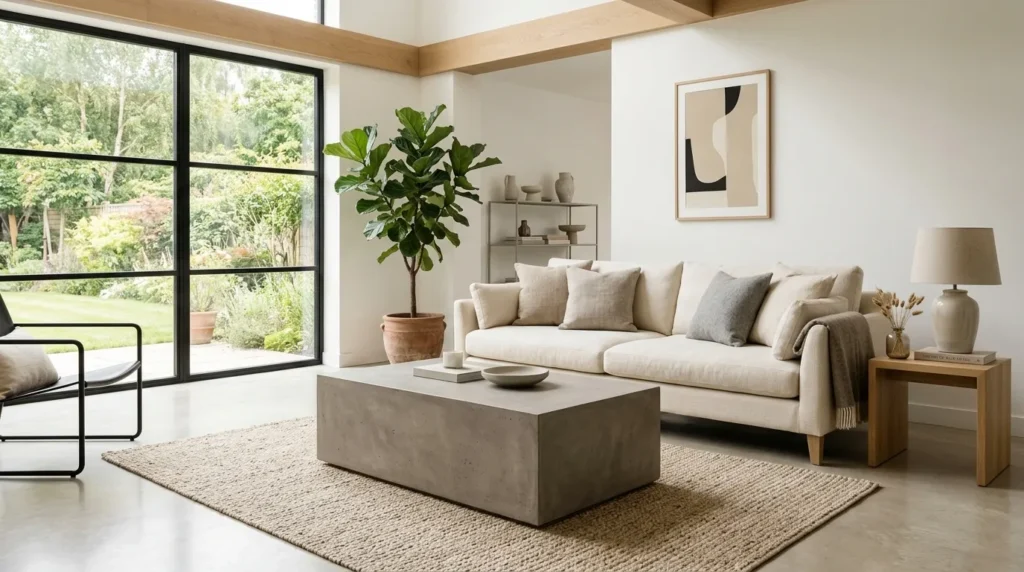
4. Concrete Style Table
Create a minimalist table inspired by the look of concrete and stone.
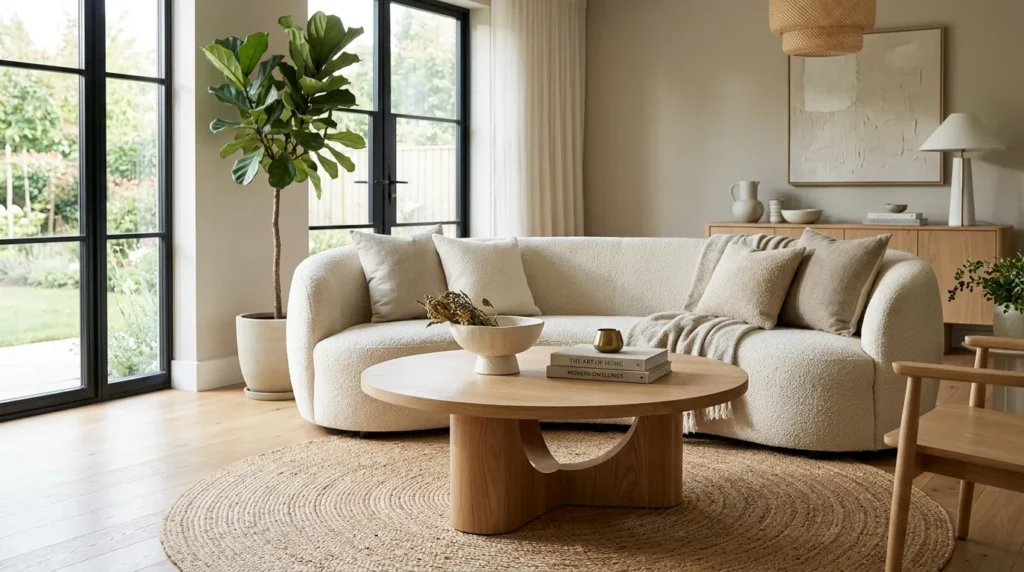
5. Round Pedestal Table
Build a soft, rounded silhouette that works beautifully with modern seating.
6. Storage Cube Table
Combine a clean tabletop with practical hidden or open storage.
7. Waterfall Edge Table
Create a sleek continuous wood form with a contemporary waterfall silhouette.
8. Two Tone Table
Pair contrasting materials or finishes for a custom modern appearance.
9. Reclaimed Wood Table
Give weathered wood a modern update with simple construction and careful finishing.
10. Sculptural Block Table
Create a bold geometric centerpiece using simple oversized forms.
1. Chunky Wood Table
Quick Benefits
- Warm and timeless appearance
- Strong visual presence
- Works with many interiors
- Easy to customize in size
- Natural wood adds texture
Why It Works
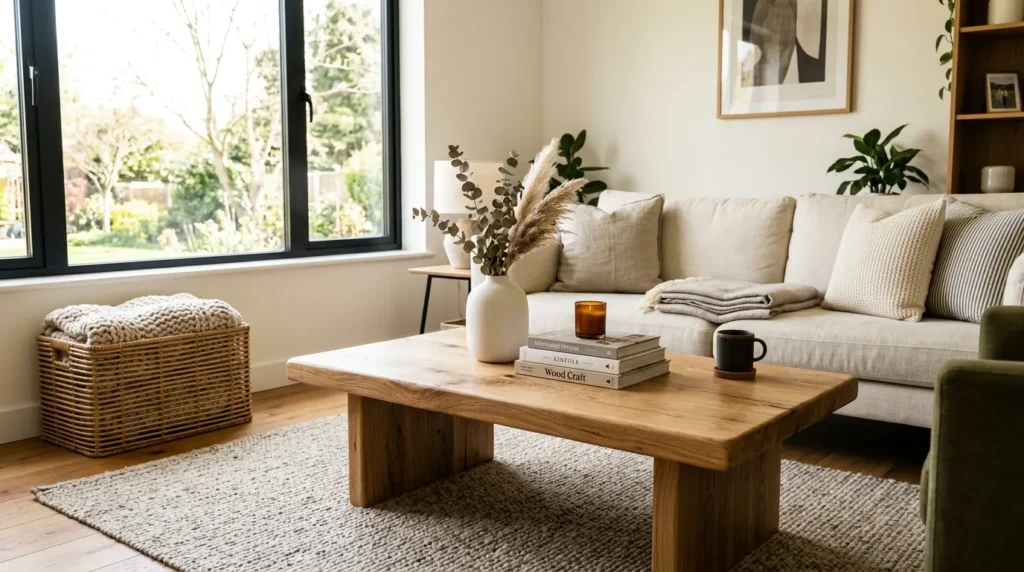
A chunky wood coffee table can make a living room feel grounded without requiring a complicated design.
The simplicity is what makes it appealing.
A thick tabletop combined with sturdy legs creates a substantial silhouette that works particularly well with contemporary sofas, neutral upholstery, and natural materials.
Wood also adds warmth to modern rooms that might otherwise feel overly sleek.
Depending on the finish, the same basic table can look Scandinavian, organic modern, modern farmhouse, or minimalist.
The key is proportion.
A thick tabletop can look beautiful, but if it is paired with legs that are too delicate or a size that is too large for the room, the table can feel visually heavy.
How To Style It
Choose a tabletop thickness that feels substantial without overwhelming your seating area.
Oak, maple, walnut, or another appropriate furniture-grade wood can work well.
For a warm modern look, consider a natural or lightly tinted finish that allows the grain to remain visible.
Keep the base simple.
Straight square legs create a classic appearance, while slightly tapered legs can make the piece feel lighter.
Add a large tray to organize coffee-table accessories.
A ceramic vase, a small stack of books, and a candle can provide enough styling without covering the entire surface.
Leave generous open space around the table so the room remains easy to navigate.
2. Hairpin Leg Table
Quick Benefits
- Simple construction
- Affordable materials
- Lightweight visual appearance
- Strong modern character
- Works well in smaller rooms
Why It Works
Hairpin legs are one of the easiest ways to give a basic wood tabletop a modern furniture look.
The thin metal legs create visual openness underneath the table, which can be useful in smaller living rooms.
Because there is less solid material below the tabletop, more of the floor remains visible.
This can make the room feel less crowded.
The contrast between natural wood and black metal is particularly popular, but the design can be adapted to many color palettes.
How To Style It
Start with a properly sized wood panel.
Sand the surface carefully and soften sharp edges if appropriate for your design.
Attach appropriately rated hairpin legs according to their manufacturer’s instructions.
For a contemporary appearance, use a clear or lightly tinted finish that highlights the wood grain.
Pair the table with a neutral sofa and black or dark metal lighting for repetition.
A woven basket underneath can add warmth without blocking the open structure.
Because hairpin legs have a relatively delicate visual profile, they work especially well with medium-thickness tabletops.
Avoid placing excessive weight on the table unless the legs and mounting system are specifically rated for it.
3. Slatted Wood Table
Quick Benefits
- Adds architectural texture
- Creates visual interest
- Works with natural materials
- Looks custom-made
- Can complement modern interiors
Why It Works
Slatted furniture brings rhythm into a room.
Repeated wood strips create a pattern that is subtle enough for modern interiors while still making the coffee table visually distinctive.
A slatted base can be especially effective when the tabletop itself is relatively simple.
The repetition of the wood creates shadows that change as the lighting shifts.
This gives the table dimension without relying on decorative hardware or elaborate shapes.
The design can also connect naturally with other slatted features in a home, such as wood room dividers, cabinet fronts, or wall treatments.
How To Style It
Use evenly spaced wood slats to create a rectangular or slightly curved base.
Keep the spacing consistent for a polished appearance.
A natural oak finish works beautifully for organic modern rooms.
For a darker contemporary look, consider a deeper wood stain or appropriate furniture finish.
Pair the table with a simple stone or wood top if the base is highly textured.
Keep tabletop accessories minimal.
A low ceramic bowl, a sculptural object, and a few books are enough.
If your living room already contains patterned textiles, let the slatted structure provide texture without introducing another bold pattern.
4. Concrete Style Table
Quick Benefits
- Creates a minimalist appearance
- Adds architectural character
- Works with modern interiors
- Provides visual weight
- Pairs well with wood and linen
Why It Works
Concrete-inspired furniture can give a living room a strong contemporary foundation.
You do not necessarily need a solid concrete slab to achieve the appearance.
Depending on the design, you can use appropriate furniture materials and finishes that create a similar visual effect while keeping the project more manageable.
The appeal comes from the combination of simple geometry, matte texture, and neutral color.
Concrete-style tables are particularly effective when balanced with softer materials.
Think linen upholstery, woven rugs, warm wood, and natural greenery.
How To Style It
Create a simple rectangular or block-like silhouette.
Use a suitable lightweight material or furniture finish designed for the intended application rather than improvising structural materials.
Choose a soft gray, warm gray, or stone-inspired finish.
Avoid making the surface too glossy.
The matte appearance is part of the modern character.
Add warmth around the table with a natural fiber rug and wood accessories.
Use a large tray to organize decorative objects.
If the table itself is visually heavy, choose furniture with visible legs or open space around it to balance the room.
5. Round Pedestal Table
Quick Benefits
- Softens angular furniture
- Improves traffic flow
- Creates a sculptural focal point
- Works well with sectionals
- Has a timeless silhouette
Why It Works
Round coffee tables are especially useful when a living room contains many straight lines.
The curved shape softens the overall composition and eliminates sharp corners.
A pedestal base takes the concept a step further.
Instead of multiple legs, one central support creates a cleaner silhouette and allows people to move around the table more easily.
This can be especially helpful in family rooms or compact spaces where traffic paths matter.
How To Style It
Choose a tabletop diameter appropriate for your seating arrangement.
A round table should be large enough to serve the seating area but leave comfortable walking space around it.
Use a sturdy pedestal base designed to support the tabletop.
Wood, painted finishes, or stone-inspired surfaces can all work.
For a warm modern room, pair a natural wood top with an understated base.
Keep the tabletop styling centered.
A round tray, bowl, or low floral arrangement can reinforce the shape.
Avoid tall decor that blocks conversation across the table.
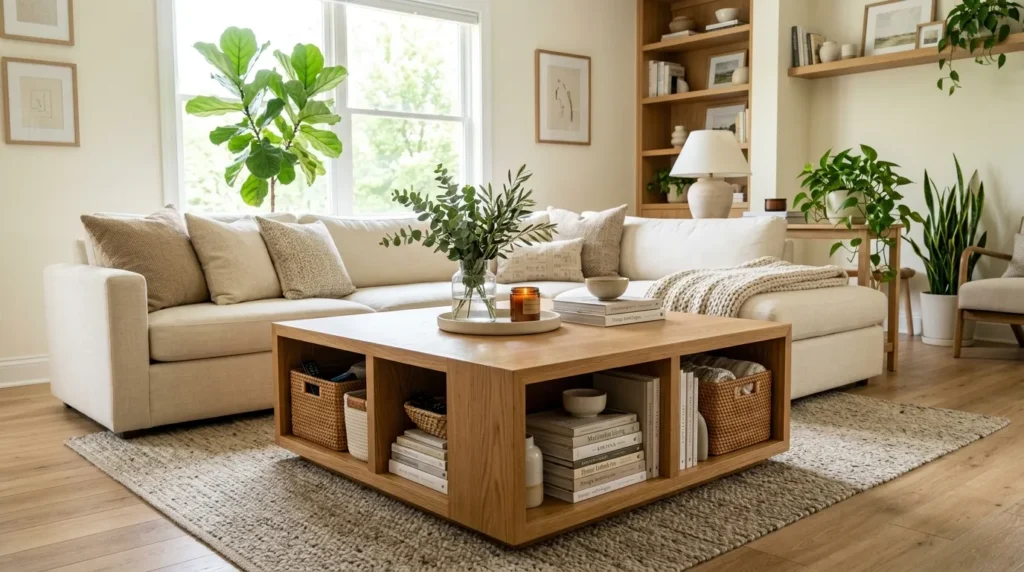
6. Storage Cube Table
Quick Benefits
- Adds hidden storage
- Helps organize small rooms
- Provides a clean silhouette
- Combines furniture and function
- Works well for family spaces
Why It Works
A coffee table can do more than provide a place for drinks.
In smaller homes, combining storage and tabletop space can make the room significantly more functional.
A cube-style table creates an architectural shape while providing opportunities for baskets, books, blankets, games, or other living-room essentials.
This approach is especially useful when you want the room to look tidy without sacrificing practical storage.
The storage can be open, concealed, or a combination of both.
How To Style It
Build or assemble a sturdy box-style base that is appropriately reinforced for its intended load.
Add a separate top if you want the tabletop to visually overhang the storage structure.
Use baskets inside open compartments to keep smaller items contained.
For concealed storage, consider appropriate hinges and hardware designed for furniture use.
Choose a finish that complements your existing cabinetry or flooring.
Keep the top relatively simple because the base already provides visual structure.
A large tray can make the surface easier to organize.
This type of table works particularly well in apartments, family rooms, and multifunctional spaces.
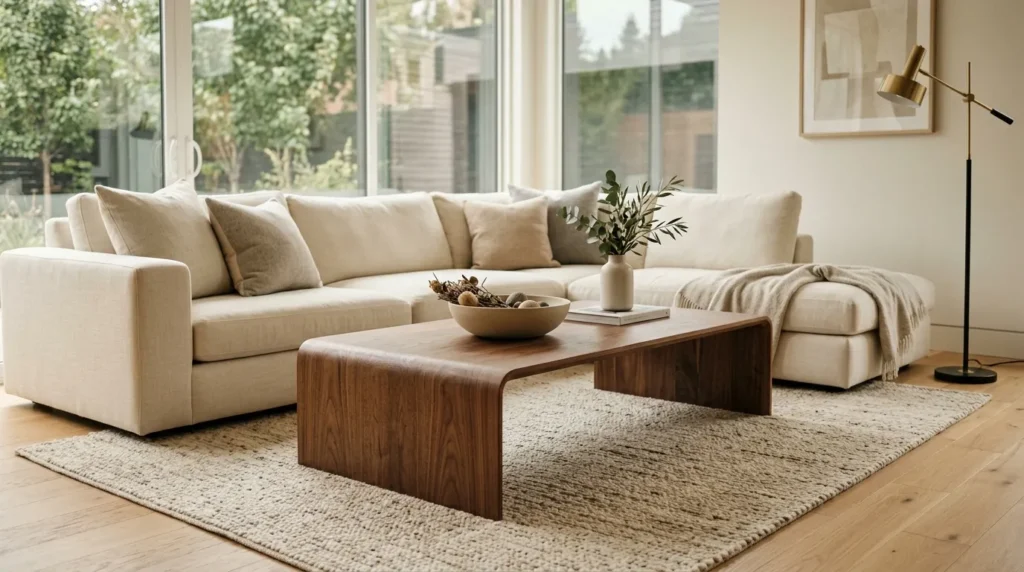
7. Waterfall Edge Table
Quick Benefits
- Creates a high-end appearance
- Uses clean modern geometry
- Highlights wood grain
- Works in minimalist rooms
- Has a sculptural silhouette
Why It Works
The waterfall edge is popular because the tabletop appears to flow continuously down one side.
That uninterrupted visual line gives the furniture a sophisticated architectural quality.
It works particularly well with wood because the grain can visually continue from the horizontal surface into the vertical section.
The design looks custom without relying on excessive ornamentation.
This is a good example of how a simple geometric idea can make a piece of furniture feel considerably more expensive.
How To Style It
Choose a high-quality wood panel with an attractive grain.
The continuous edge requires careful measurement and construction, so take your time with cutting, joining, sanding, and finishing.
Keep the surrounding decor simple.
A waterfall table already has a strong silhouette.
Pair it with a neutral sectional, textured rug, and understated accessories.
A low tray and one sculptural object can be enough.
For a darker room, a lighter wood can add warmth.
For a bright contemporary room, walnut can provide dramatic contrast.
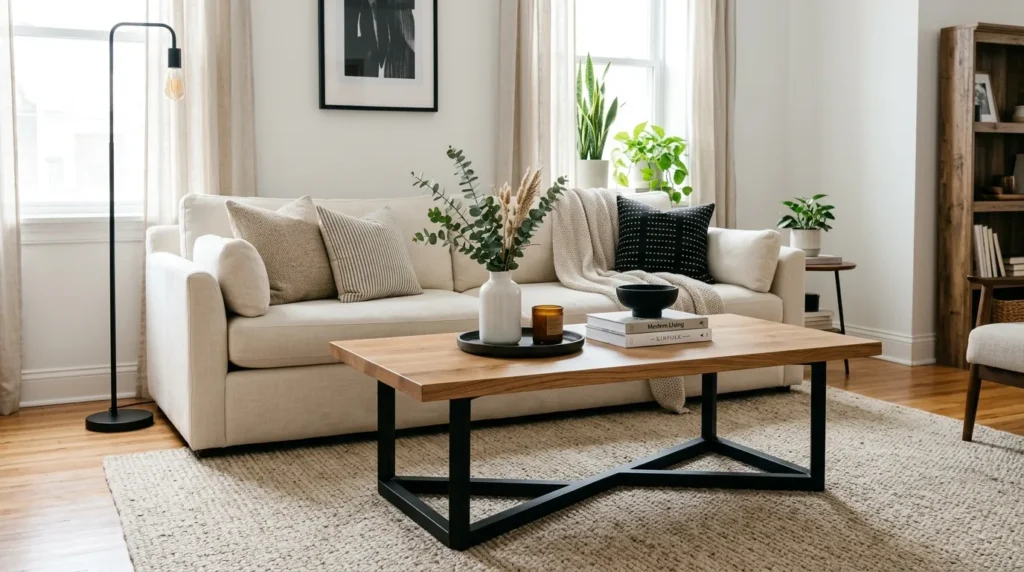
8. Two Tone Table
Quick Benefits
- Creates visual contrast
- Looks highly personalized
- Combines different materials
- Works with modern decor
- Easy to coordinate with existing finishes
Why It Works
Two-tone furniture can look custom because it introduces intentional contrast.
You might combine natural wood with black, warm white with walnut, or a stained top with a painted base.
The trick is choosing finishes that already appear somewhere else in the room.
This creates visual repetition.
For example, black legs can connect with a black floor lamp, while a natural oak top can echo the flooring or shelving.
The table then feels integrated rather than random.
How To Style It
Choose one dominant finish and one supporting finish.
A natural oak top with a matte black base is an easy modern combination.
For a softer look, try warm white with natural wood.
Use a consistent finish across all painted components.
Avoid introducing too many additional colors through accessories.
A neutral tray, ceramic vase, and small stack of books can complete the tabletop.
This approach is particularly effective when you want to connect different materials already present in your living room.
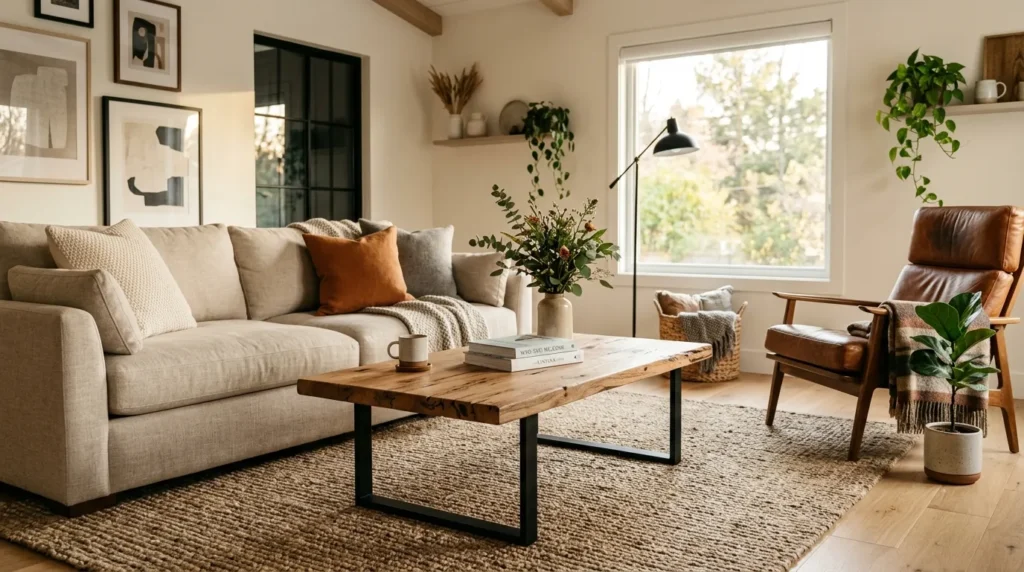
9. Reclaimed Wood Table
Quick Benefits
- Adds character
- Reuses existing material
- Creates natural texture
- Works with modern rustic interiors
- Each piece can be unique
Why It Works
Reclaimed wood brings history and variation into a modern room.
The imperfections—when the material is appropriate and properly prepared—can add character that newly manufactured furniture does not always provide.
But reclaimed wood does not have to make a room look rustic.
Pairing it with a simple modern base can create a balanced combination of old and new.
The result can work beautifully with contemporary upholstery, clean-lined lighting, and minimalist accessories.
How To Style It
Use reclaimed wood that is appropriate for furniture construction and inspect it carefully before use.
Remove unsafe hardware, clean the material properly, and prepare the surface.
Depending on its condition, you may choose to preserve some character marks while smoothing the areas that will be handled frequently.
Pair the top with a simple metal or wood base.
Avoid overdecorating.
Let the wood grain and imperfections remain the star.
Neutral linen seating, a simple wool rug, and ceramic accessories can create a polished modern setting around the table.
10. Sculptural Block Table
Quick Benefits
- Creates a strong focal point
- Uses simple geometric forms
- Looks architectural
- Works with minimalist decor
- Makes a small number of materials feel intentional
Why It Works
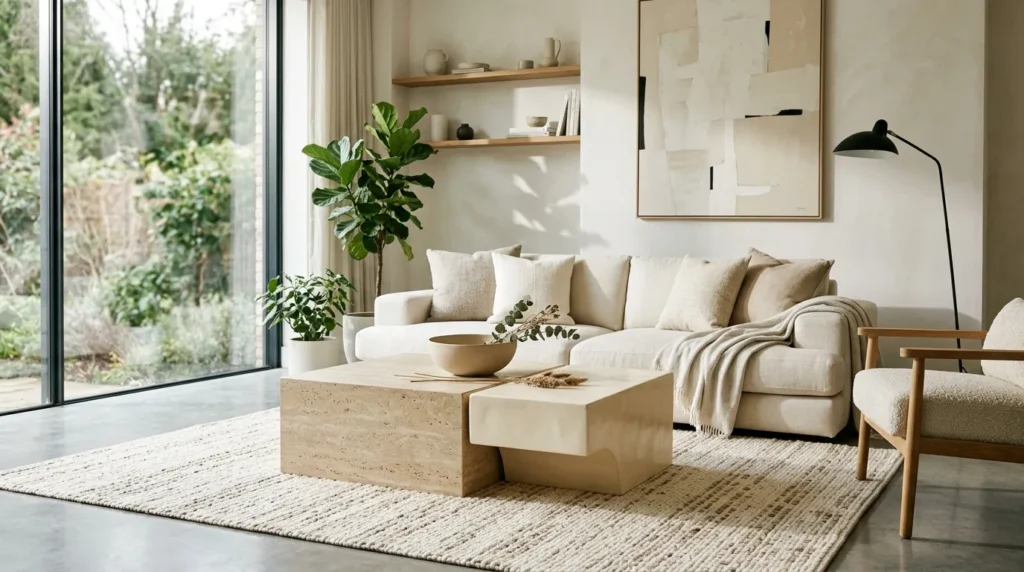
A sculptural block coffee table can turn a functional piece of furniture into artwork.
The design usually relies on large geometric forms rather than small decorative details.
That makes it particularly suitable for modern interiors.
A pair of oversized supports, a thick rectangular base, or an asymmetrical block can create visual drama while maintaining a relatively simple construction concept.
The proportions are critical.
A sculptural table needs enough breathing room around it so the shape can be appreciated.
How To Style It
Keep the finish restrained.
Warm white, natural wood, charcoal, stone-inspired gray, or deep brown can all work.
Choose one strong geometric silhouette rather than combining several unrelated shapes.
Position the table centrally within the seating arrangement.
Use a low tray or shallow bowl on top.
Avoid placing too many small accessories around the base.
Pair the table with softer furnishings such as boucle, linen, wool, or cotton upholstery.
The contrast between soft textiles and solid geometric furniture creates an appealing modern balance.
Choosing The Right Coffee Table Size
The most beautiful DIY coffee table will still feel awkward if it is the wrong size, so start by considering your seating arrangement. The table should be easy to reach from the sofa and chairs without forcing anyone to stretch, while leaving enough clearance around it for comfortable movement. For sectionals, a rectangular or oval table may fit naturally within the available space, while round or square tables can work well for smaller seating groups. Height matters, too—a coffee table that is dramatically taller or shorter than the surrounding seating can look visually disconnected, so measure your sofa and chairs before building.
Before you start cutting materials, use cardboard or painter’s tape to mark the proposed table footprint on the floor. This simple test lets you see how the size and shape will work within the room. If possible, leave the outline in place for a day and walk around it normally. You may quickly discover whether the table interferes with doors, walkways, drawers, or seating. Taking these measurements and testing the layout first can help you build a coffee table that feels balanced, practical, and perfectly suited to your space.
Best Materials For DIY Coffee Tables
Solid Wood
Warm, durable, and versatile.
Plywood
Can be an economical option when properly selected, finished, and edge-treated for the intended design.
Metal
Useful for minimalist, industrial, and modern bases.
Stone-Look Materials
Can provide a contemporary appearance without necessarily requiring a solid stone slab.
Reclaimed Wood
Adds character and natural variation when properly prepared.
The best material depends on your tools, experience, budget, and intended use.
How To Make A DIY Coffee Table Look Expensive
The final appearance usually comes down to finishing details.
Sand Carefully
Smooth surfaces and softened edges create a more professional result.
Choose A Cohesive Finish
Avoid combining several unrelated stains or paints.
Hide Hardware
Where appropriate and structurally sound, concealed fasteners can create cleaner lines.
Pay Attention To Proportion
Simple furniture can look expensive when the dimensions feel intentional.
Style Sparingly
Do not cover the entire tabletop.
Coordinate Materials
Repeat wood, metal, stone, and textile finishes elsewhere in the room.
Protect The Surface
Use an appropriate furniture finish based on the material and expected use.
FAQ
Is it cheaper to build your own coffee table?
It can be, particularly when you choose straightforward designs and readily available materials. However, the total cost depends on the wood, hardware, tools, finish, and equipment you already own. DIY also gives you control over the exact dimensions and appearance, which can be valuable when commercially available tables do not fit your room.
What is the easiest DIY coffee table?
A simple wood tabletop with appropriately rated prefabricated legs is generally one of the most straightforward approaches. Hairpin legs are another accessible option because the base is already manufactured. Even simple projects should be assembled carefully and according to the hardware manufacturer’s instructions.
What wood is best for a DIY coffee table?
Common furniture woods such as oak, maple, walnut, and other suitable hardwoods can work well. Plywood can also be useful for certain modern designs when properly selected and finished. Consider appearance, durability, availability, and your ability to work with the material before choosing.
How high should a coffee table be?
A coffee table is generally most comfortable when its height relates closely to the surrounding seating. Measure your sofa and chairs rather than relying on a single universal measurement. A cardboard mock-up can help you test the height before construction and determine whether it feels comfortable for reaching, eating, or placing drinks.
What shape coffee table works best with a sectional?
Rectangular, oval, and appropriately sized round tables can all work with sectionals. The best choice depends on the shape of the sectional and available walking space. Rounded edges can be particularly useful when traffic paths are tight, while rectangular tables can make better use of long seating arrangements.
How do I protect a DIY wood coffee table?
Choose a furniture finish appropriate for the specific wood and intended use. Follow the finish manufacturer’s preparation, application, drying, and curing instructions. Use coasters, trays, and protective pads during everyday use, especially during the initial curing period of a newly finished surface.
Can a DIY coffee table look modern?
Absolutely. Modern furniture often relies on simple silhouettes, clean edges, natural materials, and restrained finishes, all of which are achievable in DIY projects. Designs such as waterfall tables, hairpin-leg tables, sculptural blocks, two-tone furniture, and minimalist wood tables can fit beautifully into contemporary homes.
Conclusion
A DIY coffee table does not have to look homemade in the traditional sense. With thoughtful proportions, suitable materials, clean construction, and a well-chosen finish, you can create a piece that looks intentional enough to sit comfortably alongside higher-end furniture. The best design depends on your home and how you use the room. A chunky wood table can add warmth and substance, while hairpin legs keep a smaller room visually open. A round pedestal design can soften angular furniture, and a storage table adds practical function to a compact space. For something more distinctive, consider a waterfall edge, slatted base, two-tone finish, or sculptural block design to create a stronger focal point.
Before building, take time to measure your seating area and test the footprint. A few minutes spent with cardboard or painter’s tape can save hours of work later. Think about everyday life, too. If you regularly eat in the living room, need storage for blankets, or have children using the space, your coffee table should reflect those needs. When styling the finished piece, less is often more. A beautiful tray, a few books, a ceramic bowl, and a small plant can be enough to make the table feel complete without hiding its craftsmanship. Start with a design that matches your skill level, choose materials carefully, and let the furniture’s shape and texture become part of the room. The result can be more than a useful surface—it can become one of the defining pieces of your living room.
Related Articles
- 10 DIY Living Room Furniture Ideas on a Budget
- 11 Modern Living Room Ideas for a Stylish Home
- 10 DIY Wood Decor Projects for Your Home
- 10 Small Living Room Layout Ideas That Work
- 11 Modern Home Decor Ideas with Natural Wood